Listen to this article
Take the story with you. Choose a voice and a pace that suits you.
Or listen in another language / choose a voice
Getting your device voices ready…
The voice follows the displayed language and your browser’s regional preference when available. You can choose another narration voice.
Florida Safe Screens Act age verification is the core of a proposal Attorney General James Uthmeier unveiled on 22 October 2026 at Polk State College in Winter Haven. The plan would make app stores check every user’s age, make phone operating systems apply age-based restrictions at device level, and make AI chatbot operators determine how old their account holders are, according to the Attorney General’s release. It is a proposal, not a filed bill. No legislator has sponsored it yet, and Florida’s 2027 session does not begin until 2 March, Tech Times reported. Information verified through 30 October 2026.
“Parents deserve real control, and companies must design for safety, not addiction,” Uthmeier said in the release. “Florida already prohibits social media accounts for anyone under 14, and the Eleventh Circuit just upheld that law. The Safe Screens Act goes further.”
Florida app store age verification parental consent: the gate moves to the shop door
Under the proposal, app stores and similar marketplaces “must determine the user’s age, link minors to a parent’s account, and obtain parental consent before a minor downloads or buys an app from a covered platform,” the Attorney General’s release says. Operating systems would then apply age-appropriate restrictions at device level, based on that age.
That second duty is the structural shift. Earlier state laws mostly told individual platforms to check ages. This one tells the layer underneath every app to do it. As Tech Times put it, an operating system cannot sort minors from adults without first classifying everyone — which means adults, too, would have their age determined as a condition of using their phones. The proposal requires only that age determination use “commercially reasonable, privacy-protective methods.” It names no method: not ID checks, not facial estimation, not third-party credentials.
Critics quoted in coverage of similar laws have warned that operating-system age signals expand the collection of sensitive data at scale; the Electronic Frontier Foundation made that argument about California’s comparable Digital Age Assurance Act, according to Tech Times. Supporters at the launch framed it differently. Polk County Sheriff Grady Judd said it takes “the power and determination of an Attorney General to keep large social media and gaming companies from exploiting and endangering our children,” in the release.
Social media quiet mode for teens 14 to 17
For social media accounts held by 14- to 17-year-olds, the proposal sets design defaults, not just age gates. Quiet mode would block access from 11 p.m. to 7 a.m. year-round, and from 8 a.m. to 3 p.m. on school-year weekdays — and “muting notifications is not enough,” the release stresses. Use would be capped at 2 hours a day and 60 hours a month, including messaging and long-form content, with pauses at 60 and 90 minutes.
Like, comment and reaction counts would be hidden by default, switchable only by a verified parent. Autoplay and infinite scroll would start off. Cosmetic-procedure filters would be disabled. Platforms could not recommend teen accounts to unconnected adults, or let those adults message them. Biometric Update’s summary notes the same package, including the parental opt-in for autoplay and infinite scroll.
AI chatbot restrictions for minors Florida: no simulated companionship
The chatbot section covers all minors, a wider group than the 14-to-17 social media rules. Operators could not provide minors features that “simulate companionship through personification, emotional engagement, user-data retention, unsupervised therapy, sexual content, or other deceptive features,” the release says. Chatbots also could not encourage self-harm, suicide, eating disorders or illegal activity, suggest they are real humans, or encourage a minor to isolate from appropriate adults.
Enforcement would run through existing law. Knowing or reckless violations would count as unfair practices under section 501.1736, Florida Statutes, at up to $50,000 per violation, with the Attorney General able to seek damages and maintain a public website tracking incidents, per the release.
The timing is not accidental. Nine days before the announcement, an Eleventh Circuit panel ruled Florida’s existing under-14 social media ban likely constitutional, describing it as a “conditional ban” rather than an outright prohibition, Tech Times reported. A similar app-store bill in the 2026 session, SB 1722, passed a committee then died in Senate Judiciary on 13 March 2026, according to the same report. The Safe Screens Act folds that idea, the teen design defaults and the chatbot rules into one package.
Florida Safe Screens Act age verification: what happens next
Analysis: the open question is not whether Florida wants age checks — its courts fight says it does. It is whether a filed bill keeps the operating-system duty, the one part that turns a child-safety rule into an age check on every phone user in the state. That clause, and the unnamed verification method behind it, is where the 2027 fight will concentrate.
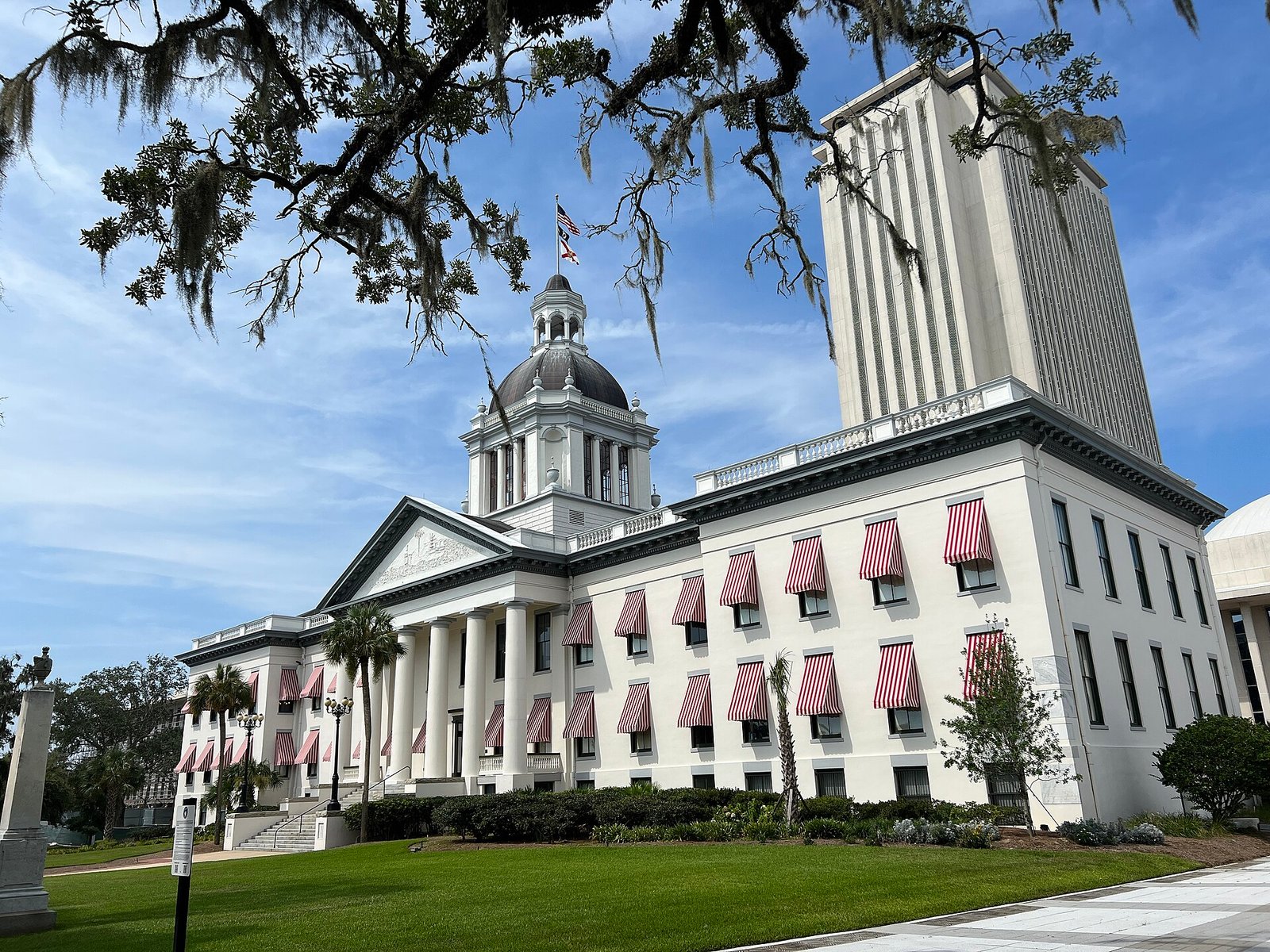
Photo: F McGady, via Wikimedia Commons (CC BY 4.0) — the Florida State Capitol in Tallahassee, old building in front, new tower behind.
Sources
- https://www.myfloridalegal.com/newsrelease/attorney-general-james-uthmeier-proposes-safe-screens-act-protect-minors-app-stores
- https://www.techtimes.com/articles/329469/20261026/florida-ags-safe-screens-act-would-force-all-smartphone-users-verify-age-os-level.htm
- https://www.biometricupdate.com/202610/florida-proposes-safe-screens-act-to-put-age-assurance-on-social-media-chatbots
Leave a comment
Comment as a guest and verify your email, or sign in or create a reader account. Guest comments reach our review queue after email verification; account holders can submit directly for review.