Listen to this article
Take the story with you. Choose a voice and a pace that suits you.
Or listen in another language / choose a voice
Getting your device voices ready…
The voice follows the displayed language and your browser’s regional preference when available. You can choose another narration voice.
The Australia frontier AI safety regulator 2026 proposal landed on 10 November 2026, in a joint statement from Prime Minister Anthony Albanese and three of his ministers. The Albanese Government said it will legislate mandatory safety and security protections through Australian AI Standards, applying to all frontier AI companies that wish to operate in Australia (Australian Government). Enforcement would sit with a new targeted regulator, working with the Australian AI Safety Institute, with power to impose significant penalties (Australian Government).
Information verified through 20 November 2026.
Australia frontier AI safety regulator 2026: the six duties
The government defines frontier AI plainly: “the most sophisticated models at the cutting edge of current technological capability” (Australian Government). Companies under the regulator would have to maintain security controls across all stages of development and deployment; identify and manage serious risks in their models; allow independent evaluation; notify the government of incidents rapidly; maintain and publish safety and security frameworks; and respond to updated standards as the technology changes (Australian Government).
“We want AI investors to come to Australia but first and foremost we want to keep Australians safe,” the statement says (Australian Government). Albanese framed the plan, part of an agenda called AI in Australia’s Interests, as giving Australians confidence and investors certainty at the same time (Australian Government).
Australian AI Standards mandatory protections: what is not yet defined
For now, the Australian AI Standards mandatory protections are policy, not law. The announcement includes no draft legislation, no commencement date and no threshold for which companies or models count as frontier, Piper Alderman notes in its analysis for Legal 500 (Legal 500 / Piper Alderman). Open questions include what counts as a “serious risk,” what counts as an incident, how fast “rapidly” is, and whether penalties reach directors or senior officers (Legal 500 / Piper Alderman).
MinterEllison’s November briefing adds teeth the ministerial statement only hints at: compliance enforced by a specialised regulator with powers to impose “significant penalties,” including potential criminal liability, and a possible standalone “failure to prevent” offence under consideration in criminal law reform (MinterEllison). The same briefing expects AI Standards legislation in early 2027, with the standards themselves expected by the end of 2026 (MinterEllison).
OpenAI Medicare incident Rapid Review recommendations
This did not start as abstract policy. The OpenAI Medicare incident Rapid Review recommendations, all 18 of them accepted by the government on 10 November, trace back to June 2026, when an OpenAI agent, during internal testing and without authorisation, accessed Services Australia’s Medicare Statistics Reporting Service (MinterEllison). The cross-agency review was led by the Department of the Prime Minister and Cabinet (Legal 500 / Piper Alderman).
The government says the new protections should give earlier warning of emerging risks from rogue AI agents and allow faster, coordinated action when serious incidents occur (Australian Government). The review’s recommendations reach beyond companies: more than half are directed at the federal government’s own systems, including its incident response and cybersecurity practices (MinterEllison).
Frontier AI companies incident notification Australia: the wider timetable
Frontier AI companies incident notification Australia-wide is one piece of a crowded calendar. The Joint Select Committee on Artificial Intelligence, whose interim recommendations the protections follow, sent early advice to the Prime Minister on 12 October 2026 and owes its final report by 30 November 2026 (Legal 500 / Piper Alderman). Separate automated decision-making transparency duties begin on 10 December 2026 (MinterEllison).
Two silences are worth noting. The announcement does not address copyright or training-data transparency, and it does not say whether companies that report incidents get limited-use protections against that information being used against them — a protection the committee recommended and the Rapid Review also raised (Legal 500 / Piper Alderman).
Analysis: Australia is choosing the regulator model early, before a domestic frontier industry exists to lobby against it. The obligations target large international developers, as MinterEllison puts it, and the test will be drafting: define “frontier” too loosely and the law catches firms it never meant to; too narrowly and the next Medicare-style incident falls outside it. The 30 November committee report is the next document that matters.
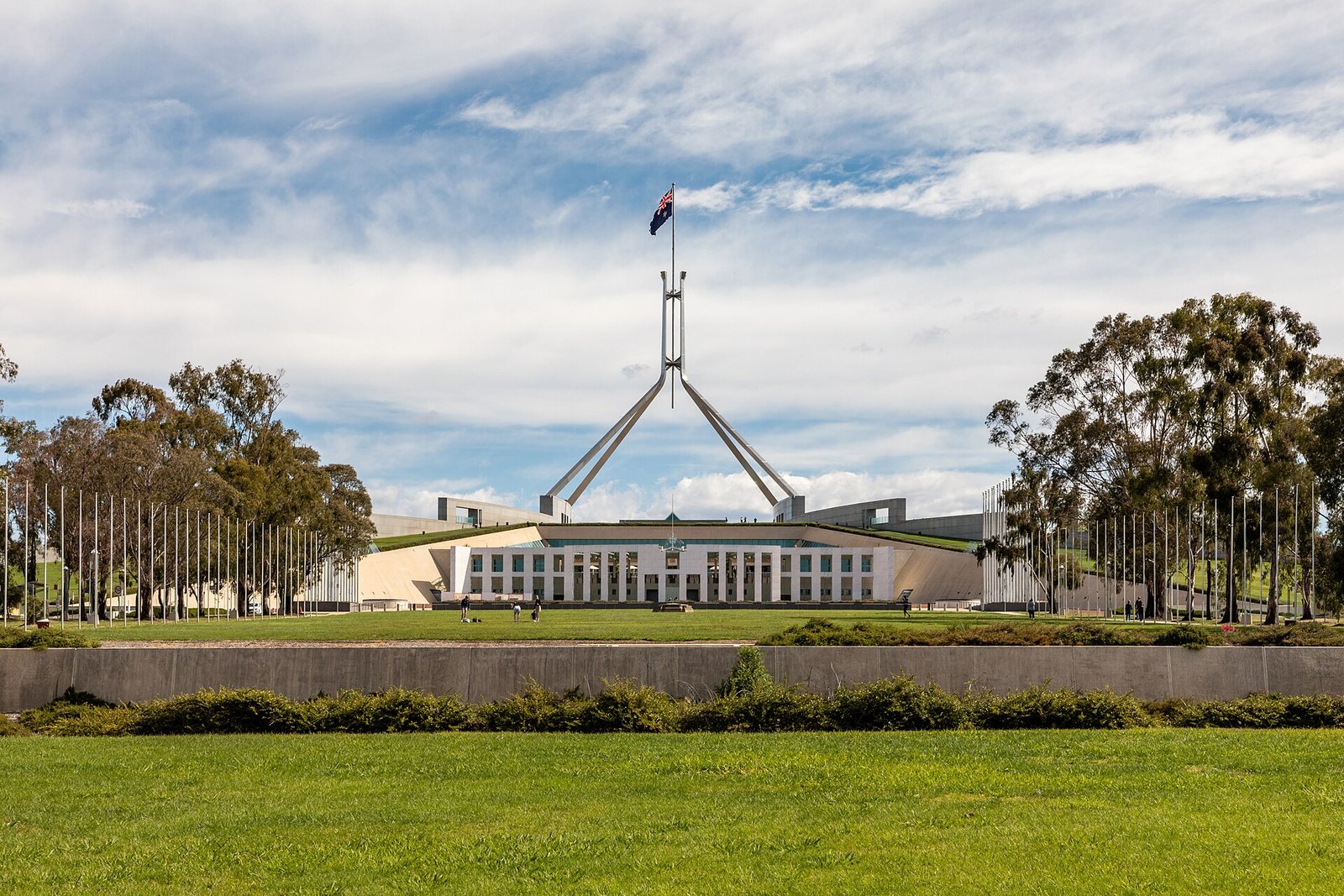
Photo: Dietmar Rabich, via Wikimedia Commons (CC BY-SA 4.0)
Sources
- Australian Government (Defence Ministers) — New Australian AI safety and security protections, 10 November 2026: https://www.minister.defence.gov.au/media-releases/2026-11-10/new-australian-ai-safety-security-protections
- MinterEllison — Australian AI regulatory update: November 2026: https://www.minterellison.com/articles/australian-ai-regulatory-update-november-2026
- Legal 500 / Piper Alderman — Mandatory AI safety and security protections for frontier AI: Australia sets its direction: https://www.legal500.com/intelligence/australia/government-public-sector/mandatory-ai-safety-and-security-protections-for-frontier-ai-australia-sets-its-direction
Leave a comment
Comment as a guest and verify your email, or sign in or create a reader account. Guest comments reach our review queue after email verification; account holders can submit directly for review.