Listen to this article
Take the story with you. Choose a voice and a pace that suits you.
Or listen in another language / choose a voice
Getting your device voices ready…
The voice follows the displayed language and your browser’s regional preference when available. You can choose another narration voice.
Three of the biggest platforms on earth have gone to court over a single question: who decides how a 14-year-old’s feed works — the company that built it, her parents, or the state of California? The California addictive feeds law under 16, known as Assembly Bill 1709, is due to take effect on 1 January 2027. On 4 November 2026, Google, TikTok and Meta filed separate federal lawsuits asking judges to block it before it starts (USA Today).
Information verified through 15 November 2026. No court has ruled yet.
AB 1709 social media law explained: the California addictive feeds law under 16 in plain terms
Governor Gavin Newsom signed AB 1709 in September 2026. The bill was authored by Assemblymember Josh Lowenthal of Long Beach (USA Today).
Strip away the legal language and the rule is plain. Platforms may not give users under 16 video autoplay, infinite scroll, notifications designed to pull them back, or recommendation algorithms that personalise what they see. Tubefilter puts the targeted features in similar terms — recommendation algorithms, infinite scroll and video autoplay — and notes that, given how these apps are built, the law could in practice end under-16 accounts on YouTube, TikTok, Instagram and Facebook altogether (Tubefilter).
That is not quite the same as a ban on accounts. The law requires companies to delete accounts and data connected to users under 16 if the restricted features are not turned off for them (USA Today). It also requires reasonable measures to verify users’ ages, according to reporting by The Business Standard (TBS News). A stripped-down, non-personalised version of an app would comply. Whether any major platform will build one is a different matter.
Penalties give the law teeth. Reporting on the filings puts potential fines at up to $50,000 per affected user under 16 for platforms that do not comply (Tubefilter).
Google Meta TikTok sue California social media law: the free-speech argument
All three lawsuits name California Attorney General Rob Bonta as defendant and ask for an injunction stopping enforcement (Tubefilter). The cases were filed in federal courts in San Francisco, Los Angeles and San Jose (TBS News).
The core claim is constitutional. The companies argue the law violates the First Amendment because it overrides their editorial judgements about how to curate, display and disseminate speech (USA Today). Meta’s complaint puts it bluntly: the state cannot, consistent with the First Amendment, override Meta’s editorial judgements about how to curate and display billions of posts of third-party speech (USA Today).
TikTok’s filing makes a parallel point in different words. Prohibiting the company from delivering curated compilations of videos to under-16 users, and dictating how those videos may be presented, runs headlong into the First Amendment, the complaint says (USA Today). A TikTok spokesperson compared curation to what bookstores, television networks and streaming services do (Tubefilter).
The second claim is statutory. The companies argue the law conflicts with Section 230 of the 1996 Communications Decency Act, the federal provision that generally shields platforms from liability for third-party material posted on their sites (USA Today).
Parents run through all three filings. Google told Reuters that parents are best positioned to make the right decisions for their families, and that overly broad laws break the systems built to help children find high-quality, age-appropriate videos (Tubefilter). Meta said it would be forced either to remove features that keep teens’ experiences age-appropriate or to cut thousands of California teens off from family, friends and communities (Tubefilter).
The autoplay infinite scroll ban children case did not arrive from nowhere
California’s side starts with harm, not speech. Bonta’s office said it was reviewing the lawsuits and remained committed to defending legislation designed to protect children online (TBS News). Lowenthal, the bill’s author, criticised the companies for suing, saying the move reinforced the need for proper regulatory frameworks and that legislators would not stop until technology is working for people rather than the other way round (USA Today).
Newsom’s signing statement struck the same note. California’s governor said he wanted children to grow up in a world where technology supports their wellbeing rather than exploits their vulnerabilities (Tubefilter).
Context matters here. The lawsuits land after a year of settlements over youth mental health and children’s privacy. USA Today reports that Meta earlier this year reached a $16.68 billion settlement resolving state claims that it designed Facebook and Instagram to addict children, misled consumers about safety and improperly collected children’s data — claims Meta denied (USA Today). The Business Standard reports a different figure for a related Meta agreement, up to $18 billion with stronger child-safety measures, ending a trial over teenage social media addiction (TBS News). The two reports describe the settlements differently, so treat the exact scope of each agreement as unsettled until the court records are read directly. TikTok, for its part, agreed in August to a $400-million settlement over Justice Department allegations that it failed to protect children’s privacy, according to USA Today (USA Today).
Analysis: the fight is really about where design ends and publishing begins. If a feed is editorial judgement, California has regulated speech. If a feed is a product feature engineered to hold attention, California has regulated a product. Judges will have to pick a frame, and the frame will decide more than this one law — every state watching this case is drafting its own version.
Nothing changes for families today. AB 1709 is not in force. The first rulings to watch are the injunction requests: if a judge pauses the law, the January deadline slips; if not, platforms have weeks to build a California mode for younger teens — or to close their accounts.
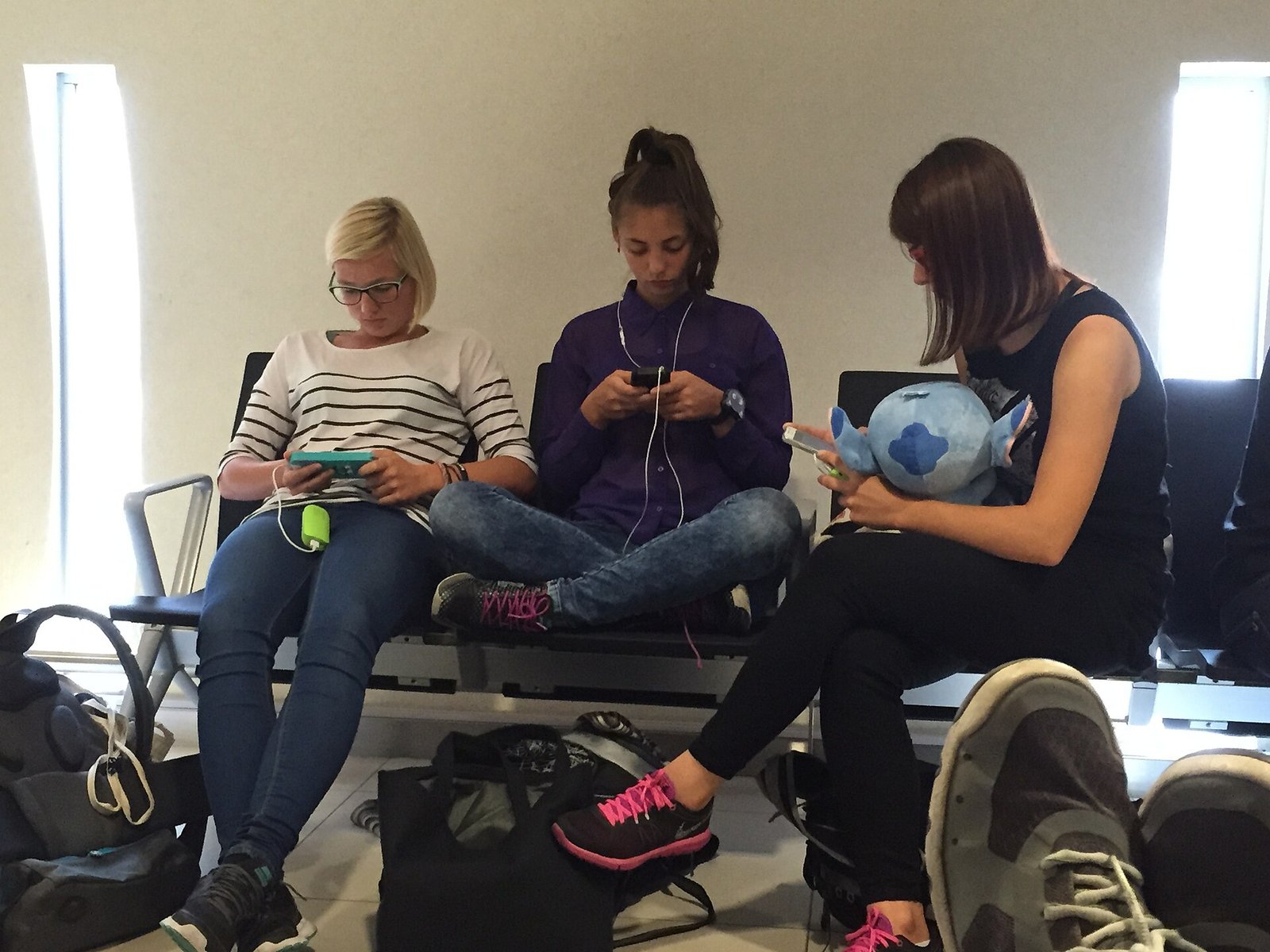
Photo: Chris Olszewski, via Wikimedia Commons (CC BY-SA 4.0)
Sources
- https://www.usatoday.com/story/news/state/california/2026/11/12/google-tiktok-and-meta-sue-california-over-new-social-media-law-teens-regulation/92692052007/
- https://www.tubefilter.com/2026/11/05/google-meta-tiktok-california-lawsuit-ab-1709/
- https://www.tbsnews.net/world/google-meta-and-tiktok-sue-california-over-child-protection-law-targeting-social-media
Leave a comment
Comment as a guest and verify your email, or sign in or create a reader account. Guest comments reach our review queue after email verification; account holders can submit directly for review.