Listen to this article
Take the story with you. Choose a voice and a pace that suits you.
Or listen in another language / choose a voice
Getting your device voices ready…
The voice follows the displayed language and your browser’s regional preference when available. You can choose another narration voice.
The Indonesia copyright bill news payments AI training proposal reached parliament on Wednesday 11 November 2026, and the three companies in the room did not mince words. Google, Meta and TikTok testified against a draft that would make platforms pay publishers for showing their news — even as a link preview — and pay again when journalism is used to train AI models, according to Reuters reporting summarised by Nieman Lab. Information verified through 14 November 2026.
This is not a narrow tweak. The draft, as reported, does not distinguish between aggregation and republication. A snippet in search, a preview card in a feed, a summary inside an AI search product: all of it would count as a use that triggers payment (Nieman Lab). Money would flow through a state-run management organisation, which would then distribute it to publishers, and platforms that refuse could face sanctions up to losing their local business permits (TechTimes).
What platforms pay for news links in Indonesia would actually cover
Start with scale. Indonesia has roughly 230 million internet users, and as of October 2026 some 92% of them reported using WhatsApp, with Instagram at 84% and Facebook at 79%, according to the We Are Social figures cited by Nieman Lab. A payment rule here does not nibble at a small market. It rewires how news travels for one of the largest online populations on earth.
Google’s objection was about access. Its Indonesia government affairs manager, Agung Pamungkas, told lawmakers that requiring payment for showing publishers’ news links would limit how freely Indonesians reach news (TechTimes). Meta’s head of public policy in Indonesia, Berni Moestafa, argued the other side of the same coin: directing readers to an article is not republishing it, and publishers could lose readership traffic, plus advertising and subscription revenue, if platforms pull back (Nieman Lab).
Those are company arguments, not settled facts. Canada is the cautionary precedent both sides reach for. Canada passed its Online News Act in 2023, and Meta responded by blocking news links on Facebook and Instagram in Canada altogether (Nieman Lab). Nobody at the Jakarta hearing, on the Reuters account, said Google or Meta would pull Indonesian news. But the Canadian example explains why publishers hear a warning inside the companies’ testimony, and why the companies hear a precedent inside the bill.
Google also pointed to deals it already has. In a June statement it said restrictions would undermine its News Showcase partnerships with more than 30 local publishers, and reporting cited 30 commercial publisher deals plus five AI-training agreements, with outlets including Antara and Kompas, alongside an opt-out for publishers (TechTimes). Lawmakers are effectively being asked to choose between private deals some publishers have signed and a statutory system that pays publishers as a class.
Why the Indonesia AI copyright law Southeast Asia angle matters
The news-payment fight is only half the bill. If passed, Indonesia would become the first country in Southeast Asia to formally fold AI into its copyright law (Nieman Lab). That first-mover status is why a hearing in Jakarta is being watched in newsrooms and product teams far beyond Indonesia.
The draft’s AI provisions, as described in July reporting, would protect AI-assisted works only if they meet human-involvement criteria and would exclude fully machine-generated works, without yet saying how much human involvement qualifies (TechTimes). It would also restrict using AI to imitate a creator’s distinctive style, and training on protected works would sit under fair-use provisions or licensing agreements (MLQ).
TikTok’s intervention landed precisely on that seam. Its representative asked lawmakers to keep disclosure requirements away from cases where AI is used only to assist, rather than to create content in full (MLQ). Draw the line too loosely and every creator who tidies a caption with a tool becomes a disclosure case. Draw it too tightly and fully synthetic work slips through labelled as assisted. The bill, in its current reported form, has not resolved that line — and the companies know it.
Publishers are not speaking with one voice either. Indonesia’s Press Council has proposed a hybrid scheme in which commercial use of journalism by platforms, search engines, aggregators and AI systems pays royalties either through a collective body or through direct business-to-business deals, according to the account in TechTimes). That is a different architecture from the July draft’s single state-supervised channel, and it would preserve the direct deals Google already cites.
What happens after the Google Meta TikTok Indonesia parliament hearing
Nothing passed on 11 November. The hearing was consultation, not a vote. The House of Representatives has listed the bill for continued discussion in its 2026–2027 second session, lawmakers have spoken of wanting progress before the session closes, and earlier reporting put a tentative mid-December target on first-level discussions (WebPublisherPro’s synthesis of the hearing coverage). Treat every date as provisional. Drafts in this process have already shifted since July, and the government said at that stage the text was still under review.
Analysis: the real contest is over a definition. Is a preview a favour that sends a reader onward, or a product built from somebody else’s reporting? Search and social platforms have built thriving products on the first answer. Publishers, watching referral traffic wobble while AI answers absorb the click entirely, increasingly insist on the second. Indonesia’s draft answers the question in statute, for both previews and training data at once — which is exactly why it drew three global companies into one committee room on the same morning.
Watch the next draft, not the speeches. If the aggregation-versus-republication distinction stays erased, if training payment survives, and if the permit sanction stays in, Jakarta will have written the most consequential news-and-AI copyright template in the region. If those pieces soften, the hearing will read in hindsight as the moment the platforms talked a landmark down to a licensing negotiation.
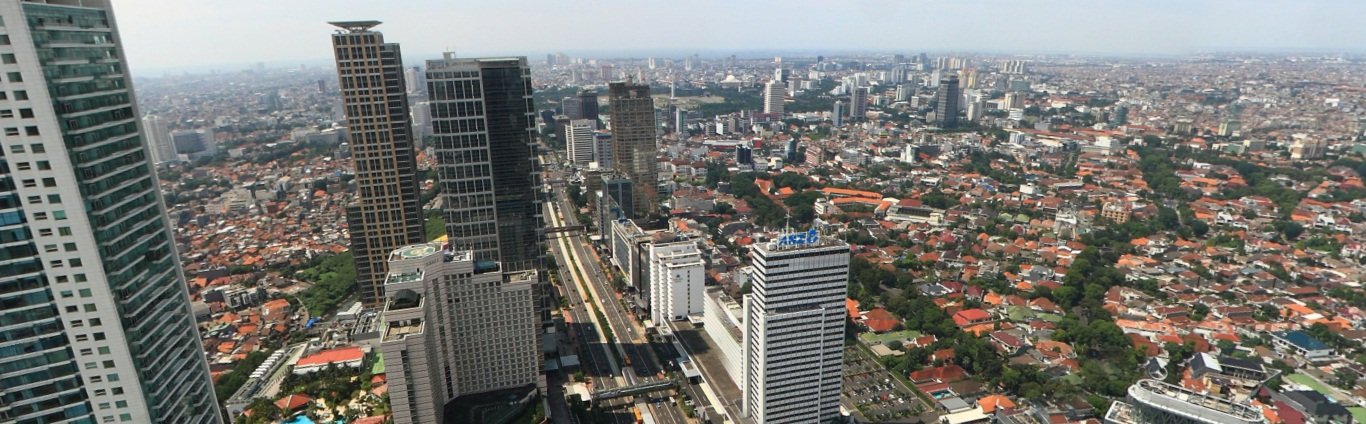
Photo: Vian Kadal, via Wikimedia Commons (CC BY-SA 3.0)
Sources
- https://www.niemanlab.org/2026/11/indonesias-new-copyright-bill-would-force-google-and-meta-to-pay-to-aggregate-news/
- https://www.techtimes.com/articles/330541/20261112/indonesia-copyright-bill-could-revoke-platform-business-permits-google-meta-tiktok-push-back.htm
- https://mlq.ai/news/meta-and-tiktok-join-google-in-opposing-indonesias-planned-ai-copyright-rules/
- https://webpublisherpro.com/blog/indonesia-copyright-bill-news-payments/
Leave a comment
Comment as a guest and verify your email, or sign in or create a reader account. Guest comments reach our review queue after email verification; account holders can submit directly for review.