Listen to this article
Take the story with you. Choose a voice and a pace that suits you.
Or listen in another language / choose a voice
Getting your device voices ready…
The voice follows the displayed language and your browser’s regional preference when available. You can choose another narration voice.
One consortium will get the lot. The EU AI media platform Horizon Europe call, briefed to the industry at the European Commission’s Apply AI Summit in Brussels on 16–17 November 2026, offers €10 million to build an interoperable, modular and multilingual AI media platform for European news and audiovisual organisations. Not ten grants. Not a procurement contract. A single Horizon Europe Innovation Action, catalogued as topic HORIZON-BRIDGING-2027-01-09 under call HORIZON-BRIDGING-2027-01. Information verified through 17 November 2026.
The Commission’s own funding page describes the same call in plainer terms: a Horizon Europe call to develop a trustworthy, interoperable, AI-powered multilingual media infrastructure that improves access to reliable European news, with €10 million of EU funding and a deadline of 16 February 2027. Lexica underlines the structural point — this is a grant call rather than a procurement tender, so the money funds a research consortium instead of a supplier winning a contract.
The EU AI media platform 10 million funding deadline February 2027, in detail
The clock is already running. The call opened on 20 October 2026 and closes on 16 February 2027 at 17:00 Brussels time, with grant negotiations expected in summer 2027 and deployment from autumn 2027. Two caveats ride along: the responsible Director-General may delay the deadline by up to two months, and the budget depends on the Union’s 2026 and 2027 appropriations.
Money rules follow the Horizon pattern. Non-profit partners are funded at 100%, for-profit partners at 70%, with a 25% flat rate for indirect costs. A consortium needs three independent legal entities from three different countries, at least one in an EU Member State, and the project is expected to start at technology readiness level 6 and reach level 8 by the end of the grant. The Commission ran an online information session on the call on 16 November 2026, the same day the summit briefing took place.
Who is expected at the table? The named participant list runs to media organisations, broadcasters, publishers, AI and language-technology providers, platform developers, content creators, fact-checking and integrity actors, and rights-management organisations. Slator’s trade coverage frames the pitch the same way: a call for multilingual AI media infrastructure incorporating translation and multilingual content distribution, with applications due in February 2027.
Multilingual AI infrastructure European news media has to build under the EU AI media platform Horizon Europe call
The shopping list is specific. The platform must integrate into newsroom workflows with automated speech-to-text, neural machine translation across official and low-resource European languages, semantic indexing and automated categorisation. Lexica adds the wider workflow demand: proposals must translate, process and distribute content through classification, recognition, linguistic analysis and multimodal workflows, including audiovisual processing and adaptation, and show a credible path to broad language coverage that includes low-resource languages.
Trust machinery is not decoration here. The platform must carry content provenance and verification mechanisms aligned with C2PA standards, to detect synthetic alterations and disinformation, and Lexica notes proposals are expected to embed transparency, explainability, logging and evaluation so the platform can be audited, plus open APIs, SDKs and onboarding pathways for smaller players.
Why build it publicly at all? CASRAI’s summit report gives the Commission’s diagnosis: Europe’s news organisations work across 24 official languages, and distribution barriers have left newsrooms reliant on commercial non-European platforms and proprietary model APIs for translation, transcription and distribution. The call sits inside the Apply AI Strategy, introduced in October 2025 to speed AI adoption across strategic sectors, and inside the Bridging Actions 2027 linking Horizon Europe to the next framework programme. Summit reaction, per the same report, split predictably: broadcasters welcomed shared open infrastructure, linguists praised the low-resource language focus — Maltese, Basque and Estonian were named — and publishers warned that one codebase serving both archive-rich national broadcasters and small investigative outlets is a hard build to maintain past the grant.
The Apply AI Summit Brussels media platform moment
The summit itself marked the one-year milestone of the Apply AI Strategy and closed the inaugural European AI Innovation Month, drawing roughly 900 people in person at The EGG conference centre, with Executive Vice-President Henna Virkkunen framing the event as Europe’s pivot from regulating AI to deploying it sector by sector.
Analysis: €10 million is small money against the platforms Europe’s newsrooms rent today, and everyone in Brussels knows it. The bet is not scale — it is shared plumbing. If one consortium ships translation, transcription and provenance tools that a small publisher in Tallinn or Valletta can plug in without a licensing bill, the call will have done something no national subsidy managed. If it ships a demonstrator that dies with the grant, it becomes one more portal in the Commission’s own list of closed pilots. The February deadline will tell us which newsrooms believe the first version.
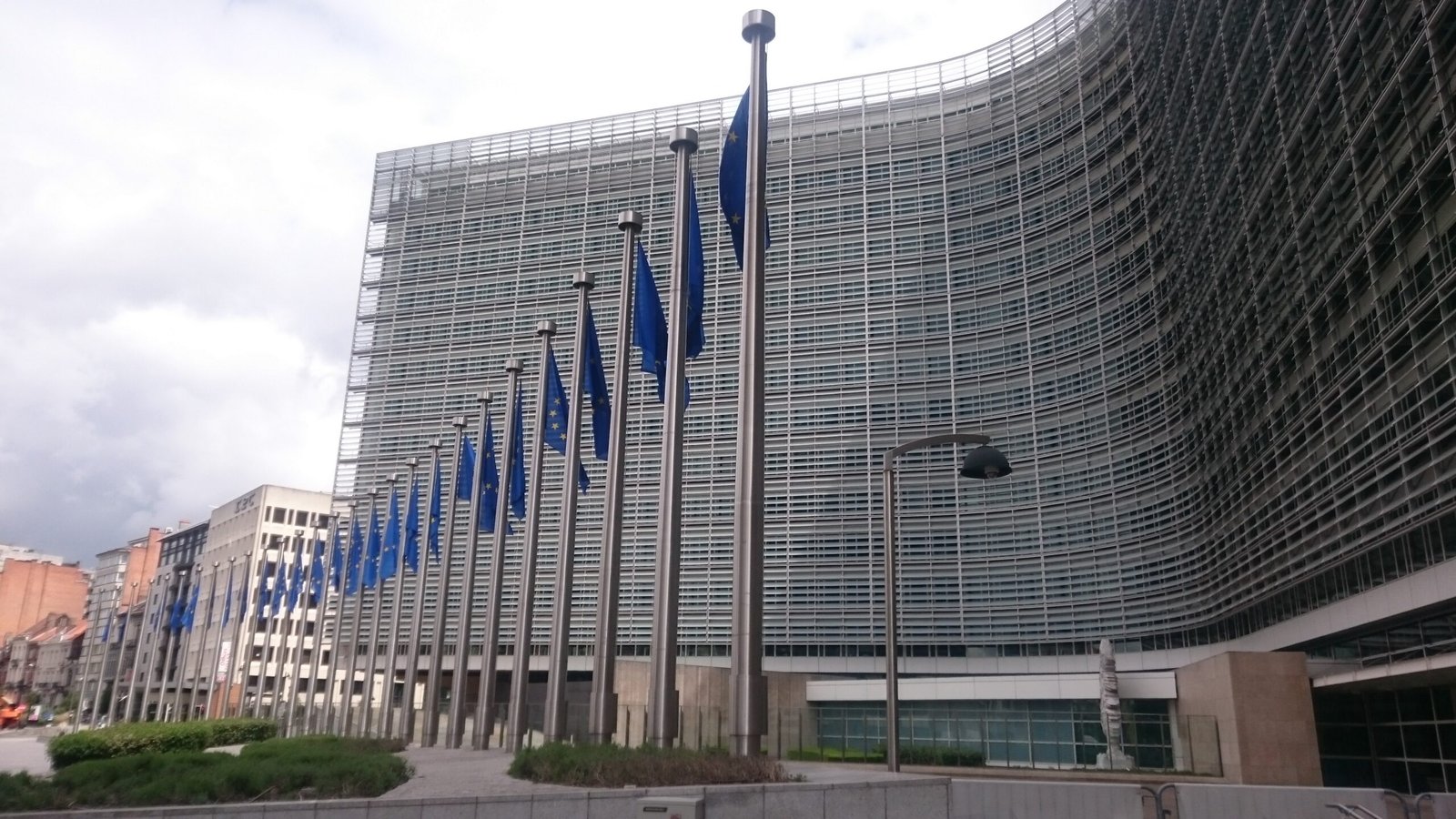
Photo: KenSwe72, via Wikimedia Commons (CC BY 4.0)
Sources
- https://casrai.org/news/eu-apply-ai-summit-horizon-europe-media-platform-call-2026
- https://lexica.net/eu-opens-eur-10m-ai-media-platform-funding-call-for-news-publishers/
- https://digital-strategy.ec.europa.eu/en/policies/funding-news-media-sector
- https://slator.com/eu-multilingual-ai-media-platform-funding/
Leave a comment
Comment as a guest and verify your email, or sign in or create a reader account. Guest comments reach our review queue after email verification; account holders can submit directly for review.