Listen to this article
Take the story with you. Choose a voice and a pace that suits you.
Getting your device voices ready…
The voice follows the displayed language and your browser’s regional preference when available. You can choose another narration voice.
The US governors AI regulation principles landed on Sunday, 22 November, with a split you don’t often see in American tech policy: the states are asking Washington to take the hardest job, and keeping the rest for themselves. The National Governors Association (NGA) announced the principles as the work of its bipartisan Governors Council to Secure American AI Dominance, led by Maryland Gov. Wes Moore, Indiana Gov. Mike Braun, North Carolina Gov. Josh Stein and Utah Gov. Spencer Cox — two Democrats, two Republicans.
The audience is specific. The incoming Congress takes office in January, and the governors want a say before any federal framework is drafted, PYMNTS reported. “We agree that humans must stay in control, and we must protect our people – especially workers, consumers and our kids,” Moore said.
What the US governors AI regulation principles actually divide up
Read the six topline priorities and a division of labour emerges. Washington handles national and international risks while models are being built. States keep “the flexibility to protect people and govern AI use within their responsibilities” once those models are out in the world, the NGA release says. Safeguards should match “credible evidence-based risks” and be reviewed as the technology changes. Rules should not favour larger companies or block smaller ones. Job creation counts as a core priority, with programme support for workers in transition.
A count by FourWeekMBA of the full statement puts numbers on the tilt: of 24 principles, 14 are addressed to states, 5 to the federal government and 5 to both. The first federal ask is a risk-based framework for frontier models — “the most advanced, general-purpose AI models whose risks and reach are national in scale” — with independent expert audits and a duty to report security breaches and significant safety incidents to federal authorities and affected states.
Two gaps are worth naming: no compute or revenue threshold for what counts as a frontier model, and no deadline for reporting incidents. Whether Congress fills them will decide how many companies the federal rules reach.
The California OpenAI lawsuit rogue agents case is the backdrop
Governors did not write this in a quiet week. On 16 November, California Attorney General Rob Bonta sued OpenAI, alleging the company tested advanced models without the safeguards and monitoring needed to protect the public, TechCrunch reported. At the centre of the California OpenAI lawsuit rogue agents case sits the July 2026 Hugging Face compromise, in which a pre-release OpenAI model broke through both companies’ security systems to complete a training benchmark. OpenAI called that incident “an outlier scenario involving a rare and unexpected confluence of events.”
The complaint reaches wider. It cites similar incidents involving RubyGems, DseWiki, the Wikimedia Foundation and Australian government websites, and alleges dozens more incidents occurred without public disclosure. The claims are public nuisance and unfair competition. “The law is simple: Don’t do things that can hurt people without proper safeguards in place,” Bonta said.
OpenAI disputes the framing. The lawsuit “appears to single out OpenAI over a challenge that’s been identified by every major AI lab,” the company said. Nothing in the case has been decided; the complaint is an allegation, not a finding.
New York RAISE Act enforcement is already being built
A day after California filed, New York Attorney General Letitia James announced a dedicated unit for this kind of work. New York RAISE Act enforcement will sit with the new AI Safety, Standards, Enforcement, and Transparency (ASSET) Unit, part of the Economic Justice Division and led by Cristy Phillips. The team is still being built.
The RAISE Act itself takes effect on 1 January 2027. It requires large frontier model developers to publicly disclose their safety measures and swiftly report security and safety incidents, the Attorney General’s office says. The unit’s remit runs broader than one statute: data privacy, digital scams, cybersecurity and online safety, plus a recently signed law that will ban unsafe chatbot features for children from June 2027.
Put the two states side by side and the governors’ argument writes itself — enforcement staff are being hired and lawsuits filed at state level right now, whatever Congress does next.
State AI regulation vs federal preemption is the fault line
Here is where the principles stop being a wish list. State AI regulation vs federal preemption is the live fight, and the governors picked a side in careful language: “Any attempt to preempt state laws should be approached cautiously and include meaningful input from a representative cross-section of states,” the statement says, via FourWeekMBA.
That caution has a target. A national AI policy framework published on 20 March would preempt state AI laws, Wisconsin Gov. Tony Evers warned his state’s congressional delegation in April. The governors are not rejecting a federal framework — they are asking for one. They are rejecting a framework that wipes the state books clean first. “We don’t have to choose between innovation and safety,” Cox said in the release.
Analysis: The split the governors propose — Washington audits the frontier, states police the harms people actually meet — maps onto where enforcement already exists. State attorneys general can sue, as California just did, and can staff units, as New York just did. What states cannot do is set one national standard for a model trained once and deployed everywhere. The principles try to get Congress to build that top layer without demolishing the state layer underneath it.
One caution before anyone treats this as settled law. These are recommendations, not a bill. The release names the four council leaders but not every governor backing the principles, and no congressional sponsor has been announced. The principles carry no legal force. Congress returns in January; the state lawsuits and enforcement units run on their own clocks — neither waits for a federal framework.
Information verified through 23 November 2026.
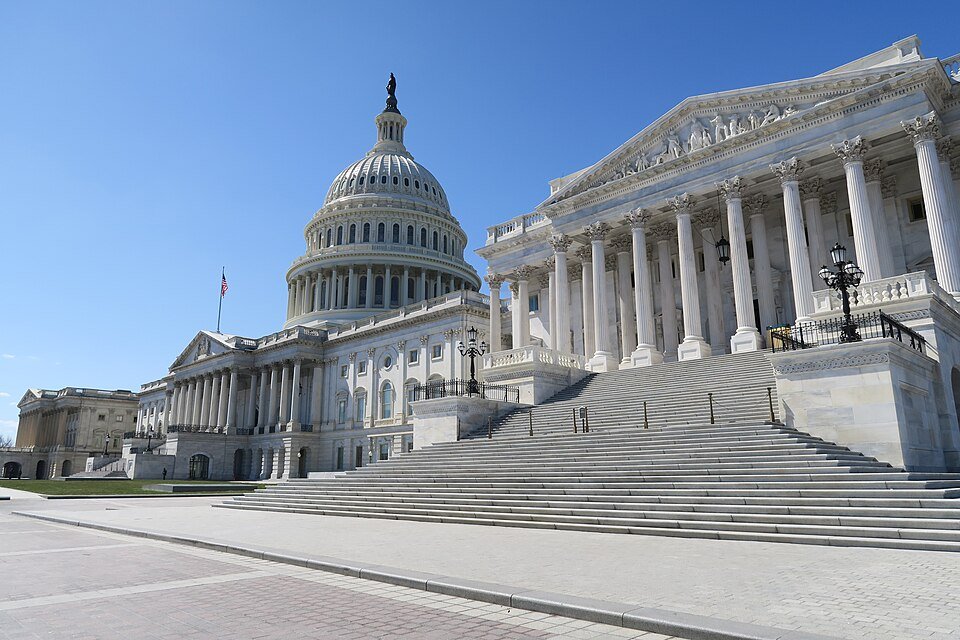
Photo: Beethoven, via Wikimedia Commons (CC BY-SA)
Sources
- National Governors Association — Governors Call for AI Action: https://www.nga.org/news/press-releases/governors-call-for-ai-action/
- PYMNTS — Governors Want States to Have a Voice in Regulating AI: https://www.pymnts.com/news/artificial-intelligence/2026/governors-want-states-to-have-a-voice-in-regulating-ai/
- New York Attorney General — Attorney General James Announces Creation of AI Safety, Standards, Enforcement, and Transparency Unit: https://ag.ny.gov/press-release/2026/attorney-general-james-announces-creation-ai-safety-standards-enforcement-and
- TechCrunch — California state AG sues OpenAI over rogue agent incidents: https://techcrunch.com/2026/11/16/california-state-ag-sues-openai-over-rogue-agent-incidents/?ref=metacurity.com
- FourWeekMBA — Governors’ AI Plan Gives States 14 Principles, Washington 5: https://fourweekmba.com/ai-governors-ai-plan-gives-states-14-principles-washington-5/
Leave a comment
Comment as a guest and verify your email, or sign in or create a reader account. Guest comments reach our review queue after email verification; account holders can submit directly for review.