Listen to this article
Take the story with you. Choose a voice and a pace that suits you.
Or listen in another language / choose a voice
Getting your device voices ready…
The voice follows the displayed language and your browser’s regional preference when available. You can choose another narration voice.
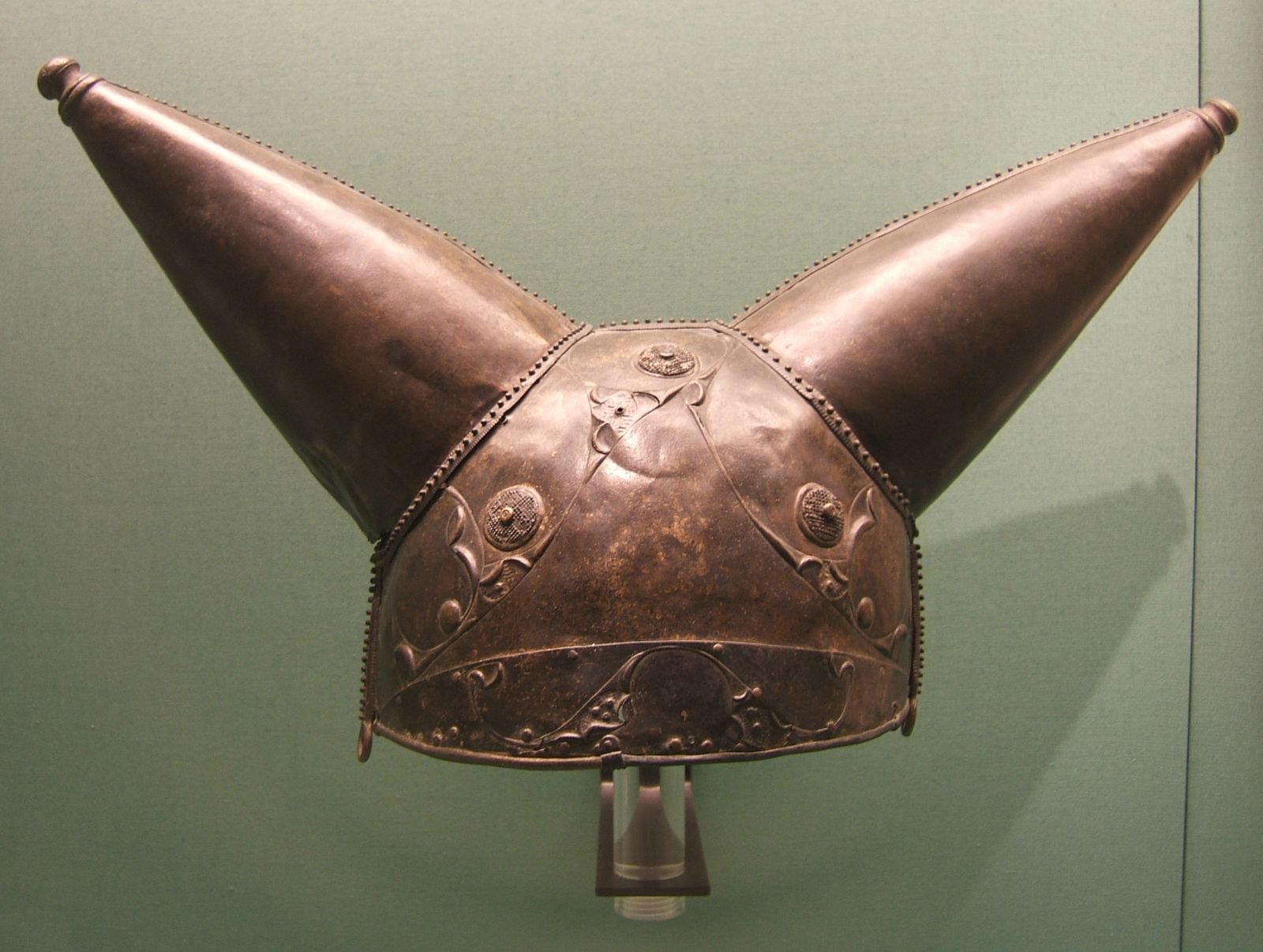
A Celtic helmet found in Poland should not, by the old map, be there at all. The crushed bronze helmet from Łysa Góra in the country’s northeast is a Berru-type piece from the fourth century BC, and a study published in Antiquity on 14 October 2026 calls it the only known helmet of its kind found outside its Celtic homeland in that period (Phys.org). It was not lost in battle. Someone crushed it, broke it apart and buried it in a pit with tools. Information verified through 9 November 2026.
A Celtic helmet found in Poland, crushed on purpose
The pit sat inside the settlement’s fortifications, filled with charred remains. Beside the helmet lay four iron adzes and a scythe (Earth.com). The excavators nearly missed what they had: “During the excavation, we uncovered an object made of bronze sheet metal, which we initially thought was a vessel,” said Bartłomiej Kaczyński of the State Archaeological Museum in Warsaw. “It was only when we exposed the tip that we realized we had found a helmet of a very rare type” (Phys.org).
Helmets like it turn up in the lavish graves of Celtic warrior elites, from Champagne in France to Dürrnberg in Austria (Phys.org). The deliberate damage matters. A valuable object rendered unusable before burial reads, to the researchers, as ritual behaviour rather than rubbish disposal — though the evidence does not establish who crushed it, or what ceremony, if any, surrounded the act (Open Chronicle).
The Łysa Góra amber route settlement was busier than anyone thought
Łysa Góra — the name means Bald Hill — was a fortified settlement on a glacial sand dune between the Orzyc River and one of its oxbow lakes, near the village of Bagienice in northern Mazovia (Earth.com). It was inhabited between the sixth and fourth centuries BC, possibly by people of the West Baltic Barrow Culture (Phys.org). Archaeologists identified the site in 1957 and dug it in bursts between 1971 and 1992, but few of those finds were ever published, and the site had a reputation for being severely disturbed (Phys.org; Open Chronicle). Work resumed in 2024 under the Warsaw museum and the University of Warsaw.
The resumed dig changed the scale of the place. Nearly 350 metal objects have come out of the ground — ornaments, weapons, evidence of bronze working — along with amber beads and an amber ring that was never finished (Phys.org). An unfinished ring is a small thing that says a lot: amber was likely being worked here, not just passing through in finished form (Open Chronicle).
A Berru-type helmet La Tène link, not just a traded trinket
The helmet does not stand alone, and that is the argument. The site has produced around 31 mostly fragmented Early La Tène brooches and ring ornaments dated to about the middle of the fourth century BC, and nearly 80 La Tène artefacts in total (Earth.com; Phys.org). In the Early La Tène world, the study notes, such helmets symbolised “high social status and affiliation with the warrior elite” — a social concept the authors consider likely alien to the local population (Earth.com).
Hand-to-hand trade is the cautious explanation, and smaller La Tène ornaments did travel widely. The authors find it less convincing here: a prestige helmet is not a trinket, and no comparable helmets are known outside the La Tène zone in the fourth century BC (Earth.com). Kaczyński goes further — “Their diversity suggests that a group of Celts lived at the site for approximately two generations” (Phys.org). The team even recovered a trepanation tool in 2025, an instrument for drilling into skulls, which Kaczyński suggests points to someone at the settlement — “possibly a druid” — with medical knowledge (Phys.org).
Iron Age amber trade Baltic coast routes explain the address
Why would southern elites spend two generations on a Polish sand dune? Amber. The settlement sits close to the amber-rich Kurpie region and to routes running north toward the Sambian Peninsula on the Baltic coast, giving whoever held it a hand on the movement of amber and other goods toward central Europe (Phys.org). The “Amber Route” was never one road — it was a network of exchanges, and a fortified, metalworking settlement at a chokepoint of that network had something worth defending and something worth visiting (Open Chronicle). The finds include a bronze coin possibly of Seuthes III, a Thracian king — another long-distance fingerprint (Phys.org).
Analysis: handle the boldest claim with care. The authors themselves say the Celtic-presence hypothesis “will require verification through further research,” the helmet’s metal has not yet been sourced, and lead isotope analysis — comparing its ore signature with Bohemian material — is still planned (Earth.com). An object can travel farther than its owner. But objects do not usually travel in packs of 80, with their own craftsmen, surgeons and unfinished jewellery. Whatever the isotopes eventually say, Łysa Góra has already stopped being a dot at the edge of the Celtic world. It looks like one of its addresses.
Photo: WordRidden, via Wikimedia Commons (CC BY 2.0)
Leave a comment
Comment as a guest and verify your email, or sign in or create a reader account. Guest comments reach our review queue after email verification; account holders can submit directly for review.