Listen to this article
Take the story with you. Choose a voice and a pace that suits you.
Or listen in another language / choose a voice
Getting your device voices ready…
The voice follows the displayed language and your browser’s regional preference when available. You can choose another narration voice.
The Ancient Armenia exhibition at the Acropolis Museum opens in Athens in mid-November 2026, and it starts from an admission: most visitors know Armenia backwards. They know the Christian centuries. They know far less about the millennia before them. The show, the first in a new Acropolis Museum series on the great cultures of antiquity, sets out to correct that imbalance with around 200 antiquities in the Temporary Exhibition Gallery, running through spring 2027. A more precise opening date of 19 November has been reported for the loan show from Yerevan.
Information verified through 2 November 2026.
Pre-Christian Armenia history, told in objects
The chronology is deliberately long. Displays run from the Palaeolithic and Bronze Age through the Early Iron Age, then the Archaic, Classical, Hellenistic and Roman periods, ending at the dawn of Christianity in the 4th century AD, according to the Acropolis Museum’s exhibition outline. That sweep is the argument. Armenia did not begin with its famous churches, and its earlier cultures were not a waiting room.
Individual pieces carry the point across thousands of years. The museum’s preview highlights a bronze deer figurine from Tolors dated to the 12th–11th century BC, an engraved bronze belt from Lchashen of the same era, a gold spoon from Artashat from the 1st century BC, and gold sceptre finials from Sisian, also 1st century BC. Small objects, long memory.
Kingdom of Urartu artefacts and the roads they travelled
The curators give the Kingdom of Urartu artefacts the starring role. Urartu flourished in the Early Iron Age around Lake Van and the Armenian highlands, and its material culture opens, in the museum’s words, a window onto connections with the Near East, the eastern Mediterranean, Cyprus, Crete and the Aegean. This was no mountain backwater. It was a kingdom plugged into the trade and craft networks of its world.
One Greek loan makes that web visible. A 7th-century BC bronze votive shield known as “The Hunter,” found in the Idaean Cave on Crete and held by the Heraklion Archaeological Museum, will hang in an Athens gallery devoted to Armenia’s highland kingdom, as the exhibition preview details. East met Aegean long before anyone drew the modern map.
Ancient Armenia exhibition at the Acropolis Museum: the loans Athens will remember
The exhibition rests on a formal partnership. The History Museum of Armenia loans Athens the core of the show under a memorandum of cooperation signed at the Acropolis Museum on 19 February 2026 by its director and Nikolaos Stampolidis, the Acropolis Museum’s director general, during a state visit to Greece, as The California Courier reported. The Armenian side described the agreement as a milestone, building on earlier talks in Yerevan.
The venue guarantees an audience. The Acropolis Museum draws well over a million visitors a year, and the Armenian museum has said the show will introduce its pre-Christian treasures to that global footfall. For Athens, the gain runs the other way: a flagship museum best known for one hill widens its lens to the whole ancient world, one civilisation at a time.
Analysis: Exhibition series live or die on their first choice. Opening with Armenia — familiar name, unfamiliar past — is a shrewd bet. It gives visitors the pleasure of being surprised by somewhere they thought they knew, and it gives the Acropolis Museum a template: pair a celebrated host collection with a partner museum holding a story the crowds have not heard yet. If the Urartu galleries land, expect the series to become a fixture of the Athens calendar.
Why does the pre-Christian framing matter so much to both museums? Because the familiar story is genuinely lopsided. Armenia adopted Christianity in the early 4th century and built a celebrated Christian culture on that foundation, which is why international exhibitions have so often started there. Starting earlier changes the cast of neighbours. Bronze Age metalworkers at Lchashen and Tolors, Urartian craftsmen, Hellenistic Artashat and Roman-era Sisian all enter the record as Armenian places in conversation with the wider world, not as a prelude waiting for its real beginning. The Acropolis Museum gains something too: proof that its new ancient-cultures series can range far beyond the Greek world while still finding Greek threads — a Cretan shield, Aegean trade routes — woven through a partner’s story.
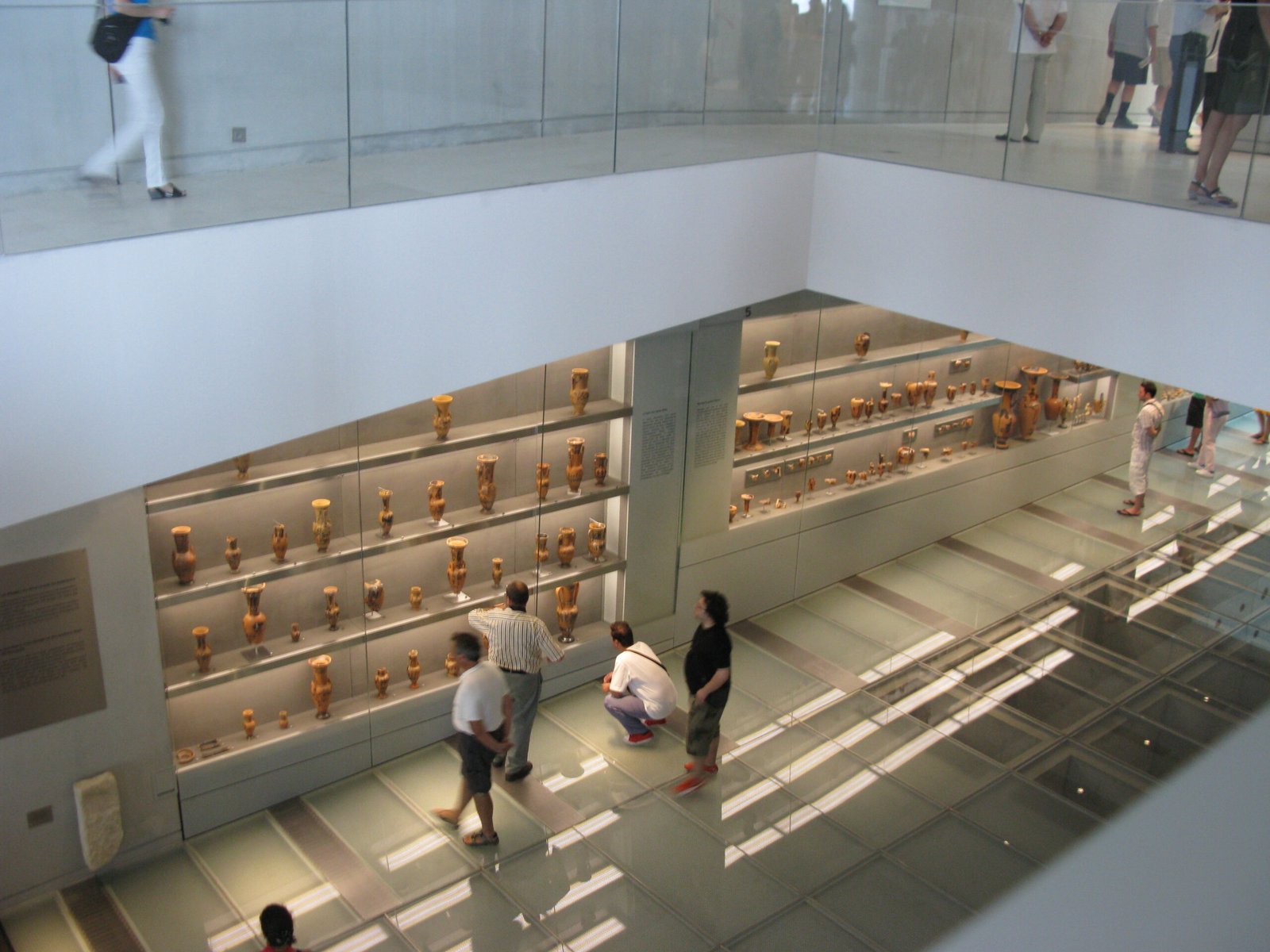
Photo: Tilemahos Efthimiadis, via Wikimedia Commons (CC BY-SA 2.0)
Sources
- Athens Riviera Journal — The Lesser-Known Ancient History of Armenia Comes to Athens — https://athensrivierajournal.gr/the-lesser-known-ancient-history-of-armenia-comes-to-athens/
- elculture — Ancient Armenia: A Major New Exhibition at the Acropolis Museum — https://elculture.com/exhibition/ancient-armenia-a-major-new-exhibition-at-the-acropolis-museum/
- The California Courier — Acropolis Museum to Host Major Pre-Christian Armenian Exhibition — https://www.thecaliforniacourier.com/acropolis-museum-to-host-major-pre-christian-armenian-exhibition/
Leave a comment
Comment as a guest and verify your email, or sign in or create a reader account. Guest comments reach our review queue after email verification; account holders can submit directly for review.