Listen to this article
Take the story with you. Choose a voice and a pace that suits you.
Or listen in another language / choose a voice
Getting your device voices ready…
The voice follows the displayed language and your browser’s regional preference when available. You can choose another narration voice.
Ninety-nine years is a long wait for an encore. At Breitenbach-Schneidemühle in Saxony-Anhalt, eastern Germany, archaeologists excavating between July and October 2026 found dense piles of mammoth bone for the first time since 1927, lying alongside flint tools, tusk fragments and worked ivory. The new Breitenbach mammoth hunting evidence — above all, cut marks on the bones — has reopened a question researchers thought they had settled: did the people of this Ice Age camp kill mammoths, or did they simply gather ivory from animals long dead?
The finds were announced in a press release from Saxony-Anhalt’s State Office for Heritage Management and Archaeology issued on 20 October 2026. Information verified through 30 October 2026.
Breitenbach mammoth hunting evidence and the Aurignacian open-air site Germany can measure in hectares
Breitenbach covers about 10,000 square metres and ranks as the largest open-air Aurignacian site in western Eurasia. The Aurignacian, dated broadly from 42,000 to 32,000 years ago, marks an early phase of modern human settlement in Europe, and most of its sites sit inside caves. A camp this size, out in the open and well preserved, is rare — which is why the state office’s Marcel Weiß calls it something very special.
The site’s history has a pleasing shape. A schoolboy found a mammoth tooth during sawmill construction work in 1924; three years later the Swedish archaeologist Nils Niklasson opened nearly 400 square metres. Modern excavation resumed in 2009 as a joint project of MONREPOS, part of the Leibniz Centre for Archaeology, and the state heritage office, and has added more than 150 square metres since.
This season alone produced more than 2,000 finds, with around 40 students from Germany and abroad taking part, according to Archaeology Magazine’s report.
The mammoth ivory workshop Breitenbach was already famous for
Breitenbach was never an obscure site waiting for a headline. Earlier seasons identified a specialised ivory workshop, where archaeologists recovered perforated beads, projectile points and fragments of carved figurines alongside heaps of manufacturing waste. Ivory here was not just a practical material; it became weapons, jewellery and art. A selection of finds is on display at the State Museum of Prehistory in Halle.
Separate zones for processing Arctic fox and mountain hare pelts give the camp an almost floor-plan quality, letting researchers see how hunter-gatherers organised their living and working spaces more than 30,000 years ago.
But the ivory carried an awkward fact. Previous research suggested it was considerably older than the human occupation of the site, dated to roughly 32,000 to 34,000 years ago. The tidy conclusion followed: Breitenbach’s people collected fossil ivory from the landscape. They were gatherers of tusks, not killers of giants. Their actual hunting, on the animal-bone evidence, ran to reindeer mostly, horses less often, red deer occasionally, and foxes and hares probably for fur.
Cut marks mammoth bones butchery — and what cut marks cannot prove
The 2026 bones disturb that tidiness. Project leader Olaf Jöris of MONREPOS now says the hunters likely killed mammoths on site as well, and the cut marks suggest the meat was eaten, with hides and ivory taken as raw material.
Here the reporting itself urges care, and so should we. As one detailed account of the announcement puts it, cut marks show that people took meat from a carcass, but on their own they do not show how the animal died. A scavenged mammoth, found fresh, would be butchered exactly the same way. Jöris’s own wording in the German release includes “vielleicht” — perhaps. HeritageDaily likewise notes that further analysis will be needed to establish exactly how the animals died.
Even the camp’s age is contested. A June 2026 paper in the journal Boreas concluded that the published dates for Breitenbach do not agree with the general archaeological evidence, and that the camp may be 1,000 to 6,000 years older than its radiocarbon results suggest — a shift that would narrow the gap between the ivory and the settlement, and make freshly hunted tusks easier to imagine.
For comparison, the firmest proof of mammoth hunting in central Europe comes later and from elsewhere: at Kraków Spadzista in Poland, a flint point fragment was found embedded in a mammoth rib, direct evidence from a Gravettian site thousands of years younger than Breitenbach. Breitenbach has produced nothing that blunt. Yet.
Analysis: What has actually changed is the default. For decades the burden of proof sat on anyone claiming an Aurignacian mammoth hunt; the fossil-ivory reading explained the workshop without requiring people armed with stone-tipped spears to bring down an animal the size of a truck. Fresh bone concentrations with butchery marks do not carry that burden away, but they move it. The honest headline is not that Ice Age hunters at Breitenbach killed mammoths. It is that the scavenging-only story no longer fits all the bones on the table, and the next seasons of dating and analysis will decide which story the site finally tells.
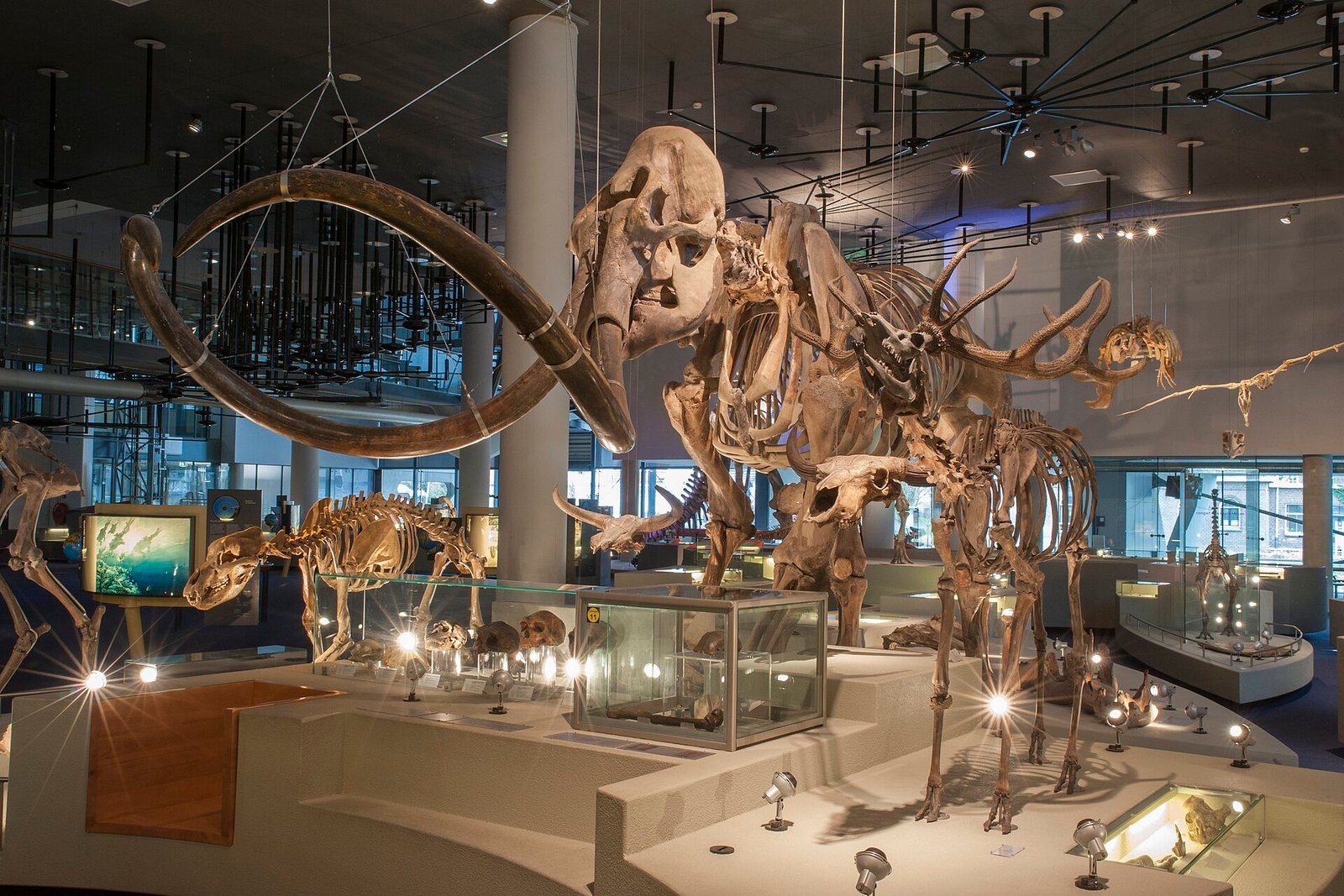
Photo: Henk Caspers / Naturalis Biodiversity Center, via Wikimedia Commons (CC BY-SA 3.0)
Sources
- https://archaeologymag.com/2026/10/mammoth-bones-at-32000-year-old-camp-in-germany/
- https://www.heritagedaily.com/2026/10/30000-year-old-site-reveals-new-evidence-of-mammoth-hunting-in-ice-age-europe/159716
- https://www.ancient-origins.net/news-history-archaeology/breitenbach-mammoth-bones-ice-age-hunting-question-00103301
Leave a comment
Comment as a guest and verify your email, or sign in or create a reader account. Guest comments reach our review queue after email verification; account holders can submit directly for review.