Listen to this article
Take the story with you. Choose a voice and a pace that suits you.
Or listen in another language / choose a voice
Getting your device voices ready…
The voice follows the displayed language and your browser’s regional preference when available. You can choose another narration voice.
A banned religion does not always end on the date written in the law. At Balak Dere, beside the Arda River in south-eastern Bulgaria, the 2026 excavation season has documented a Cybele temple in Bulgaria whose team believes worship continued into the middle of the fifth century — decades after the emperor Theodosius I outlawed pagan rites in 392 (Archaeology Magazine). Bulgaria’s National Museum of History published its press release on the results on 19 October 2026, describing them as more than impressive (La Brújula Verde).
The season was led by Ivaylo Kanev, chief curator at the National Historical Museum, funded in full by the Ministry of Culture with support from the Ivaylovgrad municipality, and it ended in October 2026 (Archaeology News). Archaeology magazine reported the find on 26 October 2026 (Archaeology Magazine).
Information verified through 28 October 2026.
The Balak Dere pagan temple discovery: inside the Cybele temple in Bulgaria
The building is modest in size and unusual in its completeness. It measures about 15 metres, or 49 feet, in length, follows a trapezoidal plan running from south-east to north-west, and contains three rooms linked by doorways (Archaeology Magazine). The largest room held an altar. The middle room is thought to have served for sacrifices — HeritageDaily reports a second altar there — and the third stored offerings brought by worshippers (HeritageDaily).
What gives the plan its weight, in the team’s account, is the arrangement itself. No earlier dig has recorded all the main parts of a pagan temple set out together in a city setting from the Roman period up to the fifth century, the excavators say (Archaeology News). The temple likely began operating in the third century, and the 2026 season supported the view that daily life in the surrounding settlement was organised around the whole complex (Archaeology News). La Brújula Verde adds context the press release leaves thin: digs at the fortress began in 2004, the walled area covers roughly one hectare, and about four kilometres away stands Villa Armira, a Roman mansion of a Thracian aristocrat, burned and looted in the second half of the fourth century (La Brújula Verde).
Stones, rooms, doorways. Then one carved clue to who was honoured here.
The three nymphs and Cybele relief: a pairing not seen before
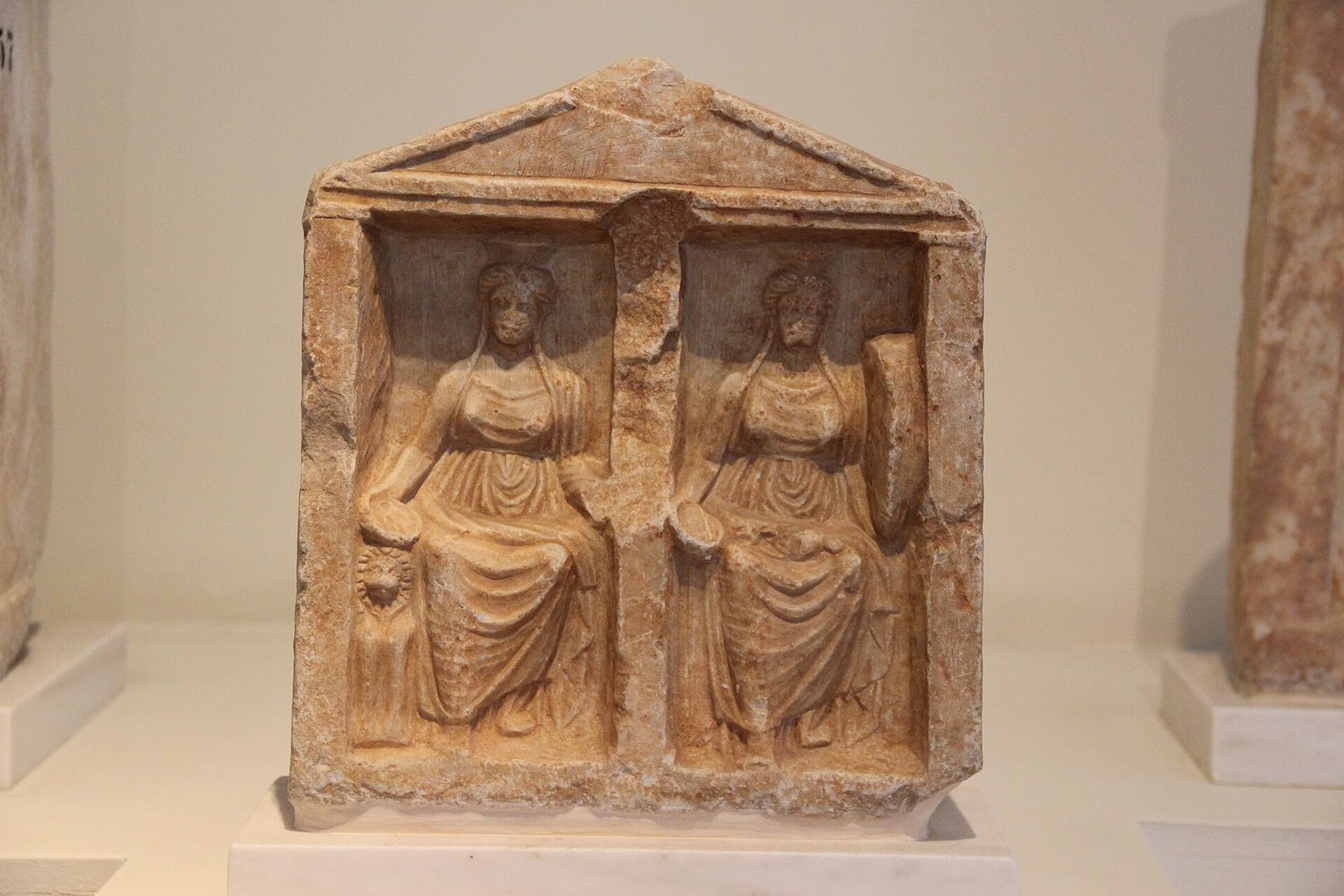
A marble relief — described in several reports as a stele — shows three nymphs together with Cybele, the mother goddess linked to fertility, nature and the protection of communities (HeritageDaily). Researchers say they know of no other scene placing the nymphs and Cybele in a single composition (Archaeology News). Cybele came from Phrygia in Anatolia, and La Brújula Verde notes her worship in Thrace had deep roots, with a Trakya University study gathering 72 published finds of the mother goddess in the region, the earliest dated to the sixth century BC (La Brújula Verde).
Water completes the team’s reading. A channel runs around the entire building, and the Arda flows close by, which led Kanev to suggest the building served as a nymphaeum, a shrine to the nymphs (Archaeology Magazine). HeritageDaily stresses the status of that idea: the nymphaeum identification remains a working hypothesis built on the available evidence (HeritageDaily). No inscription naming the deities has been reported, and one relief cannot settle a whole building’s dedication.
Was this the last pagan temple in Thrace?
The chronology is the headline claim, and it needs careful handling. The legal backdrop is documented: the Edict of Thessalonica in 380 declared orthodox Christianity the religion of the empire, a law of February 391 forbade entering pagan temples, and on 8 November 392 a further law banned any pagan rite at all, even in private (La Brújula Verde). Against those dates, the excavators propose that rites at Balak Dere continued regardless, and that discovery brought punishment: a burned layer shows the temple eventually succumbed to fire, which the team reads as a mid-fifth-century attempt to erase the memory of the Thracian gods (Archaeology News). On that basis, the researchers suggest Balak Dere could hold one of the last pagan temples of the Thracians in Western Thrace (HeritageDaily).
Separate the layers, as La Brújula Verde does in its own reporting, and the picture sharpens. Observed: a three-room building, a water channel, a relief with four figures, and a layer of fire. Interpreted: a nymphaeum, forbidden worship surviving in defiance, and a punitive burning (La Brújula Verde). That same report notes the press release does not say what the dating rests on — coins, pottery or scientific methods — does not weigh other causes for the blaze, and does not say whether the results have been peer reviewed (La Brújula Verde). Fires also start by accident, in kitchens and in wars, in temples nobody was trying to suppress.
Analysis: none of that caution empties the find. A complete, legible temple plan from this late date is rare on its own terms, and a region’s religious change was never going to move at the speed of an edict carried from Constantinople. Laws travel fast on paper. Practice moves at walking pace, through households and hillside shrines, and Balak Dere — banned, tolerated, ignored or simply remote — now gives that slow pace an address, a floor plan and a date range the next seasons will have to test.
Photo: Gary Todd, via Wikimedia Commons (CC0)
Sources
- https://archaeology.org/news/2026/10/26/did-banned-pagan-worship-continue-in-thrace/
- https://www.heritagedaily.com/2026/10/cybele-marble-relief-discovered-in-pagan-religious-centre/159770
- https://www.labrujulaverde.com/en/2026/10/rome-banned-pagan-worship-in-392-but-a-thracian-temple-may-have-kept-it-going-for-decades/
- https://archaeologymag.com/2026/10/marble-relief-of-cybele-pagan-shrine-in-bulgaria/
Leave a comment
Comment as a guest and verify your email, or sign in or create a reader account. Guest comments reach our review queue after email verification; account holders can submit directly for review.