Listen to this article
Take the story with you. Choose a voice and a pace that suits you.
Or listen in another language / choose a voice
Getting your device voices ready…
The voice follows the displayed language and your browser’s regional preference when available. You can choose another narration voice.
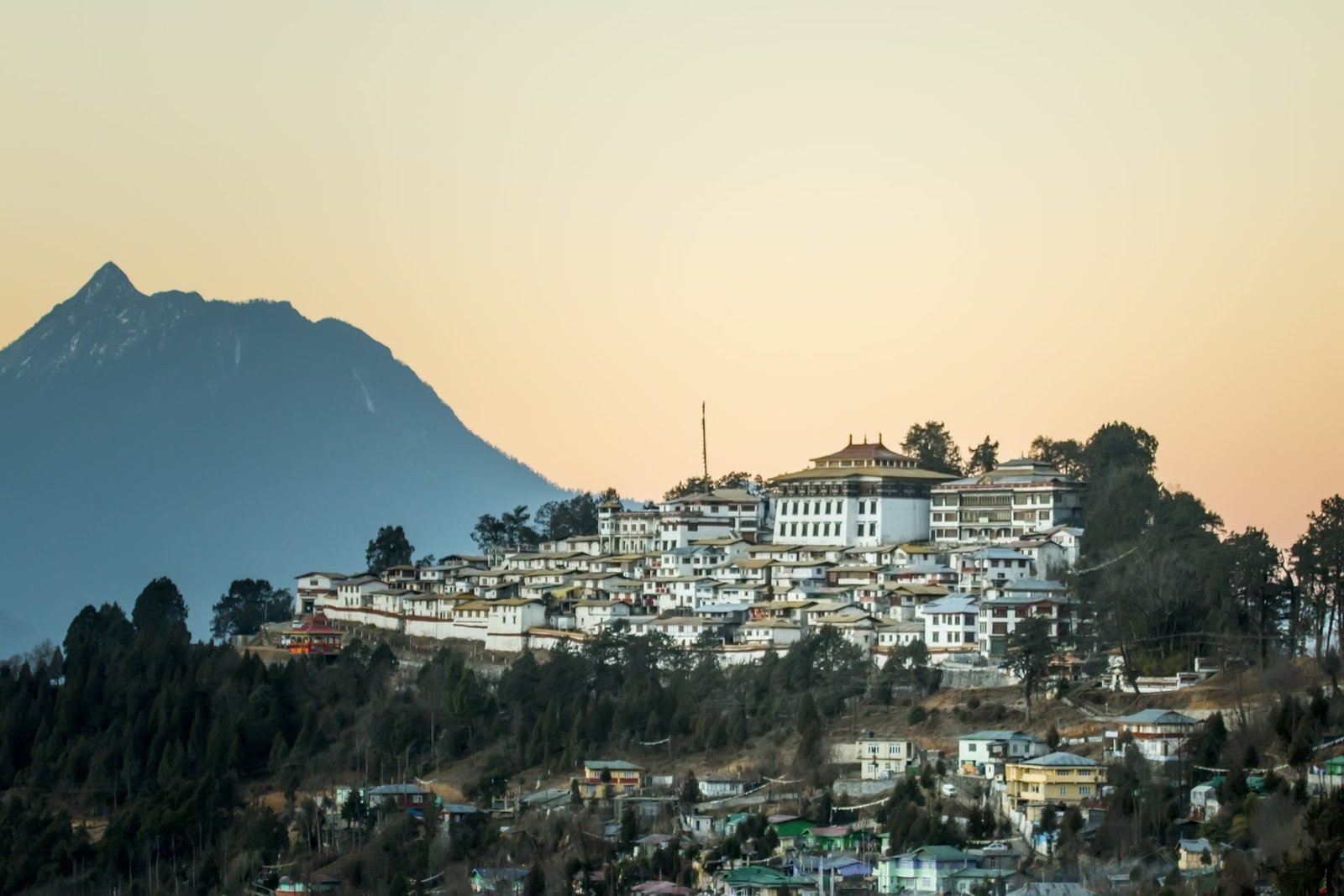
The Piprahwa relics exposition opened at Tawang Monastery on 31 October 2026, bringing sacred relics held by the National Museum in New Delhi to Buddhist communities in the Himalayas for public veneration (Press Information Bureau). The Piprahwa relics exposition runs through 21 November across three centres in Arunachal Pradesh — Tawang, Bomdila and Namsai — in a tour that is part pilgrimage, part museum exhibition, and part closing chapter in a repatriation story that began with an 1898 excavation and a halted Hong Kong auction.
Information verified through 5 November 2026.
Piprahwa relics exposition dates: Tawang Monastery Buddha relics darshan November 2026 and the road ahead
The relics were ceremonially received at Gaden Namgyal Lhatse, Tawang Monastery, on 31 October by Arunachal Pradesh Chief Minister Pema Khandu, in the presence of Union Culture and Tourism Minister Gajendra Singh Shekhawat, monks, religious leaders and devotees (Press Information Bureau). Public darshan at Tawang runs from 1 to 7 November. The exposition then moves to TGL Monastery (Lower Gompa) in Bomdila from 8 to 13 November and to the Golden Pagoda in Namsai from 14 to 20 November, before the relics return to the National Museum on 21 November (Press Information Bureau).
The tour is organised by India’s Ministry of Culture with the Government of Arunachal Pradesh, the International Buddhist Confederation and the National Museum (NorthEast India Connect). Its timing coincides with Lhabab Duchen, a festival in the Tibetan Buddhist tradition marking the Buddha’s descent from the heavenly realm, and an international conference on Buddhism in the Himalayan region was held in Tawang on 2 November (Press Information Bureau). The transfers between venues depend in part on helicopter movements, so the schedule remains subject to weather and operational conditions (NorthEast India Connect).
An accompanying exhibition, Unearthing the Sacred Piprahwa, runs at all three venues. It presents the archaeology of the Piprahwa discoveries, the tradition of relic veneration and the journey of the relics back to India (Press Information Bureau).
The Piprahwa relics 1898 excavation Peppé found — and what the inscription does and does not prove
Piprahwa, in present-day Uttar Pradesh, is associated with ancient Kapilavastu and the Shakya clan of the Buddha (Press Information Bureau). In 1898, William Claxton Peppé excavated a stupa there and found a sandstone coffer holding reliquaries. The collection described in current reporting includes bone fragments believed to be of the Buddha, the coffer, and offerings such as ornaments and gemstones (NorthEast India Connect). An inscription in Brahmi script on one casket identifies its contents, in the traditional reading, as relics of the Buddha deposited by the Sakya clan (NorthEast India Connect).
That wording deserves care. The official and devotional attribution presents the relics as relics of Shakyamuni Buddha. Archaeology can document the excavation, the coffer, the inscription and the deposit’s age and context; it cannot laboratory-prove whose remains these are. One recent account of the tour makes exactly that caution explicit: official religious attribution should be presented as attribution, not laboratory certainty (UAN World). Holding both registers at once — genuine veneration, honestly labelled evidence — is not a contradiction. It is how serious heritage reporting should sound.
Piprahwa relics repatriation 2025 Sotheby’s auction: the homecoming behind the tour
Part of the Piprahwa material did not stay in India after 1898. A portion remained with Peppé’s descendants, and in May 2025 that material was due to be sold at Sotheby’s in Hong Kong (NorthEast India Connect). India’s Ministry of Culture intervened to halt the auction, and the material was repatriated on 30 July 2025 through a public-private partnership with the Godrej Industries Group (NorthEast India Connect).
The Prime Minister’s message for the Tawang opening described the homecoming of the sacred Piprahwa relics after more than a century as a moment of pride and joy (Press Information Bureau). A major exposition in New Delhi in January 2026 brought the repatriated material together with Piprahwa holdings from the National Museum and the Indian Museum in Kolkata (NorthEast India Connect).
The Arunachal tour extends that logic. Tawang Monastery, founded in the 17th century, is described as the largest monastery in India; hosting the relics there brings them to a Himalayan Buddhist community that would otherwise have to travel to Delhi to see them (NorthEast India Connect). The organisers frame the tour as bringing India’s Buddhist heritage closer to communities in the Northeast (Press Information Bureau).
Analysis: repatriation stories often end at the airport — object recovered, photograph taken, case closed. This one kept moving. The relics went on display in the capital, then out to monasteries in a border state, in front of the communities whose tradition gives them meaning. That sequence matters. Return is a legal event; access is what turns it into heritage. The remaining test is the unglamorous one — conservation, transparent provenance records, and published visiting arrangements, which local reporting notes have not all been made public yet (NorthEast India Connect). If those follow, the Piprahwa tour will stand as a model worth copying: bring the object home, then bring it to the people.
Photo: Vikramjit Kakati, via Wikimedia Commons (CC BY-SA 4.0)
Leave a comment
Comment as a guest and verify your email, or sign in or create a reader account. Guest comments reach our review queue after email verification; account holders can submit directly for review.