Listen to this article
Take the story with you. Choose a voice and a pace that suits you.
Or listen in another language / choose a voice
Getting your device voices ready…
The voice follows the displayed language and your browser’s regional preference when available. You can choose another narration voice.
The Pompeii wardrobe discovery crepundia necklace is, at first glance, a small thing: at least 24 miniature charms, none of them precious, strung for a child almost 2,000 years ago. Yet it sat in a cloth bag inside a wooden wardrobe in a house on Via dell’Abbondanza, one of the city’s busiest streets, and nobody came back for it after Vesuvius erupted in AD 79 (Smithsonian Magazine). The find was reported in the Archaeological Park’s E-Journal degli Scavi di Pompei, issue 11, on 29 October 2026, and covered by Smithsonian Magazine on 6 November. Information verified through 7 November 2026.
The wardrobe itself has not survived as wood. What archaeologists recovered was its shape — a cavity in the volcanic deposit, post holes, and the objects that fell with its shelves — in a house catalogued as IX 11, 7, in the central area of the buried city (Daily Guardian Europe).
Pompeii wardrobe discovery crepundia necklace: rattles, gods and grapes
Crepundia comes from the Latin crepare, to make a noise. Parents gave these necklaces to children to protect them, and the rattle had a practical side: you could hear where a small child had wandered (Archaeology Magazine). The Pompeii charms are made of faience, bone, glass paste and rock crystal, each pierced for suspension, and they depict the Egyptian god Bes and the Roman god Mercury alongside hands, feet, pine cones and bunches of grapes (Smithsonian Magazine).
Why was a child’s necklace in an adult’s wardrobe? One reading, offered by park director Gabriel Zuchtriegel, is that an adult kept it from their own childhood. “It was a reminder of their parents who perhaps lived far away,” he told the Guardian, in comments reported by Smithsonian Magazine, noting how often people in this society were displaced and carried personal objects with them (Smithsonian Magazine). The alternative is simpler: the necklace belonged to a child in the household. The evidence does not settle it, and the reporting is honest about that.
Older scholarship sometimes treated groups like these as magical equipment, used in spells. The park’s account pushes back: these are crepundia, childhood rattles first, keepsakes second (Daily Guardian Europe).
What are crepundia Roman children’s charms doing beside the make-up?
Around the necklace sat the kit of an adult life. Reports describe items of mundus muliebris — objects for women’s personal care and adornment — including tweezers, a mortar or pestle for mixing make-up pigments, and a glass balsamarium that held perfume or scented oils (Smithsonian Magazine; Archaeology Magazine). There was an incense burner, a bronze lamp, and vessels in bronze, glass and ceramic for cooking and dining — cups, pots, six lids of different sizes (Smithsonian Magazine).
That mix is why some coverage calls this a woman’s wardrobe. Treat the label with care. The grooming kit suggests it; nothing confirms who owned the cupboard, or whether one person owned all of it.
Work sat in there too. A wooden box held eight lead weights, the sort a merchant might use with balancing scales, which points to trade being done from, or through, this house (Smithsonian Magazine).
The House of Cornelius Maximus Pompeii excavation, and a name that may not fit
The house takes its usual name from inscriptions recorded when its façade was first excavated in 1912. Those inscriptions are no longer visible, and the excavation report calls the attribution to Cornelius Maximus tentative — the Daily Guardian account says the façade was “tentatively attributed” on that basis (Daily Guardian Europe). The rooms behind the frontage have only now been investigated, as part of the restoration and access project for the neighbouring Insula dei Casti Amanti (Archaeology Magazine).
What those rooms show is a household mid-stream. The wardrobe room carries refined Fourth Style wall paintings linked to a workshop on Via di Castricio, suggesting a decent standard of living in a central spot (Daily Guardian Europe). Renovation work was under way when the eruption came. And the house had mice: 117 bone fragments from at least two young wood mice, Apodemus sylvaticus, were found inside an amphora on a mezzanine (Archaeology Magazine).
The Pompeii wardrobe 38 bronze coins nobody collected
In a small woven basket, a cistella, the wardrobe kept 38 bronze coins, most dating to the reign of Nero, who ruled from 54 to 68 (Daily Guardian Europe; Smithsonian Magazine). Coins are portable wealth. People fleeing a disaster take them if they can.
Their presence, alongside a keepsake necklace, is the strongest sign the owners left in a hurry — or never got the chance to pack at all. Zuchtriegel is careful here too: “We cannot reconstruct with certainty the identity of whoever lived in the house, but these fragments bring us closer to their daily life” (Smithsonian Magazine). Whether the household escaped and could not return, or died in the city, remains unknown.
Analysis: Pompeii gets described as a treasure chest, and Zuchtriegel himself used the phrase to Smithsonian Magazine before qualifying it. This wardrobe argues for the qualification. Nothing in it would stop a visitor in a gallery. Tweezers. Lids. Mouse bones. Its force comes from arrangement — work, grooming, money and a childhood rattle stored together, in one corner cupboard, by people who expected an ordinary tomorrow. Heritage rarely gets closer to a life than the cupboard that life was kept in.
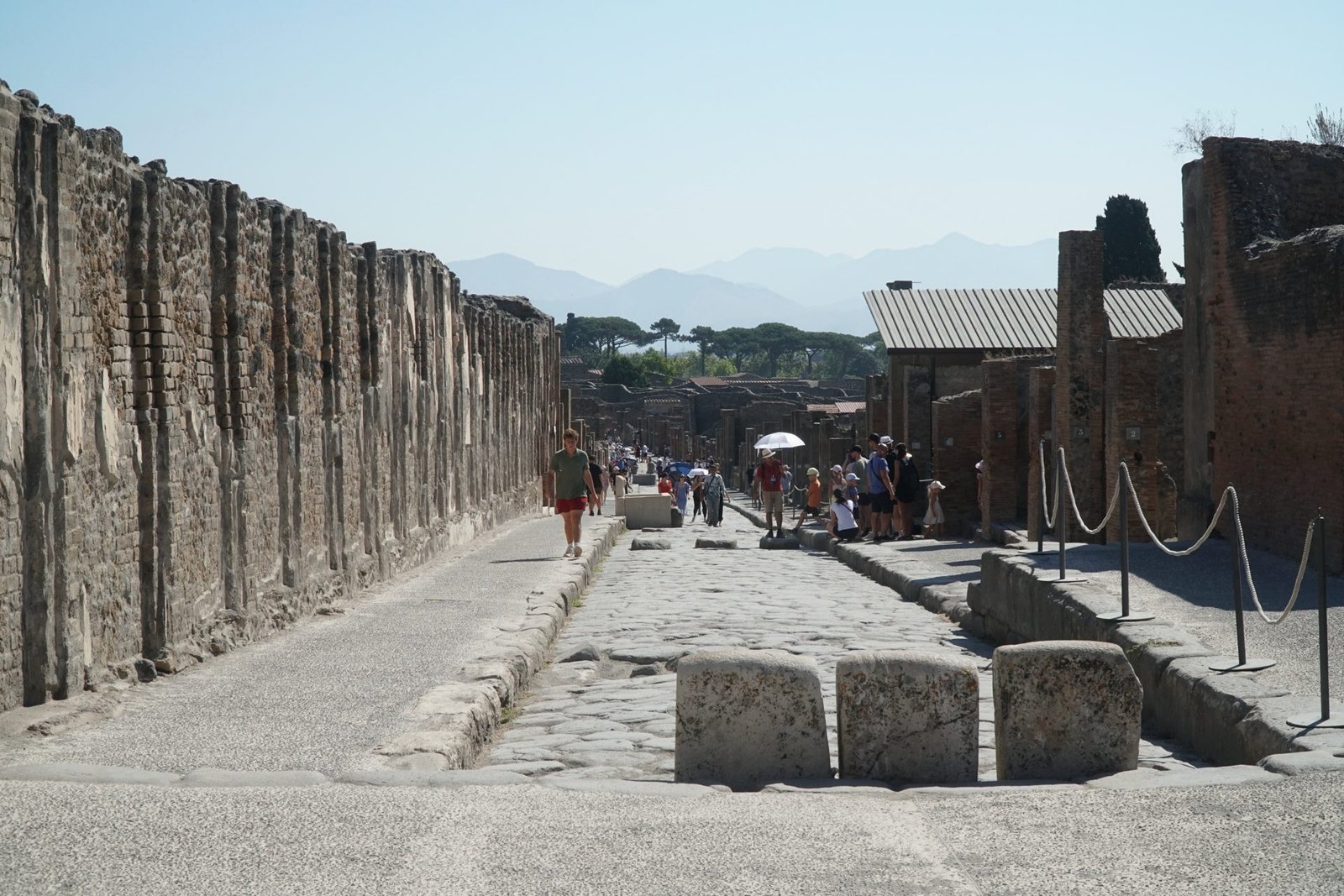
Photo: Adam Harangozó, via Wikimedia Commons (CC BY-SA 4.0)
Sources
- https://www.smithsonianmag.com/smart-news/this-wooden-wardrobe-in-pompeii-remained-sealed-for-nearly-2000-years-archaeologists-just-opened-it-for-the-first-time-180989831/
- https://dailyguardian.eu/in-pompeii-a-womans-wardrobe-resurfaces-with-beauty-items-and-jewels/
- https://archaeologymag.com/2026/10/pompeii-wardrobe-found-untouched-since-79-ce/
Leave a comment
Comment as a guest and verify your email, or sign in or create a reader account. Guest comments reach our review queue after email verification; account holders can submit directly for review.