Listen to this article
Take the story with you. Choose a voice and a pace that suits you.
Or listen in another language / choose a voice
Getting your device voices ready…
The voice follows the displayed language and your browser’s regional preference when available. You can choose another narration voice.
Why is the global plastics treaty stalled? Start with the calendar. In March 2022, the UN Environment Assembly adopted resolution 5/14 and launched talks on a legally binding treaty to end plastic pollution, with the work meant to finish by the end of 2024 (Less Plastic Please). It is now November 2026. There is no treaty, no formal negotiations under way, and the next formal round is pencilled in for March 2027 at a venue that, as of late September, no country had formally offered to host (Meridian Institute).
The scale has not waited for the diplomats. The OECD found world plastics production doubled between 2000 and 2019 to 460 million tonnes, while UNEP estimates over 500 million tonnes were expected to be consumed in 2024, much of it quickly becoming some 400 million tonnes of waste (Meridian Institute). Of the plastic waste generated in 2019, only 9% was recycled and 22% escaped waste management systems entirely (Meridian Institute).
Why is the global plastics treaty stalled on one phrase: full life cycle
Resolution 5/14 asked for an instrument based on a comprehensive approach addressing the full life cycle of plastic, including its production, design and disposal (Less Plastic Please). That phrase is the fault line.
To most countries, a full life cycle plainly includes how much plastic gets made. To a smaller group, it does not — and they have spent four years saying so. The negotiating committee met in Punta del Este, Paris, Nairobi and Ottawa between 2022 and 2024, then split its fifth session between Busan in late 2024 and Geneva, where talks adjourned early on 15 August 2025 without consensus (Meridian Institute). A one-day session on 7 February 2026 elected a new chair, Ambassador Julio Cordano of Chile, with no substantive negotiations (Meridian Institute).
The plastic production caps treaty fight, article by article
The plastic production caps treaty argument lives in the draft’s Article 6, still bracketed as “[supply][sustainable production]” (Less Plastic Please). In Geneva, some countries called for a global target for sustainable production and consumption, backed by national measures and reporting. Others wanted the article deleted, arguing the treaty should combat plastic pollution, not curtail plastic production (Less Plastic Please).
The Earth Negotiations Bulletin, which reports every session, called production and finance the most intractable issues in Geneva, with products and chemicals close behind (Less Plastic Please). On current policies, the OECD projects world plastics use rising from about 460 million tonnes in 2019 to about 1,231 million tonnes in 2060 (Less Plastic Please). No amount of better bins keeps pace with that curve.
Chemicals split the room the same way. Article 3 covers plastic products and the chemicals in them, and the choice is between a global list of products and chemicals of concern to be limited or phased out, or voluntary national measures only (Less Plastic Please). Money is the third split: developing countries want a new, dedicated fund, while developed countries prefer existing funds, voluntary contributions and public-private partnerships (Less Plastic Please).
The fourth fight is quieter, and may matter most. In Geneva, 120 countries proposed that the treaty’s future conference of parties be allowed to vote by two-thirds majority on substance once consensus efforts are exhausted; others opposed it, and the discussion ended without agreement (Less Plastic Please). A treaty that can only be strengthened by consensus may never be strengthened at all.
Majorities are not the problem. At the UN Ocean Conference in Nice in June 2025, 97 countries endorsed a call for a global production target, binding phase-outs of the worst products and chemicals, and a proper financial mechanism (Less Plastic Please).
The INC-5.4 plastics treaty road: informal meetings, then March
Since Cordano took over, everything has been informal. Heads of delegation met in Nairobi from 30 June to 3 July 2026 and in Bangkok from 27 to 30 September, where 427 delegates from 154 committee members attended (Meridian Institute). On 8 August 2026 the chair issued an Aid to Negotiations, an informal reference document that, in his own description, does not constitute a negotiated or agreed text (Meridian Institute). Its list of articles contains no separate article on primary plastic production, and the chemicals criterion is bracketed (Meridian Institute).
Environmental groups read that as retreat. The Environmental Investigation Agency said production provisions had been weakened, bracketed or removed, a reading Cordano answered by noting ideas from Nairobi had not yet been inserted into that first iteration (Less Plastic Please).
The global plastics treaty March 2027 window is now the date everything hangs on. A third informal meeting is set for Nairobi on 28 to 30 January 2027, and UNEP’s save-the-date notice places the INC-5.4 plastics treaty session within 13 to 24 March 2027, with Nairobi reserved as the venue if no host offer arrives (Meridian Institute).
Analysis: there is a useful contrast close at hand. The High Seas Treaty, covering the two-thirds of ocean beyond national borders, entered into force in January 2026 and passed 100 parties in September, Canada included (How To Protect The Ocean). Ocean protection got its treaty. Plastics has not — because plastics starts in a factory and an oilfield, not on the open sea. The November second iteration of the chair’s text is the next real signal: if production and chemicals stay bracketed, March will be Geneva again, with better catering.
Information verified through 25 November 2026.
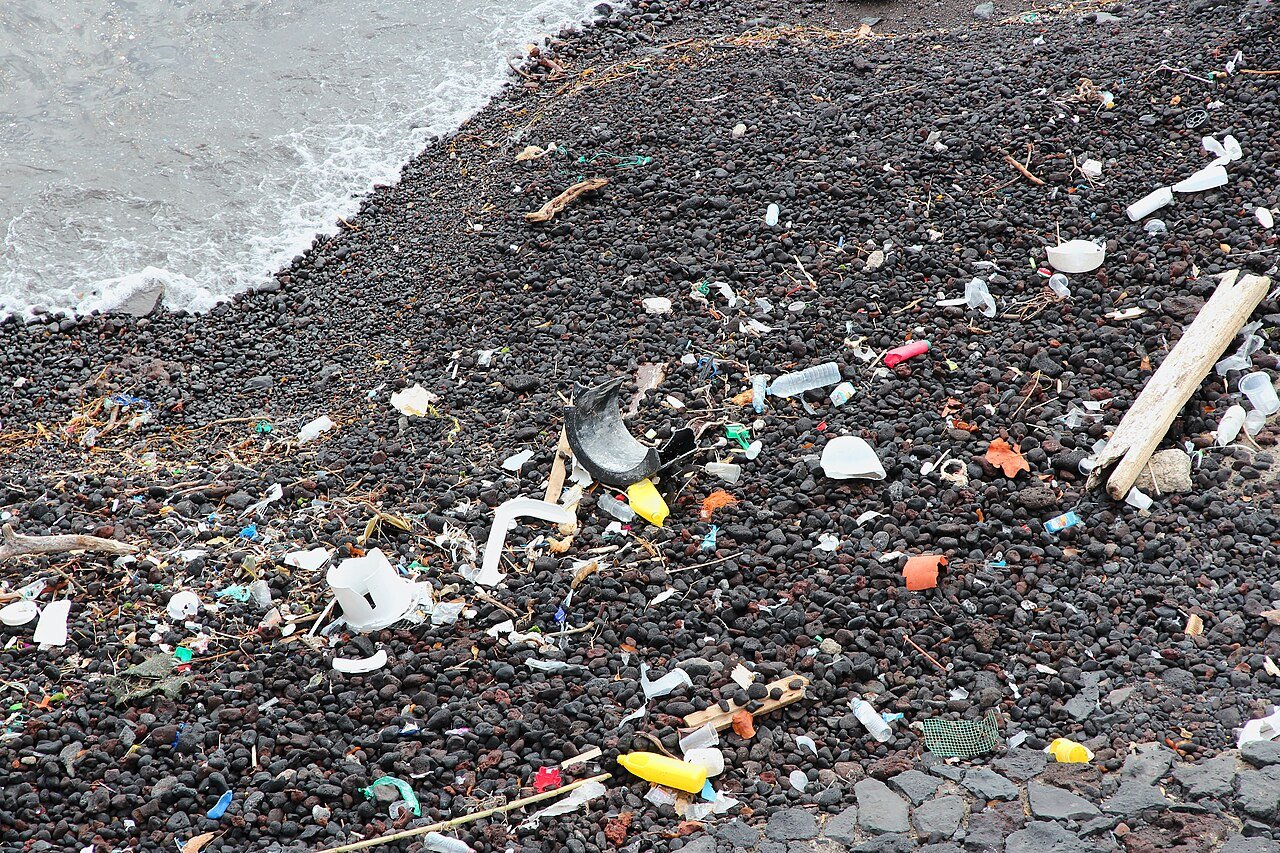
Photo: Marek Ślusarczyk, via Wikimedia Commons (CC BY 3.0)
Sources
- Less Plastic Please — The global plastics treaty: what’s on the table and why talks keep stalling: https://lessplasticplease.com/articles/global-plastics-treaty-talks
- Meridian Institute — Plastics after Geneva: The Global Treaty Talks on the Road to INC-5.4: https://meridianaffairs.org/research/plastics-treaty-road-to-inc-5-4
- How To Protect The Ocean — From Small Towns to a Global Treaty: https://podcastdataapi.com/podcasts/how-to-protect-the-ocean/from-small-towns-to-a-global-treaty-2tcbblw789hj
Leave a comment
Comment as a guest and verify your email, or sign in or create a reader account. Guest comments reach our review queue after email verification; account holders can submit directly for review.