Listen to this article
Take the story with you. Choose a voice and a pace that suits you.
Or listen in another language / choose a voice
Getting your device voices ready…
The voice follows the displayed language and your browser’s regional preference when available. You can choose another narration voice.
COP31 adaptation finance for small island states comes down to a single, uncomfortable figure, raised by Pacific representatives inside the finance negotiations in Antalya this week: small island states receive only around three per cent of adaptation finance. The money exists in pledges. It does not arrive in proportion to exposure. As ministers take over the second and final week of the UN climate talks, that gap — between what is promised globally and what reaches the most exposed countries — is where the argument now sits. The summit is scheduled to conclude on Friday, 20 November. Information verified through 18 November 2026.
COP31 adaptation finance for small island states — what the draft actually offers
The presidency’s first draft cover decision, released on Monday 16 November by Australia’s Chris Bowen, who is leading the negotiations, proposes that adaptation finance should reach at least US$120 billion. For island states specifically, the draft also calls for simpler funding procedures, dedicated minimum allocation floors for Small Island Developing States and Least Developed Countries, and greater use of grants and other non-debt-creating instruments. It recognises the Pacific Resilience Facility and calls for its capitalisation, though it sets no funding target for it.
Bowen was blunt about the status of all this. “This is a draft, a first draft. It won’t be the final draft,” he told reporters, noting that negotiators had reached agreement on 48 items while around 30 mandates still required outcomes. Every provision island states care about — the floors, the simpler procedures, the grant language — remains in an unagreed text.
Context matters here. A proposal to triple adaptation finance was left out of the formal agenda at the beginning of COP31 because countries could not reach consensus, and developing countries including the Alliance of Small Island States have since challenged the draft finance work programme, arguing it does not adequately reflect their views or the responsibility of developed countries to provide finance. The $120 billion line is in the draft despite that start, not because the argument is settled.
The numbers behind the argument: adaptation finance needs $305 billion a year
The scale problem is documented inside the draft itself. Citing the UN Environment Programme’s 2026 Adaptation Gap Report, the text estimates developing countries’ adaptation needs at around $305 billion a year by 2035, against international public adaptation finance of $28 billion to $32 billion in 2024. On those figures, tripling finance would cover no more than 29% of estimated needs.
How the money is counted is part of the fight. The draft asks the Standing Committee on Finance to calculate a baseline for tripling funding by 2035 using Oxfam’s grant-equivalent methodology — a method that values a loan at less than its face value — with countries to consider the baseline at COP32 in 2027. It also proposes an Antalya-to-Addis Ababa roadmap on predictable public funding and calls on developed countries to announce pledges by the end of 2027 to funds including the Adaptation Fund and the Fund for Responding to Loss and Damage.
That loss and damage fund shows the demand side plainly. The Fund for Responding to Loss and Damage requests already on its books total 176 funding requests worth US$2.8 billion, with its first project approvals expected in December and replenishment beginning in 2027.
Grant-based climate finance at COP31 is the demand, not loans
The island and least-developed-country ask is specific: grant-based climate finance at COP31, assessed against vulnerability rather than income alone. Maldives President Mohamed Muizzu used the summit to press for predictable, grant-based funding and finance assessments based on climate vulnerability, not just income, and called for replenishment of the Green Climate Fund, the Adaptation Fund and the Loss and Damage Fund. Nepal’s Foreign Minister Shishir Khanal, speaking for the access problem shared by least developed countries, put the debt point directly: “Climate resilience must not come at the cost of debt sustainability. We need predictable public grants and highly concessional resources, not commercial loans.”
Campaigners reading the draft make the same point about form, not just volume. Harjeet Singh of the Fill the Fund campaign said the $120 billion target, the 2027 pledge deadline and the roadmap reflected key demands from developing countries, adding: “Now we must fight to keep this in the final decision and ensure these promises become real, grant-based money.”
While the finance text stalls, the summit’s side announcements move faster. Türkiye and the UN’s International Telecommunication Union launched the Antalya Artificial Intelligence Pledge, which had secured 80 endorsements and 271 commitments by Monday morning, and a Green Industrialization Compact aimed at cleaner steel and cement followed. Countries are also divided over whether the next IPCC assessment report should be published in 2028, in time to inform the second Global Stocktake — a dispute vulnerable countries treat as part of the same question of whose evidence counts.
Analysis: the draft gives island states the architecture they asked for — a number, allocation floors, simpler access, grant language — and none of it is agreed. The 3 percent figure is why the architecture matters more than the headline total: a tripling that flows through the same channels, on the same loan terms, would leave the distribution almost untouched. What survives Friday’s deadline will show whether Antalya treated access as a design problem or a talking point.
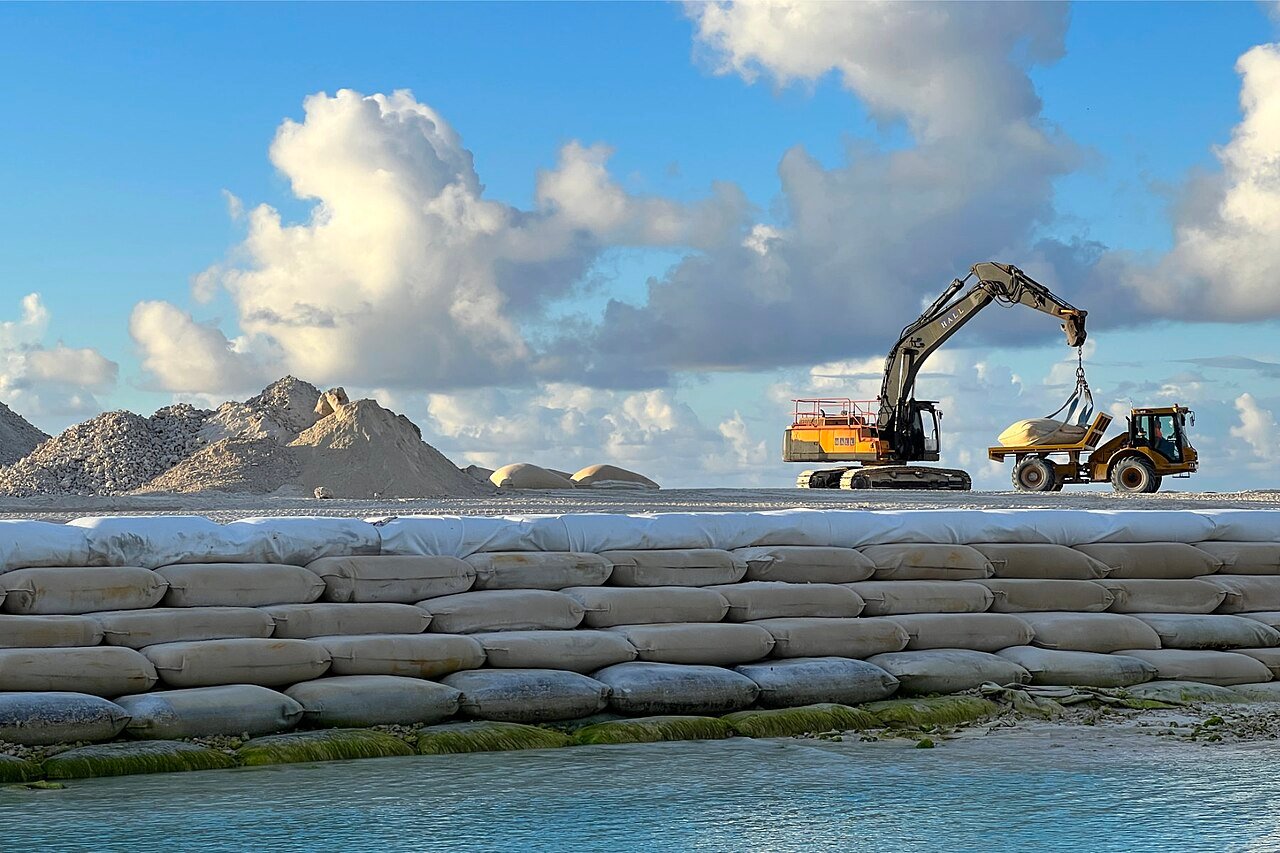
Photo: JialiangGao, via Wikimedia Commons (CC BY-SA 4.0)
Sources
- Pacific Islands News Association — Pacific climate demands face resistance at COP31: https://pina.com.fj/2026/11/18/pacific-climate-demands-face-resistance-at-cop31/
- The Business Standard — COP31 draft calls for fossil fuel phaseout, at least $120b in adaptation finance: https://www.tbsnews.net/economy/cop31-draft-calls-fossil-fuel-phaseout-least-120bn-adaptation-finance-1604866
- Nature News Africa — COP31 faces climate finance deadlock as AI initiatives advance: https://naturenews.africa/cop31-faces-climate-finance-deadlock-as-ai-initiatives-advance/
- Corporate Maldives — What President Muizzu Pushed for at COP31: https://corporatemaldives.com/what-president-muizzu-pushed-for-at-cop31/
- Nepal TV World — Nepal seeks grant-based climate finance, warns against debt burden at COP31: https://nepaltvworld.com/nepal-seeks-grant-based-climate-finance-warns-against-debt-burden-at-cop31/
Leave a comment
Comment as a guest and verify your email, or sign in or create a reader account. Guest comments reach our review queue after email verification; account holders can submit directly for review.