Listen to this article
Take the story with you. Choose a voice and a pace that suits you.
Or listen in another language / choose a voice
Getting your device voices ready…
The voice follows the displayed language and your browser’s regional preference when available. You can choose another narration voice.
There are two new howler monkey species discovered in the Amazon, and nobody found them by trekking somewhere no human had been. They were hiding inside animals scientists thought they already knew. The University of Salford announced the findings on 4 November 2026, reporting work published in Communications Biology. Information verified through 14 November 2026.
The last time anyone described a new howler monkey, Franklin D. Roosevelt was in the White House. That was Alouatta puruensis, described by Lönnberg in 1941, the University of Salford said — 84 years ago by its count, 85 in some reporting. Now two arrive at once.
Alouatta iroi and Alouatta matogrossensis
Meet Alouatta iroi and Alouatta matogrossensis. The first, the Pantepui red howler, lives in the northwestern Amazon between the Rio Branco and Rio Cauaburi and wears a bright yellowish-brown to golden coat. The second, the Mato Grosso red howler, lives in southern Amazonia between the Rio Madeira and Rio Teles Pires, in a brighter reddish-brown.
The team, led by Dr Romina Batista and Professor Jean Boubli of the University of Salford, collected genetic evidence from 86 howler monkeys across their range, including museum specimens. One DNA sample came from dried skin on mounted specimens held in Munich. Genome-wide analysis, paired with morphological data from museum collections, produced what the researchers call the most comprehensive evolutionary history of howler monkeys ever documented, the Salford announcement said.
What looked like one species split into distinct lineages once the genomes were compared. The study also questions old labels: the team’s evidence suggests A. puruensis is not a separate species at all but the same as A. juara, and that the Trinidad howler may deserve full species status, though nuclear DNA is still needed to confirm it, IFLScience reported.
Rivers did the splitting
How do monkeys that look alike end up as different species? Rivers. The Amazon, Rio Branco and Xingu acted as natural barriers for millions of years, preventing populations from mixing, so groups on opposite banks drifted apart genetically. Savanna formation split other populations. The genus itself most likely originated in Mesoamerica and spread into South America, with the first split around 3.5 million years ago, roughly when the Panama land bridge formed.
The researchers frame the work as a dent in two old problems. The Linnean shortfall is our ignorance of how many species exist. The Wallacean shortfall is our ignorance of where they live. A single genome study chipped at both, mapping each lineage as it named it.
“Our study shows that the Amazon still holds remarkable biological secrets, even among well-known animals such as howler monkeys,” Batista said, in comments released by Salford. Howlers are hardly obscure. They are considered the world’s loudest land animal, their roars audible kilometres away. Yet two species sat unrecognised inside the group for decades.
Mato Grosso red howler monkey conservation starts at a disadvantage
Mato Grosso red howler monkey conservation begins with bad geography. The species lives in southern Amazonia, which the researchers describe as one of the world’s fastest-deforesting regions, where cropland expansion fragments habitat year after year. Boubli has said the species is either endangered or critically endangered, though neither new species has had a formal conservation assessment yet. You can’t protect what hasn’t been counted, and until this month this monkey wasn’t even on the list of things to count.
“This discovery comes at a critical time, as increasing deforestation, climate change and habitat loss threaten many Amazonian species before they are fully understood or even discovered by science,” Boubli said. The hope, he added, is that conservation organisations can now pick out the most vulnerable populations and prioritise them.
There is one oddly hopeful chapter. Camera traps on rope bridges built by Projeto Reconecta, led by Fernanda Abra, have photographed A. matogrossensis crossing safely above roads in thousands of images. The bridges were built before anyone knew this species existed. Abra’s crossings have now served three recently described monkey species, PetaPixel reported, including a titi monkey described in 2019 and a marmoset in 2021.
Analysis: the sequence matters. Protection here didn’t wait for a Latin name. Bridges went up for monkeys in general, and a species science hadn’t named yet used them. Taxonomy still matters — funding, legal protection and Red List status all hang on it — but this case shows habitat work doesn’t have to queue behind the paperwork.
What the howler monkey genome study Communications Biology published changes next
The howler monkey genome study Communications Biology published (DOI 10.1038/s42003-026-11187-8) hands conservation planners a corrected map: 11 species’ genomes compared, ranges redrawn, two names added. The next steps are unglamorous and urgent in equal measure — population surveys, a formal extinction-risk assessment for both new species, and protection for forest corridors in the southern Amazon before the fragments get too small to hold a troop.
Eighty-five years is a long gap between names. The forest, meanwhile, is shrinking on a much shorter clock.
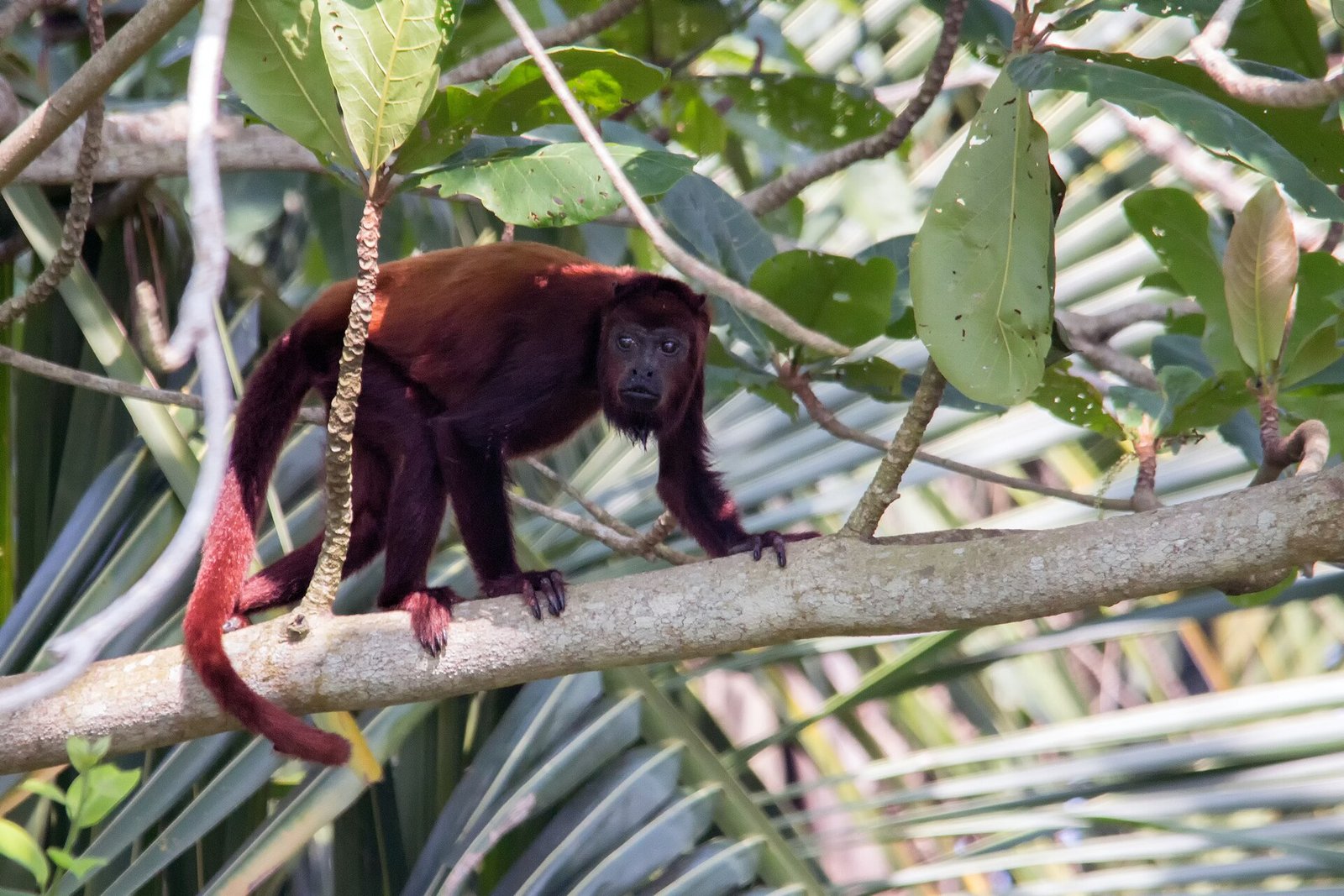
Photo: Venezuelan red howler monkey (Alouatta seniculus), by Fernando Flores, via Wikimedia Commons (CC BY-SA 3.0)
Sources
- https://phys.org/news/2026-11-howler-monkey-species-amazon-years.html
- https://www.salford.ac.uk/news/scientists-discover-two-new-species-of-howler-monkey
- https://www.iflscience.com/two-new-species-of-howler-monkey-have-been-discovered-in-the-amazon-for-the-first-time-in-85-years-85179
- https://petapixel.com/2026/11/12/camera-traps-catch-newly-discovered-howler-monkey-crossing-rope-bridge/
Leave a comment
Comment as a guest and verify your email, or sign in or create a reader account. Guest comments reach our review queue after email verification; account holders can submit directly for review.