Listen to this article
Take the story with you. Choose a voice and a pace that suits you.
Or listen in another language / choose a voice
Getting your device voices ready…
The voice follows the displayed language and your browser’s regional preference when available. You can choose another narration voice.
Investigation — Evolving Humanities. Golden Rice series, Part 4 of 6. Reporting verified November 2026.
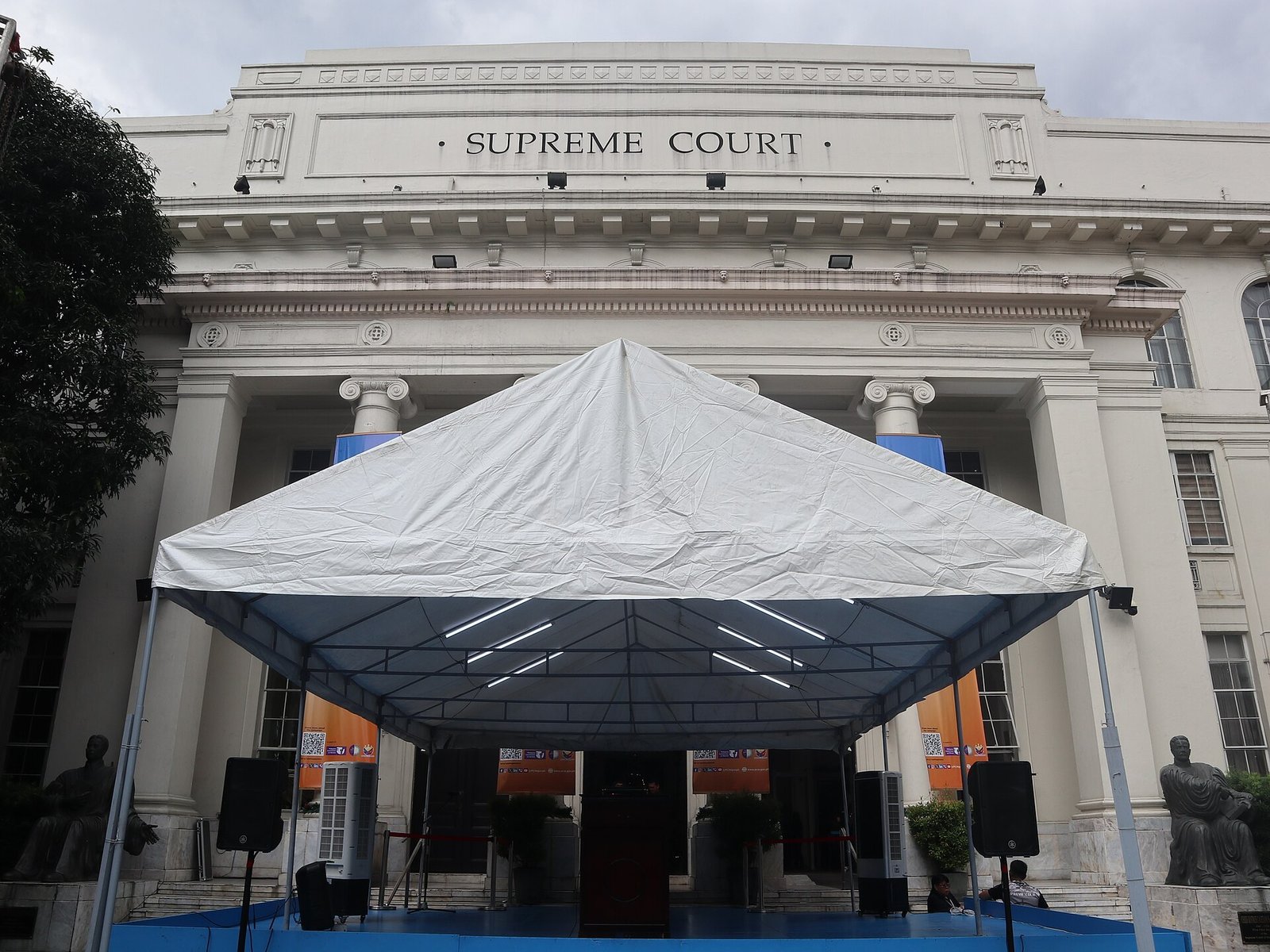
TL;DR: On 17 April 2024 the Philippine Court of Appeals revoked the world’s only Golden Rice cultivation permit, ordered its developer to cease and desist, and stopped Bt eggplant in the same judgment — without finding that either crop had harmed anyone. What it found was uncertainty: adverse effects it called scientifically plausible but uncertain, and regulators who, on the trial evidence, had not put in place the monitoring and risk-management mechanisms their own rules required. Under Philippine law that combination is enough, because precaution there is not a slogan. It is a rule of evidence, and the constitutional right to a balanced and healthful ecology gets the benefit of the doubt. This part explains how that rule was built, how it had already made the country’s GMO law once before, why its exit condition — proof of safety — may be impossible to satisfy, and why Bangladesh, where no court has ever touched Golden Rice and the rice still has not moved since 2017, is the control case that stops either side telling a simple story.
At a glance
A judgment about a rice that was not, in the end, about the rice
Start with the sentence most coverage leaves out. The Court of Appeals did not find Golden Rice dangerous. It did not find Bt eggplant dangerous. It did not identify a poisoned child, a contaminated native variety or a damaged ecosystem. If you are looking for a toxicological verdict — this food injured these people, by this mechanism — it is not in this judgment, and no honest summary should pretend otherwise.
What the court did is stranger, and more important. It stopped a technology that had passed food-safety assessments in several jurisdictions, held the only cultivation permit ever granted for it, and had already been planted and eaten in a Philippine pilot — on the strength of what had not been shown. The harm was plausible and uncertain; the monitoring meant to watch for it was, on the trial record, not in place. In ordinary litigation uncertainty defeats the claimant. Here the permit’s defenders lost because they could not dispel it.
That inversion is written into the procedural law the Supreme Court created in 2010, and it had already decided the country’s previous GMO fight. Golden Rice wandered into a machine built to give nature the benefit of the doubt — and it worked as designed. The judgment, in the end, is a verdict less on a grain than on a state: regulators approved a novel crop under rules requiring monitoring and risk management, and at trial, on the court’s account, could not show those mechanisms existed. The rice paid for that. Whether it should have is the question now sitting, unanswered, in the Supreme Court.
The decade before: Bt talong taught everyone how this would go
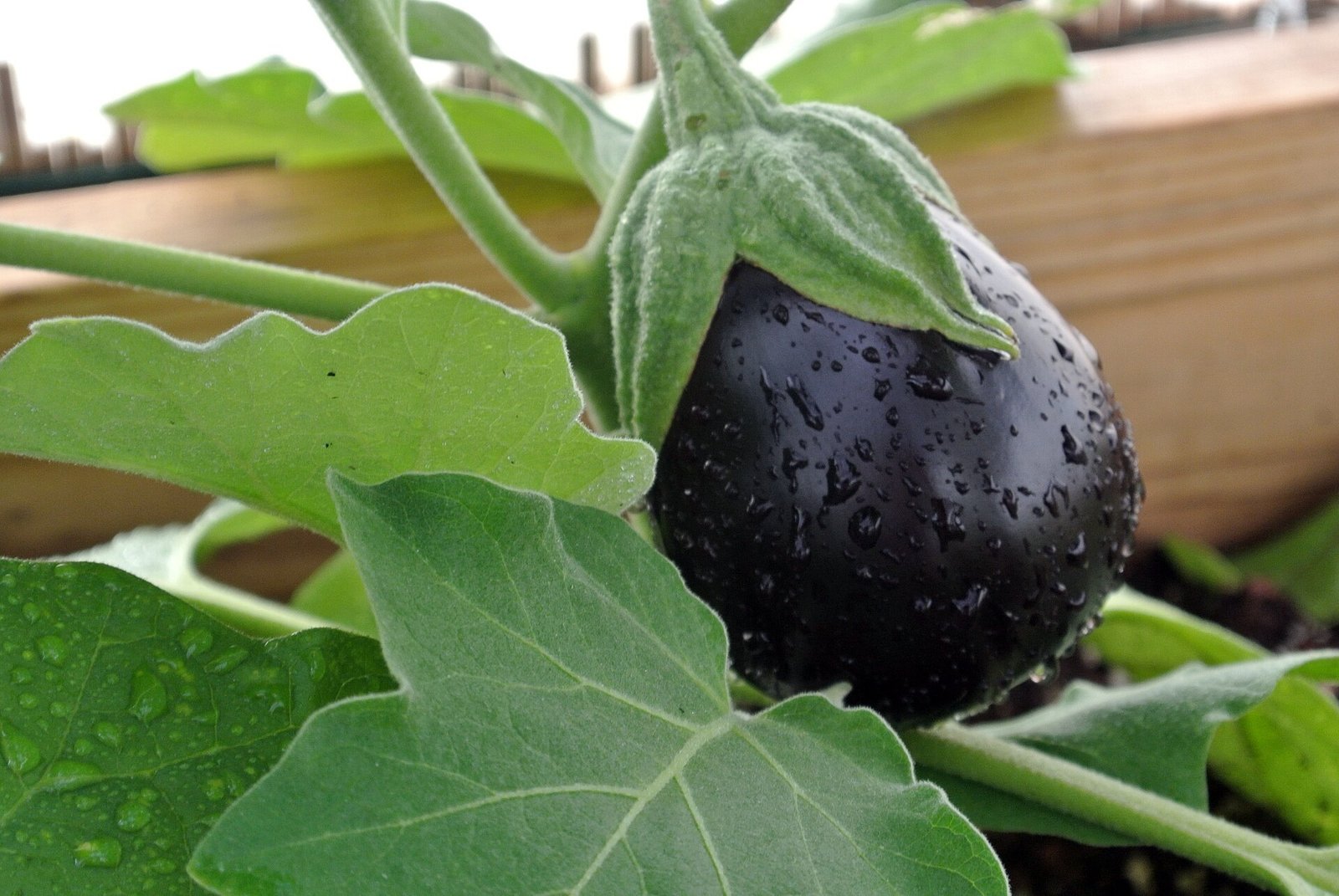
Filipino shorthand for eggplant is talong. Bt talong is the same event that appears beside Golden Rice in 2024 — eggplant engineered to produce a Bacillus thuringiensis protein against the fruit and shoot borer, developed at the University of the Philippines Los Baños. Whoever won the eggplant would set the terms for everything after it. It duly became a decade of law.
On 26 April 2012, Greenpeace Southeast Asia – Philippines, MASIPAG and others petitioned the Supreme Court for a Writ of Kalikasan and continuing mandamus against the Bt talong field trials, with a prayer for a Temporary Environmental Protection Order. Their grounds, as recorded in the later rulings, included the absence of an Environmental Compliance Certificate, failures of public consultation, and precautionary uncertainty. The Supreme Court issued the writ on 2 May 2012 and sent the case to the Court of Appeals — the same choreography that would be repeated ten years later. In May 2013 the Court of Appeals ruled for the petitioners and ordered the trials to permanently cease and desist; reconsideration was denied that September.
On 8 December 2015 the Supreme Court affirmed with modifications that turned a trial case into a national event: precaution applied, field testing permanently enjoined, the governing Department of Agriculture Administrative Order No. 08, series of 2002 declared null and void, and GMO applications temporarily enjoined until a new order issued. A case about trial plots had voided the national rulebook. Then, on 26 July 2016, the Court unanimously reversed itself, dismissing the petitions as moot: permits expired, trials completed, and Joint Department Circular No. 1, series of 2016 in place. Note what it did not say — not that the eggplant was proved safe. Time and mootness did what argument could not.
Both camps learned opposite lessons. Developers learned that a devastating loss can dissolve if permits expire and the rulebook is replaced. Petitioners learned that precaution is a defined test a petitioner can set out to satisfy, and that a regulatory vacuum is worth more in this forum than any laboratory argument. The reader’s lesson is simpler: Philippine GMO law was made by courts reacting to the gaps regulators left. And in the second saga mootness is much harder to find — in 2022 Golden Rice was a live programme, with a standing permit, seed being multiplied and rice handed to households. There was something real and continuing to stop. The Court of Appeals stopped it.
The prelude in the field: Pili, 8 August 2013
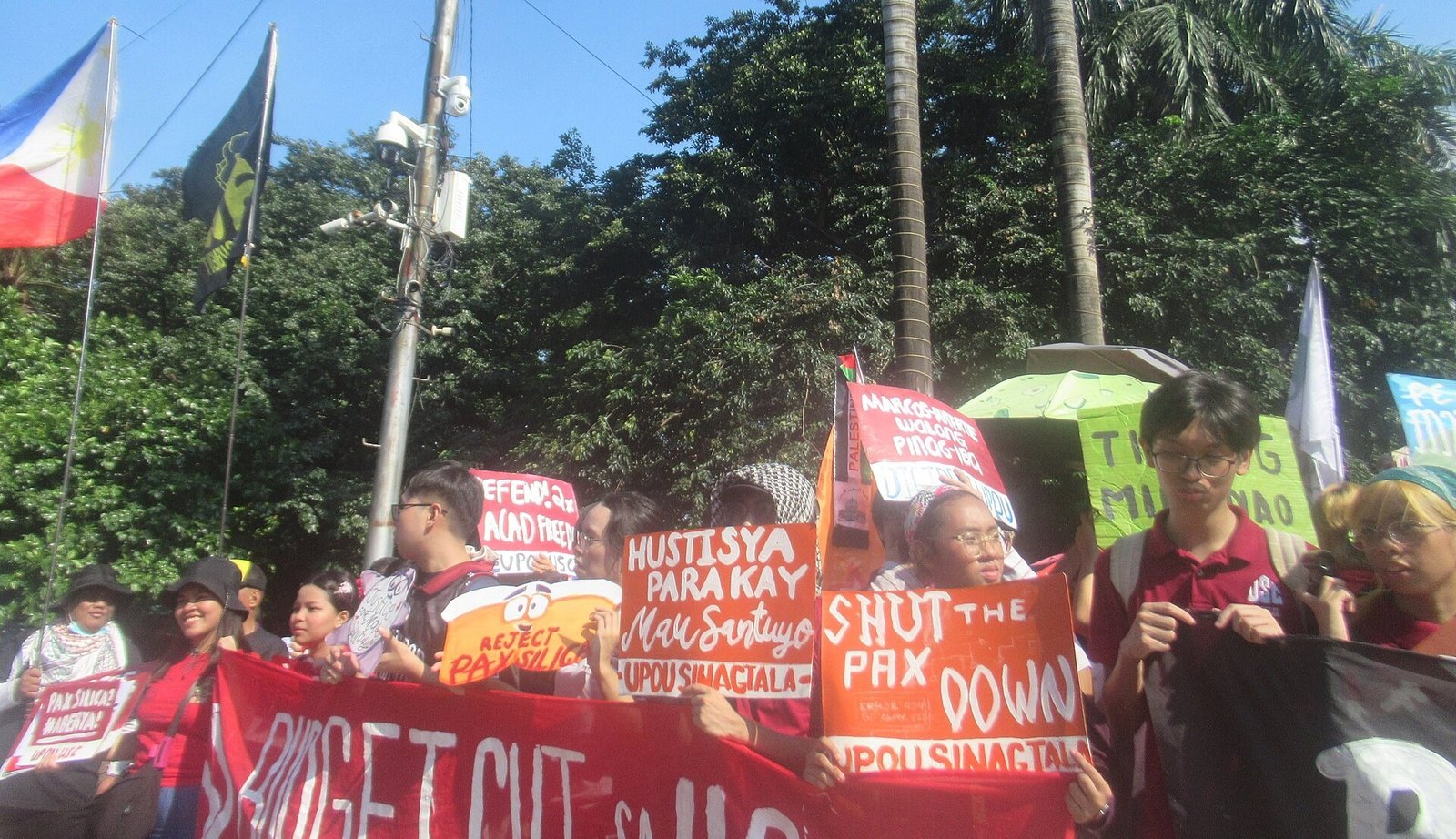
Eleven years before the permit was revoked, the argument was conducted with hands. On Thursday 8 August 2013, at the Department of Agriculture’s Bicol Experiment Station in Pili, Camarines Sur, members of the regional alliance SIKWAL-GMO and allied organisations pushed through the wired fence and uprooted a Golden Rice trial. The contemporaneous Bulatlat account said the plants were uprooted in about fifteen minutes while roughly thirty policemen failed to stop the action. IRRI’s statement that week was blunt: nearly all the plants had been uprooted and left on site, and the trial could not be continued. A PhilRice project head later recalled a researcher telephoning in tears — in Filipino, “It’s gone, Sir, they destroyed it.”
Get the dimensions right, because this plot has grown in the retelling. The site was, in IRRI’s own words, less than 1,000 square metres. Participants and farmers’-side reporting put it more precisely at 800 square metres. The round 1,000-square-metre figure in headlines and later social-media scripts takes IRRI’s ceiling and presents it as the measurement. The crowd is better documented: about 400 people on the convergent record — organisers claimed more than 400 farmers, church people, students, academics and consumers; institute-aligned accounts put the main group at 300 to 400, with a smaller number breaking away to do the uprooting. No source we found supports a crowd of about 1,000. And Pili was one site of five; the other four completed, and later regulatory dossiers rested in part on their data. The uprooting destroyed a trial. It did not destroy the trial programme.
Who did it is contested, and the contest is part of the record. The action was publicly owned by SIKWAL-GMO and the Peasant Movement of Bicol; MASIPAG later commemorated it, and the Stop Golden Rice! Network still marks 8 August as an International Day of Action. The agriculture department’s Bicol director alleged participants were paid city residents, not farmers; PhilRice said farmers were being used as a front. The farmers’ organisations rejected that then and still do. Neither claim was established in any court finding we could retrieve.
The state’s legal response has no ending anyone can produce: reporting said a malicious-mischief case was being prepared, with six persons identified, but whether charges were filed or dismissed could not be verified. The secretary said the research should continue; IRRI condemned the vandalism; the science academy called it sabotage. The science continued at the other four sites. The permit arrived eight years later.
Why give a legal article this much of an event with no verified legal outcome? Because Pili established the two registers of this fight. In one — fence, field, hands — the documented 2013 grievances were absence of meaningful consultation, contamination risk and corporate control of the seed system. In the other — petition, writ, trial, judgment — the same objections would be translated into a constitutional right and a rule of evidence, and would win. The distance between destroying one plot and revoking the permit for all of it took eleven years to travel.
The petition: a remedy built for a landscape, aimed at a permit
In October 2022 the argument arrived at the Supreme Court. The petitioners were led by MASIPAG — the farmer-scientist network founded in the mid-1980s — with Greenpeace Southeast Asia – Philippines, SEARICE, the Kilusang Magbubukid ng Pilipinas, two other networks, and individual petitioners including a former senator. The respondents were the state itself: three cabinet secretaries, the Bureau of Plant Industry director, PhilRice and the university.
Their grounds, as summarised in the Supreme Court’s release and reporting, were that both crops posed risks to environment and health, that the permits were issued despite non-compliance with governing norms, and that propagation should stop until proof of safety and compliance was shown. That last clause matters: it is the very formulation the Court of Appeals would write into its orders.
Timing sharpened everything. Golden Rice had held its permit since July 2021; Bt eggplant received its permit on 18 October 2022 — within days of the petition’s filing (sources give 12 and 17 October; we record the discrepancy rather than resolve it). The eggplant was challenged before a single seed was disseminated; the rice was challenged mid-flight, after households had eaten it. The same orders cover both.
On 18 April 2023 the Supreme Court, en banc, issued the writ and ordered a verified return within a non-extendible ten days. Plainly — because this step is the most misreported in the case — issuing the writ is not a judgment and not a ban; it is a determination that the petition must be answered. MASIPAG’s coordinator welcomed it as recognition of grave danger; that was a petitioner’s characterisation, and the Court made no such finding. On 13 June 2023 the case was referred to the Court of Appeals for hearing and judgment. The question was never simply: is this rice safe? It was: what must the state have done, and be able to show, before this rice may be planted at scale?
The decision: plausible, uncertain — and enough
The judgment came on 17 April 2024: 143 pages, Fourth Division, Justice Ong writing. PhilRice received it two days later through government counsel, which is why some reports carry the later date.
Its constitutional anchor was stated without adornment, in a passage carried across Philippine reporting:
“Considering the unmistakable importance of the constitutional right to a balanced and healthful ecology, especially in these times, we remind the government of its eminent duty to assiduously protect said right.”
The evidentiary finding followed — the hinge of the whole case. As reported from the decision text by the business and national press, the court found the adverse health and ecological effects of both projects to be scientifically plausible but uncertain. Not proved. Not disproved. In a journal that phrase is a shrug. In this courtroom it was a trigger, because the rules told the court exactly what to do with it. The court set out the definition it was applying, written into the environmental rules themselves, and held its conditions satisfied:
“when human activities may lead to threats of serious and irreversible damage to the environment that is scientifically plausible but uncertain, actions shall be taken to avoid or diminish that threat.”
“After a judicious examination of the evidence on record, this Court finds that the three conditions for the precautionary principle to apply: uncertainty, the possibility of irreversible harm, and the possibility of serious harm, are present in the case.”
Reporting adds that the court found no consensus on the safety question before it, and acted for lack of full scientific certainty on the effects, good or bad, of the two products. A reader from another tradition may wait here for the paragraph balancing that uncertainty against the completed safety assessments and the pilot’s record. That paragraph, in that form, is not this judgment’s engine. The engine is the next finding, and it is about the regulators, not the rice. In its amended restatement of its reasoning — the sharpest formulation available, which we invite readers to work through in full in the amended decision — the court explained why the uncertainty counted against the government:
“The precautionary principle applies; the grant of the privilege of the writs of kalikasan and continuing mandamus [in this Court’s April 2024 decision] was proper. … There is no evidence that would show that GMOs do not pose greater risks than their conventional counterparts, especially considering that the regulators fell short of conducting the risk management and monitoring mechanisms required under the Joint Department Circulars (JDCs). Clearly, the determination of such risks can only be done if there are proper monitoring mechanisms implemented. Unfortunately, it was revealed during trial that the regulators have no such measures in place. … All things considered the balancing of evidence adduced by the parties calls for a conclusion that the constitutional right of the people to a balanced and healthful ecology must be given the benefit of the doubt.”
Unpack the logic, because the appeal turns on it. The court did not weigh finished monitoring data and find it wanting; it found the required mechanisms were not in place at all. It did not hold a risk assessment scientifically wrong; it held safety had not been demonstrated to the standard the court required, where the rules assign the benefit of the doubt to the right, not the permit. Petitioners needed plausibility and uncertainty; the state needed affirmative demonstration, with its house in order. Commentary also records that the court excused the petitioners from exhausting administrative remedies, on public-interest grounds. Both features are the 2010 system working as designed. Whether the design is wise is now the Supreme Court’s question.
The orders, and the order the court took back
A judgment is its orders. The fallo is what ministries must obey. The April orders, reproduced verbatim in the amended decision and corroborated by USDA reporting, granted the writ, issued continuing mandamus, directed the university to cease and desist on Bt eggplant, revoked PhilRice’s permit with a cease-and-desist, enjoined both crops until proof of safety and compliance, ordered monitoring mechanisms and a strengthened risk assessment — and, in the eighth item, went far beyond the two crops. The heart of it, in the court’s words:
“REVOKING the Biosafety Permit for Commercial Propagation of Golden Rice of PhilRice”
“ORDERING PhilRice to cease and desist from commercially propagating and conducting activities relating to Golden Rice under that permit”
“ENJOINING the commercial propagation and/or conduct of activities relating to Golden Rice and Bt Eggplant, until such time that the concerned respondent government agencies submit proof of safety and compliance with all legal requirements”
Three scope points, because reporting gets all three wrong. First, the asymmetry: Golden Rice’s permit was revoked in terms. For Bt eggplant, the reproduced fallo orders the university to cease and desist under its permit, without a parallel express revocation clause — though many summaries describe both permits as revoked, and later Philippine reporting has itself made the textual point. Our formulation throughout is the precise one: the Golden Rice permit was revoked; both proponents were ordered to cease and desist; both crops were enjoined until proof of safety and compliance is submitted. A revoked permit and a suspended activity are different legal objects, and they revive by different routes.
Second, item eight. As written in April it enjoined any application for contained use, field testing, direct use as food, feed or processing, commercial propagation — and the importation of genetically modified organisms, full stop, until the agencies complied. In a country growing hundreds of thousands of hectares of Bt maize and importing most of its feed maize and soya, that was a nationwide freeze attached to a two-crop case, and it provoked the immediate economic alarm, including a widely cited business-press analysis of what a feed-import stop would do to pork, poultry and egg costs.
Third, the conditional frame. The orders sketch a path back — proof of safety, monitoring mechanisms, strengthened risk assessment — so the judgment is not, in its text, a permanent ban. But the permit was revoked, not suspended; no submission has satisfied the conditions; and a path back judged by an undefined standard functions exactly like a wall. USDA reporting added that the ruling stopped the agriculture department’s deployment memorandum — the instrument under which the rollout the ruling stopped had run.
Then the court corrected itself — at, in part, the petitioners’ own request. The government’s solicitors argued precaution did not apply. But the motion that changed the judgment came from MASIPAG and Greenpeace themselves, filed 2 May 2024, asking the court to modify item eight on the feed-import analysis — the winning side asking to narrow its own win, so the order would not raise egg and pork prices for the households in whose name the case was argued. In the Amended Decision of 15 August 2024 the court deleted item eight in full, on due process: other crops and importers were not parties and had not been heard. Every other order stood. The accurate summary after August 2024: a two-crop injunction with one revoked permit — no longer a nationwide freeze, and never a finding that either crop had hurt anyone.
The government and PhilRice petitioned the Supreme Court in October 2024 for review, asking for the appellate rulings to be reversed, the writ recalled, and a temporary restraining order in the meantime. Sources place the filings on 17 and on 24 October; the record does not cleanly separate whether those were two filings — solicitors for the agencies, corporate counsel for PhilRice — or one reported differently. PhilRice announced its petition on 5 November 2024 and rested its public case on the pilot: willingness to accept and eat the rice, its reported vitamin A contribution, and yields and costs described as comparable to conventional varieties. No restraining order has been reported. PhilRice recorded in its own 2024 reporting that Malusog operations were suspended “in deference to” the writ. Through 2025 and into reporting in January, August and October 2026, the position held in every source we found: the appeal is awaited, the programme is on hold. As of November 2026 there is no Supreme Court merits ruling, and no field in the Philippines where Golden Rice may lawfully be planted.
What the law actually says
This section carries the case’s formal identifiers and the texts everything else depends on. Readers can set it beside the Rules of Procedure for Environmental Cases and the American account in the USDA’s report on the ruling.
The petition was filed in the Supreme Court as G.R. No. 263595. The Court of Appeals decided it as CA-G.R. SP No. 00038, Fourth Division (later styled Former Fourth Division), in a decision promulgated on 17 April 2024 and an Amended Decision on 15 August 2024. The constitutional text at the centre is Section 16, Article II of the 1987 Constitution: the right to a balanced and healthful ecology in accord with the rhythm and harmony of nature. That sentence, closer to poetry than to an operative clause, is given muscle by the Rules of Procedure for Environmental Cases, promulgated by the Supreme Court in 2010.
The rules create the remedies. The Writ of Kalikasan — kalikasan is Filipino for nature — is available to a person, organisation or public-interest group on behalf of persons whose constitutional right is violated or threatened by an unlawful act or omission involving environmental damage of such magnitude as to prejudice the life, health or property of inhabitants in two or more cities or provinces. No filing fee; courts must act within days; reliefs reach permanent cease-and-desist orders and rehabilitation. The companion Writ of Continuing Mandamus keeps an agency performing — and reporting — under the court’s continuing supervision, rather than ending with a single command. The April judgment issued both: the state was placed under an obligation to come back and show its work.
The rules also define the principle, in the words the Court of Appeals quoted: when human activities may lead to threats of serious and irreversible damage that is scientifically plausible but uncertain, actions shall be taken to avoid or diminish that threat. And then — the step no other jurisdiction in this story takes in this form — Rule 20 makes that principle decide cases: where there is a lack of full scientific certainty in establishing a causal link between human activity and environmental effect, the court shall apply the precautionary principle in resolving the case. Its operative sentence is the shortest important sentence in this investigation:
“The constitutional right of the people to a balanced and healthful ecology shall be given the benefit of the doubt.”
In ordinary litigation, unresolved doubt defeats the assertion. Under Rule 20 it activates a tie-breaker that is not neutral: it awards the doubt to the constitutional right — in practice, to the party invoking it against the activity. The rule’s factors — threats to health, inequity to future generations, prejudice to the environment — frame the inquiry in which the April court recorded its three conditions, all present.
The fallo translated that rule into consequence. The agencies’ duties came not from the judges but from the executive’s own Joint Department Circulars, which govern every approval stage; the 2021 circular is the governing text. The court’s charge was that the monitoring mechanisms those circulars require were not in place at trial. Precaution supplied the burden; the missing mechanisms supplied the facts. A state arriving with its monitoring demonstrably built would have forced a much harder case — uncertainty against a functioning system, rather than an empty chair.
One last feature governs the case’s future. Nowhere in the decision excerpts available to this investigation is “proof of safety” defined. No assay is named, no standard of certainty set, no certifying body designated. The orders tell the agencies what to submit; they do not tell anyone how a submission earns release from the injunction. That silence is, at present, the operative law of Golden Rice in the Philippines.
Precaution, four ways — and the exit that may not exist
The Philippines did not invent precaution. It invented a particular place to put it. The fountainhead is Principle 15 of the Rio Declaration of 1992:
“In order to protect the environment, the precautionary approach shall be widely applied by States according to their capabilities. Where there are threats of serious or irreversible damage, lack of full scientific certainty shall not be used as a reason for postponing cost-effective measures to prevent environmental degradation.”
Rio forbids an excuse — a state may not plead incomplete science as its reason for doing nothing in the face of serious or irreversible threats. It does not assign a burden of proof or name a winner in litigation. The Cartagena Protocol goes one step further for imports: Articles 10.6 and 11.8 provide, in the operative language common to both, that lack of scientific certainty due to insufficient relevant scientific information shall not prevent the importing party from taking a decision, as appropriate, with regard to the import of the living modified organism in order to avoid or minimise potential adverse effects. Cartagena permits a precautionary refusal; it does not command one, and it does not tell a domestic court how to weigh evidence. The Philippine rules change the legal species: from diplomatic permission to evidentiary command. Uncertainty shall not merely fail to excuse inaction; it shall be resolved, by a court, in favour of the right.
Every other jurisdiction in this story keeps precaution in a different home, with a different exit. In India it was executive: the regulator recommended Bt brinjal in October 2009; the minister suspended the decision, consulted publicly, and in February 2010 imposed an indefinite moratorium:
“it is my duty to adopt a cautious, precautionary principle-based approach and impose a moratorium on the release of Bt brinjal, till such time independent scientific studies establish, to the satisfaction of both the public and professionals, the safety of the product from the point of view of its long-term impact on human health and environment…”
A minister can be lobbied, replaced or reversed; an executive moratorium has a political exit even when, as in India, nobody has used it in fifteen years. In the European Union precaution is regulatory, inside a process-based authorisation system in which the production method triggers assessment and authorisations, however slowly, can issue; the exit is administrative. In the United States the system is product-based, with no general precautionary veto — and its file on this rice contains the counter-exhibit honesty requires here: the consultation that closed without safety objection also recorded that the grain’s beta-carotene concentration was too low, at American consumption levels, to warrant a nutrient content claim. The rice a Philippine court stopped as plausibly, uncertainly risky is the rice an American agency found too weak to make a health claim for. Both statements are in the record; they answer different questions — hazard and benefit are not the same axis — but a legal process that weighs only one axis will produce judgments that look, from the other, perverse. No Philippine order engages the benefit side, because the rule under which the case was decided does not ask it to.
The Philippine exit is judicial and undefined: the injunction lifts when agencies submit proof of safety, monitoring mechanisms and a strengthened assessment, to a court’s satisfaction. Legal commentators, as gathered in our research lanes, converge on an observation we attribute to them rather than adopt: science rarely proves a negative. A regulator can show that no harm has been detected and that mechanisms exist to detect it; it cannot prove, in the absolute register, that no harm is possible. Read that way, “proof of safety” is potentially unliftable. Read practically — build the mechanisms, file the assessment — it is liftable, and continuing mandamus is the machinery for judging the attempt.
The petitioners’ counter-argument deserves its force: the state wrote the circulars and promised monitoring as the price of staged approval; a court finding those promises unkept is holding an administration to its own paperwork. On that view the exit is mundane government, not metaphysics. Both readings are available — and that the difference between a pause and a permanent end turns on an undefined phrase is the precedent’s most consequential feature.
The control case: Bangladesh, where nothing happened, slowly
Every causal story needs its control. Golden Rice has a nearly perfect one: the same trait, bred into the flagship local variety of a neighbouring rice nation, filed at roughly the same moment — and stopped just as completely, by nobody, in no proceeding, for no published reason.
The Bangladesh Rice Research Institute introgressed the trait into BRRI dhan29 and filed its dossier on 26 November 2017, into a familiar committee architecture under the agriculture and environment ministries. The committees met three times in 2018–19, then sought clarification on eleven issues; the institute states it answered fully. Three further questions followed; the institute states those were answered too — after which, in Bangladeshi reporting, the ministry had not commented. Eleven questions, then three, then silence.
In October 2020 the agriculture minister said it aloud, as reported in the Bangladeshi press: final clearance was stuck due to the reluctance of the Department of Environment. The institute’s director general defended the dossier on its data. Around the week in April 2024 when Manila revoked the Philippine permit, a delegation pressed again and received, on the reporting, an assurance of approval. No approval issued. That year eighteen Bangladeshi organisations asked the government not to approve, arguing among other things that no other country retained a commercial approval after the Philippine revocation. Dhaka’s opponents were citing Manila’s court as their evidence. The precedent was already travelling.
The latest systematic account is the USDA’s November 2025 report: biotechnology policy “at a standstill,” the dossier still under review after more than seven years, Golden Rice among several events awaiting approval while the national policy and biosafety guidelines remain unfinalised — a paralysis the report attributes to the limited capacity of the biosafety regulatory authority. That phrase should stop every reader of the Philippine judgment short. In Manila, limited regulatory capacity was the court-found fact that activated precaution and revoked a permit. In Dhaka, it is the reported reason no decision in either direction has ever been taken. Same condition, opposite procedural expression, identical result in the field: no rice.
Bangladesh falsifies the two easiest morals. Against the claim that litigation delayed Golden Rice: no litigation, a complete dossier, and delay that outlasted the Philippine case. Against the claim that assessments move once courts are kept out: no court was in the way, and it did not move. The shared variable is a biosafety state whose machinery can process a file indefinitely without the confidence or political cover to sign it. Courts are one way such a system says no; committees are another. Precaution as a rule of evidence is the most articulate form of the stall — not the only form.
What the parties and the commentators said
A ruling this consequential generates a second record — what interested parties said it meant — and this series keeps that record labelled, never laundered into findings.
The petitioners’ public reading was set before the judgment existed: welcoming the writ’s issuance in April 2023, MASIPAG’s then national coordinator described it as recognition that the crops posed a grave danger — a characterisation of a procedural order that contained no such finding. After April 2024, petitioner-side statements and allied commentary treated the judgment as vindication of the precautionary framework; a community legal-help policy paper in 2026 analysed the case, with the Bt talong litigation, as the foundation for further reform of GMO regulation, recording that the court ruled for the petitioners on both procedural and substantive grounds, including the excusal from exhausting administrative remedies. The same side then moved, itself, to narrow item eight, carrying the feed-import analysis into court so its victory would not fall on livestock farmers and consumers who were never parties.
The institutes answered on performance. PhilRice’s petition and November 2024 statements appealed for reversal, resting the public case on the pilot: willingness to eat the rice, high acceptability in surveyed households, a reported vitamin A contribution, and yields and costs described as comparable to conventional varieties. The university’s Bt eggplant project leader stressed, in 2025–26 reporting, that when the writ issued the eggplant’s seed had not yet been disseminated at all, while Golden Rice had already started.
Developer-side commentary, including the 2025 legal review of this litigation in a bioengineering journal, criticises the doctrinal joint: a product with completed food-safety assessments was stopped without a finding of harm, the burden effectively reversed to require proof of a universal negative, and absence of certainty treated as itself the trigger. Environmental-law commentary answers from the design’s intent: the 2010 framework was built so a plausible threat plus a defaulting regulator would not be resolved in the regulator’s favour, and a government that cannot show its mandated monitoring exists has been caught by housekeeping, not metaphysics. Beneath the disagreement, both sides agree on the facts: no harm found, the monitoring failure load-bearing, the exit undefined. They differ on who should bear the cost of the state’s incompleteness — the technology that waits, or the public in whose name the waiting is imposed. Courts can assign that cost. They cannot abolish it.
The precedent travels further than the rice did
Golden Rice itself has travelled poorly: planted in exactly one country, for two pilot seasons, on about two hundred cumulative hectares. Bt eggplant has two fates — a documented, bounded success in Bangladeshi fields (approved 2013; a randomised trial measured sharply lower pesticide costs and higher net yields) and a Philippine absence. The germplasm stayed home. The doctrine did not: a 2010 invention — install precaution inside the law of evidence, with a named beneficiary for every unresolved doubt — has decided two technologies’ fates and supplied the citation Bangladeshi civil society now uses. As precedent it travels at the speed of a citation.
The psychological story underneath is about what a monitoring failure invites a court to do. A tribunal cannot re-run a feeding trial from the bench; it judges what it can certify — whether the institutions in front of it followed their own rules and built what they promised. On the trial record, the state failed in a way a court could see. Precaution then converted an administrative failure into a technological prohibition, automatically: once the empty chair is established, the rule does not weigh the benefit side of the ledger at all. A judgment about regulatory capacity, dressed, structurally, as a judgment about a rice.
Whether the Supreme Court ratifies that conversion, softens it, or dissolves it procedurally — as in 2016, and a new agriculture circular issued in 2025 is already being analysed against these precedents — is the live question. Each exit teaches a different lesson: build better monitoring, better dossiers, or simply longer patience.
Meanwhile the argument has not paused. How both establishments tried, and failed, to close this debate by prestige is the business of the 2016 authority war, where this series goes next. The courtroom closed what the letters could not — provisionally, on a rule about doubt.
Nothing in Manila established that Golden Rice harms anyone; nothing in Dhaka established that it does not deserve approval. What the record establishes is narrower and more durable: in the country that built a machine for resolving uncertainty in favour of a constitutional right, the machine was used, correctly by its own instructions, against a state that had not finished building its own safeguards — and in a country with no such machine, the same unfinished state produced the same empty field by silence. The rice is identical. The law is the variable. And the law, unlike the rice, is already growing everywhere it is cited.
The timeline
| 2010 | The Supreme Court promulgates the Rules of Procedure for Environmental Cases. Precaution becomes a rule of evidence: where full scientific certainty is lacking, the constitutional right to a balanced and healthful ecology is given the benefit of the doubt. |
| May 2013 | The Court of Appeals halts the Bt eggplant (Bt talong) field trials. |
| 8 August 2013 | A Golden Rice trial at Pili, Camarines Sur, is uprooted: a plot of under 1,000 square metres (800 square metres by the participants’ account), about 400 people, one of five trial sites. |
| 8 December 2015 | The Supreme Court makes the Bt talong injunction permanent and declares the governing administrative order void. |
| 26 July 2016 | The Supreme Court unanimously reverses itself, dismissing the Bt talong petitions as moot: permits expired, trials completed, a new framework in place. |
| 26 November 2017 | Bangladesh: the Rice Research Institute files its Golden Rice dossier. No court is involved, then or ever. |
| October 2022 | MASIPAG and allies file the Writ of Kalikasan petition against Golden Rice and Bt eggplant propagation. |
| 18 April 2023 | The Supreme Court, en banc, issues the Writ of Kalikasan — a procedural order to answer, not a merits ban — and on 13 June 2023 refers the case to the Court of Appeals. |
| 17 April 2024 | The Court of Appeals decides: Golden Rice’s permit revoked, PhilRice and the university ordered to cease and desist, both crops enjoined until proof of safety and compliance, and all GMO applications and imports enjoined under the eighth item. |
| 15 August 2024 | The Amended Decision deletes the eighth item in full on due-process grounds. Every Golden Rice and Bt eggplant order stands. |
| October 2024 | The government and PhilRice petition the Supreme Court for review, with a request for a temporary restraining order. |
| November 2025 | The USDA describes Bangladesh’s Golden Rice policy as “at a standstill,” the 2017 dossier still under review. |
| November 2026 | No Supreme Court merits ruling has been reported. No Golden Rice is legally planted in the Philippines. |
What we could not verify
- The original April 2024 decision as a standalone document. The circulating PDF link was unreachable. The reasoning was verified through the Amended Decision’s verbatim reproduction of the fallo, page-cited scholarly quotation of the April and August decisions, USDA reporting and Philippine press — but the full 143-page April text was not read directly from an official copy.
- Whether the 2013 Pili charges were filed, and their outcome. Reporting shows a malicious-mischief and damage case being prepared, six persons identified. No filing, prosecution or dismissal was found.
- Two exact filing dates. Sources give 12 and 17 October for the 2022 petition, and 17 and 24 October for the October 2024 Supreme Court filings — the latter possibly two separate filings reported differently. We record both rather than choosing one.
- The full condition list of the 2021 propagation permit. Varietal registration and the pilot framework were verified; the permit’s complete terms were not retrieved.
- Any Supreme Court action on the appeal beyond its filing. No restraining order or merits ruling was found in any source through November 2026 — a finding from a multi-source sweep, not a docket certification.
- Malusog seed stocks. No retrieved PhilRice statement quantifies remaining stocks or describes their disposal or preservation.
Sources
- Court of Appeals, Amended Decision, 15 August 2024 (reproducing the 17 April 2024 fallo verbatim) — scribd.com
- Supreme Court of the Philippines, Public Information Office, “SC Issues Writ of Kalikasan on Genetically Modified Rice and Eggplant Products,” 19 April 2023 — biosafety-info.net
- Rules of Procedure for Environmental Cases, A.M. No. 09-6-8-SC (2010), Rules 1, 7 and 20 — thecorpusjuris.com
- Rio Declaration, Principle 15 (1992); Cartagena Protocol on Biosafety, Articles 10.6 and 11.8 — cbd.int
- Kershen, D., “Agricultural biotechnology in the courts,” Frontiers in Bioengineering and Biotechnology, 11 August 2025 — frontiersin.org
- USDA Foreign Agricultural Service, GAIN, “Agricultural Biotechnology Annual — Philippines,” RP2024-0039, 12 November 2024 — apps.fas.usda.gov Biotechnology Annual_Manila_Philippines_RP2024-0039.pdf
- USDA Foreign Agricultural Service, GAIN, “Bangladesh: Biotechnology and Other New Production Technologies Annual,” BG2025-0011, 24 November 2025 — apps.fas.usda.gov and Other New Production Technologies Annual_Dhaka_Bangladesh_BG2025-0011.pdf
- DA-PhilRice, “PhilRice acknowledges Court of Appeals’ decision granting the Writ of Kalikasan against Golden Rice in the Philippines,” 20 April 2024 — philrice.gov.ph
- DA-PhilRice, “PhilRice seeks reconsideration of CA ruling on Malusog Rice” (Supreme Court petition), 5 November 2024 — philrice.gov.ph
- BusinessWorld, “CA revokes biosafety permits for Golden Rice, Bt Eggplant,” 22 April 2024 — bworldonline.com
- Philippine News Agency via Balita, “CA halts planting of Golden Rice, Bt Eggplant,” 23 April 2024 — balita.org
- IRRI, statement on the destruction of the Golden Rice trial at Pili, August 2013 — news.irri.org
- Bulatlat, Olea, R. V., “Farmers in Bicol uproot golden rice,” 9 August 2013 — bulatlat.org
- Supreme Court, Resolution of 26 July 2016 in the Bt talong cases (mootness reversal), via case summaries — asg.ph
- Ministry of Environment and Forests, India, Decision on Commercialisation of Bt-Brinjal, 9 February 2010 — pure.ulster.ac.uk
- Community Legal Help / Public Interest Centre, “Seeds of Justice: Reforming GMO regulation in the Philippines,” July 2026 — communitylegalhelp.org
Leave a comment
Comment as a guest and verify your email, or sign in or create a reader account. Guest comments reach our review queue after email verification; account holders can submit directly for review.