Listen to this article
Take the story with you. Choose a voice and a pace that suits you.
Or listen in another language / choose a voice
Getting your device voices ready…
The voice follows the displayed language and your browser’s regional preference when available. You can choose another narration voice.
The idea behind cryosphere overshoot irreversible ice loss is simple and bleak: cross 1.5°C for a while, cool back down later, and the ice does not simply come back. Two reports released on 2 November 2026 — Overshoot and the Cryosphere: Averting Global Meltdown and State of the Cryosphere 2026: The Cost of Overshoot — argue that overshooting the Paris target brings large-scale, often irreversible damage to ice sheets, glaciers, permafrost, sea ice and polar oceans (BharatNeeti). The reports land a week before COP31 opens in Antalya, Türkiye, on 9 November.
Information verified through 2 November 2026.
What the overshoot and the cryosphere report actually says
Overshoot and the Cryosphere was produced by the International Cryosphere Climate Initiative (ICCI) in coordination with the UN Environment Programme (UNEP), as a companion to UNEP’s Limiting Overshoot report, and written with a team of more than 80 polar and mountain scientists (BharatNeeti). Its coordinating lead author, ICCI chief scientist James Kirkham, put the core finding bluntly in the release: there are no good outcomes in exceeding 1.5°C, overshoot must be kept to the absolute minimum, and temperatures must be returned to well below 1.5°C as quickly as possible.
The planet has already heated by about 1.3°C since pre-industrial times, and the report treats some overshoot as now inevitable while insisting its length and height still decide the damage (BritBrief). Enough carbon would need to be removed to bring long-term warming down much further — ideally below 1°C by 2150 — because a safe long-term limit for polar ice sheets sits closer to 1.0°C, possibly lower. Under current policies, with peak warming around 3°C, nearly all near-surface permafrost would thaw and severe disruption to ocean circulation becomes likely, the report found.
That is not a distant modelling abstraction. Switzerland has lost 20% of its glacier ice in the past five years, and thousands of glaciers worldwide are expected to go extinct each year in the coming decade, Kirkham said (BritBrief). Greenland and Antarctica are melting about six times faster than in the 1990s, and they would keep losing ice even if overshoot proved brief and temperatures returned to 1.5°C.
Cryosphere overshoot irreversible ice loss, region by region
The regional maths shows why averages mislead. Current policies pointing to about 2.8°C of heating would cut glacier ice mass to below 10% in the Rockies, the Alps, Iceland and Scandinavia, whereas limiting warming to 1.5°C would leave roughly 20–35% remaining (BritBrief). In the Hindu Kush Himalayas, where glacier water supports nearly a quarter of humanity, current policies leave about 41% of ice mass; at 1.5°C, about 83% would remain.
Kirkham, speaking to PTI ahead of COP31, tied the science to events people have already watched happen. He cited a deadly ice-rock avalanche on the Nepal–China border this year, floods in Nepal in August linked to a collapsing mountainside and glacier, and the 2023 Sikkim disaster that destroyed a power plant, arguing that thawing permafrost — the frozen glue holding high mountain slopes together — makes landslides, avalanches and collapse events more likely (The Hindu BusinessLine). Sea ice loss, he added, can feed extreme weather including droughts, floods and wildfires far from the poles.
Glacier loss also cuts both ways on water. Melt first swells rivers, then the supply dries as glaciers dwindle — hitting drinking water, irrigation and hydropower that depends on summer melt. Damaged power infrastructure in mountain regions matters doubly, Kirkham noted, because those plants are part of the shift away from fossil fuels needed to slow the loss itself.
ICCI’s background work on overshoot adds the longest timescales. Polar ice sheets, especially Antarctica, will keep losing ice and raising sea levels for thousands of years after temperatures fall; thawed permafrost keeps emitting carbon for one to two centuries; Arctic sea ice takes decades to a century to return because the ocean stays warm; and polar ocean acidification could take 50,000–70,000 years to reverse (ICCI).
What the report asks leaders to do in Antalya
The prescription is speed, not a new slogan. The reports call for emissions cuts of at least 5% a year starting now, net zero greenhouse gas emissions by mid-century, a fast fossil fuel phaseout, deep methane and black carbon cuts, and large-scale investment in sustainable carbon removal to bring temperatures down after net zero (BharatNeeti). Adaptation gets equal billing: early warning systems and monitoring for glacier lake outburst floods and ice-rock avalanches, designed with local people from the start rather than installed on them, plus cross-border data sharing because these hazards ignore national lines (The Hindu BusinessLine).
Analysis: The political habit overshoot language encourages is delay dressed as realism — exceed the limit now, invent the clean-up later. These reports attack that habit at its weakest point. Carbon removal, even if it works at scale, does not un-thaw permafrost, re-form an extinct Alpine glacier, or call back a flood in Nepal. Keeping overshoot short and shallow is not a purist position. On the evidence published this week, it’s the only version of overshoot that leaves much ice to save.
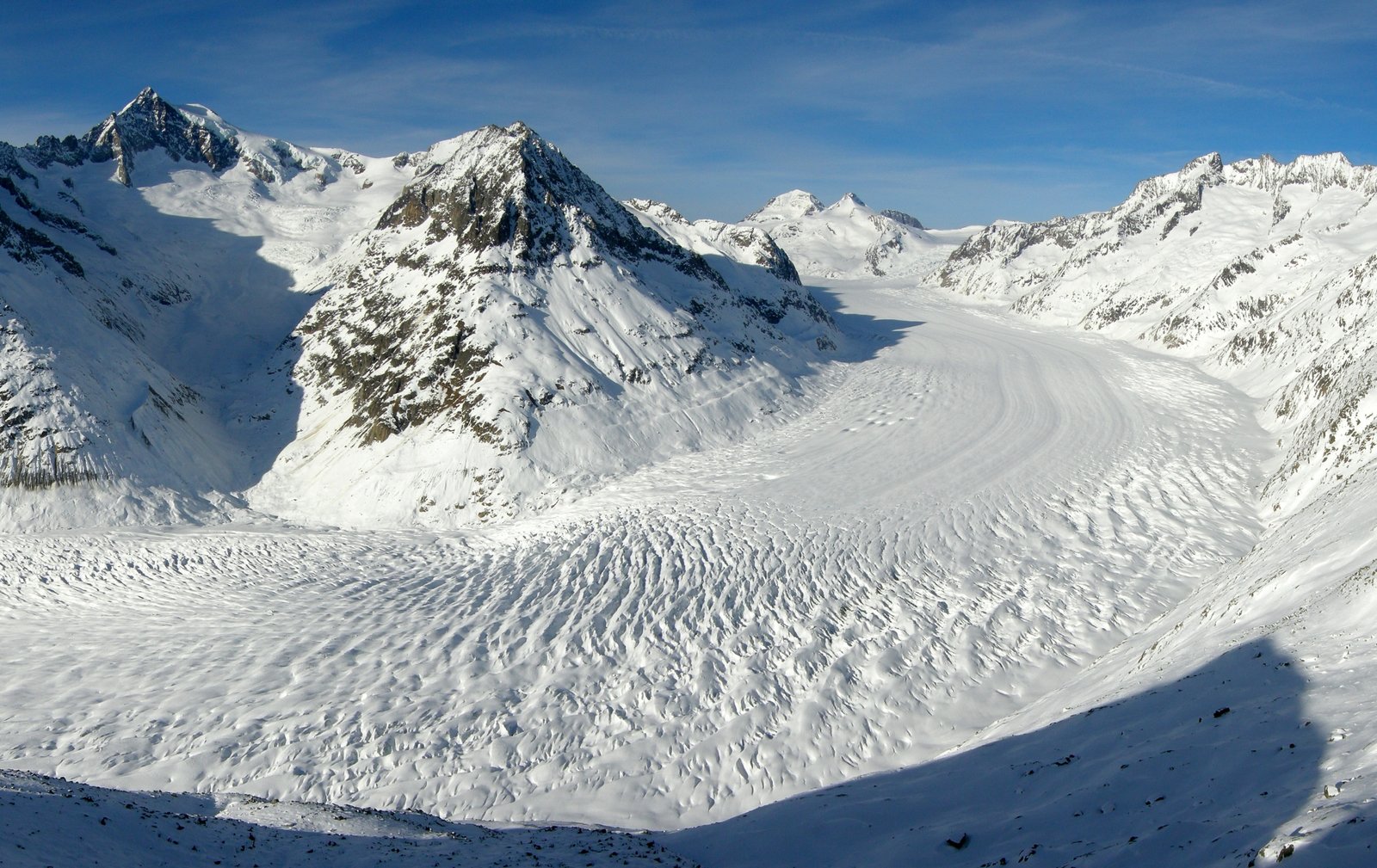
Photo: Tobias Alt, via Wikimedia Commons (CC BY-SA 4.0)
Sources
- https://www.thehindubusinessline.com/news/science/ice-loss-impacts-this-year-a-wake-up-call-for-world-leaders-ahead-of-cop31-icci-chief-scientist/article71655225.ece
- https://bharatneeti.com/global-ice-crisis-un-report-warns-of-irreversible-damage-beyond-1-5c-warming/
- https://britbrief.co.uk/environment/climate/un-ice-melt-damage-permanent-even-if-warming-reversed.html
- https://iccinet.org/impacts-of-overshoot/amp/
Leave a comment
Comment as a guest and verify your email, or sign in or create a reader account. Guest comments reach our review queue after email verification; account holders can submit directly for review.