Listen to this article
Take the story with you. Choose a voice and a pace that suits you.
Or listen in another language / choose a voice
Getting your device voices ready…
The voice follows the displayed language and your browser’s regional preference when available. You can choose another narration voice.
Here is the strange shape of this year’s climate numbers. Fossil fuel emissions are falling — slightly. Total emissions are rising — slightly. And the Global Carbon Budget 2026 remaining carbon budget for holding warming to 1.5°C now stands at 150 billion tonnes of CO2, less than four years of emissions at the current rate, according to the Global Carbon Project’s annual assessment, published on 10 November 2026.
The assessment was published on 10 November 2026. Information verified through 21 November 2026.
The 2026 edition — the 21st annual report, produced by an international team of more than 140 scientists — projects fossil CO2 emissions of 38.2 billion tonnes this year, down 0.4% on 2025, per the Global Carbon Budget summary. Two forces did the pushing: clean energy expanding fast enough to meet about two-thirds of rising energy demand, and an oil shock. Oil emissions are projected to fall 1.9%, a drop the researchers link to the energy shock triggered by the Iran conflict, according to the Global Carbon Project’s key messages briefing.
The Global Carbon Budget 2026 remaining carbon budget and a fossil CO2 emissions decrease 2026 nobody is celebrating yet
The researchers themselves are careful about what this dip means. “A decline in fossil CO2 emissions is encouraging, but a reduction driven partly by geopolitical shocks is not a sustainable climate solution,” said Professor Pierre Friedlingstein of the University of Exeter, who led the study, quoted by the Global Carbon Budget. Glen Peters of the CICERO Center for International Climate Research made the same point more bluntly, in the same release: “A drop in emissions in one year is not a peak unless it is driven by structural change.”
Look at the fuel split and you can see why. Oil is down 1.9% and natural gas down 0.3%, but coal — the dirtiest of the three — is projected to rise 0.6%, according to the key messages briefing. Country by country: China’s emissions fall 0.9%, the United States falls 1.3%, the European Union falls 1.5% and Japan falls 1.0%, while India’s rise 4.4% — above its 3.5% average annual growth over the past decade, per the briefing.
Total CO2 emissions 43.3 billion tonnes: the land gives back the fossil gain
If fossil emissions fell, why did the total go up? Because of the land. Total CO2 emissions 43.3 billion tonnes is the projected 2026 figure — up from 42.8 billion tonnes in 2025 — once land-use change is added in. Land-use emissions are projected to reach 5.1 billion tonnes in 2026, driven by peat fires and forest degradation in Southeast Asia, where drier conditions linked to the onset of El Niño have raised fire risk, according to the Global Carbon Budget. Nearly all peat fires are ignited by people, the briefing notes.
The longer land story is better than this year’s blip. Permanent deforestation released about 3.8 billion tonnes of CO2 a year on average between 2016 and 2025, and reforestation and afforestation offset roughly half of that, per SciTechDaily’s account of the assessment. The land carbon sink has also recovered after weakening sharply during the 2023–24 El Niño — though the powerful El Niño developing in 2026 is expected to weaken uptake again over the coming year, according to the briefing. Novel carbon removal technologies, meanwhile, still capture less than fossil fuels emit in 30 minutes, the Global Carbon Budget reports.
Solar wind electric vehicles avoided emissions are doing the heavy lifting
Strip out the oil shock and the durable story is technological. Solar wind electric vehicles avoided emissions reached a projected 4.6 billion tonnes of CO2 in 2026 from solar and wind generation alone — up from 4.1 billion tonnes in 2025 and just 0.28 billion tonnes in 2010, according to SciTechDaily. China accounts for about half of the emissions avoided worldwide through renewables and electric vehicles, the Global Carbon Budget notes, even while producing roughly 32% of global fossil emissions.
The pace of the whole system has changed, too. Total CO2 emissions grew by an average of 0.3% a year over the past decade, against 1.7% a year in the decade before, per the briefing. And 59 countries emitted less in 2025 than in 2019, before the pandemic, while their economies grew, according to the accompanying analysis reported by the Global Carbon Budget.
None of that changes the arithmetic at the top. Human-caused warming reached 1.37°C in 2025, and each further 220 billion tonnes — about five years at current rates — adds roughly another 0.1°C, per the briefing. Atmospheric CO2 concentration is projected to reach 427.7 parts per million in 2026, 54% above pre-industrial levels, SciTechDaily reports. The budgets for 1.7°C and 2°C stand at 510 and 1,035 billion tonnes — 12 and 24 years at 2026 rates, according to the briefing.
Analysis: This is the first Global Carbon Budget in which the good news and the bad news are the same size. Clean technology is now big enough to bend the fossil curve on its own — and the remaining budget is now small enough that a single bad fire season in Southeast Asia can cancel the bend out. Whether 2026 gets remembered as the peak depends on which of those two facts compounds faster.
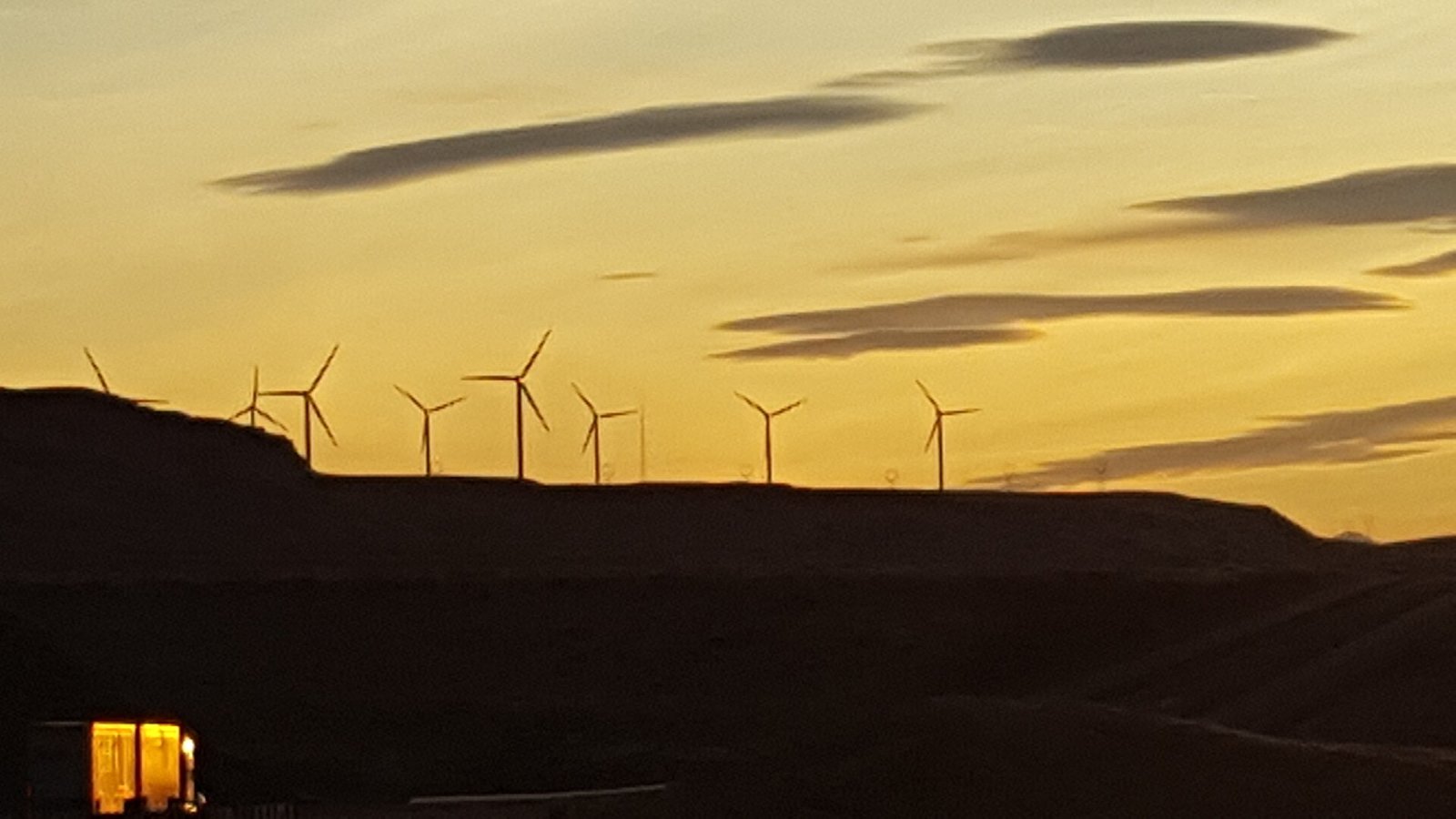
Photo: Always dreamin, via Wikimedia Commons (CC0)
Sources
- Global Carbon Budget — Fossil CO2 emissions decrease in 2026 https://globalcarbonbudget.org/fossil-co2-emissions-decrease-in-2026/
- Global Carbon Project — Briefing on key messages from the Global Carbon Budget 2026 https://cger.nies.go.jp/gcp/pdf/20261110/Key%20Messages%20Global%20Carbon%20Budget%202026.pdf
- SciTechDaily — Scientists Warn: The World Has Less Than Four Years of Carbon Budget Left https://scitechdaily.com/scientists-warn-the-world-has-less-than-four-years-of-carbon-budget-left/
Leave a comment
Comment as a guest and verify your email, or sign in or create a reader account. Guest comments reach our review queue after email verification; account holders can submit directly for review.