Listen to this article
Take the story with you. Choose a voice and a pace that suits you.
Or listen in another language / choose a voice
Getting your device voices ready…
The voice follows the displayed language and your browser’s regional preference when available. You can choose another narration voice.
November is when the ocean off San Francisco is supposed to cool. This year it did the opposite. The record Farallon ocean temperatures November brought — 18.8°C (65.8°F) on 11 November, nearly 6°C above the historical average for that date — are the kind of reading researchers double-check before they believe (Point Blue).
Information verified through 15 November 2026.
A strong El Niño California coast 2026 is building
Two days earlier the water had gone higher still. On 8 November the temperature reached 19.1°C, the third-highest measured since records began in 1925; only two days in August 1997, during one of the strongest El Niño events on record, were warmer (Point Blue). The run matters as much as the peak: 12 consecutive days above 18°C, and 16 of the past 18 days, against seven consecutive days above 18°C in August 1997 (Point Blue).
NOAA’s 12 November 2026 report says El Niño is rapidly strengthening, with unusually warm water spreading across the tropical Pacific. NOAA estimates a greater than 79% chance that a strong to very strong El Niño persists through early 2027, and about a 60% chance it becomes one of the strongest events recorded since 1950, potentially surpassing 1982–83, 1997–98 and 2015–16 (Point Blue).
The Farallones are not an outlier. Weather West reports near-shore temperatures more than 10°F above average in an unbroken band from central Baja California to Sonoma County, with record-breaking values for any cool-season week since at least 1981 from Newport Beach to Eureka (Weather West). Its assessment of the cause is careful: an extreme El Niño building on a pre-existing marine heatwave, itself amplified by long-term ocean warming from human-caused climate change, with future attribution studies needed to split the shares (Weather West).
Warm water takes up more room. Thermal expansion is holding coastal ocean levels at least 6–12 inches above average, Weather West estimates, and seasonal forecasts suggest the anomalies could persist through January or February (Weather West). That raised baseline is why forecasters there are watching the late-November to late-January king tides: add a storm on top of water already a foot or more high, and coastal flooding stops being hypothetical (Weather West).
California marine heatwave wildlife: boobies in, gulls missing
The islands are a laboratory because people have watched them for so long. Daily measurements at the Farallones stretch back nearly a century and have been maintained by Point Blue researchers since 1968 in partnership with Scripps Institution of Oceanography (Point Blue).
This month the biologists report water so clear that visibility reached 50 feet. Warm-water visitors have arrived in force: a record-tying 32 Cocos boobies, with at least 20 present daily, record numbers of black-vented shearwaters, large pods of common dolphins rarely seen there outside warm-water events, and schools of bonito near the surface (Point Blue).
The absences tell the other half. Fewer migratory gulls are visiting, possibly reflecting changes in local food availability. California sea lions and northern fur seals have seen reduced pup production and survival. Shark predation events are up (Point Blue). Point Blue is explicit that not all of this can be pinned on El Niño directly — food webs move for many reasons — but together the changes show how fast a marine ecosystem can rearrange itself (Point Blue).
Warmer water changes where fish and other marine animals find food, and that ripples out to seabirds, seals, sea lions and whales (Point Blue). El Niño can also bring wetter winters to parts of California, so the same event rearranging the food web may be loading the season’s storms.
The Farallon Islands sea surface temperature record behind the record Farallon ocean temperatures November
A record is only as good as the series behind it. Because the Farallon measurements run daily back to 1925, a November reading can be compared honestly against a century of Novembers — that is what makes “third-highest since 1925” a fact rather than a flourish (Point Blue).
Long records also change management while events are still unfolding. On the Atlantic coast, the Smithsonian Environmental Research Center describes how the Atlantic Cooperative Telemetry Network — more than 120 organisations, over 17,000 tagged animals across 92 species — used tag data to show dusky sharks migrate through a protected zone from November to May, not January to July as managers had assumed; in 2026 the National Marine Fisheries Service moved the zone’s protected season to 1 November–31 May to match (Smithsonian Magazine). Same principle, different ocean: measure for decades, then move the rule when the animals move.
Point Blue says its Farallones science feeds the same kind of decisions — marine protected area placement, management of NOAA’s Greater Farallones and Cordell Bank sanctuaries, shipping behaviour that saves whales, and fishing management (Point Blue).
Analysis: the temptation is to file a warm November under weather. The century-long series argues otherwise. El Niño is natural and cyclical; a November reading that rivals the peak of 1997, sustained for twelve straight days on top of a pre-existing heatwave, is what a natural cycle looks like when it lands on a warmer baseline. The wildlife now arriving and vanishing at the Farallones is the baseline making itself visible.
Winter will deliver the verdict on land — rain, flooding, erosion. Out at the islands, the verdict is already swimming past the researchers, in water clear enough to see 50 feet down.
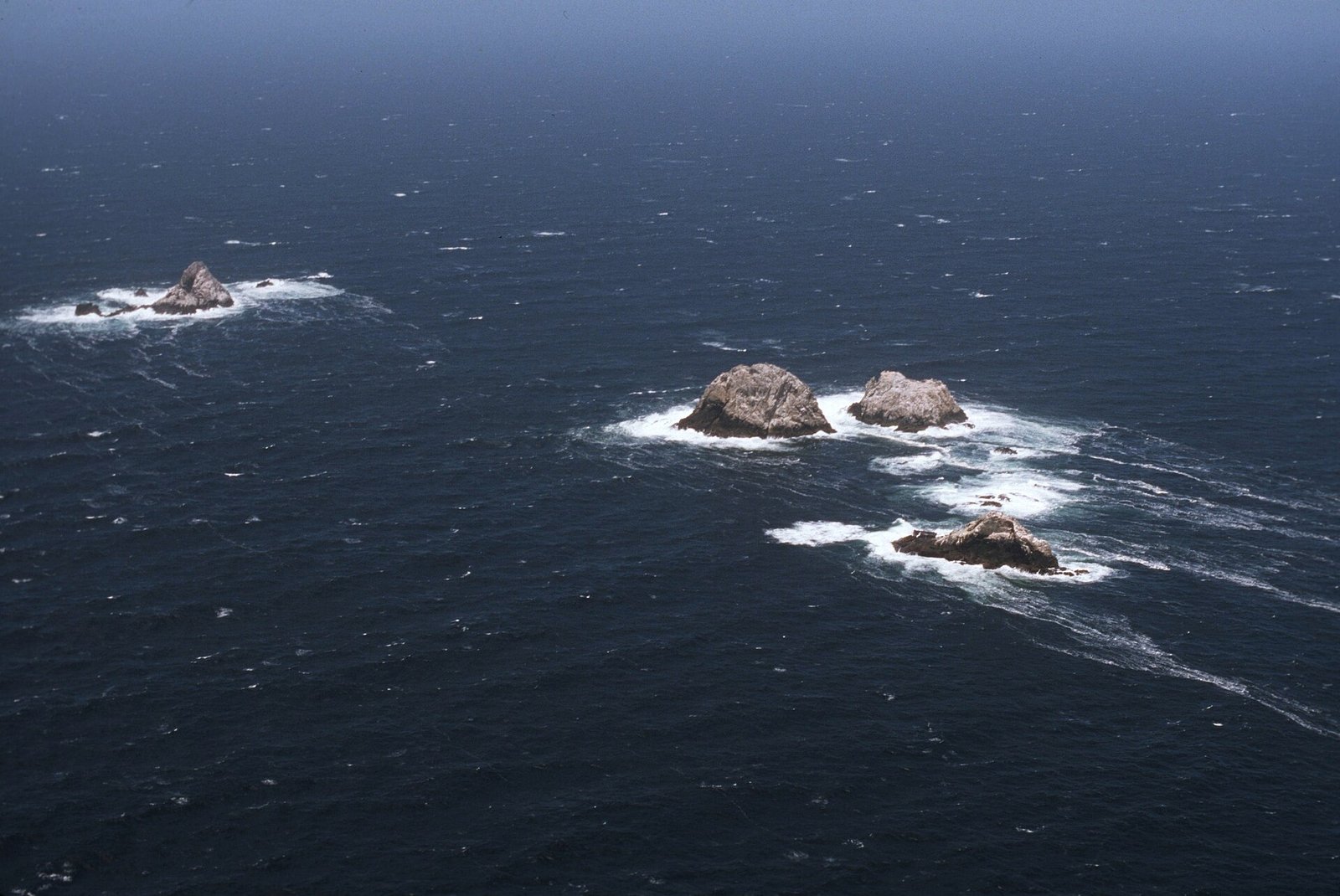
Photo: Common Murre Restoration Project, USFWS, via Wikimedia Commons (public domain)
Leave a comment
Comment as a guest and verify your email, or sign in or create a reader account. Guest comments reach our review queue after email verification; account holders can submit directly for review.