Listen to this article
Take the story with you. Choose a voice and a pace that suits you.
Or listen in another language / choose a voice
Getting your device voices ready…
The voice follows the displayed language and your browser’s regional preference when available. You can choose another narration voice.
Investigation — Evolving Humanities. Golden Rice series, Part 1 of 6. Reporting verified November 2026.
TL;DR: Golden Rice really does make beta-carotene in a part of the plant that normally makes none, and in adults its beta-carotene converts to vitamin A unusually well. What has never been shown — in a surviving, peer-reviewed trial — is that eating it improves vitamin A status in the children it was designed for. Its first version was too weak, its second version’s famous figure was a laboratory maximum, the deployed version’s field content is disputed by a factor of several, storage and cooking take much of what is there, and the only children’s feeding study was retracted in 2015 for consent failures, not fabricated data. Meanwhile Philippine vitamin A deficiency has fallen from 40.1 percent to 13.9 percent without it, and rival interventions carry measured outcomes Golden Rice does not. The honest dispute is not safe versus dangerous. It is unproven at the only endpoint that matters.
At a glance
A plant that made something where nothing was
Start with the anatomy, because the invention is real even where the promise remains unmeasured.
A rice plant makes beta-carotene in its green tissues, but the endosperm — the white, starchy centre people eat — is carotenoid-free. The pathway’s early steps and its precursor GGPP are present there. Then it stops.
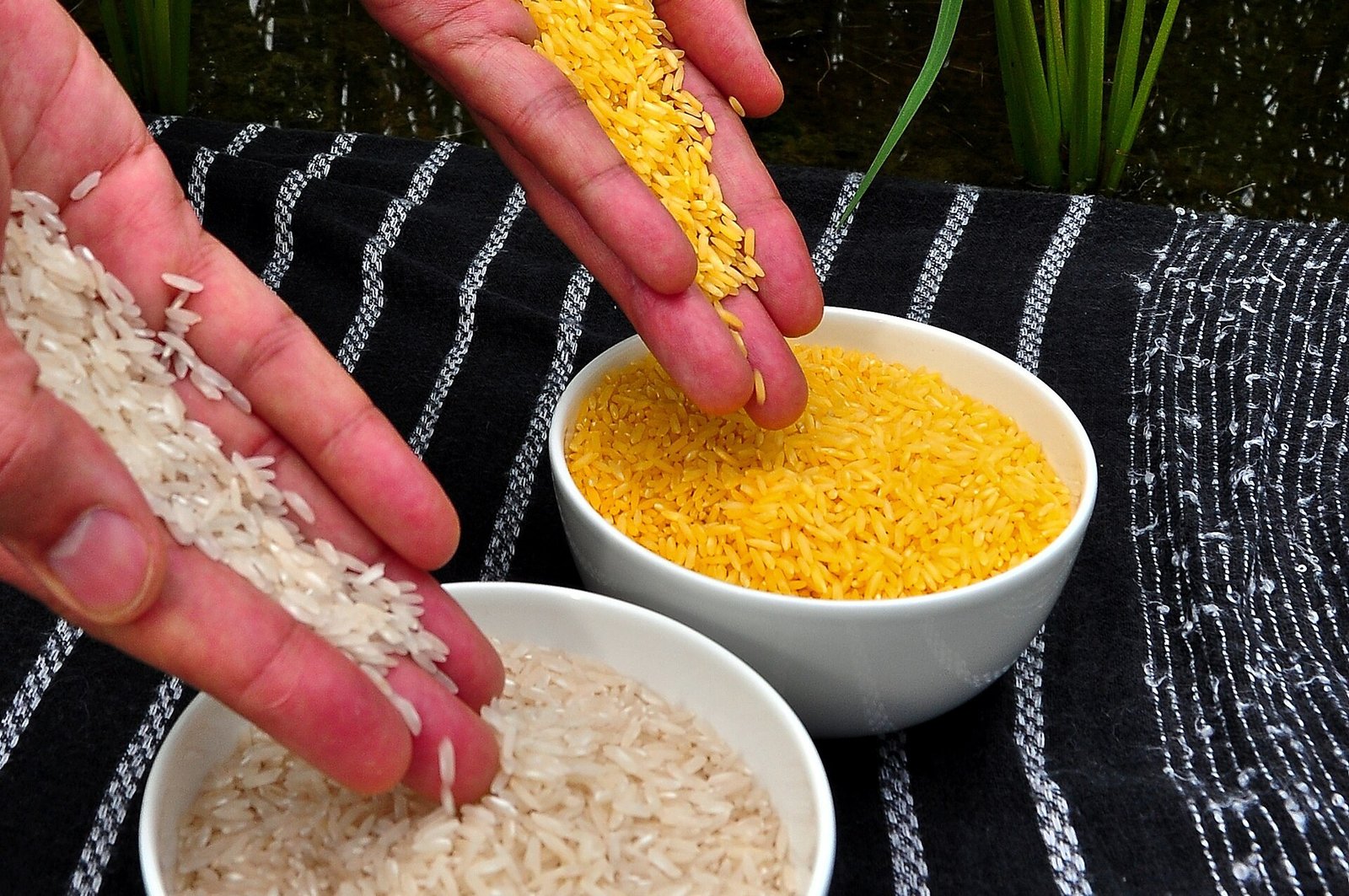
Ingo Potrykus, at the Swiss Federal Institute of Technology in Zürich, and Peter Beyer, at the University of Freiburg, restarted it. Their paper, by Ye and colleagues, appeared in Science in January 2000: “Engineering the provitamin A (beta-carotene) biosynthetic pathway into (carotenoid-free) rice endosperm,” Science 287: 303–305. They used two genes, switched on only in the endosperm: psy, from daffodil, converting GGPP to phytoene; and crtI, from the bacterium Erwinia uredovora (now Pantoea ananatis), performing steps that would otherwise need several plant enzymes. A third gene proved unnecessary. The grain turned yellow — hence the name. The achievement was not quantity but that a whole pathway had been engineered into a tissue that did not run it. Quantity is where the trouble starts: GR1 contained about 1.6 micrograms of total carotenoids per gram of dry endosperm, of which about 0.8 was beta-carotene — figures routinely collapsed in retellings, though total carotenoids are not beta-carotene alone, and dry weight is not cooked weight.
Golden Rice was never argued about as a demonstration. It was argued about as a delivery system: how much vitamin A activity reaches a deficient child, after the grain is grown in a real variety, stored in real conditions, cooked and eaten as part of a real diet? Twenty-five years later, the first question has several answers. The second has an estimate, a retracted trial and a gap.
How do you get from 0.8 to 31 — and why does that journey mislead?
In 2005, a Syngenta team published the second generation. Paine and colleagues, in Nature Biotechnology, replaced the daffodil psy gene with maize psy1, keeping the bacterial crtI, and reached up to 37 micrograms per gram of total carotenoids in dry grain, of which about 31 micrograms per gram was beta-carotene — roughly a 23-fold increase over GR1.
Thirty-one micrograms per gram was a maximum in the best laboratory lines, not a field average — the most abused distinction in the file. GR2 was a family of transformation events; only one was carried through deployment: GR2E, which Swamy and colleagues (Scientific Reports, 2021) reported contained a single intact copy of the inserted DNA at a single site. An earlier lead event was abandoned after poor field performance.
In the Philippines GR2E was introgressed into PSB Rc 82 and registered as NSIC 2022 Rc 682GR2E, Malusog Rice (“malusog” = healthy). The Philippines issued the world’s first commercial propagation permit on 21 July 2021. The developer-authored pilot account (Zagado et al., Scientific Reports) reports 202 hectares across 24 provinces in 2022–23 and more than 77 tonnes of milled rice distributed free to target households.
Then ask the simplest question in nutrition — how much beta-carotene was in that rice? — and the record splits open.
What is actually in the deployed grain?
There is no single agreed figure for GR2E as grown. That is not a rhetorical flourish. It is the finding.
Biswas and colleagues (Frontiers in Plant Science, 2021) reported GR2E in the Bangladeshi variety BRRI dhan29, in a confined field trial, at 8.5–12.5 micrograms per gram of total carotenoids, mean 10.6, about 80 percent of it beta-carotene. Swamy and colleagues reported earlier introgression generations lower: 3.6–6.2 micrograms per gram in an IR64 background, 3.1–6.4 in PSB Rc 82 and 3.2–8.0 in BRRI dhan29, with later selected lines described as able to supply 30–50 percent of the vitamin A estimated average requirement. Bollinedi and colleagues, working with transgenic lines in India, found 7.13–22.81 micrograms per gram of beta-carotene at harvest across genotypes.
Against that sits the regulatory submission to the United States Food and Drug Administration. In the data submitted for GR2E (Biotechnology Notification File 000158, as reported from the FDA record), beta-carotene in unmilled GR2E rice ranged from 0.50 to 2.35 micrograms per gram, mean 1.26. The FDA’s consultation letter of 25 May 2018 closed the food-safety consultation and delivered the sentence that has followed the project ever since. You can read the FDA’s consultation letter yourself.
“the concentration of β-carotene in GR2E rice is too low to warrant a nutrient content claim.” — US Food and Drug Administration, GR2E consultation response letter, 25 May 2018
Read it carefully. It does not say the rice is unsafe, or that it contains no beta-carotene. It says the concentration in the submitted material was too low to warrant a nutrient content claim under United States labelling rules.
Critics — Wilson and Latham in Independent Science News (2018), and groups including GMWatch in the material reviewed — present the 0.50–2.35 range as proof the deployed rice contains less beta-carotene than GR1 did. Proponents answer on two grounds: the FDA test applies to a United States serving (Americans eat roughly 45 grams of rice a day, against roughly ten times that in the Philippines, the International Rice Research Institute’s stated position), and regulatory samples are not necessarily fresh-at-harvest maxima, since beta-carotene falls in storage before assay. Neither side’s published material, as retrieved for this investigation, fully reconciles the FDA range with the 8.5–12.5 field range. The samples differ by background, place, season, milling, age and assay, and some figures are total carotenoids rather than beta-carotene alone. That may explain part of the gap. It does not produce a number a reader can safely repeat as “the level in Malusog Rice.”
Our research therefore uses the most defensible synthesis in later review literature: lines can hold roughly 20–30 micrograms per gram of total carotenoids at harvest, suffer more than 50 percent post-harvest losses, and are still expected to provide about 4–6 micrograms of beta-carotene per gram at consumption — a planning estimate, not an assay of a named sack of Malusog Rice. The pilot paper states qualitatively that levels met the 30–50 percent target but, in the summary retrieved, gives no single value. A nutrient-delivery deployment reported without a headline nutrient assay leaves both camps free to fill the space with a preferred number from somebody else’s field, variety and year.
What happens between the harvest and the bowl?
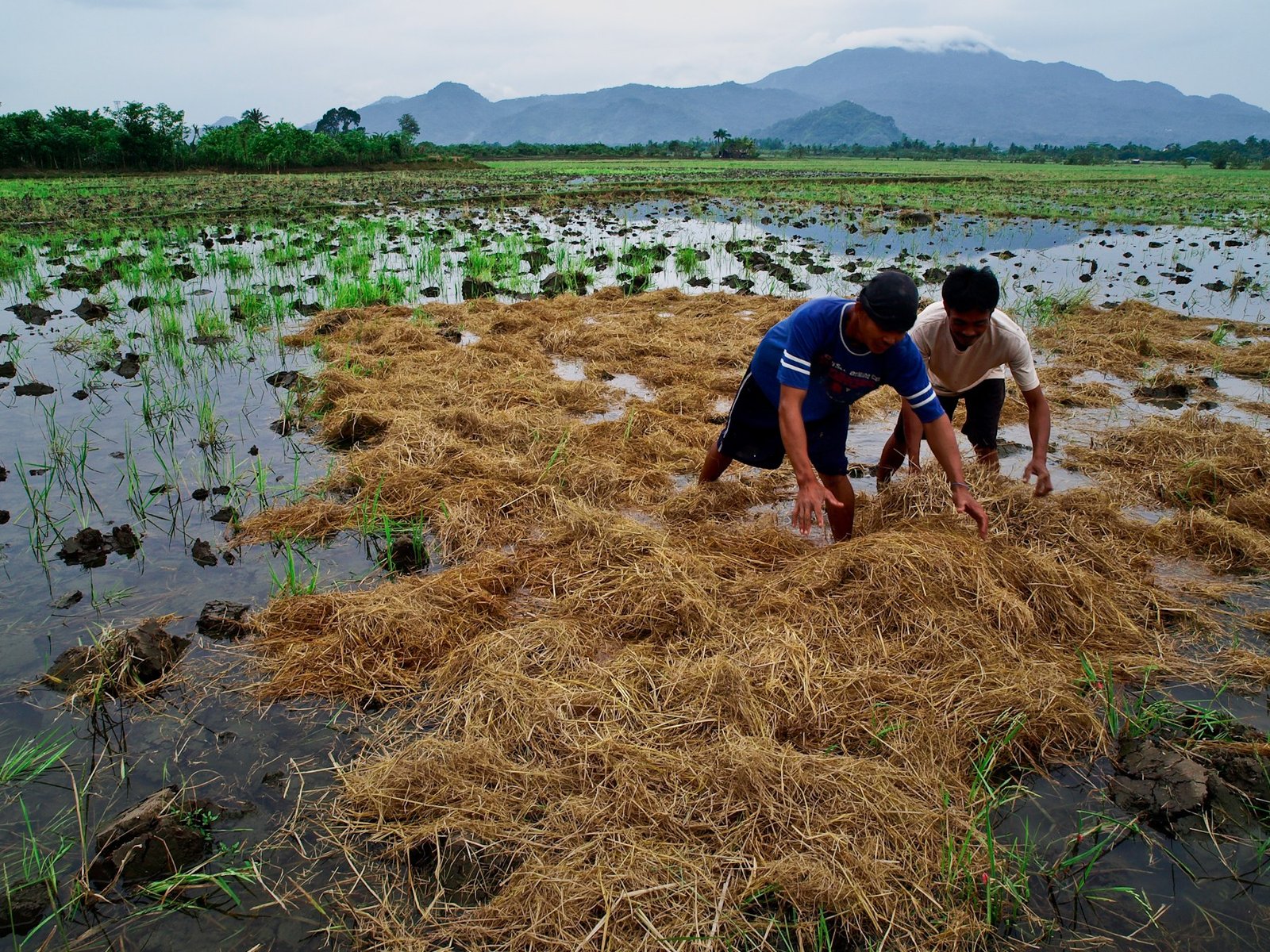
Beta-carotene oxidises — degraded by oxygen, light, heat and lipoxygenase co-oxidation. Milled rice endosperm, engineered to make a compound it never evolved to store, offers little protection. The grain is at its richest on the day it is harvested. Every honest calculation starts downhill from there.
Schaub and colleagues (Journal of Agricultural and Food Chemistry, 2017), studying a GR2E line in the Kaybonnet background, found Golden Rice retained only about 60 percent of its beta-carotene after three weeks in air, and about 13 percent after ten weeks. Supporters note Kaybonnet is not grown in the Philippines and storage regime drives the rate — fair caveats about kinetics, not a Malusog assay. But kinetics do not stop at a border.
Bollinedi and colleagues (Food Chemistry, 2019) followed transgenic lines for six months from starting levels of 7.13–22.81 micrograms per gram. After six months in air, losses were 68 percent (paddy), 72 percent (brown) and 79 percent (polished) at 4°C, and 80, 81 and 84 percent respectively at 25°C. The best retention — unhusked paddy, vacuum-packed at 25°C — still lost about 46 percent. Steam cooking removed a further 17–24 percent, depending on genotype.
Later proponent-side reviews add that losses plateau after two months and vacuum packaging would help; critics, including GMWatch and Wilson and Latham, answer that poor households do not vacuum-pack paddy. Both use the same papers. Degradation is large — half or more within weeks to months in air, over 80 percent in six months for polished rice at tropical temperature. The dispute is which baseline and storage practice to assume.
That matters because target households are least likely to have sealed, cool, short-turnover storage. If a grain starts at 10 micrograms per gram, loses half in storage and a fifth of the remainder in cooking, the bowl holds about 4. Starting at the FDA mean of 1.26, the same arithmetic leaves a fraction of a microgram. The assay dispute, multiplied through degradation, is the difference between a meaningful supplement and a rounding error. Any account quoting a harvest figure as a dinner figure is misleading you.
Does the body actually use it?
Here the record improves — narrowly, carefully, and in adults.
Tang and colleagues published “Golden Rice is an effective source of vitamin A” in the American Journal of Clinical Nutrition in 2009. Five healthy adults (three women, two men) in Boston ate a single serving of 65–98 grams of dry rice (130–200 grams cooked), containing 0.99–1.53 milligrams of beta-carotene, with 10 grams of butter. The rice had been grown hydroponically with deuterium oxide, so its beta-carotene was intrinsically labelled and could be tracked into retinol, the active form of vitamin A, against a labelled retinyl acetate reference dose.
“the conversion factor of Golden Rice β-carotene to retinol is 3.8 ± 1.7 to 1” — Tang et al., American Journal of Clinical Nutrition, 2009
About 3.8 parts by weight of Golden Rice beta-carotene produced one part of retinol, with an individual range of 1.9–6.4 to 1. That is far more efficient than the roughly 12:1 ratio used for mixed vegetable beta-carotene, and far better than leafy vegetables (~21–27:1 in studies Tang cited). The proposed explanation is the food matrix: rice endosperm is simple and easily digested, and its beta-carotene is not trapped in chloroplasts as leaf beta-carotene is.
This study stands and is the strongest human evidence in the file — and its limits deserve the same prominence. Five subjects; healthy, well-nourished United States adults; one meal, with butter — and beta-carotene is fat-soluble, so absorption in a near-fat-free meal would be expected to be lower. Critic M. Krawinkel questioned a mean from five subjects in which only two of five values were above the median; Tang replied that all five still beat 12:1. Both points are in the journal record. The study does not measure conversion in deficient, possibly gut-compromised children on a low-fat diet — the target population.
Tang 2009 establishes bioavailability under favourable conditions, not efficacy — that deficient children eating this rice as grown, stored and cooked end up with better vitamin A status. A compound can be bioavailable and still fail its clinical endpoint. Bioavailability is a mechanism; efficacy is a result in the people you claim to help. Golden Rice has the first. For children, after 2015, it no longer has a surviving claim to the second.
First, though, the kilograms
Long before GR2E there was an argument about how much rice a person would have to eat. Both sides still use its slogans, and neither slogan survives the arithmetic of its own era.
On 9 February 2001, Greenpeace International’s press release “Genetically Engineered ‘Golden Rice’ Is Fool’s Gold” calculated from GR1 figures that an adult would have to eat at least twelve times the normal 300-gram intake for the daily recommended provitamin A. Later summaries put the implied figures at ~3.7 kilograms a day, and 6–9 kilograms in other reports, depending on the assumptions used.
Ingo Potrykus replied. He did not dispute that GR1 alone could not supply 100 percent of the recommended allowance at normal intakes. He disputed the test and the arithmetic: on Greenpeace’s own 100-percent standard he calculated 0.75–1.5 kilograms, not 9, and the design goal, he argued, was never sole-source supply.
“We want to provide rice, which has enough provitamin A, that it has a clear beneficial effect on vitamin A-deficient people — not 100%.” — Ingo Potrykus, published reply to Greenpeace, 2001
Our research verdict: for GR1, “kilograms per day for 100 percent of requirements” was broadly correct arithmetic; as a claim GR1 could therefore contribute nothing, it was contested by its inventor on supplement-not-substitute grounds. A third of a requirement is not nothing — and a first version nowhere near the promoted requirement was not what headlines suggested either.
GR2 changed the arithmetic ~23-fold at its maximum, and Tang 2009 changed the conversion assumption from ~12:1 to ~3.8:1. (One Paine-derived estimate — 60–80 grams meeting a young child’s allowance — is laboratory-based and should not be applied to field grain.) The developers’ current claim is more modest:
“A cup of cooked Malusog Rice can provide 30–50% of the estimated average requirement of vitamin A for under-five children and pregnant or lactating mothers” — IRRI / PhilRice deployment claim, reported in Swamy et al. 2021 and Zagado et al. 2026
Note the language: a cup, cooked; of the estimated average requirement; assuming regular consumption. Conservative modelling reaches a similar neighbourhood (6 µg/g, 80 percent cooking retention, 6:1 conversion → ~50 percent for ages 4–8), and de Moura and colleagues (2016) found modelled intakes improved in three countries. Modelled — the word does heavy work where the content fed into the model is the thing in dispute.
The fairest sentence the evidence supports: at documented field levels, after storage and cooking losses, and at Philippine intakes, GR2E is estimated by its developers to supply roughly 30–50 percent of a young child’s requirement — a substantial supplement, not a complete source, and not yet confirmed by a measured feeding outcome. Remove “estimated,” “by its developers” or “not yet confirmed,” and you have left the science for the brochure.
What happened in Hunan?
In 2008, in a primary school in Hengyang, Hunan province, China, schoolchildren aged 6–8 ate weekday lunches for three weeks containing, by group, Golden Rice, spinach, or beta-carotene in oil capsules. The senior researcher was Guangwen Tang of Tufts University, author of the adult study above.
Even the headcount will not settle. The published paper’s analysable cohort is commonly reported as 68 children; Tufts and press accounts describe 72 recruited or fed, in groups of roughly two dozen, with about 24–25 receiving Golden Rice. Our research could not reconcile 68 against 72 — the paper is retracted and its full participant flow was not retrieved — so this article says: about 68–72 children, of whom about 25 ate Golden Rice.
On 1 August 2012 the study was published in the American Journal of Clinical Nutrition as “β-Carotene in Golden Rice is as good as β-carotene in oil at providing vitamin A to children.” Its claim was exactly the one the field needed, with a reported child conversion of roughly 2.3:1 later cited by Potrykus. Because the paper is retracted, those numbers are reported here only as what it claimed. They are not established findings.
Within weeks, Greenpeace East Asia alleged children had been used in a genetically modified trial without disclosure. That allegation — unlike many here — was investigated by institutions with authority over the researchers, and substantially upheld. Hunan officials initially denied any genetically modified rice had been fed (1 September 2012). The denial did not hold; the China CDC investigated for three months.
Its findings, as summarised in Nature‘s news report (Qiu, 10 December 2012), were specific. The consent form described a beta-carotene study. It did not say what parents most needed to know.
The consent form “said that the rice contained β-carotene, but not that it was genetically modified or that it was Golden Rice” — Nature news report summarising the China CDC findings, Qiu, 10 December 2012
Reporting of the joint CDC statement adds a detail difficult to read without anger: parents were handed only the consent form’s last page to sign, with no mention of Golden Rice or genetically modified food. The CDC found Wang Yin (Zhejiang Academy) had fabricated ethics approval documents rather than applying, and Tang had brought the rice into China without due declaration. CCTV’s investigation (8 December 2012) disclosed an email from Yin Shi’an to Tang saying he had changed the wording because mentioning Golden Rice was “too sensitive.”
On 6 December 2012 the China CDC announced the dismissal of three officials for violating regulations, scientific ethics and academic integrity: Yin Shi’an (principal investigator of the Chinese arm), Hu Yuming (Hunan CDC, failure of supervision) and Wang Yin (Zhejiang Academy).
This is not a finding that Golden Rice harmed the children; no such finding appears in the institutional record. It is a finding that adults concealed the food’s defining fact from the parents asked to consent. Consent omitting the intervention’s defining characteristic is not informed consent, and a study built on it cannot stand.
Why did the paper fall — and what fell with it?
Tufts University’s year-long external review, published 17 September 2013, found the study was not conducted in full compliance with its policy or federal regulations: the researchers had not adequately explained the nature of Golden Rice and had made changes without its review board’s approval. Tufts also said the scientific conclusions remained valid and that its committee found no evidence of falsification or fabrication of the underlying data. Its sanction: Tang was banned from human-subjects research for two years, followed by two years under direct supervision.
In July 2014 Tang sued the American Society of Nutrition, the journal’s publisher, to block retraction, after the Society had twice asked the authors to withdraw voluntarily and they declined. On 17 July 2015 a Massachusetts Superior Court judge denied the injunction, ruling it would be an unconstitutional prior restraint. On 29 July 2015 the Society retracted the paper. You can read the journal’s retraction notice yourself. Its two stated reasons were about proof of process, not fabrication:
“The authors are unable to provide sufficient evidence that the study had been reviewed and approved by a local ethics committee in China in a manner fully consistent with NIH guidelines” — American Society of Nutrition, retraction notice for Tang et al., 29 July 2015
“The authors are unable to substantiate through documentary evidence that all parents or children involved in the study were provided with the full consent form for the study.” — American Society of Nutrition, retraction notice for Tang et al., 29 July 2015
A later challenge must be labelled for what it is. A 2024 Committee on Publication Ethics case file presents a complaint by Adrian Dubock — Golden Rice project manager and a former Syngenta executive — arguing the retraction was unwarranted and alleging competing-interest prejudice. The Society’s position in the same file is that the retraction followed a thorough investigation under the Committee’s guidance. Our research records Dubock’s challenge as a contested claim by an interested party, not a reversal. No court or journal has reinstated the paper. The retraction stands.
The distinction between “retracted for ethics” and “retracted for fraud” cuts both ways. For critics, the retraction is not evidence the rice failed biologically — Tufts found no fabrication. For supporters, that does not rescue it: research on children that cannot document consent and ethics approval is unusable. What fell in 2015 was not proof the rice does not work in children. It was the only direct attempt to prove it does. No replacement exists: no non-retracted child feeding trial establishes a conversion ratio or a vitamin A status outcome. Indirect support — the adult study, other biofortified crops, modelling — is not a feeding trial. The centre of the efficacy case has been empty for more than a decade.
How big is the problem it was built to solve?
Vitamin A deficiency damages immune function and eyesight, and in severe form blinds. The World Health Organization calls it the world’s leading preventable cause of childhood blindness, in a sentence quoted so often its age is rarely mentioned.
“An estimated 250 000–500 000 children who are vitamin A-deficient become blind every year, and half of them die within 12 months of losing their sight.” — World Health Organization, vitamin A deficiency page
Our research flags that figure plainly: it descends from 1980s–90s analyses and has been carried on WHO pages for decades essentially unchanged; no post-2005 empirical update was found. Present it, as here, as WHO’s long-standing estimate — not a current annual count.
Stevens and colleagues (Lancet Global Health, 2015), pooling 134 sources, put deficiency in children 6–59 months in low- and middle-income countries at 39 percent (1991) falling to 29 percent (2013) — and from 42 to 6 percent in East and Southeast Asia and Oceania — while it remained at 48 percent in sub-Saharan Africa and 44 percent in South Asia, with about 105,700 attributable under-five deaths in 2013, over 95 percent in Africa and South Asia. The global burden had concentrated there; Southeast Asia is not its centre in the way early rhetoric implies. But a falling regional average is not a solved Philippine problem.
The authoritative Philippine source is DOST-FNRI’s National Nutrition Survey series, using serum retinol below 20 µg/dL (low-to-deficient, the 0.70 µmol/L threshold). WHO bands 10–19.9 percent as moderate public-health significance, 20 percent or above as severe. In the Expanded National Nutrition Survey 2018–19 (10,421 children), prevalence at ages 6 months to 5 years was 15.5 percent, mean serum retinol 27.6 µg/dL — publicised by FNRI as one in six children. Rural: 16.9 percent. Urban: 13.6 percent. Poorest quintile: 22.4 percent — severe, inside a national figure classed as moderate, with 23 of 79 areas at severe levels. The pilot targeted pockets, not averages. Other groups were far lower (pregnant women 3.0 percent, lactating mothers 2.2 percent): in the Philippines, deficiency is now overwhelmingly a preschool-child problem. You can read the FNRI survey results yourself.
The trend neither camp quotes whole: 38.0 percent (1993), 35.3 (1998), 40.1 (2003), 15.2 (2008), 20.4 (2013), 15.5 (2018–19), 13.9 percent in 2023 (3,677 children; highest at 6–11 months, ~34.8 percent). The fall from ~40 to ~15 percent happened before any Golden Rice was eaten outside a trial, during supplementation scale-up and under the 2000 Food Fortification Act. Critics cite this as proof existing tools work. Proponents reply that 15.5 percent still meant roughly two million children, and coverage is patchy — in 2018–19 only 50.8 percent of children 12–71 months had been supplemented once in the past year, 11.7 percent twice. Both readings fit the same numbers. A deficiency down by two-thirds, still severe for the poorest and imperfectly covered, is neither a crisis suspending evidentiary standards nor a success making a new intervention pointless. It is a stubborn residual problem — the kind for which you would want to know, not model, whether a proposed food works.
What else has been measured?
This is the comparison the public debate avoids, because it is unflattering to the technology at its centre — not on safety, but on proof.
High-dose vitamin A supplementation. Twice-yearly capsules (100,000 IU at 6–11 months; 200,000 IU at 12–59 months). The Cochrane review (search updated March 2021) covers 47 trials and 1,223,856 children: high-certainty evidence of a 12 percent reduction in all-cause mortality and diarrhoea mortality, and reduced night blindness. (An earlier version headlined 24 percent; this article uses the current figure.) Its weaknesses are acknowledged: a campaign, not a food; no fix for dietary inadequacy between doses; coverage decays; effect largest where deficiency is severe. Its virtue is simple: its effect on children was measured, at over a million participants.
Food fortification. Adding vitamin A to centrally processed oil, sugar, flour or milk. The Philippines legislated mandatory fortification in 2000; in Bangladesh, edible-oil fortification coincided with deficiency falling from about 20 percent (2011–12) to 7.2 percent (2020). Its evidence is largely programmatic, and it under-reaches subsistence households that buy little processed food — precisely Golden Rice’s target households. The two approaches complement each other, as reviewers on both sides note.
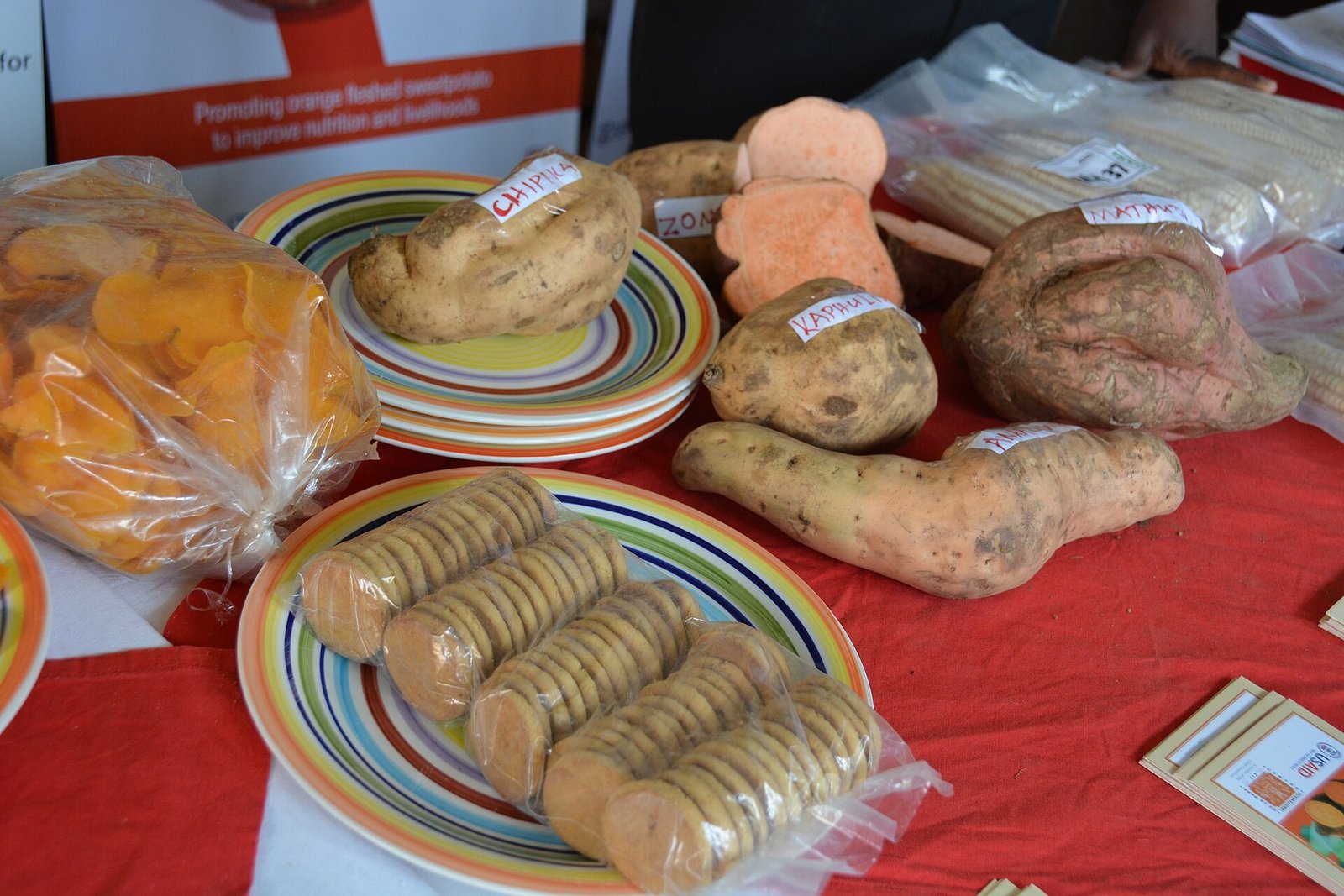
Orange-fleshed sweet potato (OFSP). Conventionally bred (International Potato Center with HarvestPlus), not transgenic — and it has what Golden Rice lacks. In Mozambique, Low and colleagues (2007, 741 children) found median vitamin A intake of 426 against 56 µg retinol activity equivalents, mean serum retinol up 0.100 µmol/L with no significant rise in controls, and low serum retinol down from about 60 to about 38 percent on adjusted analyses. In Uganda, Hotz and colleagues (2012) found OFSP supplied 44–60 percent of vitamin A intake, inadequate intake fell by more than 30 percentage points, and low serum retinol fell 9.5 percentage points in children 3–5. In South Africa, van Jaarsveld and colleagues (2005) found 125 grams a day of boiled OFSP improved a liver vitamin A stores indicator.
The league table, plainly: supplementation — mortality measured across 47 trials. OFSP — intake and blood status measured in children, in more than one country. Fortification — population trends measured, causally softer. Golden Rice — conversion measured in five adults; child efficacy claimed by one trial and withdrawn for ethics failures; population outcome modelled, never measured.
Proponents answer, fairly, that Golden Rice was not eaten at scale until the 2022–23 pilot, whose permit was then revoked under the court ruling. You cannot measure a population outcome for a food a population may not eat. True — and not a substitute for the measurement: a technology can be blocked and unproven at once. The consensus our research surfaces is that supplementation, fortification, diversification and biofortification are complements, not substitutes. The either/or framing belongs to advocacy, not nutrition science.
And the sweet potato, properly stated?
The sweet potato deserves better than its life as a slogan. A widely circulated claim holds that a local sweet potato contains five times more beta-carotene per gram than Golden Rice. That figure traces, in this series’ wider research, to a 2014 advocacy quotation, not an assay of a named Philippine variety. Checked against the numbers, our research found something more interesting: in direction, for orange-fleshed sweet potato against the deployed rice, five times is if anything understated; as an exact figure for “a local sweet potato,” it is imprecise and variety-dependent.
USDA data give raw sweet potato at 85.1 µg/g fresh weight; review literature puts typical orange-fleshed sweet potato at 30–160 µg/g, with deep-orange genotypes reaching 226 in some studies. The USDA value is about 2.7 times Paine’s never-deployed laboratory maximum (~31 µg/g), about ten times Biswas’s GR2E field grain, roughly 14–21 times the 4–6 µg at-consumption estimate, and roughly 67 times the FDA submission mean.
Three caveats must travel with that comparison. First, Philippine kamote comes in white, yellow, purple and orange-fleshed types; white and purple contain little or no beta-carotene, yellow modest amounts — only orange-fleshed carries these figures, and no Philippine assay of a named local variety was found. Second, per gram is not per serving, and fresh is not dry: sweet potato is roughly three-quarters water, rice figures are dry grain that absorbs two to three times its weight cooked. Per gram as eaten the advantage narrows — cooked rice dilutes to roughly 1.5–3 µg/g at documented GR2E levels, boiled OFSP retains tens of µg/g — but does not close. About 125 grams of OFSP is documented to supply a preschooler’s full daily provitamin A need; a cup of cooked Malusog Rice is claimed by its developers to supply 30–50 percent of the estimated average requirement. Third, conversion differs: rice’s 3.8:1 ratio beats the generic 12:1 used for sweet potato, clawing back some — not most — of the gap.
OFSP’s limits are real: a side crop, not the daily staple in rice cultures; seasonal, bulky, perishable; much of what is grown is white or yellow-fleshed. Dried OFSP chips in one Ugandan study lost ~70 percent of provitamin A in four months — degradation is biofortification-wide, not a Golden Rice defect. The honest statement is not “sweet potato wins.” OFSP has measured efficacy in children and Golden Rice does not, while rice holds the cultural position — eaten daily, in quantity, by the children at risk — that sweet potato does not. Serious policy would hold both facts at once.
Why did a missing trial become the centre of the story?
Investigations usually turn on something found: a toxin, a document, a payment. This one turns on something nobody produced. Why a missing trial, rather than a toxicity finding, became the centre of gravity is an institutional and psychological question — because the gap did not stay a gap. It filled with everything else the participants believed.
First, the promise was framed as a rescue, and rescues are not allowed to be partial. Presented from its earliest publicity as an answer to children going blind, Golden Rice made “a useful supplement supplying a third to a half of a requirement, if storage is kind” read as failure — though as nutrition it would be a genuine contribution. Potrykus saw the trap in 2001, insisting on a clear beneficial effect, not 100 percent. The publicity never lowered the test; every later number was judged against a standard the inventors said they had never set.
Second, a surrogate endpoint replaced the real one. Content is easy to measure and headline; vitamin A status in deficient children is slow, expensive and ethically demanding. So the argument migrated: rival content figures, an FDA sentence about content, a sweet-potato comparison that is at bottom about content. Content multiplied by intake, retention, conversion and baseline status is a model of efficacy. It is not efficacy.
Third, the one attempt to close the gap destroyed the credibility needed to try again. After parents have been shown on state television to have signed a single page omitting the food’s defining fact, any successor study inherits that footage. Ethics boards, funders and journals become more cautious — rightly. The retraction protected future children. It also froze the evidence base at the moment it discredited its only child study.
Fourth, institutions learned to prefer the argument to the answer. For proponents, a definitive child trial might show an effect too small to justify a quarter-century of claims; modelling carries no such risk. For opponents, it might show the rice works modestly well, dissolving a symbol into an unremarkable intervention; campaigning carries no such risk. For regulators, more process is always safer than certifying an outcome. No bad faith is needed — only incentives that reward keeping a position over resolving the question, and a missing trial, unlike a negative one, lets every position survive.
Fifth, absence is cognitively expensive, so audiences replace it. “It blinds children” and “corporations poison food” fit the mind easily; the accurate sentence about conversion ratios, consent retractions and disputed assays fits no placard. So the discourse supplies a verdict the evidence never delivered — miracle or fraud — and treats the missing middle as evasion. It is not evasion. It is the finding.
There is no toxicity finding at the centre of the science record reviewed here. There is no completed child efficacy finding either. There is a missing trial, a disputed assay, and institutions that have each learned to live inside that absence.
The timeline
| 2000 | Ye and colleagues publish GR1 in Science: a daffodil gene and a bacterial gene restart beta-carotene production in rice endosperm, at about 0.8 µg/g of beta-carotene. |
| 2005 | Paine and colleagues at Syngenta publish GR2 in Nature Biotechnology: substituting maize psy1 reaches up to about 31 µg/g of beta-carotene in the best laboratory lines. |
| 2008 | Tang’s team feeds Golden Rice to schoolchildren aged 6–8 in Hunan, China — about 68–72 children, of whom about 25 eat the Golden Rice. |
| 2009 | Tang and colleagues publish the adult bioavailability study: Golden Rice beta-carotene converts to retinol at 3.8:1 in five healthy adults. The study stands. |
| 2012 | The Hunan children’s study is published on 1 August; Greenpeace publicises the consent allegations; on 6 December the China CDC dismisses Yin Shi’an, Hu Yuming and Wang Yin. |
| 2013 | Tufts University publishes its review on 17 September: the study was not conducted in full compliance, with no evidence of data fabrication found; Tang is barred from human-subjects research for two years, with two further years supervised. |
| 2015 | The American Journal of Clinical Nutrition retracts the Hunan paper on 29 July, days after a Massachusetts court refuses Tang’s injunction against the journal. |
| 2018 | The US FDA closes its GR2E consultation in May: the submitted beta-carotene range is 0.50–2.35 µg/g, and the letter states the concentration is too low to warrant a nutrient content claim. |
| 2018–19 | DOST-FNRI’s Expanded National Nutrition Survey finds vitamin A deficiency at 15.5% among Filipino children aged 6 months to 5 years. |
| 2023 | DOST-FNRI’s National Nutrition Survey finds vitamin A deficiency down to 13.9% in the same age group. |
What we could not verify
- The irreconcilable GR2E assay figures. The FDA-submitted range of 0.50–2.35 µg/g of beta-carotene and the field-study range of 8.5–12.5 µg/g of total carotenoids could not be reconciled to one authoritative number; background, milling, storage before assay and the total-carotenoids versus beta-carotene distinction explain part, but not demonstrably all, of the gap.
- The Hunan headcount. Authoritative accounts give 68 children in the published paper’s analysable cohort and 72 recruited or fed; the retracted paper’s full participant flow was not retrieved, so this article reports about 68–72 throughout.
- A Philippine assay of a named local sweet-potato variety. No laboratory figure in µg/g for a named Philippine kamote variety was found; the comparison here rests on USDA and international data for orange-fleshed sweet potato as a class.
- The vintage of WHO’s blindness figure. No post-2005 empirical update to the estimate of 250,000–500,000 children blinded each year was found; it appears carried forward from 1980s–90s data, and is labelled a long-standing estimate wherever it appears here.
- A single numeric assay for harvested Malusog Rice from the 2022–23 pilot. The developer-authored deployment account states levels met the 30–50 percent target but, in the published summary retrieved, gives no single µg/g value.
The grain was never the only document
A bowl of rice cannot tell you who may plant it. For that you need a different text — shorter than this article, and quoted far less often than summarised. Whether farmers must buy seed each year, pay for a trait or surrender their harvest turns, in the end, on the licence at the centre of the argument, whose published words say what may be saved, replanted and sold. The science says what the grain can deliver; that document says on what terms — and the two have been confused for as long as the grain has existed.
Sources
- Ye X et al. (2000), Engineering the provitamin A biosynthetic pathway into carotenoid-free rice endosperm, Science 287:303–305, citation record — en.wikipedia.org
- Tang G et al. (2009), Golden Rice is an effective source of vitamin A, American Journal of Clinical Nutrition 89:1776–1783, full text — pmc.ncbi.nlm.nih.gov
- Swamy BPM et al. (2021), Development and characterization of GR2E Golden Rice introgression lines, Scientific Reports 11:2496 — nature.com
- Biswas PS et al. (2021), Development and field evaluation of near-isogenic GR2E BRRI dhan29 Golden Rice lines, Frontiers in Plant Science 12:619739 — frontiersin.org
- Zagado RG et al. (2026), Pilot deployment of beta-carotene-enriched rice in the Philippines, Scientific Reports, developer-authored deployment account — nature.com
- Stevens GA et al. (2015), Trends and mortality effects of vitamin A deficiency in children in 138 low- and middle-income countries, Lancet Global Health 3:e528–e536 — pubmed.ncbi.nlm.nih.gov
- Imdad A et al., Vitamin A supplementation for preventing morbidity and mortality in children aged six months to five years, Cochrane Database of Systematic Reviews CD008524 — cochrane.org
- World Health Organization, Vitamin A deficiency fact and data page — who.int
- DOST-FNRI (2021), Vitamin A status in the Philippines, Expanded National Nutrition Survey 2018–2019 dissemination — enutrition.fnri.dost.gov.ph:443
- Perlas LA et al. / DOST-FNRI, Vitamin A deficiency among Filipino preschool children, pregnant and lactating women, 1993–2013 trend series — goldenrice.org
- Wilson A and Latham J (2018), GMO Golden Rice offers no nutritional benefits says FDA, Independent Science News, reporting the FDA Biotechnology Notification File 000158 — independentsciencenews.org
- Golden Rice Project, The science behind Golden Rice and how Golden Rice works — goldenrice.org
- USDA FoodData Central, Sweet potato, raw, unprepared, beta-carotene 8,509 µg per 100 g — fdc.nal.usda.gov
- Tufts University (2013), Statement on the Golden Rice study review, reported 19 September 2013 — insidehighered.com
- Committee on Publication Ethics (2024), Case file on the complaint concerning the Tang et al. retraction, with the publisher’s response — zenodo.org
- Greenpeace International (2001), Genetically Engineered Golden Rice Is Fool’s Gold, press release with Potrykus’s published response — mail.agbioworld.org
Leave a comment
Comment as a guest and verify your email, or sign in or create a reader account. Guest comments reach our review queue after email verification; account holders can submit directly for review.