Listen to this article
Take the story with you. Choose a voice and a pace that suits you.
Getting your device voices ready…
The voice follows the displayed language and your browser’s regional preference when available. You can choose another narration voice.
Greenhouse gas concentrations record high 2025 is a headline the world has now read, with small variations, for two decades. The latest version arrived on 27 October 2026, when the World Meteorological Organization (WMO) published its Greenhouse Gas Bulletin No. 22: carbon dioxide, methane and nitrous oxide all reached unprecedented levels in 2025, the WMO reported. Carbon dioxide averaged 426.8 parts per million, 153 percent of its pre-industrial level.
Information verified through 3 November 2026.
“Another year, another new record,” said WMO Deputy Secretary-General Ko Barrett, in the agency’s release. “Greenhouse gases are trapping an unprecedented amount of heat in the atmosphere, providing energy for more extreme weather and associated risks to our economies and societies.” The past 11 years have been the warmest on record.
What the greenhouse gas concentrations record high 2025 reading means
Start with a distinction the WMO stresses every year, because headlines blur it. The bulletin measures concentrations — what has accumulated in the air — not the emissions released in a single year, the agency explains. About half of the carbon dioxide emitted each year stays in the atmosphere. Land ecosystems and oceans absorb the rest, for now.
That is why the number keeps rising even in years when emissions flatten. The atmosphere works like a bath with a partly blocked drain. Turn the tap down slightly and the level still climbs.
The climb is also faster than it used to be. Growth rates of carbon dioxide have tripled since the 1960s, from an average of 0.8 parts per million a year to 2.4 a year across 2011–2020, the WMO records. The 2024–2025 rise was 2.8 parts per million — above the recent average, though below the exceptional surge a year earlier. When the bulletin first appeared in 2004, the annual average stood at 377.5 parts per million. It is now near 427.
The warming effect follows the stock, not the flow. The NOAA Annual Greenhouse Gas Index shows radiative forcing from long-lived greenhouse gases rose 56 percent between 1990 and 2025, with carbon dioxide accounting for about 81 percent of that increase, according to the WMO summary.
Methane and nitrous oxide set records too
Methane reached 1,948 parts per billion in 2025, 267 percent of its pre-industrial level, and nitrous oxide reached 339.1 parts per billion, 126 percent above it, the Japan International Research Center for Agricultural Sciences summarised. Methane contributes about 16 percent of the warming effect and comes from wetlands plus human sources — livestock, rice farming, fossil fuel extraction, landfills and biomass burning. Nitrous oxide, at about 6 percent, is driven mainly by nitrogen fertiliser use on cropland, and human-caused emissions of it have risen 30 percent over four decades.
The year-to-year wiggle has a weather story inside it. The smaller carbon dioxide rise in 2025 reflects land carbon sinks recovering and fewer fire emissions after the strong 2023/2024 El Niño dried out vegetation and fuelled wildfires, AFP reported via Phys.org. WMO scientists warn the relief may be brief: continued fossil fuel burning and a developing strong El Niño could push concentrations up again in 2026, and a warming ocean may absorb less carbon dioxide over time.
Two smaller gases deserve a hard look
The bulletin also flags gases most climate coverage skips. Sulphur hexafluoride, used as an insulator in electricity distribution, hit a record increase in 2025, the WMO notes. It lingers for more than a thousand years and warms the planet roughly 24,300 times more powerfully than carbon dioxide over a century. Molecular hydrogen rose 5.3 percent between 2010 and 2024; it is not itself a greenhouse gas, but it changes atmospheric chemistry in ways that prolong methane’s life.
There is an irony in that section worth sitting with. Both gases are tied to the clean-energy build-out — grid equipment and hydrogen storage. The transition solves the main problem and creates smaller ones at its edges, which is an argument for monitoring, not for stopping.
Analysis: The bulletin lands days before COP31 opens in Antalya, Türkiye, from 9 to 20 November 2026, and it is written for those negotiators. Its message is not that a single year shocked anyone. It is that the stock in the air — the thing that actually sets temperature — moved in one direction again, at a pace triple the 1960s, while every government in the room has a plan that claims to bend it. Concentrations are the scoreboard. Emissions pledges are the press releases. On the scoreboard, 2025 was another record, and the early readings from monitoring stations show levels still rising through 2026.
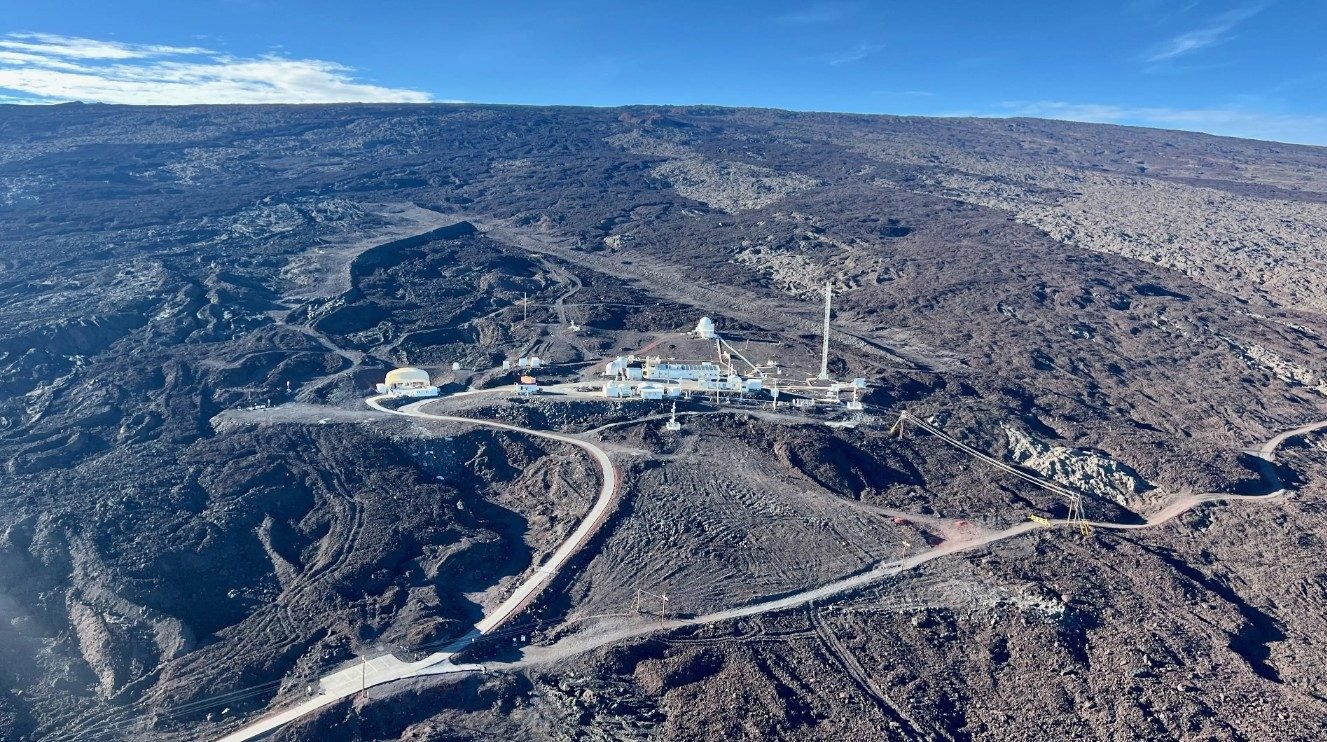
Photo: Brian Vasel / NOAA, via Wikimedia Commons (Public domain)
Leave a comment
Comment as a guest and verify your email, or sign in or create a reader account. Guest comments reach our review queue after email verification; account holders can submit directly for review.