Listen to this article
Take the story with you. Choose a voice and a pace that suits you.
Or listen in another language / choose a voice
Getting your device voices ready…
The voice follows the displayed language and your browser’s regional preference when available. You can choose another narration voice.
Four days from now, the COP31 climate finance expectations arrive in Antalya with an unusual burden: nobody is promising a landmark deal. The 31st UN climate conference runs from 9 to 20 November 2026 in Antalya, Türkiye, under a split arrangement in which Türkiye hosts and leads the action agenda while Australia leads the negotiations (UN DESA; Amnesty International Australia). World leaders gather for a special summit on 11 and 12 November (UN DESA).
Information verified through 5 November 2026.
COP31 climate finance expectations start with an old promise
The money argument is the summit’s centre of gravity. At COP29 in Baku, countries committed to $300 billion a year in climate finance, and the World Resources Institute warns that declining aid and disputes over what counts as climate finance could put that commitment at risk in Antalya (WRI). Behind it sits the Baku to Belém Roadmap to $1.3 trillion, which underlines the role private investment has to play; in Antalya, the COP29 and COP30 presidencies are expected to give that roadmap more detail and set up a monitoring system for it (WRI).
For the poorest countries, the argument is less about the headline figure than about the terms attached. Concessional finance — below-market loans and grants — remains essential for adaptation in the most vulnerable states, WRI argues, and for small island states access to finance matters almost as much as the amount (WRI). Türkiye’s ambassador to the UN, Ahmet Yıldız, made a version of the same point at UN Headquarters in October: “The issue is not simply the overall volume of finance. It is also whether finance is available, accessible, affordable and predictable” (UN DESA).
The 35 by 35 electrification pledge and the energy argument
Türkiye’s host-country pitch leans practical. Ankara has outlined plans to accelerate clean energy, cut methane emissions and strengthen resilience, and its Climate Implementation Bridge, developed with the UN Development Programme, aims to turn national climate commitments into investment-ready projects and connect them with financing (UN DESA).
WRI’s first test for the summit is the presidency’s electrification goal: countries signing a pledge to meet 35 per cent of final energy use with electricity by 2035, up from 23 per cent today, and publishing roadmaps to get there (WRI). The obstacle is the cost of capital. In 2024, emerging and developing economies received only 15 per cent of global clean energy investment, WRI notes, and that investment needs to triple to $2.2–2.8 trillion a year by the early 2030s to meet global climate goals (WRI).
Triple adaptation finance by 2035 — and measure it
Adaptation is the second test. Governments committed at COP30 to triple adaptation finance by 2035, and negotiators in Antalya need to make enough progress to finalise the Global Goal on Adaptation at COP32, with common metrics for resilience (WRI). Brazil, which hosted COP30, has named its three priorities for Antalya: making the new just transition mechanism operational, improving how countries measure progress on adaptation, and expanding climate investment in developing countries struggling with debt (UN DESA).
The backdrop is grim arithmetic. General Assembly President Khalilur Rahman reminded delegates in October that this year’s strengthening El Niño could be among the strongest since at least 1950, while current policies put the world on course for 2.8°C of warming above pre-industrial levels (UN DESA). Amnesty International’s COP31 explainer, published 4 November, adds that in September 2026 the United Nations acknowledged for the first time that the world is set to overshoot the 1.5°C limit within the next few years, and that UNEP warned in October that emissions need to fall by nearly a fifth in the next four years (Amnesty International Australia).
The second global stocktake, the ocean, and who gets heard
Two longer processes frame the fortnight. COP31 is set to launch the second global stocktake, the Paris Agreement’s mechanism for assessing collective progress (Traders Union, reporting UN News). And with Australia and the Pacific so closely involved this year — pre-COP meetings ran in Fiji and Tuvalu in early October — WRI expects the ocean to take unusual prominence, while warning it may stay “a theme rather than a concrete outcome” unless it is written into formal decisions on emissions, adaptation and finance (WRI; Amnesty International Australia).
Amnesty also raises who gets to speak. Its explainer calls on governments to end fossil fuel expansion, make the Just Transition Mechanism operational and properly funded, and scale up grant-based climate finance — and it argues that protecting civic space at the summit matters, because climate conferences remain among the few global spaces where almost all states sit alongside Indigenous peoples and civil society (Amnesty International Australia).
Analysis: Antalya will not be judged the way Paris or Glasgow were. WRI itself says this summit “isn’t expected to be defined by a landmark negotiated outcome” (WRI). The test Rahman set in October is blunter: “Let COP31 be judged not by promises we repeat, but by the people we protect” (UN DESA). Watch the unglamorous files — the adaptation metrics, the finance roadmap’s monitoring system, whether the electrification pledge collects signatures with roadmaps attached. If those move, Antalya did its job. If the fortnight produces photographs and a communiqué, the trust problem the UN itself named will be waiting, larger, at COP32.
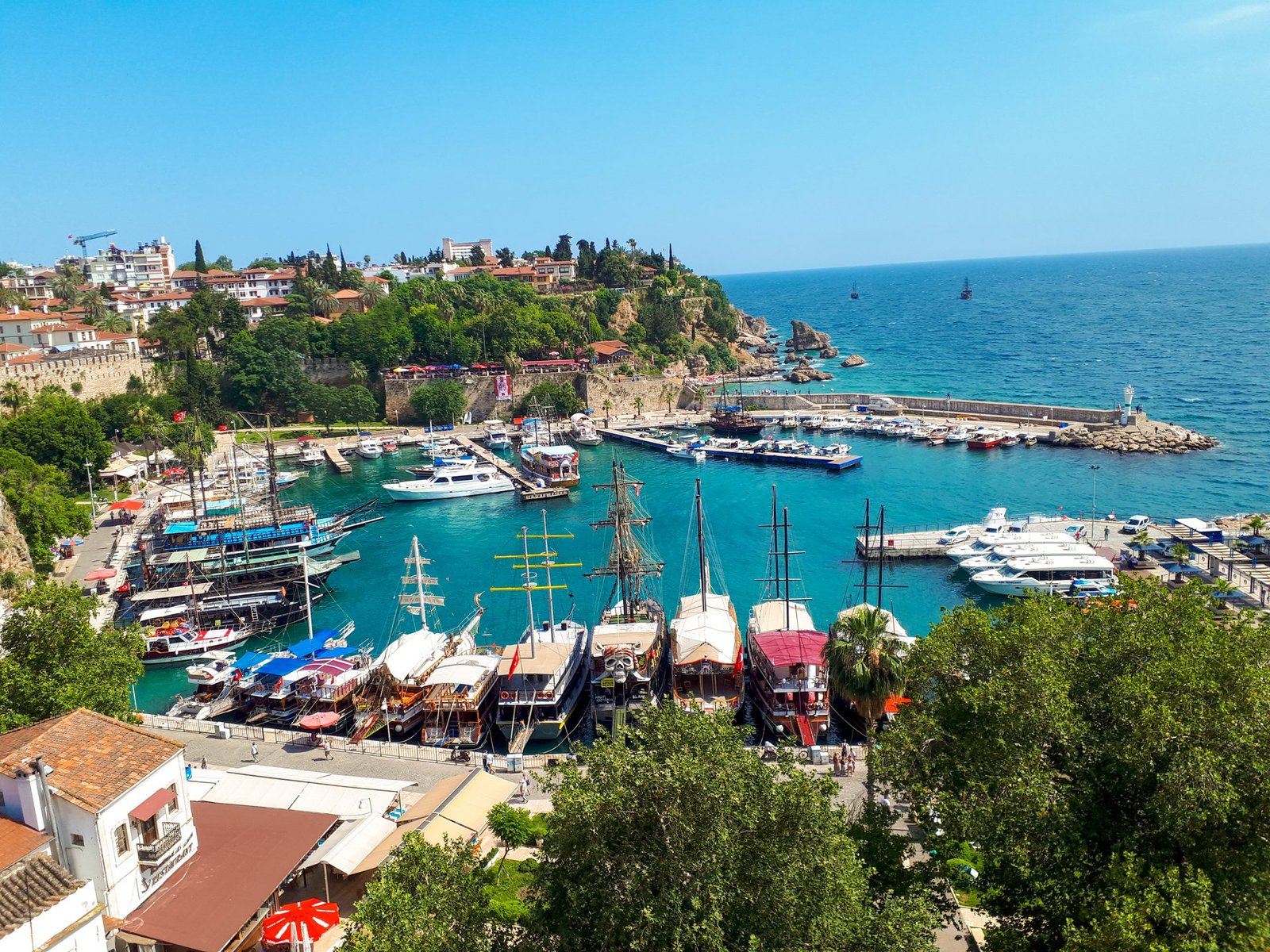
Photo: REHBER0770, via Wikimedia Commons (CC BY-SA 4.0)
Sources
- https://www.un.org/en/desa/as-disasters-mount-next-un-climate-summit-faces-a-test-of-trust
- https://www.wri.org/insights/cop31-climate-summit-what-to-expect
- https://www.amnesty.org.au/cop31-explained-why-the-turkiye-climate-summit-matters/
- https://www.unepfi.org/themes/climate-change/from-belem-to-antalya-what-cop31-means-for-financial-institutions/
- https://tradersunion.com/news/geopolitics-trade/show/4104002-cop31-climate-finance-implementation-gap/
Leave a comment
Comment as a guest and verify your email, or sign in or create a reader account. Guest comments reach our review queue after email verification; account holders can submit directly for review.