Listen to this article
Take the story with you. Choose a voice and a pace that suits you.
Or listen in another language / choose a voice
Getting your device voices ready…
The voice follows the displayed language and your browser’s regional preference when available. You can choose another narration voice.
COP31 ends without climate pact. After two weeks of negotiations in Antalya, Türkiye, and two days of overtime that made it the longest-running UN climate summit on record, governments closed on Sunday 22 November with no final agreement adopted (UN News). UN Secretary-General António Guterres said he was “deeply disappointed” — then pointed past the negotiating room: “There may be no consensus in the negotiating room. There is no ambiguity in the science.”
COP31 President Murat Kurum, Türkiye’s environment minister, acknowledged the impasse in the closing plenary: “I understand that there is no agreement on this text. For that reason, these decisions have not been adopted” (UN News).
COP31 ends without climate pact: what actually failed
The COP31 Antalya outcome fossil fuels dispute was specific, and it was about words with legal weight. The draft cover decision — the proposed Antalya Pact — dropped any reference to fossil fuels and to the commitment, agreed at COP28 in Dubai, to transition away from them (Global Issues / IPS). Oil- and gas-producing countries had pushed for that omission. A coalition of climate-vulnerable nations and countries seeking a stronger move away from coal, oil and gas refused to accept it.
The European Union formally objected, saying the text failed to “meet the moment” and calling the omission of fossil fuels “unconscionable” (UN News). Speaking for the EU, Irish Climate Minister Darragh O’Brien stated: “We will not endorse a cover decision or an Antalya pact that does not even mention fossil fuels” (SAFETY4SEA). Panama and the Marshall Islands also withheld support; the Marshall Islands delegation said accepting the text would amount to a betrayal of its people.
Not every delegation wanted the text to fall. Pakistan urged delegates to keep working toward consensus, warning that climate action requires “bridges, not barriers,” and Ghana, speaking for the African Group, said the group would not stand in the way despite shortcomings on finance and the just transition (UN News). Saudi Arabia, for the League of Arab States, defended the draft’s references to carbon capture and storage against charges of greenwashing. Under the COP’s consensus rules, the objections were enough. The pact was not adopted.
Why did COP31 fail on finance, too?
Ask why did COP31 fail and fossil fuels are only half the answer. Money broke the talks alongside language. An earlier draft proposed raising annual adaptation finance to at least US$120 billion by 2035; the final text dropped the figure, keeping an ambition to triple adaptation finance with no clear baseline or binding commitment (Global Issues / IPS). The World Resources Institute noted the same gap, saying negotiators “could not agree on a specific dollar target for tripling adaptation finance” (WRI).
WRI president Ani Dasgupta called the result “a failure of political leadership, not a failure of the Paris Agreement,” and said vulnerable nations were left “without a clear path to protecting their people and economies” after a year of fires and floods (WRI). The draft also acknowledged that warming is now on course to exceed the 1.5°C limit, while offering limited new measures in response — a concession that hardened opposition rather than softening it.
Some decisions did survive the collapse. Countries adopted outcomes on the Global Goal on Adaptation, the Adaptation Fund and the Just Transition Work Programme, according to the IISD Earth Negotiations Bulletin reporting summarised by SAFETY4SEA (SAFETY4SEA). UN Climate Change Executive Secretary Simon Stiell pointed to the just transition agreement and Action Agenda initiatives on electrification and resilience in his closing remarks. But the Mitigation Work Programme and response-measures decisions were not adopted, and because consensus failed, the draft Antalya Pact itself has no formal standing (WRI).
What happens after COP31
So what happens after COP31? The unanswered questions travel. Focus shifts to COP32 in Addis Ababa, Ethiopia, in November 2027, where governments will face the same fights over the fossil fuel transition and climate finance for developing countries (UN News). The presidency’s push to lift electricity’s share of global final energy use to 35% by 2035 — backed by more than 70 countries, per WRI — also died with the pact, since it was never part of an adopted outcome (WRI).
Australia’s Chris Bowen, who served as President of Negotiations, called the outcome “very disappointing” (SAFETY4SEA). Stiell was blunter about the stakes: “The world cannot afford a repeat of this moment.”
Analysis: Antalya did not repeal anything. The Paris Agreement and the Dubai commitment to transition away from fossil fuels still stand; what failed was an attempt to restate them, and the failure itself is now the record. A text too weak for the EU and island states, and too strong — on carbon capture, on electrification — for others, satisfied no one. The lesson other sectors are already drawing is practical: shipping negotiators head to the IMO in London this month knowing regional rules will keep filling any global vacuum. Expect the same pattern elsewhere. Where consensus stalls, blocs and markets move first, and COP32 inherits a harder room.
Information verified through 24 November 2026.
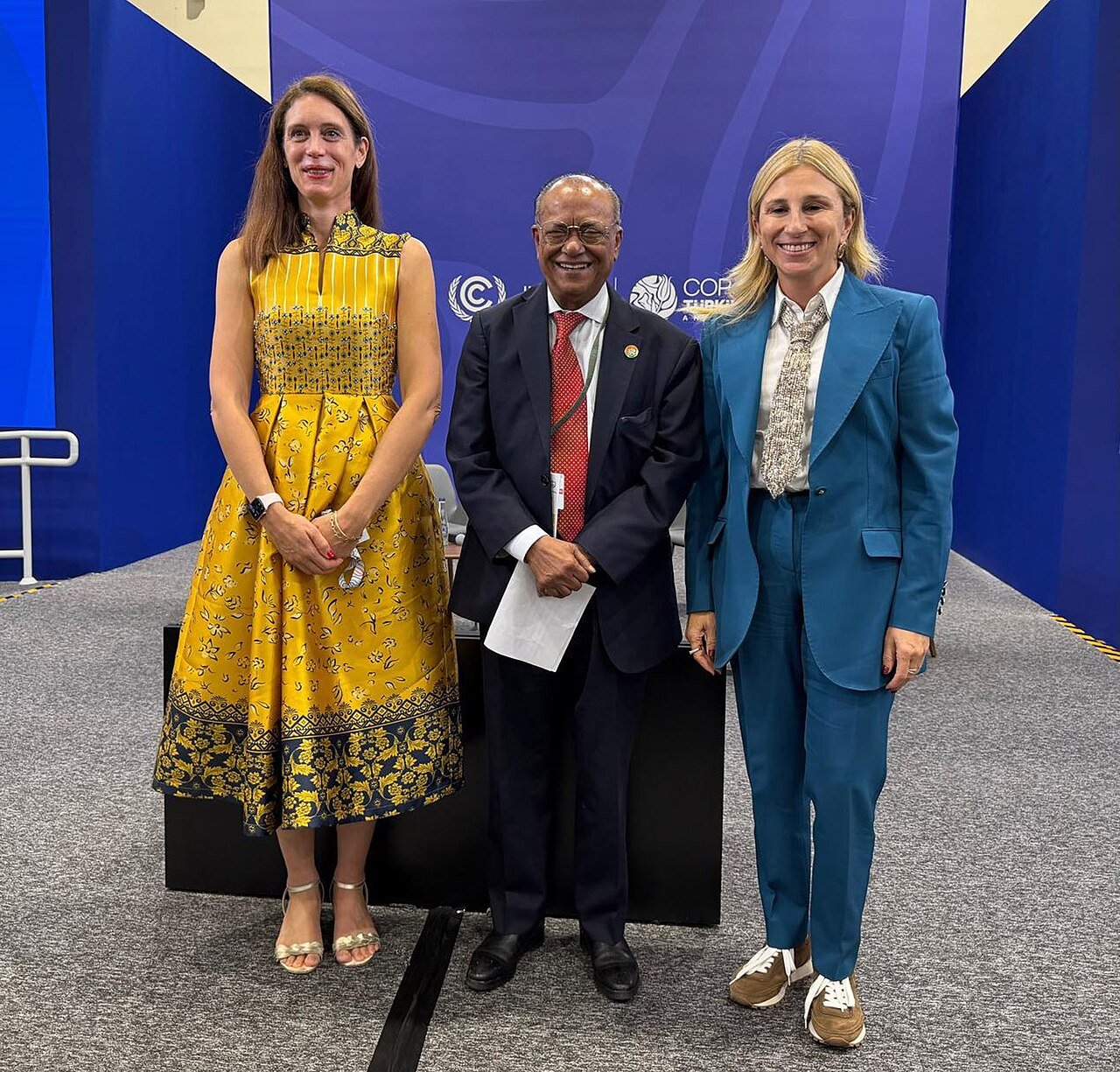
Photo: Press Information Department, via Wikimedia Commons (public domain)
Sources
- UN News — COP31 ends without climate pact as UN chief warns there is ‘no ambiguity in the science’: https://news.un.org/en/story/2026/11/1168855
- World Resources Institute — Hollow outcome at COP31 a failure of political leadership: https://www.wri.org/news/statement-hollow-outcome-cop31-failure-political-leadership
- SAFETY4SEA — COP31 ends without climate pact: what the outcome means for shipping: https://safety4sea.com/cm-cop31-ends-without-climate-pact-what-the-outcome-means-for-shipping/
- Global Issues / IPS — COP31 cover deal collapses as EU and others reject draft over fossil fuel omission: https://www.globalissues.org/news/2026/11/22/44662
Leave a comment
Comment as a guest and verify your email, or sign in or create a reader account. Guest comments reach our review queue after email verification; account holders can submit directly for review.