Listen to this article
Take the story with you. Choose a voice and a pace that suits you.
Or listen in another language / choose a voice
Getting your device voices ready…
The voice follows the displayed language and your browser’s regional preference when available. You can choose another narration voice.
A “Made with AI” label can now sit in the corner of advertisements across Microsoft Advertising and Bing, after Microsoft made its AI content transparency controls generally available in its November 2026 product update. Advertisers declare whether an image or video contains AI-generated content, and choose a visible watermark where the format supports one, according to Microsoft’s official announcement and Search Engine Land. The label appears in the corner of supported ad images.
Information verified through 24 November 2026.
Made with AI label: how the declaration works
The system runs on declaration, not detection. An advertiser marks whether an image or video includes AI-generated content, then picks a visible watermark where supported, Microsoft explains. Declarations can be updated for one asset or many at once in the Ads Studio Library, and the same settings can be managed through the Microsoft Advertising APIs and product feeds.
Microsoft does run detection of its own, but the company is careful about what that detection means. Its AI detection signals are a reference for supported assets, offered as a helpful prompt. “You still decide on, and remain responsible for, your own declarations,” the announcement states. Search Engine Land makes the same point in blunter terms: the signals are advisory, not definitive, and the advertiser carries the responsibility for getting the declaration right.
Microsoft Advertising AI content labels across formats
The controls reach across most of the platform’s visual inventory. They work in Product Ads, Multimedia Ads, Audience Ads, Display Ads and Video Ads, and on assets used in Performance Max campaigns, Microsoft states. The exact controls vary by ad format and workflow, and watermark size and placement vary by format, placement and serving environment.
That breadth is the practical story. A label that only covered one ad type would leave most AI-generated creative unmarked. Covering shopping, display, video and automated campaign assets in one control set means a brand can apply a single disclosure policy across a campaign instead of policing each format separately.
AI content transparency controls, with the advertiser still responsible
Microsoft frames the change as trust maintenance, and points at the law coming behind it. Governments are passing laws that may require labels on some AI-generated content, the company notes, and advertisers remain responsible for following local laws and disclosure rules, including deciding whether their own content needs a label.
The design choice matters. Microsoft could have labelled automatically wherever its detection fired. Instead it built a declaration system with detection as a hint, which keeps the legal judgement with the advertiser. That protects the platform when detection misses something, and it puts the burden exactly where regulators tend to put it: on the business that made the ad. Whether advertisers declare honestly and consistently is, as Search Engine Land notes, the thing to watch.
Why platforms want advertisers to declare AI-generated ad content
The label lands in a crowded November update. The same announcement put ads inside AI Overviews on Bing in all markets except China, launched an AI-curated Discover feed, and opened an assistant connection that lets advertisers query their own account data. AI is generating more of the advertising and more of the surfaces it runs on. A visible label is how the platform shows regulators and users that somebody is keeping track of which is which.
For advertisers, the calculation is shifting. AI creative is cheap and fast, and an unlabelled synthetic image that a customer later discovers can cost more trust than the label costs clicks. Microsoft’s bet is that a small line of text in the corner of an ad becomes normal, the way sponsored labels did. The declaration system is built so that normality can be managed at scale, one library setting at a time.
There is a catch for global campaigns. A declaration made for Microsoft does not travel with the creative to other platforms, each of which runs its own labelling rules, formats and wording. An advertiser using the same AI-generated image across search, social and display now has to declare it several times, in several dashboards, under definitions that do not always match. Until the platforms converge on shared standards for disclosure, the honest advertiser does more paperwork, not less. Microsoft’s controls at least make its own share of that paperwork a bulk operation rather than an asset-by-asset chore.
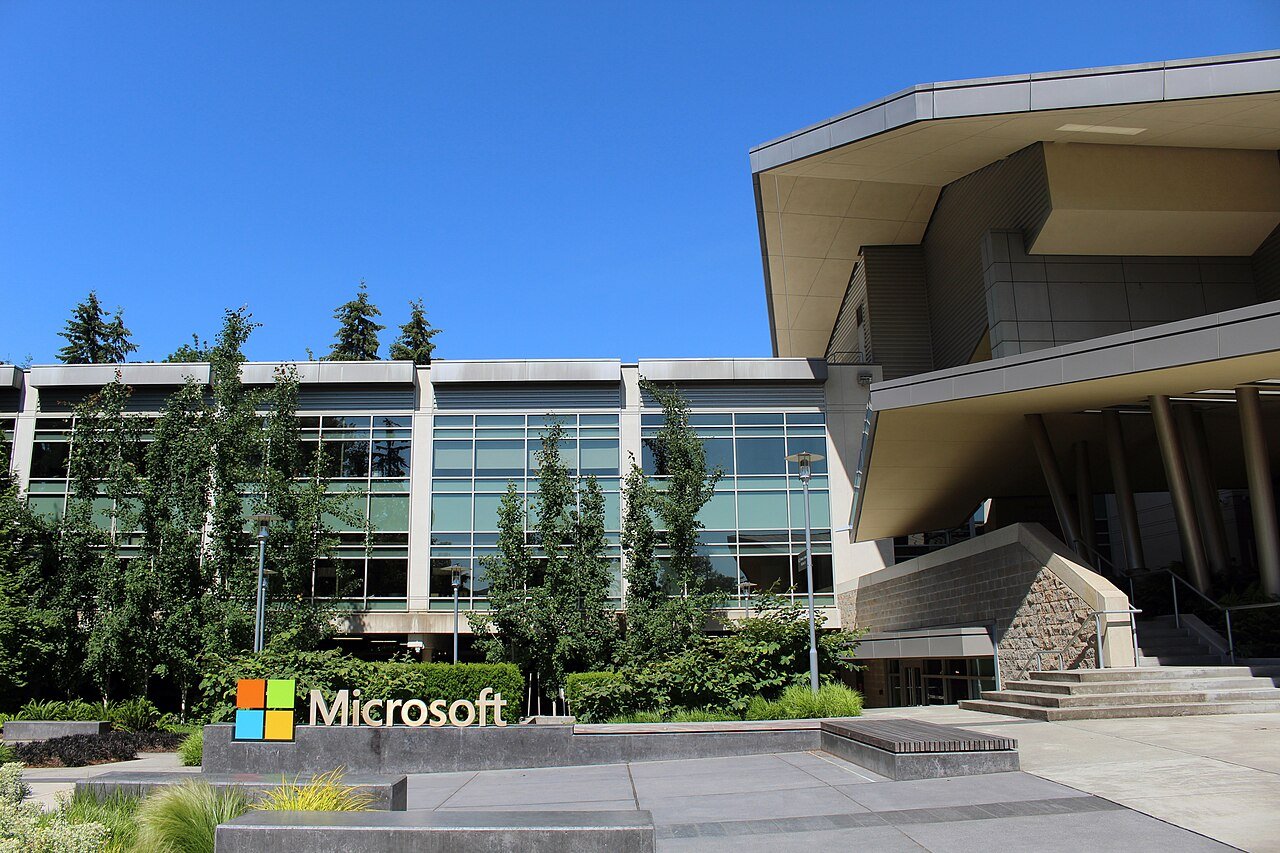
Photo: Coolcaesar, via Wikimedia Commons (CC BY-SA 4.0) — Building 92 at Microsoft’s Redmond campus.
Sources
- Microsoft Advertising blog — What’s new in Microsoft Advertising this November (19 November 2026) — https://about.ads.microsoft.com/en/blog/post/november-2026/put-ai-to-work-engaging-customers-in-more-places-whats-new-in-microsoft-advertising-this-november
- Search Engine Land — Microsoft Ads introduces ‘Made with AI’ labels to AI-generated ad images — https://searchengineland.com/microsoft-ads-adds-made-with-ai-labels-to-ai-generated-ad-images-502652
- Search Engine Roundtable — Bing Ads Made with AI label — https://www.seroundtable.com/bing-ads-made-with-ai-label-42579.html
Leave a comment
Comment as a guest and verify your email, or sign in or create a reader account. Guest comments reach our review queue after email verification; account holders can submit directly for review.