Listen to this article
Take the story with you. Choose a voice and a pace that suits you.
Or listen in another language / choose a voice
Getting your device voices ready…
The voice follows the displayed language and your browser’s regional preference when available. You can choose another narration voice.
Ask a seniors’ centre director what keeps the doors open and you rarely hear about a breakthrough programme. You hear about a grant that ended, a coordinator post frozen, a waiting list. A study published in BMC Public Health on 14 November 2026 starts from that unglamorous reality and asks how community organisations tackle loneliness in older adults while the money underneath them contracts. Its answer is less a single intervention than a shared toolbox, built by the organisations themselves. Information verified through 15 November 2026.
The study comes from the Connect!Âge project British Columbia arm, led by researchers at Simon Fraser University’s Gloria Gutman Gerontology Research Centre with partners at the Université de Sherbrooke. Forty organisations took part — seniors’ centres, neighbourhood houses and specialised services — grouped into clusters of five to nine by size, location and type, the paper reports. Across 2023 to 2025 each cluster sat through two series of 90-minute workshops, and the team folded two surveys into what the workshops surfaced.
The people hardest to reach are the point
Connect!Âge was designed around four groups at high risk of isolation: older adults from invisible minorities, people living with stress, anxiety and depression, people who struggle with daily tasks such as dressing, cooking, shopping, transport and cleaning, and their caregivers, Simon Fraser University’s project page explains. In other words, social isolation among marginalised older adults and caregivers is not a side case in this research. It is the brief.
That focus explains the study’s most stubborn finding. The organisations named three structural problems again and again: limited funding, too few staff, and the sheer difficulty of reaching people who are highly isolated, the BMC Public Health paper says. Someone who never leaves the house does not see the poster in the library window. Outreach to that person costs time — home visits, phone calls, a knock through a neighbour — and time is exactly what a shrinking budget removes first.
How community organisations tackle loneliness in older adults, according to Connect!Âge
Three strategies recur in the findings. The first is social prescribing for older adults: a doctor, nurse or community worker spots isolation during an ordinary contact and refers the person into a local group, a lunch club, a walking circle — something with a door they can walk through weekly. The second is preventive programming, activities built to keep connection in place before loneliness hardens into crisis. The third is plainer and maybe more powerful: organisations working with each other instead of competing for the same shrinking pot, sharing venues, drivers, volunteer lists and hard-won knowledge about what actually gets a reluctant 82-year-old out of the house, the study reports.
None of this is magic. A referral only works if the group at the other end still exists. Prevention sounds cheap until you price the coordinator who runs it. Collaboration takes meetings nobody has hours for. The paper is honest about that tension: these groups operate under significant structural constraints while still producing inventive responses, a summary of the findings notes.
A shared shelf instead of forty separate ones
The project’s concrete product is a digital resource repository, co-produced with the 40 British Columbia organisations rather than handed down to them. It holds shared directories, evidence summaries written for practitioners, grant application tools, volunteer support frameworks and standardised data templates, the paper describes. Read that list slowly. Directories, so a worker in one town can find the counterpart programme two valleys away. Grant tools, because small organisations lose funding rounds on paperwork as often as on merit. Data templates, because forty groups counting forty different ways cannot make a joint case to a funder.
The work was funded by a Social Sciences and Humanities Research Council of Canada Insight Grant, and ethics approval came from Simon Fraser University’s Research Ethics Board, the paper records. The Quebec arm of Connect!Âge runs in parallel; this paper covers British Columbia only, a limit worth keeping in view before anyone treats the findings as a national picture.
Analysis: The study’s real subject is not loneliness. It is organisational stamina. Plenty of research can tell you that isolated older adults fare worse; far less of it asks who is supposed to do the reaching, with what staff, on which budget line. Connect!Âge’s wager is that resilience can be pooled — that a repository, a shared template and a referral habit are worth more together than forty centres each improvising alone. The wager has a hole in it, and the authors don’t hide it: pooling tools does not refill an empty funding envelope. Shared directories don’t drive the minibus.
What the study can legitimately claim is narrower and still useful. Co-produced approaches may strengthen organisational capacity and improve coordination, the authors conclude — “may” doing honest work in that sentence. For a funder reading along, the implication cuts both ways. Back the shared infrastructure, yes. But don’t mistake a well-organised sector for a funded one.
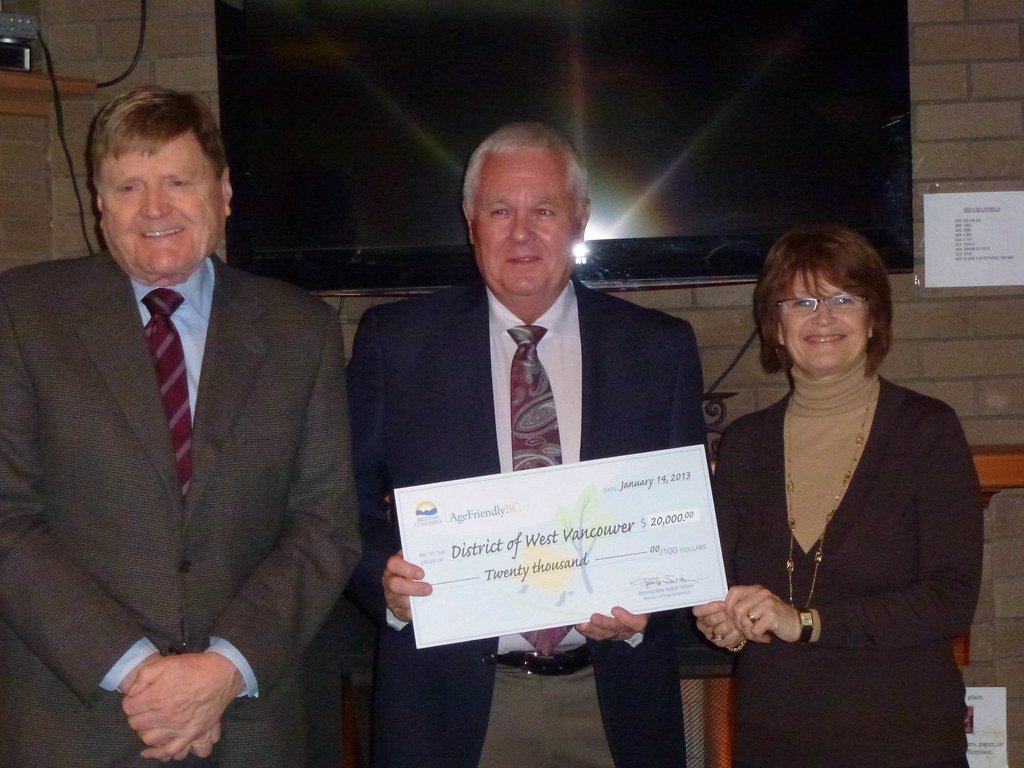
Photo: BC Gov Photos, via Flickr (CC BY-NC-ND 2.0) — an Age Friendly community event in West Vancouver, British Columbia.
Leave a comment
Comment as a guest and verify your email, or sign in or create a reader account. Guest comments reach our review queue after email verification; account holders can submit directly for review.