Listen to this article
Take the story with you. Choose a voice and a pace that suits you.
Or listen in another language / choose a voice
Getting your device voices ready…
The voice follows the displayed language and your browser’s regional preference when available. You can choose another narration voice.
In August 2026, Jon Richardson — the Austin skincare founder behind THE GÜDE LIFE and its Güde Skin line — went public with an accusation he had been sitting on for three months: that another company, selling a near-identically named sunscreen out of California, had taken his brand identity. The company, Güd Life Company, answered that it had built itself from the ground up and had never heard of him. Both sides then did what American brand disputes now do. They went to the filing office.
This investigation is built from the paper, not the posts: the two federal trademark applications, pulled from the U.S. Patent and Trademark Office register; the California and Texas company records; the domain registries; and both sides’ public statements in full. What that record shows is a genuinely tangled dispute, in which each side’s public story is contradicted somewhere by its own paperwork. And underneath the tangle sits something older and larger than either company — a documented, two-century pattern in which Black inventors and founders create, and then lose the name, the credit or the ownership at exactly the point where the law is supposed to protect them. The Güde Life trademark dispute is the modern, administrative version of that pattern: quieter, procedural, and decided by whoever can afford to keep filing.
Two companies, one name
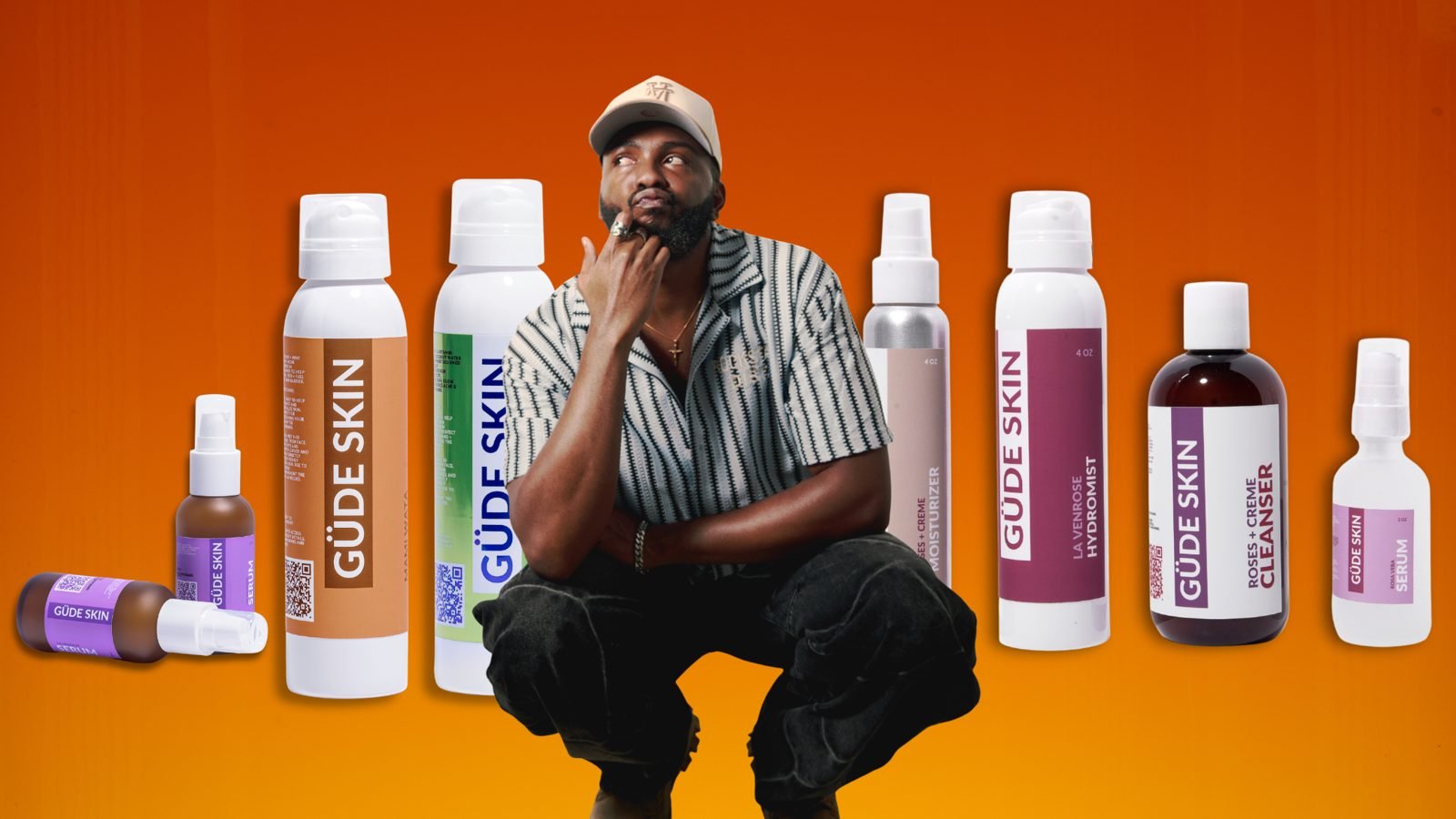
Jon Richardson is the founder and CEO of THE GÜDE LIFE LLC of Austin, Texas — the parent, in his branding, of Güde Skin (skincare), Güde Scent (fragrance and deodorant) and Güde Gear (apparel), sold through gudelife.com. His account, consistent across six years of posts and coverage, is that he began with a rosewater spray in 2016 while living in Heidelberg, Germany, and launched commercially in the United States in August 2020. The hard records line up with a 2020 start: the domain gudeskin.com was registered on 17 August 2020, and a Texas company of his, Güderich Skincare LLC, was registered with the state that same month. His federal trademark application, when he eventually filed one, claimed first use of THE GÜDE LIFE in commerce on 30 August 2020. He says the brand has served 260,000 customers; that figure is his own and has not been independently verified.
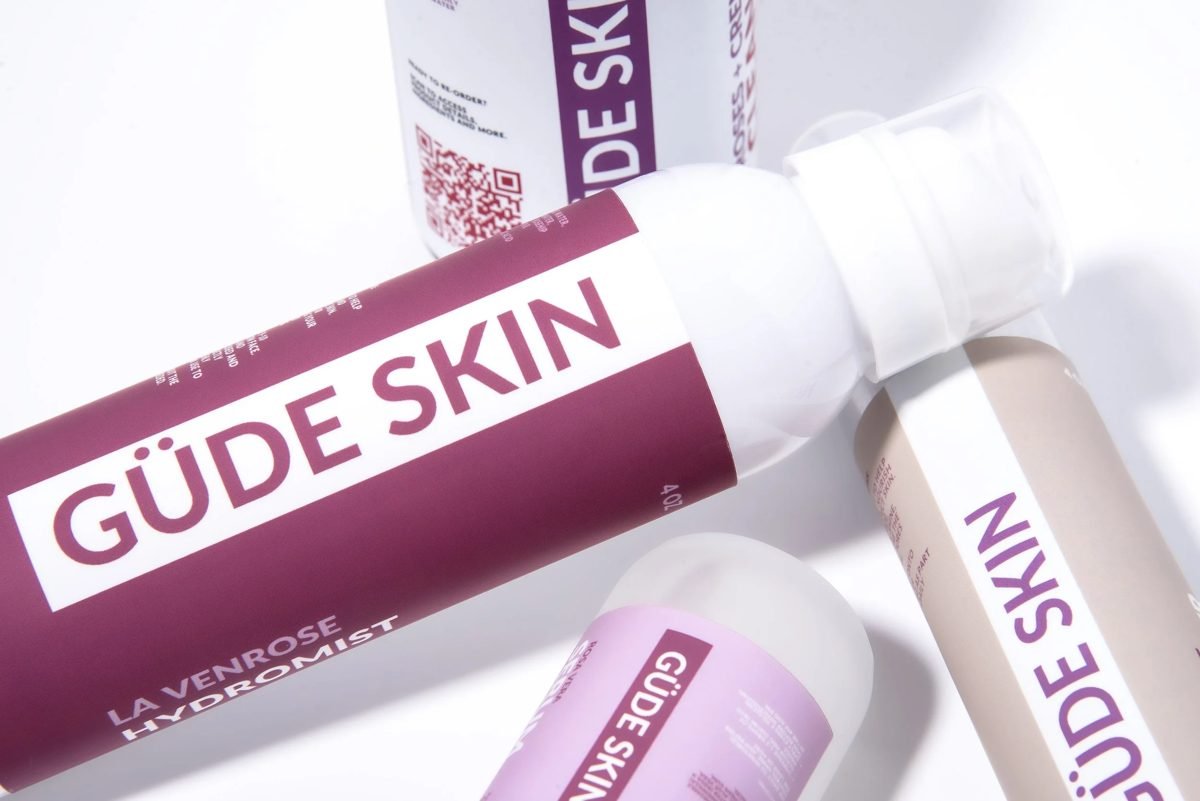
Caroline Flores is the founder of Gud Life Company LLC of Dana Point, California, which trades as GÜD LIFE CO. and sells essentially one product: an OG Tinted SPF 30 mineral sunscreen, in plastic-free packaging, through gudlifeco.com. Her company’s own statement says it was built around that single product, over years of work on formula, design, manufacturing and retail relationships, and a mission born, in the company’s telling, from personal and family encounters with skin cancer.
The names are not similar in the way brands are often similar. Güde and Güd differ by a final letter, sound the same spoken aloud, and sit in the same product aisle — a collision Richardson says produced real customer confusion, including buyers who ordered from the California company believing they were supporting his Black-owned business, and a search problem: type his brand’s name into Google, he says, and hers is what surfaces.
August 2026: the call-out, the filing, the statement
The sequence matters, and on the sequence the record is clear. Richardson says he discovered Güd Life Company on 20 August 2026. He went public the next day — “THIS BRAND IS STEALING FROM ME” — across TikTok and Instagram. Four days after the call-out, on 24 August 2026, Güd Life Company filed its federal trademark application. On 25 August, the company published its only full public response, an Instagram statement titled “Setting the Record Straight,” signed by Caroline Flores and Jorge Flores.
Her side deserves to be stated as she states it. The company says the copying accusation is false: it was built from the ground up and did not steal another business. It says it had never heard of Güde Skin until Richardson’s video went viral. It argues the businesses are different — it sells sunscreen, not skincare — and notes that the other entity has a distinctly different legal name and that more than 60 live trademarks use the element “Güd,” so the word is not unique to either party. And it describes real harm on its side of the viral moment: harassment, and damage to business, customers, partnerships, sleep and safety. It asks the public to review facts before accusing anyone, and says two small businesses can coexist. Contacted by a beauty-news outlet in September, the company called the concerns “unsubstantiated allegations.”
Coverage followed: BLANCK magazine’s “The Battle for GÜDE,” then The Shade Room’s TSR Investigates segment in September 2026, which framed the fight in a headline neither side wrote: he built it; she filed the paperwork. Richardson’s own closing slide in his 11 November presentation ends on a version of the same sentence: “They build it. Someone else files the paperwork.”
The two companies, side by side
| Jon Richardson — THE GÜDE LIFE | Caroline Flores — GÜD LIFE CO. | |
|---|---|---|
| Base | Austin, Texas | Dana Point, California |
| Legal entity | THE GÜDE LIFE LLC (Texas); earlier operating company Güderich Skincare LLC | Gud Life Company LLC (California) |
| Entity registered | Güderich Skincare LLC — August 2020; THE GUDE LIFE LLC — May 2025 | 28 May 2024 |
| Public launch | 29 August 2020 (gudeskin.com registered 17 August 2020) | Product on sale by March 2025; the company marked “1 year of GLC” in March 2026 |
| Range today | Skincare line, plus scent and apparel; 26+ products claimed | One product: OG Tinted SPF 30 sunscreen |
| Sells sunscreen? | No sunscreen product on his storefront | Yes — it is the entire range |
| Trademark application | THE GÜDE LIFE — standard-character wordmark, filed 16 March 2026 | GÜD LIFE CO. — design mark (words in a circular logo), filed 24 August 2026 |
| Application status | Live/pending — suspended, September 2026; the register does not state the reason | Live/pending — awaiting examination |
| First use claimed in the filing | August 2020 | 19 March 2022 |
| Websites | gudelife.com (registered August 2026); gudeskin.com (2020) | gudlifeco.com |
| Social | @checkoutjon on Instagram and TikTok; @gude.skin | @gudlifecompany on Instagram |
What the trademark record actually shows
Richardson’s accusation, at its sharpest, is that Güd Life Company moved to lock up a name at the trademark office only after he exposed it — and on the filing dates, the register supports the sequence. But the register complicates his story too, in ways his presentations do not mention.
His application for THE GÜDE LIFE — a standard-character wordmark, the strongest kind, covering the words themselves in any styling — was filed on 16 March 2026, five months before the public fight, in classes covering skincare and cosmetics and apparel. (Much of the coverage, and even his own presentations, have carried a September 2026 filing date for him; the register says March. We use the register.) As of the register’s last status entry, dated 18 September 2026, his application is live but suspended, marked “action required.” The record does not state why, and we do not guess: what can be said is that the man accusing another company of paperwork manoeuvres currently has his own application frozen mid-examination.
Her application, filed 24 August 2026, is a different and weaker instrument than his — a point he makes often, and on this he is simply right about the document. It is a design mark: the words GÜD LIFE CO. arranged in one specific circular logo. A design mark protects that arrangement; it does not, by itself, give its owner the words in every other form. It covers one class of goods — sunscreen, and only sunscreen — and it disclaims the element “CO.” The application was still awaiting assignment to an examining attorney when we pulled it.
Two more details belong on the record. First, the goods overlap runs in an unexpected direction: Richardson’s own Class 003 list, as filed, includes “sun screen” among his claimed goods — even though no sunscreen product appears anywhere on his storefront. On paper, each side has a foot in the other’s aisle. Second, the attorney-or-no-attorney line: Richardson is his own correspondent of record on his federal application. Güd Life Company’s application names a lawyer. Keep that asymmetry in mind; it is the whole dispute in miniature.
The 2022 problem
The single most contested date in this fight is 2022. In her federal application, Güd Life Company claims it first used its mark anywhere, and in commerce, on 19 March 2022. Some coverage converted that claim into a launch date — reporting that Flores “launched Güd Life Co. in 2022.” The public record does not support a 2022 launch, and it points firmly the other way.
Gud Life Company LLC did not exist until 28 May 2024, when its Articles of Organization were filed in California. Its state Statement of Information followed on 12 June 2024. The company’s Instagram was advertising its tinted sunscreen by March 2025, and in March 2026 the company posted “1 year of GLC!” — its own celebration of a first year of operation, which places its public launch around spring 2025. Nothing outside the trademark application itself — no state filing, no press, no retail listing, no dated post found in this investigation — shows the company operating in 2022 or 2023.
A first-use claim is an assertion, not a finding: a business can legally have traded before incorporating, and an application is where such claims are tested, in examination and, if it comes to it, in opposition. But as the record stands, “2022” survives only as a date inside Güd Life Company’s own filing, contradicted by the company’s own anniversary post and by the calendar of its legal existence.
There is a second contradiction, smaller but telling. The company’s public defence rests on separation: “we sell sunscreen, not skincare.” Its California Statement of Information — a sworn state filing, made in June 2024, two years before this dispute — describes the business in its own words: “We sell all natural and safe skincare.”
The record cuts both ways
Fairness requires the same light on Richardson’s paperwork, and it is not spotless. His original Texas company, Güderich Skincare LLC — the entity his own contracts and his own agency’s portfolio name as his skincare company, registered in August 2020 — is now inactive on the state register, its right to transact business involuntarily ended over franchise-tax filings. The entity that owns his trademark application, THE GUDE LIFE LLC, was registered only in May 2025, and its own right to transact business in Texas stands forfeited for missing reports and payments, though its registration remains active. And the domain at the centre of his current storefront, gudelife.com, was registered on 28 August 2026 — four days after Güd Life Company’s trademark filing, and a week after his own call-out. His 2020 priority rests on gudeskin.com and six years of trading, which are real; but the umbrella name he is fighting under was, as a domain and as an LLC, formalised late and, in the LLC’s case, left in poor standing. None of this answers the underlying question of who used the name first in commerce. All of it shows how much of a modern brand fight is a fight about paperwork hygiene — and how unevenly the cost of that hygiene falls.
“I am also suing”: what the legal record shows, and what it does not
Richardson’s videos say it flatly: he is suing. His website’s headline says it too — “WE’RE SUING A COPYCAT.” The body of that same page says something more careful: that he is “working with legal counsel to evaluate and protect our rights,” that any funds may cover litigation expenses “if necessary,” that “all legal claims and available remedies are being evaluated with counsel,” and that donors are not being asked “to decide who’s right… let the legal process determine the outcome.”
We searched for the lawsuit: federal and state court records and indexes, case databases and the coverage of the dispute, in Texas and California. As of publication, no filed case could be located — no complaint, no docket, no court. That is not the same as saying no case exists; a recent or poorly indexed state-court filing might not surface. But nothing in the public record shows one, and the live legal track is not a courtroom at all. It is administrative: her pending application, his suspended one, and the Trademark Trial and Appeal Board’s opposition process. When her application is eventually published for opposition, anyone who believes they would be damaged — Richardson, explicitly — has a 30-day window to oppose it. By his own account, that is the move he is waiting to make: “The moment that window opens, we move.”
Opposition is where the money decides. A contested trademark opposition, briefed and argued through the Board, commonly costs the parties somewhere between $50,000 and $250,000 or more — which is why Richardson’s GoFundMe, “Help Protect THE GÜDE LIFE,” seeks $100,000, and why he cites, as his money precedent, the trade-dress case Van Leeuwen v. Rebel Creamery, which ended in a federal judgment of nearly $23.8 million in July 2026 (a judgment Rebel has appealed). As of 11 November, his fund had raised $12,985 of its $100,000 goal, from 677 donors — about thirteen cents of every dollar he says the fight requires, raised one small donation at a time, while the other side’s application was filed by a named attorney. The dollar figures that fly around his comment threads — a six-figure demand, a follower-suggested eight-figure lawsuit — are talk, not pleadings; no document attaches to any of them.
The racism question, on the record
Richardson frames this dispute as racial theft, and his presentation includes a claim of “a history of racism and theft.” Because Evolving Humanities reports the record, the record on this point has to be stated precisely — it does not support inflating the charge, and it does not need inflation.
We found no documented racist statement by Caroline Flores in any material reviewed for this investigation: not in her company’s statement, which says nothing about race at all, and not in Richardson’s own evidence presentation. The only racist text actually displayed in his 11 November presentation is a comment left by a user named “johnny” under a customer’s post — “yea but no one wanna buy from a black guy” — aimed at Richardson’s side of the market: a Black founder’s customer, being told the quiet part out loud. A slur quoted in Richardson’s post caption is attributed there to no named speaker, and we attribute it to no one. He has also said he sent the company a cease-and-desist after being called racist himself; no document for either the letter or the remark was located.
In other words: the documented racism in this story is not a slur from a founder. It is the ambient market racism left sitting in the comments under a customer’s post — and a structure, set out below, that was built long before either company existed.
The pattern is the story
Strip the names away and the shape of this dispute is old: a Black creator builds something in public, over years, without the capital to formalise ownership early; the formal system — the registry, the filing office, the court — is where the ownership gets decided anyway; and inside that system, the side with money for lawyers and filings sets the terms. That is not a metaphor. It is the documented history of American intellectual property, and it begins with the law saying the quiet part in writing.
In 1857, an enslaved Mississippi mechanic known as Ned invented an improved cotton scraper. His enslaver applied for the patent in his own name, arguing that “the master is the owner of the fruits of the labor of the slave both intellectual, and manual.” The Attorney General’s formal opinion, Invention of a Slave (10 June 1858), closed the question for the whole country: “a machine invented by a slave, though it be new and useful, cannot, in the present state of the law, be patented.” The enslaved inventor could not swear the inventor’s oath, because he was not a citizen; the owner could not swear it, because he was not the inventor. The invention simply fell out of the law — unprotected, unrecorded, unowned. Benjamin Montgomery, enslaved on Joseph Davis’s Mississippi plantation, designed a shallow-water steamboat propeller; both Joseph Davis and his brother Jefferson tried to patent it and were refused as non-inventors, Montgomery was refused as a non-citizen, and when he applied again as a free man in 1864 he was rejected again. The Confederacy, at least, was honest about the arrangement: its 1861 patent rules provided that “[i]f the inventor be a slave, his master may make the oath in his stead” and take the patent himself.
Thomas L. Jennings could patent his dry-scouring process in 1821 — the first U.S. patent held by a Black American — only because he had been born free. He defended the patent in court, grew wealthy, and spent the proceeds buying his family’s freedom and funding the abolitionist press. Henry Blair, a free Maryland farmer, took out corn- and cotton-planter patents in 1834 and 1836, signed his documents with an X because he could not write, and remains the only inventor the early federal records bothered to annotate by race — “a colored man” — in a file that preserved almost nothing else about him.
After emancipation the bar fell, and the pattern changed costume: from legal exclusion to employment contracts, capital starvation and litigation costs. Lewis Latimer, the self-taught draftsman who had drawn Bell’s telephone patent figures, devised the carbon-filament manufacturing process that let Hiram Maxim’s lamps be mass-produced. In the USPTO’s own published history: “Maxim had the legal right to his employees’ patents and took credit for Latimer’s invention. The ‘Maxim Lamp’ was the first to use Latimer’s carbon filaments.” (The popular version that makes Latimer the light bulb’s inventor is not supported by the record, and this investigation does not repeat it; the documented story — his process, his employer’s rights, his employer’s name on the product — is damning enough.) Granville Woods beat Edison’s interests in court twice over his railway telegraph, proved the invention was his, and spent so much of his career and earnings on infringement fights against richer companies that the victories themselves were a tax. Elijah McCoy held 57 patents and, in the National Inventors Hall of Fame’s summary, “lacked funding to properly capitalize” on them, selling his rights to employers and investors while railroads ran on his lubricators for decades. Garrett Morgan sold his three-position traffic signal — the ancestor of every modern traffic light — to General Electric for a single payment of $40,000; the Smithsonian’s Lemelson Center records the market logic of the sale: concern that racism would deter buyers if the inventor’s name stayed attached. Frederick McKinley Jones, whose mobile refrigeration remade food transport, got his ownership the one way the system reliably allowed: in partnership with a white former employer who brought the capital and the industry access. And Nathan “Nearest” Green, the enslaved Tennessee distiller who taught Jack Daniel his trade and became the distillery’s first master distiller, was written out of the company’s official history for roughly 150 years — until a 2016 newspaper investigation and a researcher’s archive of more than 10,000 documents forced the correction, and in 2017 Jack Daniel’s parent company formally recognised Green as its first master distiller.
The numbers did not heal with time. Economist Lisa D. Cook counted 726 patents obtained by Black inventors between 1870 and 1940 — and more than 1,100 “missing” patents suppressed over the same period by lynchings, race riots and segregation law. A study cited to a House committee in 2020 put Black inventors at 6 patents per million people across 1970–2006, against 235 per million for U.S. inventors overall. The USPTO’s own report to Congress under the SUCCESS Act (31 October 2019) found African Americans were 11.3% of U.S.-born Americans but 0.3% of respondents in its survey of inventors on valuable patent applications. Secondary reporting has also described higher rejection rates for Black inventors’ applications; that finding reaches this investigation second-hand, so we flag it rather than rest on it.
The modern beauty and fashion aisle keeps producing the same geometry in miniature. In 2021, Guess withdrew a logo tote that closely resembled Telfar’s signature Shopping Bag after a public backlash — no lawsuit, no filing, just a bigger company’s product disappearing once the copying was named. When BeautyBakerie, a Black-founded indie brand, objected that Huda Beauty’s baking-powder line borrowed its concept, there was likewise no lawsuit; the brand later closed, for reasons the reporting does not tie to that dispute. And when Destiny Bleu sued Good American over bodysuit designs she said were copied from her D.Bleu Dazzled line, the case settled in June 2021 on confidential terms — claims circulating online that a specific large sum changed hands are not supported by anything in the record.
“They build it. Someone else files the paperwork.”
THE CLOSING LINE OF JON RICHARDSON’S 11 NOVEMBER PRESENTATION
What happens next
Nothing about the Güde Life trademark dispute has been decided — not by a court, because no filed case could be located as of publication; not by the trademark office, where her application awaits examination and his sits suspended; and not by the internet, which moved on in September. What will decide it is the unglamorous machinery: an examiner, a 30-day opposition window, briefs, fees, and which of two small businesses can afford to keep paying for all of them. A Black founder who built a brand for six years is crowdfunding that machinery at $12,985 of $100,000, acting as his own trademark correspondent. A California company that says it never heard of him holds an application filed by counsel, claiming a first-use date its own state filings and its own anniversary post do not support.
Jon Richardson’s slide said it in seven words: they build it; someone else files the paperwork. The historical record says the rest: in America, the paperwork has never been a neutral place for the people who build things. It is where Ned’s cotton scraper disappeared, where Latimer’s filaments got another man’s name, where Morgan’s signal became a lump sum, and where, in 2026, a sunscreen and a skincare line are now waiting to find out whose name the register keeps.
Reporting note: Evolving Humanities sought the primary record for every material claim above. Where a fact rests on one party’s statement alone — Richardson’s customer and sales figures, Güd Life Company’s account of its founding, either side’s characterisation of the other’s conduct — it is attributed in the text. The USPTO register entries for both applications were pulled on 11 November 2026; the register does not state a reason for the suspension of the THE GÜDE LIFE application, and none is asserted here. Güd Life Company’s TikTok presence could not be located and none is cited.
Sources
- U.S. Patent and Trademark Office — trademark register entries for THE GÜDE LIFE and GÜD LIFE CO., pulled 11 November 2026
- California Secretary of State — Gud Life Company LLC, Articles of Organization (28 May 2024) and Statement of Information (12 June 2024)
- Texas Comptroller — franchise tax account status records for Güderich Skincare LLC and THE GUDE LIFE LLC
- Verisign RDAP — gudeskin.com registration record (17 August 2020)
- Verisign RDAP — gudelife.com registration record (28 August 2026)
- Jon Richardson — Instagram presentation of the dispute, 11 November 2026
- The Güde Life — storefront and brand history
- Help Protect THE GÜDE LIFE — trademark and legal defence fund
- Güd Life Company — storefront
- The Shade Room — TSR Investigates, September 2026
- Smithsonian Magazine — “The First African-American to Hold a Patent Invented ‘Dry Scouring,'” February 2019
- USPTO, Journeys of Innovation — “Bringing Light for All” (Lewis Latimer)
- Harvard Gazette — Lisa D. Cook’s research on violence and Black patenting, June 2020
Leave a comment
Comment as a guest and verify your email, or sign in or create a reader account. Guest comments reach our review queue after email verification; account holders can submit directly for review.