Listen to this article
Take the story with you. Choose a voice and a pace that suits you.
Or listen in another language / choose a voice
Getting your device voices ready…
The voice follows the displayed language and your browser’s regional preference when available. You can choose another narration voice.
Investigation — Evolving Humanities. Evidence checked and tiered — documented, contested, unverified — through 8 November 2026. Allegations are attributed; nothing in this report treats an allegation as a finding. One business is named in this report: a public Instagram storefront. We do not accuse it of a crime, and the closing sections of this report state plainly what we could not verify about it.
TL;DR: A public Instagram page advertises bulk East African gold — “Purity: 97%+ up to 99.99%”, “23K & 24K”, “secure procedures” — and routes every inquiry to a single WhatsApp number. In a 23-post sample, 21 posts carry the identical sales template. The trade the pitch describes is real and heavily documented: the UN Group of Experts has traced Ituri’s artisanal gold through smuggling routes into Uganda’s refining boom and on to the Emirates for years. The pitch format is also, exactly, the format of the documented advance-fee gold scam, a genre with court cases on three continents and standing warnings from US authorities. And underneath both sits the third reality the advertisement is filmed over: artisanal mining itself, a legal-but-informal livelihood in which women wash ore in mud and mercury, and children work at half the sites researchers visited. The storefront cannot be assigned to any one of these three worlds from outside. That is not a weakness in this report. It is the finding.
The storefront
The page calls itself “iturigoldmining”. Its handle is @kambale_david_, it is a public creator account with roughly 17,800 followers and 577 posts, and its biography does not describe a miner. It describes a middleman: “Gold Trade Consultant — Connecting Buyers with Gold Suppliers — Helping Facilitate Secure International Gold Transactions.” The biography’s only link leads to WhatsApp. The profile’s country field says Uganda; the contact number every post advertises is a Congolese (+243) mobile number, and the display name points at Ituri, the gold province of north-eastern Congo.
We sampled the page’s 23 most recent feed posts, published between 7 September and 7 November 2026. The sample is not a cross-section of a personality. It is a catalogue. Twenty-one of the 23 posts carry one identical caption template, word for word. The other two carry a second, shared caption about verification. There is no lifestyle content, no personal content, and no post about mining that is not selling something. Every one of the 23 captions ends at the same place: the WhatsApp number.
This is the standard template, with the contact number withheld by us:
The footage underneath the template is the other half of the storefront. The posts are illustrated with artisanal mining film — pits, mud, basins, and, prominently, women panning and washing material by hand. The labour is the advertisement’s proof of authenticity: this is what “East Africa origin” looks like before it is a bar.
Engagement is modest and uneven: across the sample, likes run from 9 to 3,425 with a median of 76, and half the posts drew one comment or none. One post, dated 6 November 2026, breaks the template to announce a result:
That is the whole public record of the page: a claim of origin, a claim of purity, a claim of a completed intercontinental delivery, and a phone number. Everything else in this report is what can be checked against it.
The record in numbers
Claim one: “Purity: 97%+ up to 99.99%”
Verdict: uncheckable as stated — and purity is precisely the claim this trade’s frauds are built on.
A purity figure in a caption is an assertion, not a measurement. Nothing in any sampled post shows an assay certificate, a refinery name, a licence number, a company registration, or a price. There is no price anywhere on the page at all — no figure per gram, kilo or bar — which means a buyer cannot even establish what “bulk” costs before entering the WhatsApp channel, where the negotiation, and all of its risks, actually happens.
The two September posts show the page understands the objection. Under the heading “Authenticity Comes First”, they promise “a transparent process: physical inspection, smelting, assay testing, and document verification before finalizing any deal”, closing with “Real Gold. Proper Verification. Professional Business.” But verification language is not verification. In the documented scam cases examined later in this report, staged assays that pass, forged assay certificates, sealed and stamped boxes, and fake export documents are not the opposite of the fraud — they are its standard props. A page offering inspection and assay in its own captions is describing the process every serious buyer is told to demand independently, from parties the seller did not introduce.
What a legal export of Congolese artisanal gold actually requires — licensed exporters, national certification, traceability documentation under the OECD’s five-step due-diligence framework — appears nowhere in the storefront’s public material. That absence does not prove the operation is illegal. It proves the storefront offers a buyer nothing checkable.
Claim two: “East Africa origin”
Verdict: the origin story is the documented heart of the problem. The region’s artisanal gold overwhelmingly leaves outside the law — that is the finding of a decade of UN reporting.
Ituri’s gold does not mostly travel through export offices. The UN Group of Experts’ July 2025 final report found that CODECO/URDPC and Zaïre militias “continued to control gold mining sites in Djugu and Mahagi territories in Ituri”, imposing taxes and checkpoint fees and keeping mining officials out, and it described the exit route in one sentence:
The same report called the return leg — goods bought abroad with the gold and resold in Ituri — trade-based money laundering. Its 2024 report concluded that a state-backed attempt to buy Ituri and Kivu artisanal gold legally had withered, and that “gold continued to be smuggled, notably to Rwanda and Uganda”. The transit end of the chain is where the money becomes visible. Uganda declared 11 kilograms of gold exports in 2014. By the twelve months to June 2026, Bank of Uganda figures put exports at 70.1 tonnes worth 8.9 billion dollars — 56.5% of everything Uganda sells abroad — while Uganda’s own minerals ministry says the country formally produces almost no gold. The UN’s assessment of the 2019 flow was that 95% of Uganda’s gold exports were not of Ugandan origin. The United States has twice sanctioned refinery networks at this junction: African Gold Refinery in Entebbe and its owner Alain Goetz, designated by the Treasury in March 2022 for moving Congolese gold “valued at hundreds of millions of dollars per year”, and Rwanda’s Gasabo Gold Refinery, designated in June 2026 for sourcing gold out of M23-held eastern Congo. In October 2026, The Sentry reported that gold had become the primary financing of the ADF, the Islamic State-aligned armed group in eastern Congo, worth an estimated 1 to 1.6 million dollars a year from one mining area alone, flowing to Uganda and the Emirates.
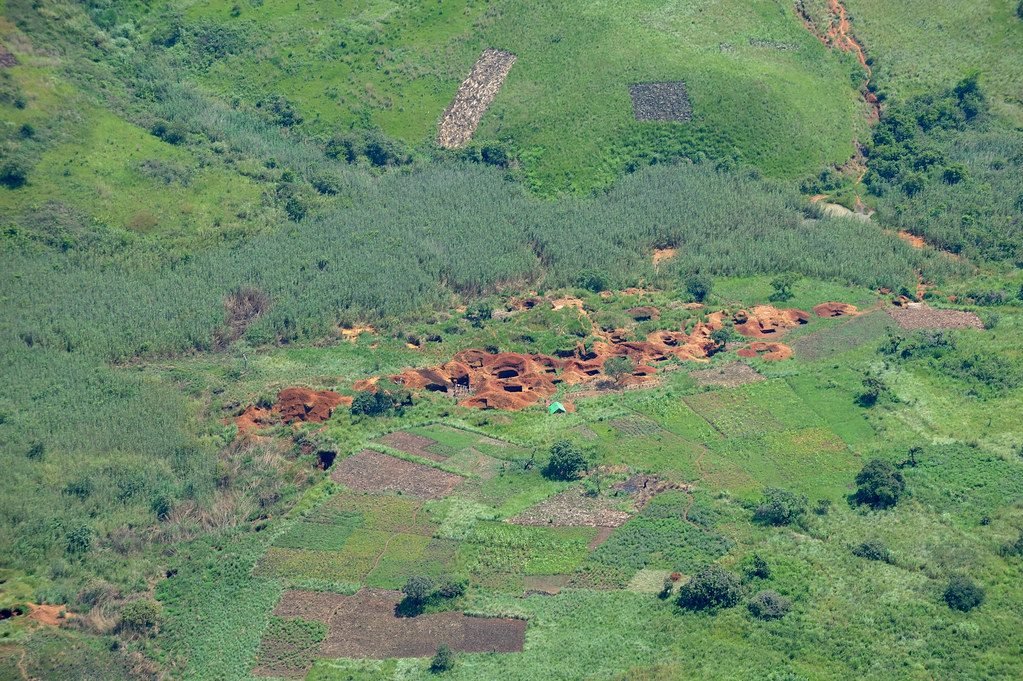
IPIS, the Antwerp institute whose site mapping the UN relies on, puts the human scale underneath: across 829 eastern Congolese mining sites visited between 2021 and 2023, employing an estimated 132,320 miners, 85% of the miners work in gold, and 61% work under some form of armed interference — the Congolese army itself the single most present armed actor. And the state-sanctioned alternative was audited too: Primera Gold, the Congolese government’s joint venture with an Emirati partner that held exclusive rights to buy South Kivu’s artisanal gold, exported more than 5 tonnes in 2023 — and, per a two-year investigation by the Global Initiative Against Transnational Organized Crime, never published a due-diligence report before collapsing in 2024.
So when a storefront says “East Africa origin”, auditors hear something specific. The region’s artisanal gold is real, enormous, and documented to move — in its overwhelming majority — through exactly the informal, undocumented channels a WhatsApp storefront operates in. Even the legal clean-up channel could not produce its paperwork.
Claim three: “Another successful international gold delivery”
Verdict: a claim, not evidence — and the claimed route is a documented one.
The page’s single delivery announcement, Uganda to Hong Kong, comes with no airway bill, no refinery receipt, no date of shipment, no quantity. It cannot be checked, and the report treats it as what it is: marketing copy. What can be checked is the route’s plausibility as a destination. Hong Kong is one of the documented onward markets for East and Central African gold after refining, principally via the Emirates — SWISSAID’s 2024 quantification found that 405 tonnes of the gold imported into the UAE from Africa in 2022 had been smuggled out of its countries of origin, and that undeclared African gold “acquires a legal existence” when it enters the international market through such hubs. A delivery claim pointing at Hong Kong is, in other words, a claim to have completed the exact journey the documented chain describes. It is consistent with everything. It verifies nothing.
Three trades wearing one caption
The reason this storefront matters is that three different realities share its format, and only two of them are crimes.
The first is a livelihood. Artisanal mining in Ituri is legal in Congolese law when licensed and cooperative-organised, and it is the cash economy of whole territories. That world is examined in the next section, on its own terms.
The second is a smuggling chain. Gold dug under militia taxation, carried across borders undocumented, refined in transit countries and sold into the world market. It is documented above, in UN reports and sanctions designations, tonne by tonne. A seller inside that chain would advertise exactly like this: origin without paperwork, bulk without numbers, contact by encrypted chat.
The third is a con. The advance-fee gold scam is one of the most prosecuted fraud genres in the trade. Its shape never changes: gold offered from Africa, documents produced, and then a sequence of fees — duty, customs, storage, insurance, release — each described as the last, for gold that never ships. The US International Trade Administration’s standing alert for Ghana states it flatly: “Be extremely cautious of any business transaction that requires you to pay advance monies or fees”, and, under its own heading:
The US Commodity Futures Trading Commission warns the public to be “especially cautious of anyone who approaches you on social media, dating apps, messaging apps” about precious metals. Kenya’s Directorate of Criminal Investigations has warned foreign buyers repeatedly; in one Nairobi case, court testimony describes foreign buyers losing the equivalent of about two million euros through duty payments, a staged customs confiscation and a rescue fee, in a deal that began, as these deals begin, with confidence and documents. Ghanaian prosecutors charged eleven people in October 2025 over an alleged two-million-dollar gold fraud against a Sri Lankan parliamentarian; the charges are allegations, not convictions. In the United States, the genre has produced convictions — among them a Texas case in which two men pleaded guilty in 2014 to a scheme that wired investors’ money to Ghana for gold that never shipped, with 464,035 dollars in restitution ordered.
A seller inside the third world would also advertise exactly like this. That is the point. The format does not discriminate, and neither, from the outside, can we.
The people in the footage
The advertisement is filmed over labour, so the labour deserves its own audit — starting with a number that travels badly. Advocacy material often states that women are 40% or more of Congo’s artisanal mining workforce. That figure traces to a 2010 Pact assessment and counts everyone around the mine — the women cooking, carrying water, trading and washing — across the whole country. IPIS’s direct site counts in eastern Congo measure something narrower and find something different: at 41 gold sites in western Mambasa, Ituri, visited in 2022, researchers counted 13,668 miners, of whom 442 — about 3% — were women working in production, mostly processing and washing ore. Both numbers are true under their definitions; swapped, they become false. What neither captures is the third figure: women were present around 34 of the 41 sites, running the restaurants, water points and trade the mining camps run on, for piece rates paid by male diggers, bearing the production risk, rarely owning a pit or a licence.
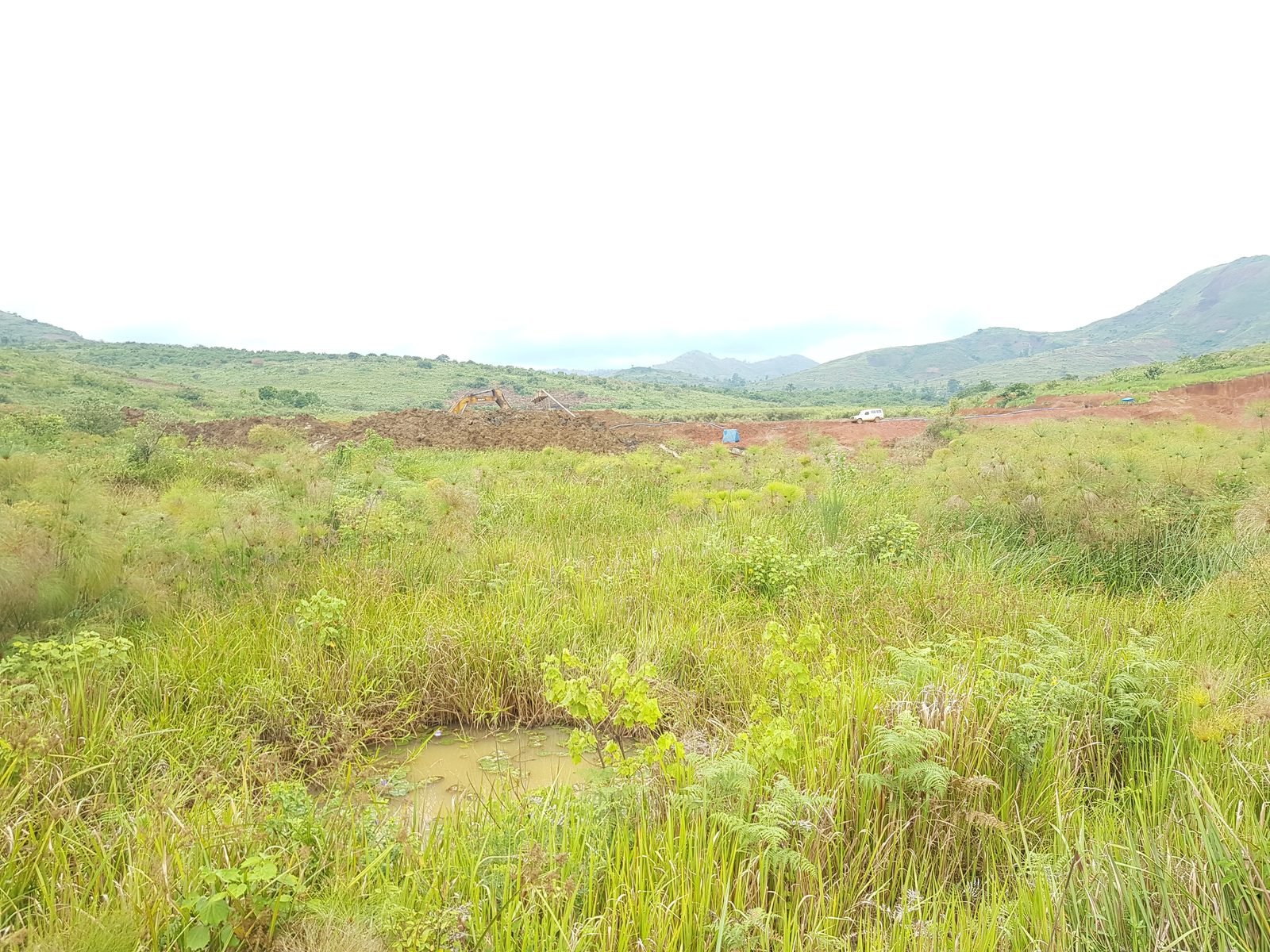
The work itself is documented in detail. In western Mambasa, mercury amalgamation was used at 92% of sites — the worst rate IPIS recorded in any eastern province — handled bare-handed, metres from houses and rivers, in a province whose gold belt has no biomonitoring of what it does to bodies. Children under 15 were counted at 51% of the sites, 1,098 of them, about 8% of the workforce; IPIS recorded children manipulating mercury at nine of the sites and digging pits at thirteen, work it classifies among the worst forms of child labour. Site managers reported to researchers 239 accidents, 347 serious injuries and 8 deaths in six months at eleven sites. In May 2026 the province’s gold town of Mongbwalu became the centre of an Ebola outbreak; miners were among the dead, and miners kept working — “if I stay at home, what are my children going to eat?” one told AFP.
None of this is hidden because it is shameful. It is hidden because it is ordinary. International Alert’s fieldwork in Ituri follows Jérémie, 29, who left teaching seven years ago to pan for gold ten to twelve hours a day for 50 to 200 dollars a month, because mining pays for housing, school fees and medicine. The women in the storefront’s footage are performing the same arithmetic. They are also, not incidentally, the authenticity backdrop of a sales pitch none of them will ever see a buyer’s fee from: the value of what they wash out of the mud is set in Kampala, Dubai and Hong Kong, by men with phones — the same instrument, at the respectable end, as the storefront’s WhatsApp number. In 2018 the women of five Ituri mining communities founded REAFECOM, the first association of women artisanal gold miners in the province, to bargain inside that chain rather than decorate it.
What the platform’s rules actually say
Because the storefront operates in the open, we checked the rulebook in the open. We read Meta’s published Commerce Policies, its Marketplace prohibited-items list, and the Community Standards’ Restricted Goods and Services policy in full. None of them names gold, gold bullion, or precious metals as a prohibited or restricted item. The commerce lists restrict “real, virtual or fake currency” — a category aimed at money, not metal. Organic posts like this page’s are not governed by the commerce list in any case; they sit under the Community Standards.
What does reach a storefront like this in Meta’s own text is fraud law, not commodity law. Meta’s Prohibited Commercial Practices policy bans advance-fee content — material that “falsely promises money in exchange for an up-front fee, wire transfer or payment” — alongside non-delivery and product-misrepresentation enforcement. In other words: selling gold is not the offence in the rulebook; lying about it is. Enforcement is complaint- and detection-driven, and Meta itself appends the caveat that its enforcement “isn’t perfect”. A storefront can therefore comply with every published list while operating in a format indistinguishable from two documented illicit trades — and the platform’s own policy architecture has nothing to say about the format itself, because the format is just speech, footage and a phone number.
Our assessment
This section is labelled analysis — the view of Evolving Humanities, on the record assembled above.
The instinct that a page like this “looks illegal” is understandable and, as a legal statement, unprovable — which is why this report does not make it. What the record supports is sharper. The documented system around this storefront runs on a gap: between gold as it is dug — by women and children, under armed taxation, in mercury — and gold as it is sold, as a clean line in a caption. Every checkpoint that is supposed to close that gap has been audited and found wanting: a UN-estimated 98% leakage in 2014 and no replacement percentage since because the leakage is now measured in missing tonnes; a transit state whose exports grew from 11 kilograms to 70 tonnes while producing almost nothing; refineries sanctioned while the trade’s volumes kept climbing; a state clean-up venture that never published its due diligence. The OECD’s standard asks one thing of this chain above all: know, and be able to show, where the gold came from. A WhatsApp storefront is that standard’s exact negative — origin as a slogan, provenance as a promise, verification as a caption.
The women panning in the footage are the only people in this story whose work is exactly what it appears to be. Everyone downstream is asking to be taken on trust. The record assembled by the UN, by IPIS, by sanctions lawyers and by fraud prosecutors says, in one voice, how that trust has historically been repaid.
What we could not verify
- Whether the named page is a genuine informal trader, a seller inside the documented smuggling chain, or an advance-fee scam. We examined no transaction, document or shipment from the page; nothing in its public material settles the question, and this report does not pretend otherwise.
- Whether the page has ever delivered gold, including the announced Uganda to Hong Kong delivery. The announcement is a caption claim with no checkable evidence attached.
- The purity or provenance of any gold the page offers. No assay, licence or registration document from the page was available to examine — because the page publishes none.
- Where or when the footage in the page’s posts was filmed, or by whom. The posts carry no location data; its resemblance to documented Ituri artisanal mining is visual, not proven.
- A current UN percentage for how much of Congo’s artisanal gold leaks out. None exists in the authoritative record after January 2014; later UN work quantifies tonnes and gaps instead. The 2026 report’s Ituri figures reached us through Congolese press coverage, not the primary text.
- Any mention of gold in Meta’s rulebook beyond what we report. Our negative finding rests on Meta’s published lists as read in full on 8 November 2026 — the Commerce Policies, the Marketplace prohibited items, and the Community Standards’ Restricted Goods and Services. None names gold, bullion or precious metals.
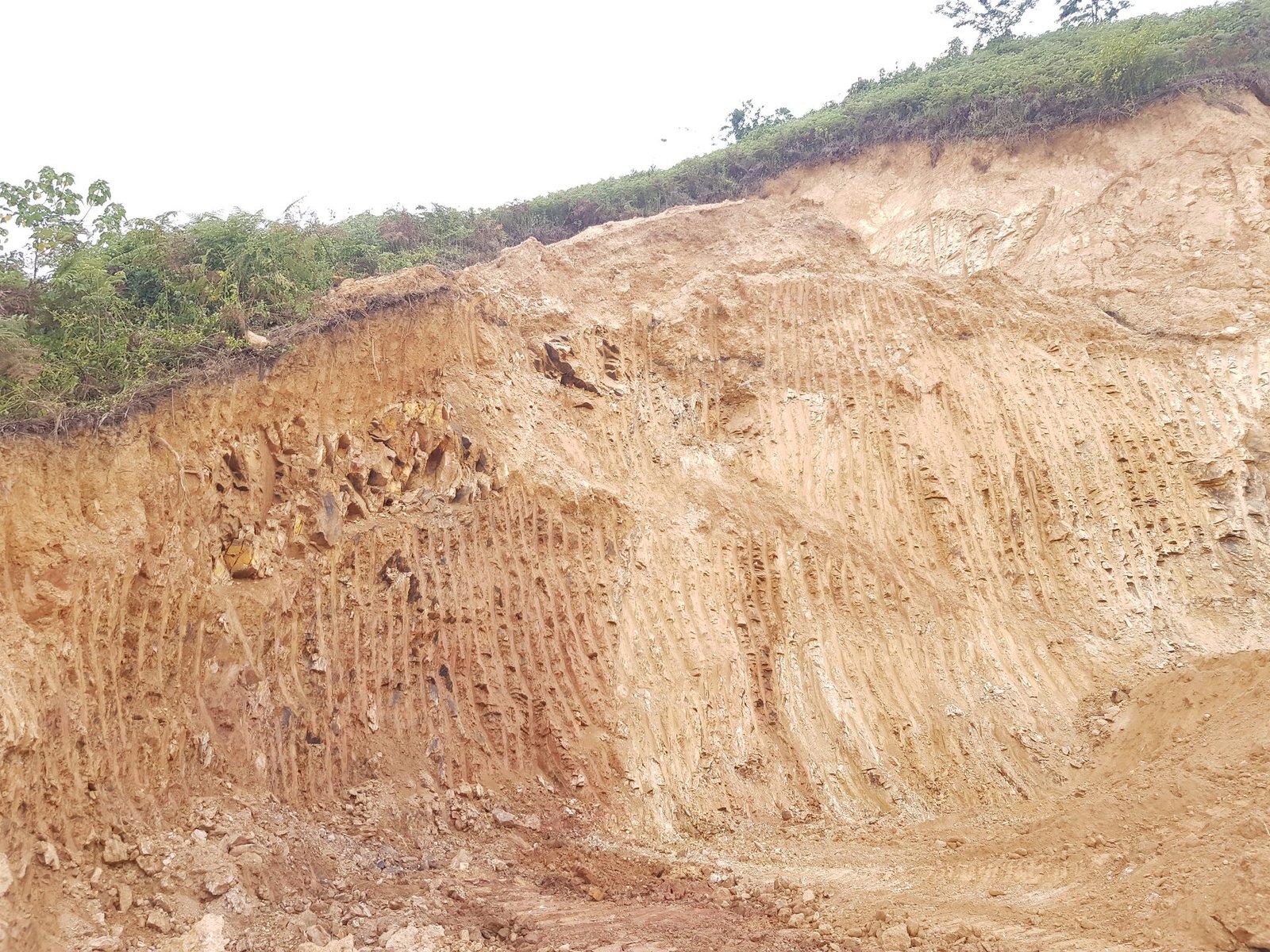
Featured image: an artisanal gold-mining quarry in Djugu Territory, Ituri Province. Photo: Fabien Bagbasi, CC BY-SA 4.0, via Wikimedia Commons.
Sources
- UN Group of Experts on the DRC — Final Report S/2025/446 (3 Jul 2025): Ituri site control, militia taxation, and the Kampala route; Final Report S/2024/432 (4 Jun 2024): smuggling to Rwanda and Uganda
- Beto.cd — the UN Group of Experts’ 2026 report on Ituri gold (2 Jul 2026): Ituri’s 559 kg declared exports for 2025; the Mabanga–Nizi site estimate
- Enough Project — “Congo’s Conflict Gold Rush” (30 Apr 2015): the UN’s 98% artisanal smuggling estimate; Reuters on S/2020/482 (Jun 2020): the 2019 Ituri tonnage and Uganda’s 95%
- UgBusiness / Bloomberg — Bank of Uganda gold export data (3 Oct 2026): 70.1 tonnes, $8.9bn, twelve months to June 2026; US Treasury — OFAC designations of Alain Goetz / African Gold Refinery (17 Mar 2022) and Gasabo Gold Refinery (25 Jun 2026)
- IPIS — Analysis of the interactive map of artisanal mining areas in eastern DRC, 2023 Update (Jul 2023); IPIS — Mapping of artisanal mining sites in western Mambasa, Ituri (Oct 2023); IPIS — Armed groups, territorial control and gold exploitation in Djugu (Jun 2023)
- The Sentry — “Gold-Backed Brutality” (Oct 2026): ADF gold financing; SWISSAID — “On the trail of African gold” (May 2024): the UAE import figures; GI-TOC — “Feeding the furnace” (Jan 2026): Primera Gold
- US International Trade Administration — Ghana Scam and Fraud Alert (17 Apr 2024); CFTC customer advisory on precious-metals fraud approaches via social and messaging apps; US DOJ (Northern District of Texas) — gold purchase scheme convictions; Kenya DCI statement via Pulse Kenya (27 Sep 2024) and court testimony reporting, Kenya Insights (6 Sep 2025); Ghana News Agency (24 Oct 2025)
- Meta — Commerce Policies; Marketplace prohibited items; Community Standards: Restricted Goods and Services; Prohibited Commercial Practices (all read 8 Nov 2026)
- IMPACT — women artisanal gold miners in Ituri; IMPACT — REAFECOM, the Ituri women miners’ association founded 2018; International Alert — artisanal gold mining in Ituri (Oct 2026); AFP reporting from Mongbwalu (Jun 2026)
- Instagram — the storefront post sampled for this report (17 Oct 2026), and the page sample of 8 Nov 2026 described in the text
Leave a comment
Comment as a guest and verify your email, or sign in or create a reader account. Guest comments reach our review queue after email verification; account holders can submit directly for review.