Listen to this article
Take the story with you. Choose a voice and a pace that suits you.
Or listen in another language / choose a voice
Getting your device voices ready…
The voice follows the displayed language and your browser’s regional preference when available. You can choose another narration voice.
Opinion and analysis. The personal account below is reported as experienced by the writer; company terms and regulations are cited to their published sources.
Check hold times are sold to the public as a fact of banking, like weather. They are not weather. In 2026, when a phone can photograph a check, read it, and transmit it in seconds, a five-business-day hold on that deposit is a business decision. And at Current, one of the biggest app-based banking services in the United States, that decision can quietly stretch to nine calendar days — nine days in which your money exists, has been accepted, and is not yours to use.
Start with a case that is not hypothetical. A check issued by Wells Fargo — one of the largest banks in the United States — was deposited into Current on Sunday 8 November 2026. This was not a personal check from a stranger, and it was not drawn on some obscure out-of-state issuer. It was a check from a major national bank, the kind of instrument the system is supposed to clear without drama. Current accepted the deposit — and placed it on the longest hold in its own published range, three to five business days. By the Friday of that week, the money still had not cleared. The knock-on effects were not abstract: a phone bill went unpaid, the mobile service was suspended, and the number itself was at risk of being lost. The check was good. The app had it. The only person who did not have the money was the person it belonged to.
Now count the days, because the industry counts them in a way designed to shrink them. A Sunday deposit does not start processing until Monday. Wednesday of that week was Veterans Day, a federal holiday, which is not a business day. Five business days from that Sunday deposit therefore ran out the following Monday, with the funds usable on the Tuesday — nine calendar days after the check went in. "Up to five business days" is the phrase in the terms. Nine days is the phrase in a person's life.
The check already travelled. The money is just waiting.
The standard defence of the hold is fraud and verification, and it deserves a direct answer: the check itself is not moving slowly. Under Check 21, the federal law that let banks exchange check images instead of paper, the Federal Reserve states that once a check is deposited, "it is almost always delivered overnight to the paying bank and debited from the checkwriter's account the next business day." The paying bank knows within a day or two whether the check is good. Meanwhile, the rails for genuinely instant money already exist and are running: the Federal Reserve's FedNow service, live since July 2023, "processes and settles individual payments within seconds, 24 hours a day, 7 days a week, 365 days a year," with more than 1,800 institutions participating, and The Clearing House's RTP network has moved money in seconds since 2017. The Fed itself says instant payment "could help avoid the need to use expensive check cashing services, engage in high-cost borrowing, or incur overdraft or late fees." The five days, in other words, are not the check travelling. They are the customer waiting.
The federal floor does not cover the app
Surely the law protects depositors? Regulation CC, the federal funds-availability rule, does set a floor: since July 1, 2025, the first $275 of a check deposit must be available the next business day, and only the amount above $6,725 can be pushed onto a large-deposit exception hold. But read the fine print of the biggest names in app banking and the floor disappears. Capital One's own mobile deposit agreement states that items deposited through its app "are not subject to the funds availability requirements of Regulation CC or our Availability Schedule," and that it may place an extended hold anyway. Ally Bank's deposit agreement says the same of its eCheck deposits: they "aren't subject to Regulation CC funds availability requirements or our Funds Availability Policy." That is the scandal in one sentence. The protection was written for a paper check handed to a teller. The deposit most people actually make — a photograph, through an app — is carved out of it by contract. The hold is not the law. The hold is the terms and conditions.
Current's own terms show how the machine is tuned. Its support page caps mobile check deposits at $2,000 per check — paid more than that by check, and you cannot deposit it at all — warns that a deposit "can take up to 5 business days to clear," and notes that deposits made after 4 p.m. Eastern begin processing the following business day. Current is a financial technology company, not a bank; its banking services are provided through Cross River Bank, Member FDIC. None of this is hidden. All of it is simply accepted, because the people it falls on — benefit claimants, hourly workers, anyone still paid on paper — are the people with the least power to refuse it.
Free means wait. Fast means pay.
Here is the two-tier insult, and it should be named plainly: instant access to your own check money already exists across the fintech market — for a fee. Ingo Money, the check-cashing engine inside many banking apps, charges 2 percent of payroll and government checks and 5 percent of other checks, with a minimum fee, for money in minutes; the free option is funding in ten days. At Current itself, faster settlement is not sold but rationed: eligibility is decided by the company's own system, based on your deposit history and account health — a lottery the customer cannot see into. Either way, the structure is the same. Wait a week or more for free, or pay a percentage — or win an algorithm's approval — to use money that is already yours. A percentage fee on a government check, charged to the person least able to pay it, is a poverty toll. That is not a metaphor. It is a price list.
Which raises the question underneath all of this: why is anyone still paid by paper check at all? A check is the slowest, most fraud-exposed payment instrument in the system, and it survives because it is cheap for the payer and costly for the payee. If governments and employers insist on paying wages and benefits by check, then the institutions that take those customers — and market themselves to them — should be required to honour those checks properly. You cannot build a brand on serving workers and then freeze a check drawn on one of the largest banks in the country for nine days.
What should change
Four demands, none of them technically difficult. First, cap mobile-deposit holds by law, and close the app carve-out: if Regulation CC's availability schedule means anything, it must apply to the deposit people actually make. Second, next-business-day availability for government checks as a class — the payer is the state, the verification is the easiest in the system, and the current treatment of benefit money is indefensible. Third, require instant or next-day verification using the same image-exchange and instant-payment rails banks already use between themselves; the technology gap is a policy gap. Fourth, end paper checks as a payment method for wages and benefits altogether: pay people electronically, or guarantee that their paper converts at electronic speed.
Until then, the honest translation of "up to five business days" is the one counted out above: a Sunday deposit, a holiday, a frozen week, a suspended phone — nine days. The money moved at the speed of light. It just was not allowed to arrive.
Sources
- Current — How do I deposit a check into my Current Account?
- CFPB — Regulation CC threshold adjustments (effective July 1, 2025)
- eCFR — 12 CFR Part 229 (Regulation CC)
- Capital One — Mobile Deposit Disclosures
- Ally Bank — Deposit Agreement and Disclosures (PDF)
- Federal Reserve — Check 21 / Regulation CC FAQ
- Federal Reserve — FedNow Service
- Ingo Money — fee schedule
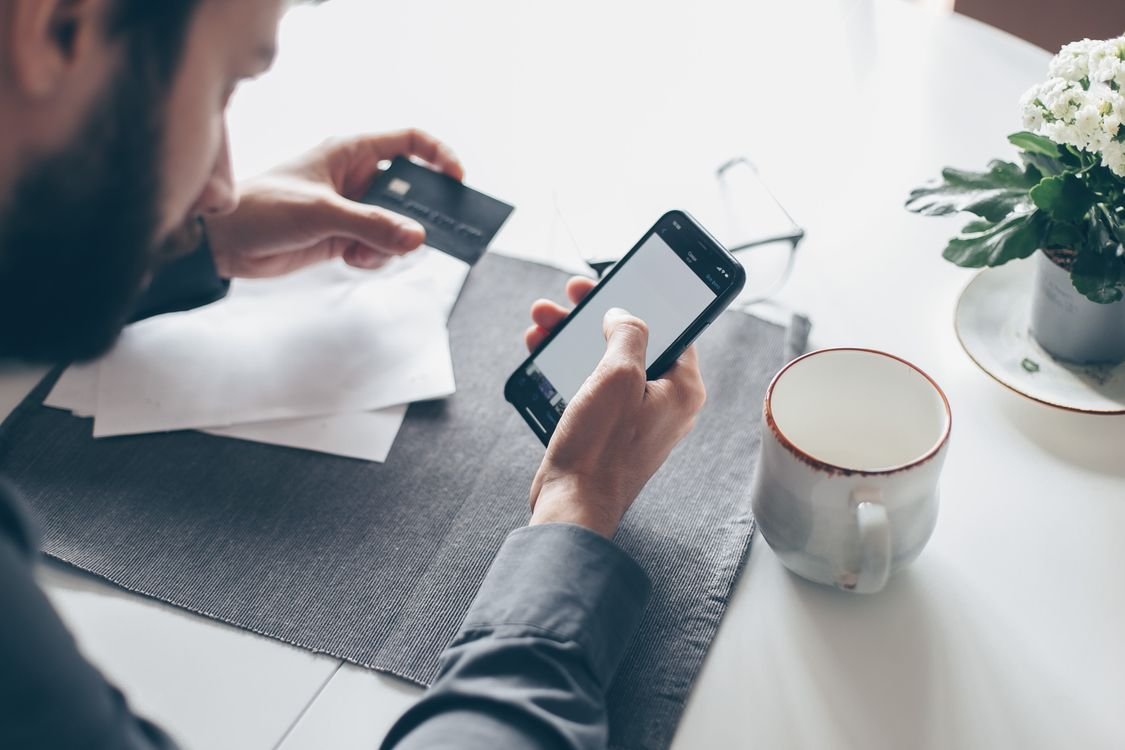
Featured image: photograph by Mikhail Nilov via Pexels (free licence) — a man processing a payment on a smartphone.
Leave a comment
Comment as a guest and verify your email, or sign in or create a reader account. Guest comments reach our review queue after email verification; account holders can submit directly for review.