Listen to this article
Take the story with you. Choose a voice and a pace that suits you.
Or listen in another language / choose a voice
Getting your device voices ready…
The voice follows the displayed language and your browser’s regional preference when available. You can choose another narration voice.
The Pitt Rivers Museum returns Naga ancestral remains to the community they were taken from, in a handover ceremony at the University of Oxford on 9 November 2026 that transferred custodianship of 39 ancestral remains to the Naga people (RuralPost). Almost 30 members of the Naga community travelled from Nagaland, in northeastern India, to be there (Times Now World). Information verified through 10 November 2026.
It is, the museum has said, its largest return of human remains — and the end of a process that began in 2020 (NorthEast India Connect).
The 39 Naga ancestral remains handover ceremony
The ceremony opened with a chant, Langhon Langpheng Ngao, performed by Nyamto Wangsha, expressing the idea that when the soul returns, the village heals (RuralPost). Oxford’s vice-chancellor, Professor Irene Tracey, recognised the event as “historic between the university and the Naga people” and described the repatriation journey as a community-led initiative of reconciliation, healing and peace (RuralPost).
The Transfer of Title Form was signed by Professor Laura Van Broekhoven for the Pitt Rivers Museum and Rev. Dr Wati Aier for the Forum for Naga Reconciliation, which facilitated the process from its start (RuralPost). After the signing, the remains were prepared for transport to Heathrow Airport to begin the journey back to India (Times Now World).
Speaking for the Naga Tribe Hoho, Thejao Vihienuo framed the return as a Naga right to take care of their ancestors, and an acknowledgement of common humanity — and said all Naga ancestral remains kept in museums must return to the homeland with dignity (RuralPost). Ellen Konyak, coordinator of the Recover, Restore and Decolonise team, called the repatriation not an end but a new beginning, from which the Nagas create their own story (RuralPost).
Pitt Rivers Museum returns Naga ancestral remains that were taken, not given
The returned remains are primarily skulls, collected between 1910 and 1940, largely by two colonial administrators who also served as anthropologists, John Henry Hutton and James Philip Mills (Times Now World). According to research cited by the museum, such remains and objects were frequently confiscated during punitive military expeditions rather than freely given (Museums Association). Vihienuo made the same point at the ceremony: it was unlikely such items were ever offered as gifts (Times Now World).
The scale of the holding matters. The Pitt Rivers holds the largest collection of Naga material in the world, more than 6,000 objects, and its collection lists 219 items as Naga human remains: the 39 ancestral remains, and 178 objects that contain or may contain human hair (Museums Association). The museum removed all human remains from its exhibition floors in 2020 and committed not to display any without the consent of communities of origin — the shift that opened the door to dialogue with Naga communities (Museums Association). Around 2,700 human remains from all origins remain in its storage (Times Now World).
Naga ancestral remains repatriation: the road from claim to homecoming
The timeline is a study in patience. Dialogue began in 2020, facilitated by the Forum for Naga Reconciliation and its Return, Restore and Decolonize initiative (NorthEast India Connect). In June 2025 the museum hosted the first formal Naga delegation in its history; leaders and elders saw the remains, held ceremonies, prayers and song, and released the Naga-Oxford Declaration on Repatriation, committing to a shared memorial resting place and a dignified rest for the ancestors (Museums Association).
In July 2026, following a formal claim, the University of Oxford Council agreed to return 39 of the 40 remains claimed. It declined one, citing a lack of clear evidence that it originated from the Naga people (Museums Association).
At home, the receiving end is already being built. Preparation of the burial site began on Saturday at Naga Solidarity Park in Kohima, with a prayer service; site clearance and ground preparation have formally begun, though no design or burial date has been announced (NorthEast India Connect). Tribal leaders plan to inter the remains together at the joint memorial site (Times Now World).
One disagreement sits on the record. The Naga National Council and Federal Government of Nagaland formally challenged Oxford’s decision — not against repatriation, but over whether authority over it was properly recognised — asking for the physical transfer to be suspended, for full disclosure and for an independent review (NorthEast India Connect). The handover went ahead on 9 November; the reports reviewed carry no response from the museum or the Forum to that request.
Colonial-era human remains in UK museums: a wider reckoning
The Pitt Rivers has returned human remains before — to Indigenous communities in Australia, New Zealand and the United States (Times Now World). It is not alone in rethinking. Manchester Museum has removed the mummified body of an Ancient Egyptian woman, known as Asru, from display after more than 200 years, following consultation grounded in what it calls its values of care and inclusion (Museums Association).
Analysis: what distinguishes the Naga return is not the paperwork — transfer-of-title forms are now familiar — but who led it. The process was Indigenous-led from the first dialogue, the destination is a memorial the community is building itself, and the museum’s role shrank, over six years, from owner to signatory. Dolly Kikon, the Naga anthropologist who was part of the delegation, described it as “an act of healing, of returning sovereign decision making and reclaiming the dignity of our ancestors and the Naga people” (Museums Association). The ancestors are going home. The argument over who speaks for home, as the NNC-FGN challenge shows, travels with them.
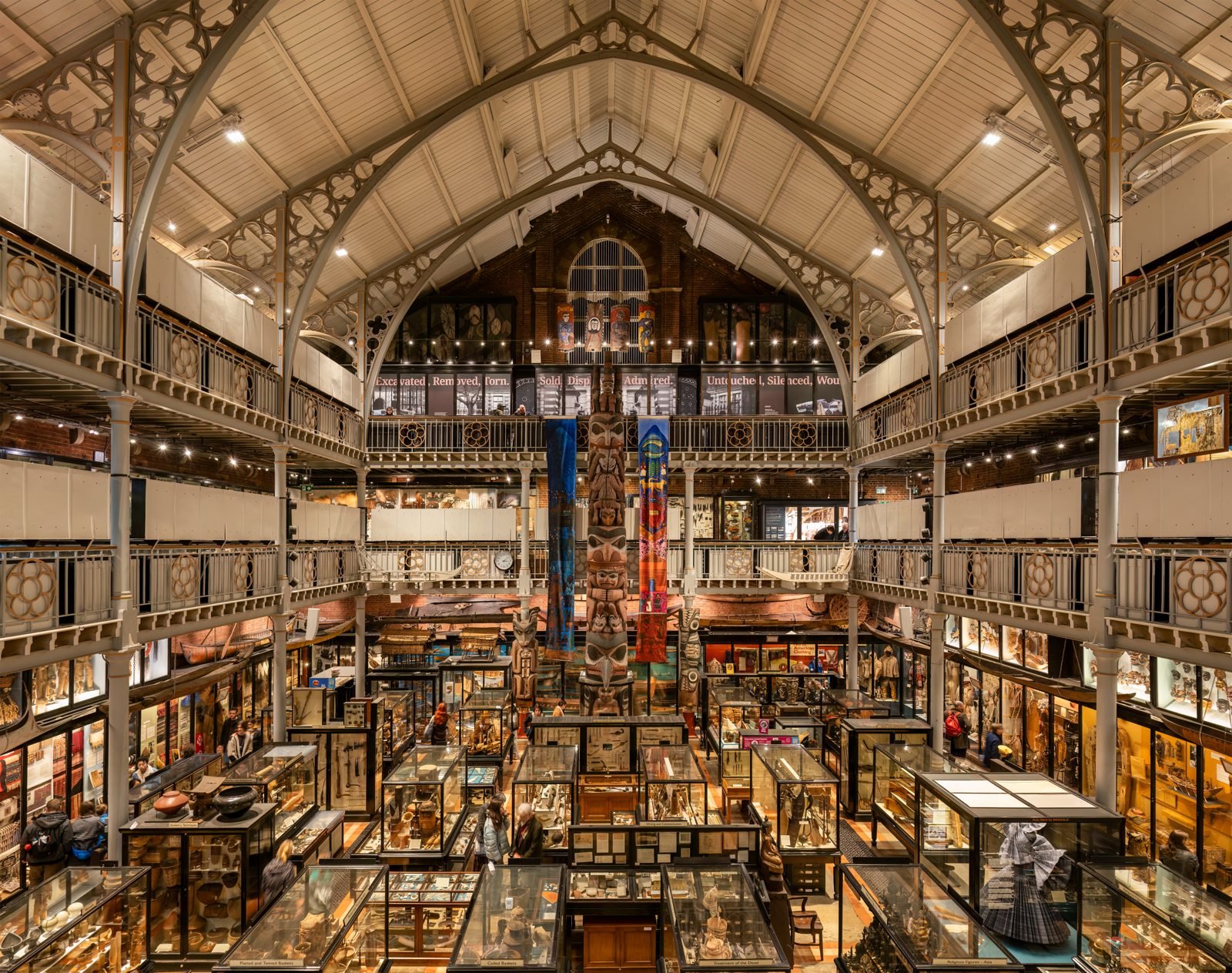
Photo: Rhododendrites, via Wikimedia Commons (CC BY-SA 4.0)
Sources
- https://ruralpost.in/oxford-hands-over-naga-ancestral-remains/
- https://www.timesnowworld.com/us-news/oxford-pitt-rivers-museum-returns-naga-ancestral-remains-india-article-156488862
- https://www.museumsassociation.org/museums-journal/news/2026/09/two-significant-developments-in-the-care-of-human-remains-in-uk-collections/
- https://northeastindiaconnect.com/naga-ancestral-remains-burial-site-kohima/
Leave a comment
Comment as a guest and verify your email, or sign in or create a reader account. Guest comments reach our review queue after email verification; account holders can submit directly for review.