Listen to this article
Take the story with you. Choose a voice and a pace that suits you.
Or listen in another language / choose a voice
Getting your device voices ready…
The voice follows the displayed language and your browser’s regional preference when available. You can choose another narration voice.
Ask why AI needs a moral compass and you get a blunt answer from Ayanna Howard: because it does not arrive with one. Her book Rebooting the Machines: A New Human Vision for Artificial Intelligence was released on 10 November 2026 by Broadleaf Books, and Spelman College hosted a launch event that day with a fireside chat, audience questions and a signing, Spelman College reported on 12 November. Information verified through 14 November 2026.
Howard is not an outsider scolding an industry she has never worked in. She is a robotics expert who helped develop technology for Mars rovers at NASA’s Jet Propulsion Laboratory, later served as dean of engineering at Ohio State University, and became the 12th president of Spelman College on 1 August, her launch coverage summarised. She has written more than 300 publications and an earlier book, Sex, Race, and Robots. That biography shapes the argument. She builds these systems. She is asking who gets to steer them.
Rebooting the Machines Ayanna Howard wrote for more than engineers
“We need to reboot our relationship with technology, reboot our relationship with AI, and even retrain how we do certain things,” Howard told Hypepotamus, in remarks quoted in launch coverage. The book is written for readers in STEM as well as the humanities and creative fields, the same coverage noted.
If moral choices are baked into a system during design — which data count, whose errors matter, what gets optimised — ethics cannot be left to the small group present at that moment. Howard puts it in her own words: “We have the power to build AI that is representative of our society as it is, and that’s exactly what we’re doing. But we also have the power to build AI that represents and fosters the kind of society we aspire to have,” Spelman quoted from the book.
A system trained on the world as it is will reproduce that world, including its exclusions. A system built toward a society people aspire to have requires someone to name those aspirations, argue about them, and accept responsibility. Neither happens by accident.
Library Journal called the book “a very timely work on the ethics of artificial intelligence algorithms,” in a review quoted by US Black Engineer on 6 November, launch coverage reported. Timely, here, is not a compliment about the news cycle. Systems are being embedded now.
An AI moral center ethics cannot be outsourced
Howard argues AI, including robotics, “is not built with a moral center,” so if people want it to serve all humanity they must provide the compass, Bookshop’s description of the book summarises. Read that claim carefully. It does not say machines are wicked. It does not say they are neutral in their effects, either. A tool with no moral center can still land unevenly — trained, deployed and priced by people, inside institutions with histories.
Health care gives the concrete case. AI systems in critical sectors such as health care are rarely trained on data reflecting the full diversity of the human population, and they often underrepresent Black women, leading to unequal outcomes, US Black Engineer reported in its review. Howard also insists on something engineers sometimes slide past: “AI is fundamentally connected to physical interaction with the world.” Choices in digital infrastructure have material consequences for people, communities and environments, she writes. A drone is not an opinion. A robot arm is not a spreadsheet.
Her remedy is collective, and early. Find and fix biased algorithms before they become embedded in infrastructure, she urges. She also warned against fear that drives the work underground: if the public expresses fear, governments and companies will not stop using AI, she argued; they will stop telling us about it, leaving it unregulated and in few hands, HBCU Connect published her remarks. Secrecy is not safety. It is the loss of oversight.
Diverse perspectives in AI development as a practical demand
Diversity, in Howard’s framing, is not decoration on a team photo. Students at Spelman worry AI will erase the futures they worked to build, Spelman noted at the launch, and the book arrives in that anxiety rather than above it. It offers a roadmap: what to demand from tech companies, what to fight against, and how to get ethical human values built in, Spelman said.
On jobs, she refuses both scripts. AI will transform jobs rather than simply eliminate them, launch coverage summarised — while another account puts it sharper: AI will eliminate some opportunities and open many others, and the collective job is to fight for the AI people want to live with, HBCU Connect reported. Transformation is not a promise that every displaced worker lands well. It describes movement, not fairness.
All proceeds from the book go toward scholarships for Spelman students, both Spelman and launch coverage confirmed. That detail belongs in the review, not a footnote. A book arguing that who gets into the room shapes what gets built is funding more people into the room.
Analysis: The strength of Howard’s position is that it relocates the moral question. Much public argument asks whether a finished system is good or bad, as if values were a coat of paint applied at the end. She asks earlier questions: who chose the data, who defined success, who was missing, who can appeal a decision? Those are philosophical questions, but they have engineering addresses. You can point to the meeting where they were — or were not — answered.
Her launch conversation at Spelman, with engineer and policy scholar Dr. Kamau Bobb and WABE’s Rose Scott, took up workforce impact, diversity among developers, bias, and collective responsibility, Spelman reported. A compass, after all, does not walk for you. It tells you which way you are facing while you decide. Howard’s book asks readers — not only coders — to pick it up.
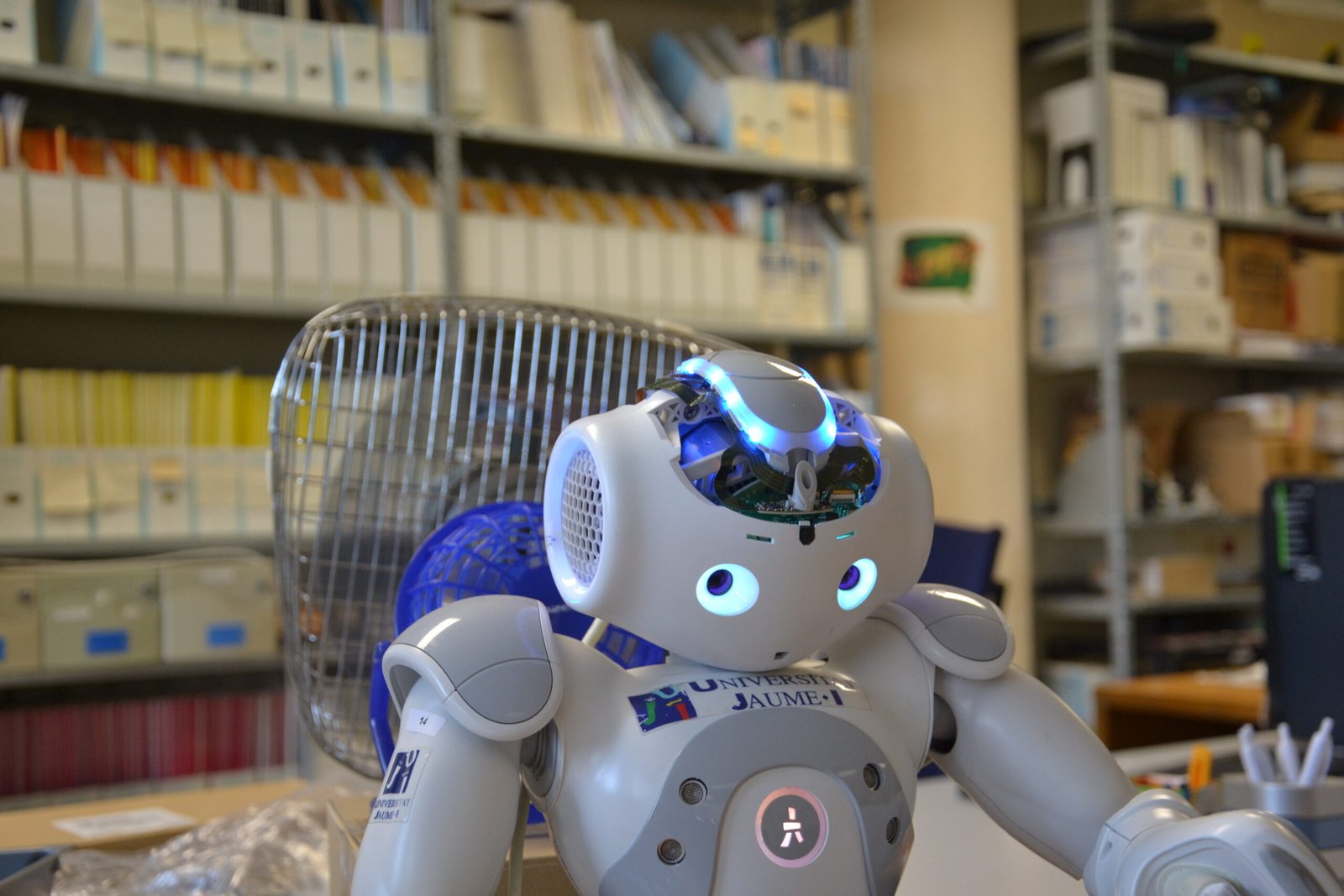
Photo: Gustavo A. Casañ, via Wikimedia Commons (CC BY-SA 4.0)
Sources
- https://www.spelman.edu/news/2026/11/ai-expert-spelman-college-presidents-new-book-offers-a-new-vision-for-the-future-of-artificial-intelligence.html
- https://stellantgroup.com/news/ayanna-howards-rebooting-machines-launches-national-coverage/
- https://bookshop.org/p/books/rebooting-the-machines-a-new-human-vision-for-artificial-intelligence-ayanna-howard/2dd3b6b76d60570a?ean=9798341904958
- https://hbcuconnect.com/content/416215/new-spelman-college-president-dr-ayanna-howard-authors-book-on-creating-an-ai-that-works-for-all
Leave a comment
Comment as a guest and verify your email, or sign in or create a reader account. Guest comments reach our review queue after email verification; account holders can submit directly for review.