Listen to this article
Take the story with you. Choose a voice and a pace that suits you.
Or listen in another language / choose a voice
Getting your device voices ready…
The voice follows the displayed language and your browser’s regional preference when available. You can choose another narration voice.
Functional understanding of quantum technologies sounds like a modest demand. Know what the machines can do. Know what they can’t. Then argue about whether they should. A paper published in NanoEthics this month argues that this ordering — functions first, verdicts second — is not a nicety but a precondition, and that most public explanation of quantum technology currently gets it backwards (Springer). Information verified through 11 November 2026.
The paper, by philosopher Eline de Jong of the University of Amsterdam, appeared in NanoEthics, volume 20, on 8 November 2026 (Science Magazine summary, via Scienmag). Its claim is precise: meaningful ethical debate about a technology requires understanding its functional capabilities — what it can do and what it can be used for — and that requirement is separate from understanding the physics underneath (Springer).
Functional understanding of quantum technologies, explained by a car key
De Jong opens with a handheld device. It is blue. It has two buttons, labelled “read” and “write.” Could you debate its ethics? Call it a “duplicator” and you still know almost nothing. Now learn what it actually does: it reads the electronic data from a car key and writes that data into a blank key. The ethical questions arrive on their own — theft, consent, locksmithing, car security (Springer).
That is the whole argument in miniature. Ethical engagement is a cognitive task. It runs on “what-if” scenarios and “if-then” inferences — if the technology has these capabilities, then those applications become possible (Springer). No grasp of function, no scenarios worth arguing about. The quantum technology ethics debate, on this account, keeps stalling because participants are handed physics lessons when what they need is a capability map.
Technological understanding and ethics: three contexts, one that matters here
The framework comes from work by De Jong and Sebastian De Haro on technological understanding, defined as the cognitive skill of recognising how a technology can be used to realise a particular aim (Springer). They sort it into three contexts. Design understanding is the engineer’s kind: how superposition and entanglement can be controlled to perform computations. Operational understanding is the driver’s kind: you can work the pedals without knowing how the engine combusts. Innovation understanding is the third kind — inventing new relationships between a technology and a practical aim, which means grasping its functional capabilities and its limits (Springer).
Ethics, De Jong argues, lives in that third context. To assess a large quantum computer you need to know what it may plausibly be used for — breaking current encryption methods, speeding up aspects of drug design — and what it is not expected to do, such as deliver an all-purpose speed-up over classical computers or automatically “supercharge” artificial intelligence (Springer). Her comparison case is the large language model: understanding that such models predict plausible next words tells you where they are useful and where they are unreliable, without opening the architecture.
The physics-first approach to quantum technologies, measured
Here is the mismatch. An empirical study cited in the paper found that 81 per cent of Dutch news articles about quantum technologies explain the underlying physics, and a second study found quantum phenomena explained in 70 per cent of expert TEDx talks on the subject (Springer). De Jong calls this the physics-first approach to quantum technologies, and her objection is narrow: not that the physics is wrong, but that it comes first. “Mentioning ‘superposition’ in discussions of a quantum computer is, of course, not a crime,” she writes — it just rarely equips anyone to reason about consequences (Springer).
Most of us debate cars and smartphones ethically without being able to explain a transistor. Her point is that quantum should not be the exception. Decoupling functional understanding from technical expertise, she argues, raises and lowers the bar at the same time: it sets a real threshold for joining the debate, then makes that threshold reachable by non-specialists (Science Magazine summary, via Scienmag). One corollary stings a little. Physicists, despite deep knowledge, are “not automatically well positioned to engage in ethical reflection” either — they need the functional kind of understanding too (Springer).
A neighbouring argument in the same field reaches a similar warning from a different direction. An analysis of the “bad actor narrative” in quantum computing discourse notes how responsibility gets passed down the innovation chain — researchers explore, engineers build, and only hypothetical malicious users are blamed — while the feared “cryptocalypse” is dated 10 to 15 years out and steers funding and attention in the present (Springer Professional). Speculation about misuse, detached from what the technology presently does, is exactly the failure mode De Jong’s functions-first rule is built to prevent. Where capabilities remain genuinely unclear, she counsels ethical caution to avoid “speculative overreach” (Springer).
Analysis: the proposal reframes who counts as qualified to argue about quantum technology. Not the person who can derive the mathematics, and not the person with the loudest hypothetical. The person who can say, accurately, what the machine does, what it might do next, and where its limits sit. That is a smaller, checkable claim to expertise — and a harder one to fake.
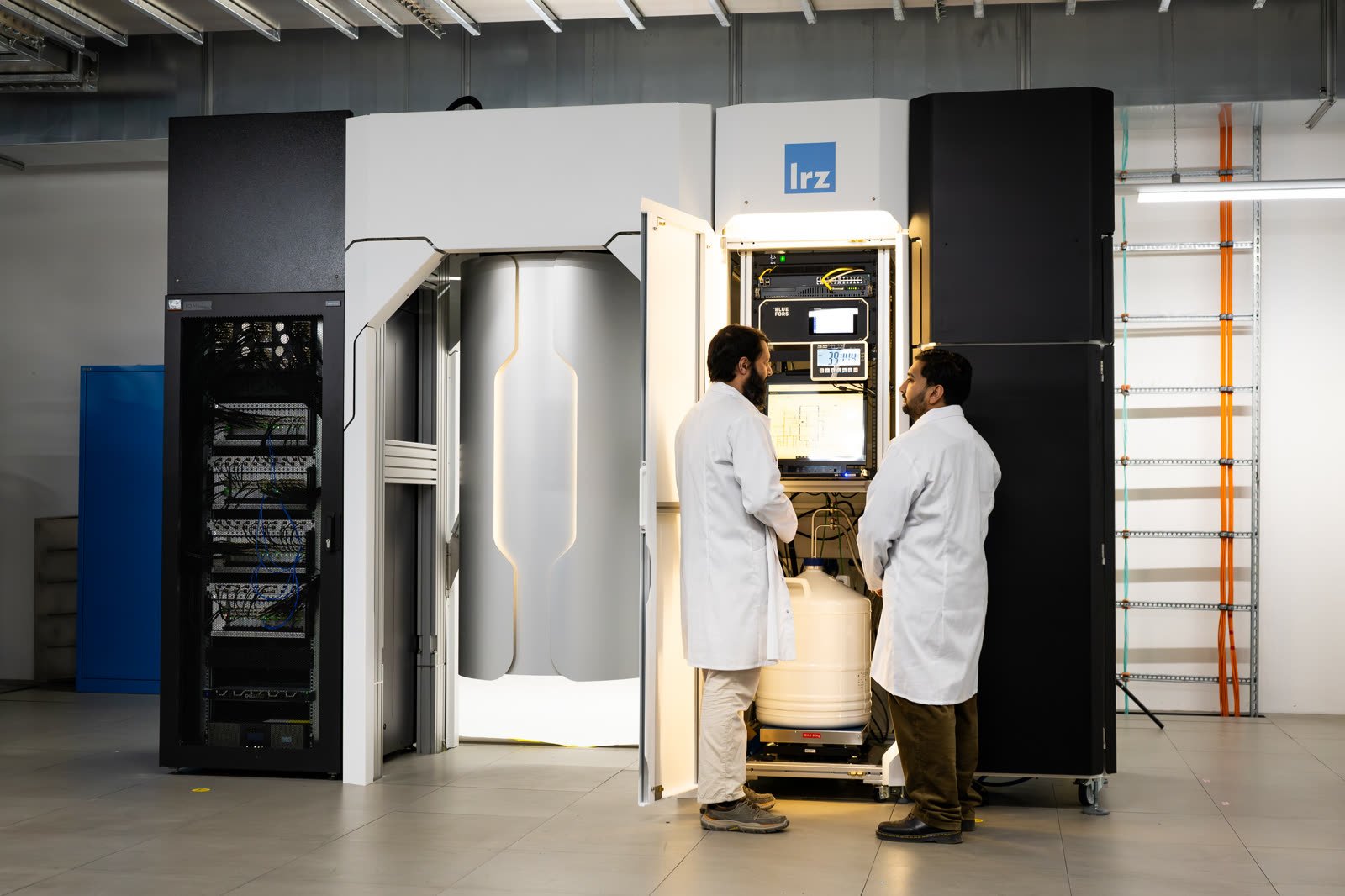
Photo: Sebastian Widmann / European Union, via Wikimedia Commons (CC BY 4.0)
Leave a comment
Comment as a guest and verify your email, or sign in or create a reader account. Guest comments reach our review queue after email verification; account holders can submit directly for review.