Listen to this article
Take the story with you. Choose a voice and a pace that suits you.
Or listen in another language / choose a voice
Getting your device voices ready…
The voice follows the displayed language and your browser’s regional preference when available. You can choose another narration voice.
Does rationality justify morality? It is the question underneath every argument about why anyone should be good when being good costs something, and a new scholarly volume returns to it through the most ambitious answer philosophy has produced. Reason, Agency, and Ethics: New Perspectives on Kantian Constitutivism, edited by Carla Bagnoli and Stefano Bacin, was published by Oxford University Press on 3 November 2026 (Wordery).
The book’s starting point is plain to state and hard to defend: whether and how rationality justifies morality is one of the fundamental questions of philosophy, and Immanuel Kant’s attempt to answer it remains the reference point the debate keeps circling back to (Wordery).
Does rationality justify morality? Kantian constitutivism and self-constitution, in one idea
The Kantian constitutivism and self-constitution thesis runs like this. The norms of rationality are not merely abstract requirements of thought. They are also the principles by which rational beings govern themselves and shape their relations with one another (Wordery). On this view, morality is not imposed from outside. It arises from what constitutes a moral subject in the first place.
That is a striking bargain. If the rules of thinking straight and the rules of acting decently turn out to be the same rules — the ones you cannot break without ceasing to function as a rational agent at all — then morality needs no police force, no divine backing and no appeal to taste. You are bound by it the way you are bound by logic: from the inside.
The Stanford Encyclopedia of Philosophy describes the wider family this belongs to. Kantian constructivism understands moral and normative truths through the basic features of rational agency: reasons for being moral do not spring from our interests or desires, but are rooted in our nature as rational agents, which is why they claim to bind universally and necessarily (Stanford Encyclopedia of Philosophy).
Why Kant refused every outside source
Kant’s diagnosis of earlier moral theories was that they failed as theories of practical reason. Sentimentalism made reason a servant that merely finds means to ends set by feeling. Dogmatic rationalism treated moral truths as objects reason passively perceives. Kant called both patterns heteronomy — reason taking its law from something outside itself — and treated heteronomy as a form of moral scepticism (Stanford Encyclopedia of Philosophy).
His alternative is that reason is a self-legislative activity, governed by a norm internal to itself: the categorical imperative, described in the constructivist reading as the constitutive norm of reason, the basic standard of rationality in thinking and acting (Stanford Encyclopedia of Philosophy). The test it sets is whether the principle behind an action could be endorsed as a universal law, binding every agent endowed with rational capacities.
A popular summary of the same tradition puts the middle position this way: moral truths are neither invented nor discovered, but constructed by rational agents to solve practical problems, and their authority rests on reason and agreement rather than on a moral order waiting out there to be found (Philosophy Institute).
Norms of rationality and moral obligation: where scholars still split
None of this is settled, and the new volume does not pretend otherwise. How exactly Kant argues for the bold claim, and whether he succeeds in securing the objectivity and authority of moral obligations, remain pressing questions at the centre of what the publisher calls a vigorous and expanding debate across moral philosophy, the theory of practical reason and action theory (Wordery).
The splits are real. Some interpreters read Kant’s appeal to the absolute value of humanity as a realist move that sits uneasily inside a constructivist frame. Others point to his description of our consciousness of the moral law as a “fact of reason” and argue that Kant is perceiving a moral fact, not constructing one. Constructivist readers reply that the fact of reason shows practical reason’s deliverances cohering with ordinary moral experience, which is a different thing from realism (Stanford Encyclopedia of Philosophy).
There is also the standing objection aimed at constitutivism itself: show that a norm is constitutive of agency, and a sceptic can still ask why they must be an agent on those terms. The essays in Reason, Agency, and Ethics — the work of Bagnoli and Bacin as editors, bringing Kant scholarship into conversation with current work on constitutivism, autonomy and practical knowledge — probe unanswered questions, refine contested distinctions and develop new methodological tools rather than declaring the argument closed (Wordery). The introduction and two chapters are available open access on the Oxford Academic platform, so the debate is not locked entirely behind the hardback (Wordery).
Analysis: the staying power of this argument is not nostalgia for an eighteenth-century system. Every modern institution that asks people to follow rules they did not personally choose — a constitution, a professional code, a platform’s terms — quietly needs an answer to Kant’s question: what makes a norm binding on a free person? Constitutivism’s answer, that you are bound by the standards that make you an agent at all, is either philosophy’s neatest trick or its deepest truth. A 264-page volume of specialists arguing over which is, in its own way, evidence that the question has not gone stale.
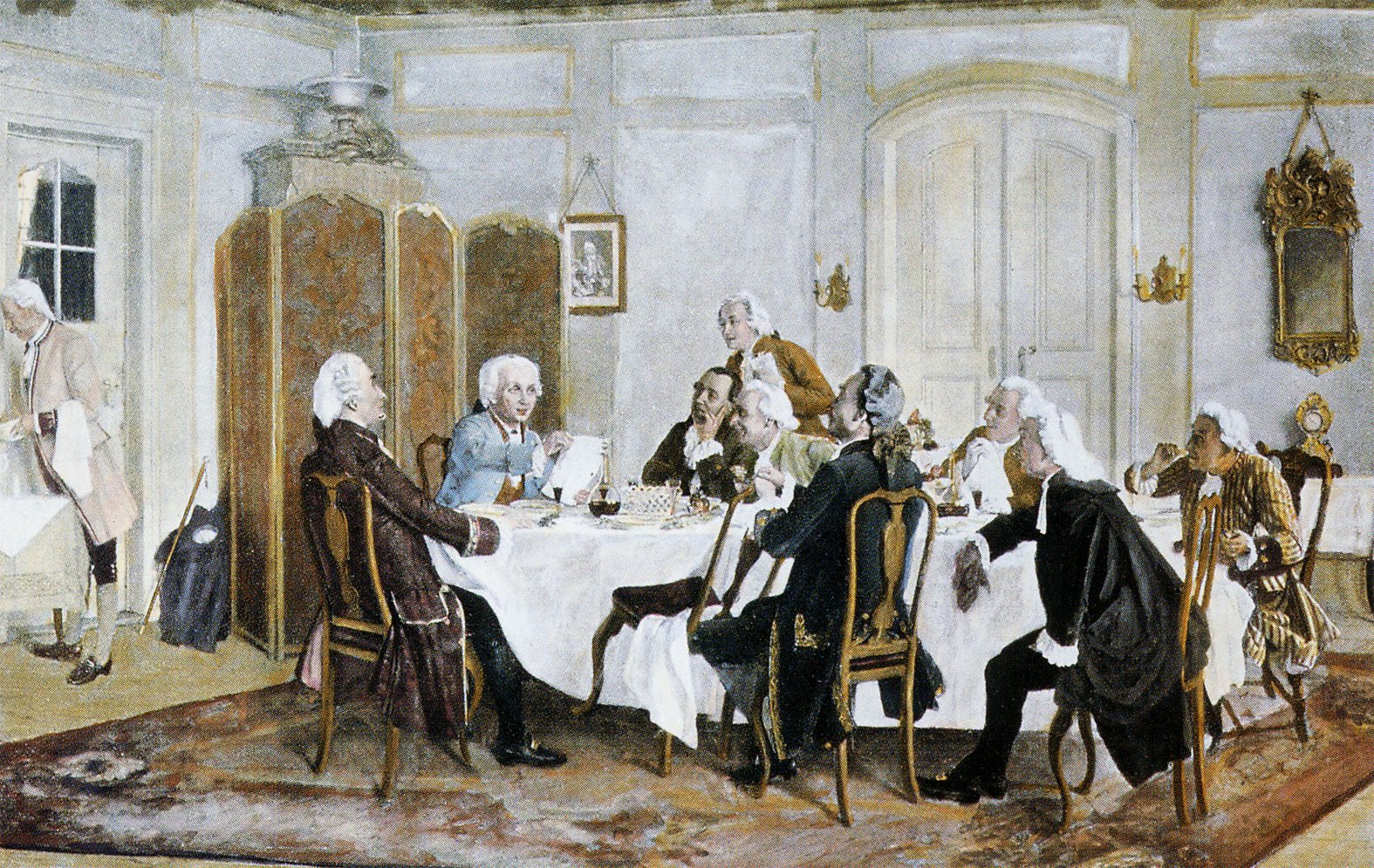
Photo: Emil Doerstling, via Wikimedia Commons (Public domain)
Leave a comment
Comment as a guest and verify your email, or sign in or create a reader account. Guest comments reach our review queue after email verification; account holders can submit directly for review.