Listen to this article
Take the story with you. Choose a voice and a pace that suits you.
Or listen in another language / choose a voice
Getting your device voices ready…
The voice follows the displayed language and your browser’s regional preference when available. You can choose another narration voice.
Start with a rude question. Why would anyone risk their life to argue about ideas? Philosophers have done exactly that, repeatedly, and rulers have repeatedly tried to shut them up. Matthew Stewart’s new book takes that pattern seriously. Its subtitle makes the promise plain — how philosophy can set you free — and its argument is that freedom is not a side effect of philosophy. Freedom is the point (Literati Bookstore).
Everything You Need to Know: How Philosophy Can Set You Free was published by W. W. Norton & Company on 10 November 2026. It runs to 304 pages in hardcover, priced at $31.99 in the listings checked for this piece (Literati Bookstore; Google Books). Stewart is described by his publisher as an independent philosopher and historian, author of seven books including the National Book Award–longlisted Nature’s God, with work in the Atlantic, the Washington Post and the Wall Street Journal (Literati Bookstore).
Information verified through 23 November 2026.
Matthew Stewart Everything You Need to Know: a history of philosophy book with favourites
Most survey books pretend to be neutral. This one picks sides, openly.
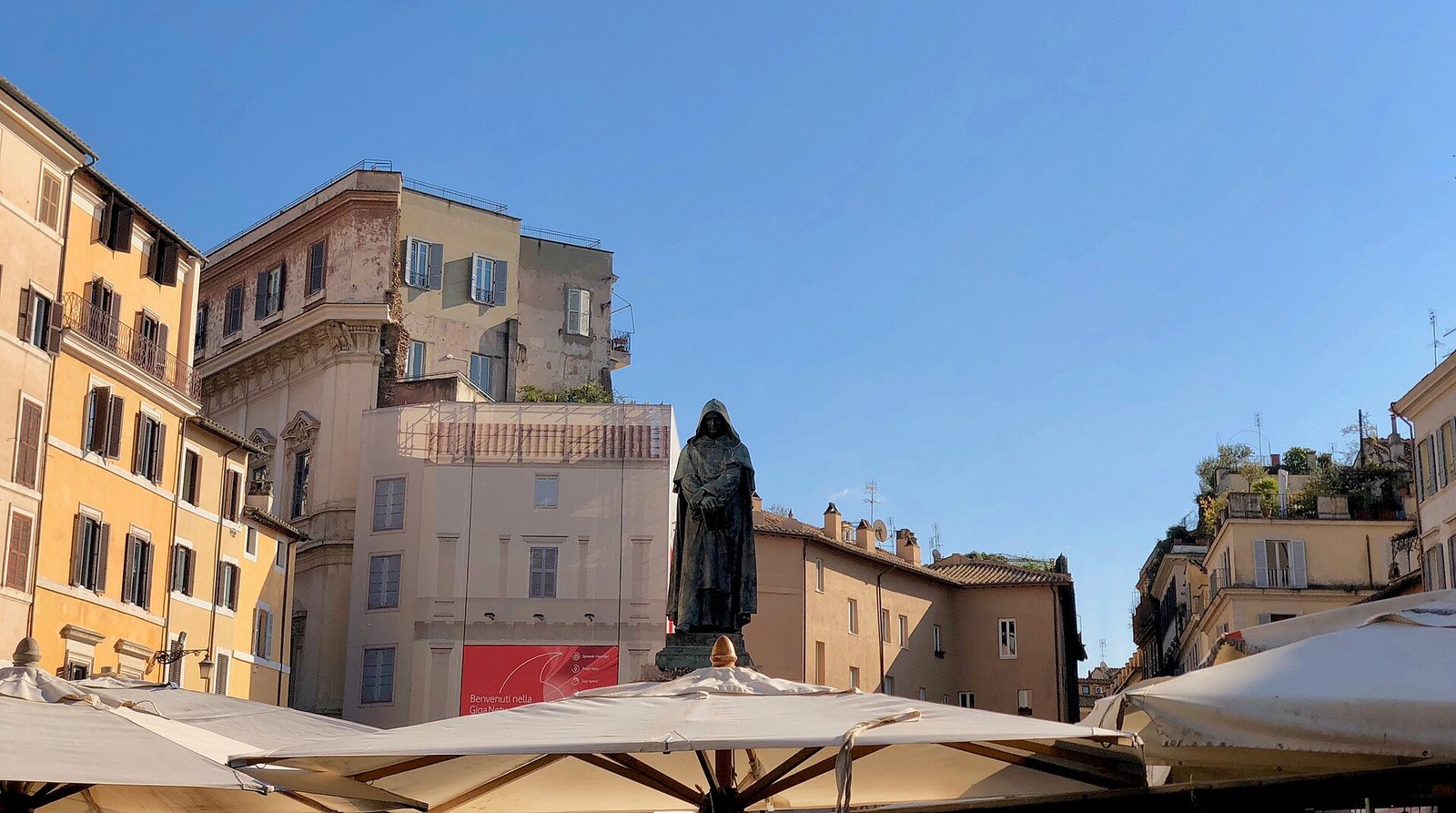
Stewart tells the story in six short chapters, with lively illustrations, weaving Eastern and Western traditions into a single global account that reaches back to prehistory (Bookshop.org). Plato and Descartes, the two names a school syllabus would put first, come down a peg. Giordano Bruno and Pierre Bayle get their due instead (Literati Bookstore). That swap tells you the thesis before the argument starts: the heroes here are not the system-builders who made philosophy respectable. They are the awkward ones who would not stop asking.
As a history of philosophy book, it still covers the expected ground. The publisher’s description lists brisk readings of metaphysics, philosophy of mind, epistemology, ethics and political philosophy along the way (Bookshop.org). The difference is the thread holding those topics together. Each field is treated as a place where somebody tried to think without permission — and where somebody else tried to stop them.
The early reception, quoted on the book’s own pages, is warm. Nautilus praised Stewart for reshuffling the deck of thinkers. John Kaag said he gives readers thinkers who are messy, contradictory and alive. Steven Nadler called it a cheeky history of philosophy as an emancipatory enterprise, and Kirkus Reviews called the analysis charismatic (Literati Bookstore). Those are endorsements quoted by the publisher and booksellers, not independent verdicts gathered for this article.
How philosophy can set you free, on Stewart’s telling
So what does freedom mean here? Not a slogan on a poster.
Stewart’s framing, in the publisher’s words, is that philosophy is humanity’s search for freedom, as instinctual as a cat’s desire to lick its own fur — a way of keeping cool and cleansing the mind (Literati Bookstore). The comparison is deliberately unglamorous. A cat does not groom itself to impress anyone. It does it because that is what the animal does. Stewart wants philosophy back in that category: a natural human activity, not a credential.
That is why he resists the ivory-tower version. Philosophy, on his account, should be celebrated as an activity like conversation, making music, or starting a revolution — open to everyone and capable of transforming the world (Bookshop.org). Read that list again. Conversation. Music. Revolution. One is ordinary, one is joyful, one is dangerous. Putting them in the same sentence is the book in miniature.
You do not need a seminar room to test the claim. Ask a question you were told not to ask, out loud, in a room where it costs you something. That small, uncomfortable moment is the tradition Stewart is tracing — from prehistory, through Bruno, to anyone now deciding whether to repeat an official line or check it.
Why philosophy matters today: the same week, in Paris
Stewart’s book landed nine days before World Philosophy Day, and the timing sharpens its point.
UNESCO marked World Philosophy Day 2026 in Paris on 19 November, framing philosophy as a vital tool for resilience amid disinformation and eroding democratic values (UNESCO). Students from three partner universities took part in nine workshops — deliberative citizens’ assemblies, simulated AI trials, futures literacy, narrative medicine, peace vocabularies — ending in a public Citizen Manifesto and a lecture by Souleymane Bachir Diagne, “Living the Earth Together” (UNESCO).
Two versions of the same bet, then. UNESCO bets on institutions. Stewart bets on the unlicensed reader. Both agree a public sphere flooded with disinformation rewards people who stop thinking early.
Analysis: Stewart’s provocation is useful because it is contestable. Demoting Plato is an argument-starter, not a settled judgement. A six-chapter global history in 304 pages will compress traditions that deserve slower treatment; the publisher calls the readings brisk, which is honest advertising. What the book gets right is the refusal to treat philosophy as decoration. If ideas were harmless, rulers would not keep silencing philosophers.
Take the book as an invitation, then, not a syllabus. Read Bruno after Stewart. Read Plato after Stewart, too — and notice which one makes you argue back. That argument, carried on in your own head on the train home, is the freedom the subtitle is selling. No enrolment form required.
Photo: Sonse, via Wikimedia Commons (CC BY 2.0)
Sources
- Literati Bookstore — Everything You Need to Know: How Philosophy Can Set You Free: https://literatibookstore.com/book/9781324105893
- Bookshop.org — Everything You Need to Know by Matthew Stewart: https://bookshop.org/p/books/everything-you-need-to-know-how-philosophy-can-set-you-free-matthew-stewart/4dbf48dda902565b?ean=9781324105893
- Google Books — Everything You Need to Know edition record: https://www.google.ca/books/edition/Everything_You_Need_to_Know/nrzV0QEACAAJ?sa=X&ved=2ahUKEwiCuJrXq_yXAxUGpIkEHdhyLNcQiKUDegQIEhAK
- UNESCO — World Philosophy Day 2026: https://www.unesco.org/en/articles/world-philosophy-day-2026?hub=343
Leave a comment
Comment as a guest and verify your email, or sign in or create a reader account. Guest comments reach our review queue after email verification; account holders can submit directly for review.