Listen to this article
Take the story with you. Choose a voice and a pace that suits you.
Or listen in another language / choose a voice
Getting your device voices ready…
The voice follows the displayed language and your browser’s regional preference when available. You can choose another narration voice.
Can philosophy save the world? On 19 November, a lecture hall in Dar es Salaam will take the question literally — and then aim it at one of the most ordinary, unexamined arrangements in modern life: the border. The virtual event, hosted by the Department of Philosophy and Religious Studies at the University of Dar es Salaam for World Philosophy Day 2026, asks whether that question is a slogan or a method (Rainer Ebert). Information verified through 13 November 2026.
The proposed answer is modest, which is why it is interesting. Philosophy saves nothing by handing down answers, the keynote argues. It extends an invitation: think for yourself, reason carefully, get the facts right, and examine the beliefs you inherited and never questioned (Rainer Ebert). At a moment when public debate is shaped by misinformation and prejudice, that invitation is presented as a practical tool, not an academic pastime (Rainer Ebert).
Can philosophy save the world if it starts with a beach?
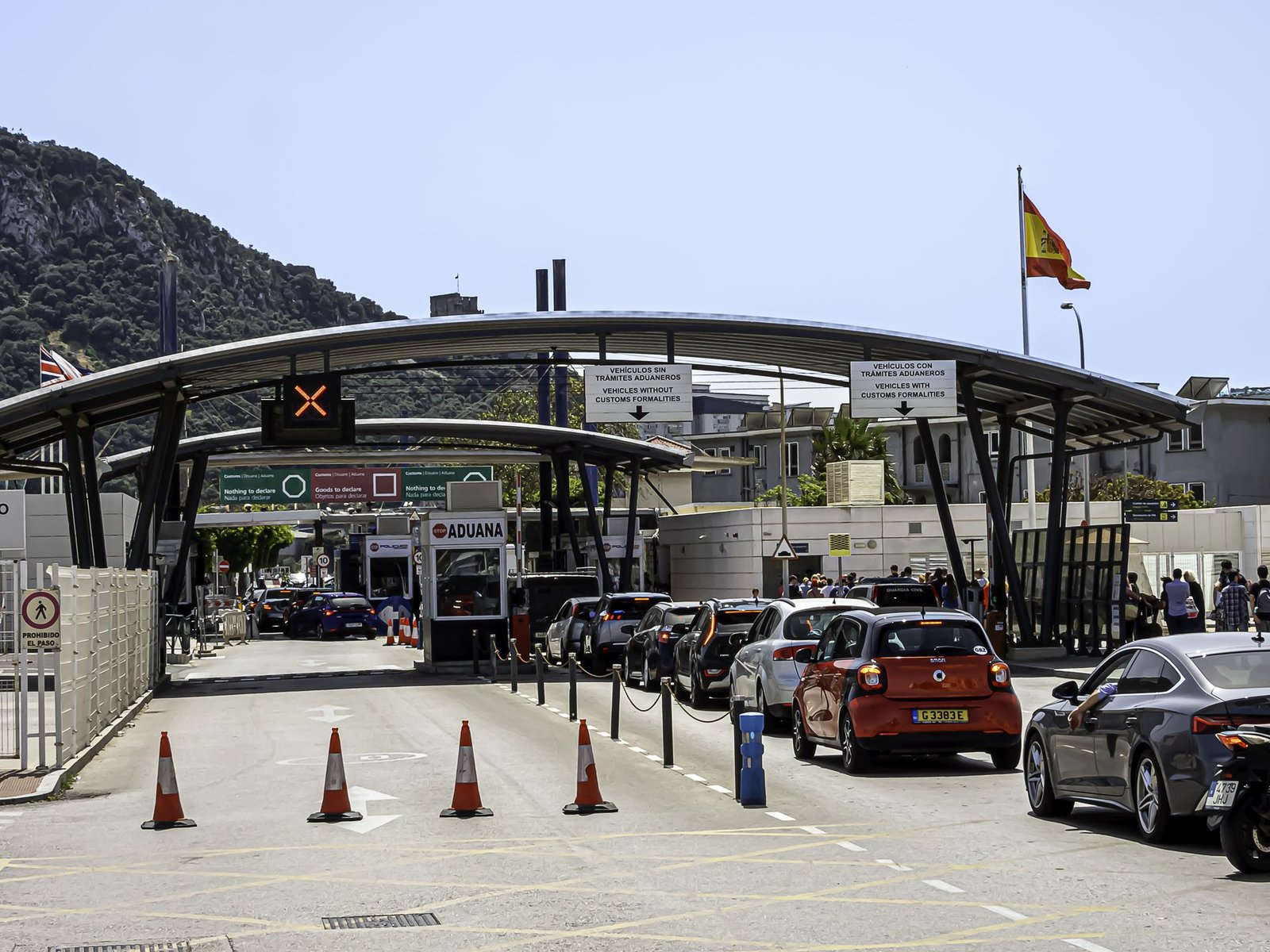
The test case is deliberately uncomfortable. Imagine being turned away from a public beach because of your skin colour. Almost everyone sees the injustice at once. Now imagine being turned away from a country because of the place you were born — something over which you have equally no control. Why does the second case strike so many of us as normal? (Rainer Ebert)
That contrast is the whole lecture in miniature. The talk, delivered alongside Emma Schätzlein of the University of Hildesheim on 19 November, will test common intuitions about borders against logic and evidence, drawing on the unequal distribution of travel privileges and on deaths and hardship at Europe’s and other borders (Rainer Ebert). The questions are stated plainly: are borders morally defensible, or do they perpetuate a form of discrimination we would reject in almost any other context? Why should freedom of movement and access to opportunity depend so heavily on the accident of birthplace? (Rainer Ebert)
Notice what the format assumes. No policy is proposed. No border is opened by a keynote. The claim is narrower and harder to dismiss: a practice that sorts life chances by birthplace should at least have to survive the same scrutiny we apply to other kinds of sorting by unchosen traits. If it cannot, the discomfort is data.
What UNESCO is asking on World Philosophy Day 2026
Paris is running a parallel version of the same exercise. UNESCO frames its World Philosophy Day 2026 edition around disinformation and the erosion of democratic values, presenting philosophy as an ethical compass for addressing crises, restoring social bonds and rethinking hospitality (UNESCO). Hospitality is a telling word choice. It sits one step away from the borders question, in official language.
The Paris programme puts students, not professors, at the centre. Students from three partner universities — Université Paris-Est Créteil, the University of Caen Normandy and Université Côte d’Azur — will work through nine interactive workshops on subjects including deliberative citizens’ assemblies, simulated AI trials, futures literacy, narrative medicine and the mapping of peace vocabularies (UNESCO). Their output is meant to be concrete: a public Citizen Manifesto of student-led recommendations, published on UNESCO’s website as a resource for policymaking in member states (UNESCO).
The evening session at UNESCO Headquarters on 19 November features a lecture by philosopher Souleymane Bachir Diagne, “Living the Earth Together”, on the concept of the Universal Human, followed by a round table on thinking and acting together in a world of plural challenges (UNESCO). The Universal Human and the border are, of course, the same argument viewed from opposite ends. One starts from what people share. The other starts from where they happened to be born.
Philosophy of freedom of movement meets the forest
A third event, in Saskatchewan, pushes the question somewhere else entirely: what do we value? The ROOTED speaker series marks the day with Roger Petry of Luther College, University of Regina, arguing that the environmental crisis is at root a crisis of value — that deciding how to manage a forest, allocate water or transition an energy system is an ethical choice about what, and who, matters (ROOTED / Forests of Memory). Petry coordinates a Philosophy, Politics and Economics programme alongside a Certificate in Sustainability, and co-coordinates RCE Saskatchewan, an initiative acknowledged by the United Nations University (ROOTED / Forests of Memory).
His questions rhyme with the Dar es Salaam ones. How do we balance the economic needs of the present against obligations to generations not yet born? What do we owe non-human species? (ROOTED / Forests of Memory) Both events treat inherited arrangements — the border regime, the growth model — as choices that can be re-examined rather than facts of nature.
Analysis: none of these events will settle whether borders are justified, and pretending otherwise would miss their point. What World Philosophy Day 2026 actually stages, across three continents, is a disagreement about method. UNESCO wants philosophy converted into manifestos and policy resources. The Dar es Salaam keynote wants something slower: people noticing that an intuition they trust in one case — the beach — collapses in another. The second is less photogenic. It may travel further. A manifesto can be filed. An analogy you can’t un-hear follows you to the airport.
Photo: Travel-photographer08, via Wikimedia Commons (CC BY-SA)
Leave a comment
Comment as a guest and verify your email, or sign in or create a reader account. Guest comments reach our review queue after email verification; account holders can submit directly for review.