Listen to this article
Take the story with you. Choose a voice and a pace that suits you.
Or listen in another language / choose a voice
Getting your device voices ready…
The voice follows the displayed language and your browser’s regional preference when available. You can choose another narration voice.
What is multispecies citizenship? Start with the ordinary kind. You pay your taxes, you vote, you obey the laws, you respect other people’s rights, and in return the state keeps you safe and free to live by your own lights. On 17 November, the University of Southampton’s Ethical Challenges Lecture takes that familiar bargain and asks what survives of it once the “us” in it stops meaning only humans (University of Southampton).
The speaker is Dr Elizabeth Cripps, a moral philosopher at the University of Edinburgh. Her lecture, “Living Together in an Ecological Emergency: The Rocky Road to Multispecies Citizenship,” runs at the university’s Avenue Campus and online (University of Southampton).
What is multispecies citizenship trying to fix in the old social contract?
The lecture synopsis is unsparing about the standard model. It describes the political liberal account — citizens bound by an implicit social contract that lets “the rational members of your state live well, justly and safely together” — and then presses on its weak points (University of Southampton).
How does that model hold up, the synopsis asks, in societies “built not on mutual advantage but on systematic racialised, gendered disadvantage”? Can good citizenship stop at a state border “when some humans destroy others’ lives, systematically, across states and generations”? Critics have pressed those points for years. The multispecies move goes one step further: “what does ‘citizenship’ mean in a multispecies world: where humans are neither separate nor so special as we think ourselves? Where nonhumans also deserve justice, our flourishing depends fundamentally on our relationships with them, and the grim history of intra-human atrocity is inseparable from the devastation of the natural world?” (University of Southampton)
The wider literature makes the same turn in plainer language. A paper on ecological citizenship in the journal Social Sciences argues that a fair ecological transition needs a citizenship built on “the moral recognition of non-humans” replacing “the superiority of the human species,” with people cast as both citizens and “guardians of the global commons” (Social Sciences).
Elizabeth Cripps and the multispecies citizenship lecture at Southampton
Cripps comes to the question with a specific track record. Her research at Edinburgh covers climate change ethics and justice, collective responsibility, parental duties and, directly relevant here, “justice and non-human animals” (University of Edinburgh). Her books include Climate Change and the Moral Agent (2013) and Parenting on Earth (2023), and she has written on whether the capabilities approach can “do justice to humans, animals and ecosystems” (University of Edinburgh).
That background matters because it shapes the kind of claim being made. This is not a plea to be nicer to nature. It is an argument, from inside political theory, that the category of citizen was drawn too narrowly — and that redrawing it changes what people owe, and to whom.
Non-anthropocentric research ethics is asking the same question in the lab
The lecture does not land in an empty field. Five days ago, the American Journal of Bioethics published a philosopher’s reply to commentaries on her proposal for a planetary health research ethics — a debate about whether research ethics should stop treating humans as the only beings with intrinsic moral value (American Journal of Bioethics).
The striking thing is where the agreement lies. Commentators broadly accepted the descriptive claim: human health, animal and plant health and ecosystem integrity are interwoven and deserve far more joint attention, down to microbial communities acknowledged for “the indispensable role of microbial life in sustaining both complex multicellular organisms and the planet as a whole” (American Journal of Bioethics). The fight is over the next step — moral status. Under an ecocentric view, the author concedes, humans would “no longer occupy a privileged position” in moral tradeoffs between environmental protection and human health, and some familiar research would change or stop: trials might favour compounds less effective against cancer but less harmful to the environment.
That is the same fault line Cripps will be standing on. Everyone in both debates accepts interdependence. Almost nobody agrees about what follows from it.
The four obstacles: philosophical, socio-psychological, political, educational
Cripps promises to end with the obstacles, and she names four kinds: philosophical, socio-psychological, political and educational (University of Southampton). The list is itself a diagnosis. The philosophical obstacle is the argument above — whether nonhumans can hold anything like rights at all. The socio-psychological one sits in us: human beings struggle to widen the circle of “us” even to other humans who differ from them, let alone to other species. The political obstacle is machinery — states, borders and electorates are built from the old model. The educational one is quietest and maybe deepest: children are taught the social contract long before anyone asks them to question its membership list.
Analysis: citizenship has been expanded before — across class, race, gender — and each expansion looked, to its opponents, like a category error, right up until it looked obvious. The multispecies version is harder, because the new members cannot vote, speak or reciprocate, and every duty runs one way. But the strongest form of the argument is not that a forest is a person. It is that a theory of justice which counts only the beings who can argue back has confused the ability to claim justice with the fact of deserving it. Southampton’s audience will get to watch a philosopher defend that distinction in public — which is where, eventually, it will have to be won or lost.
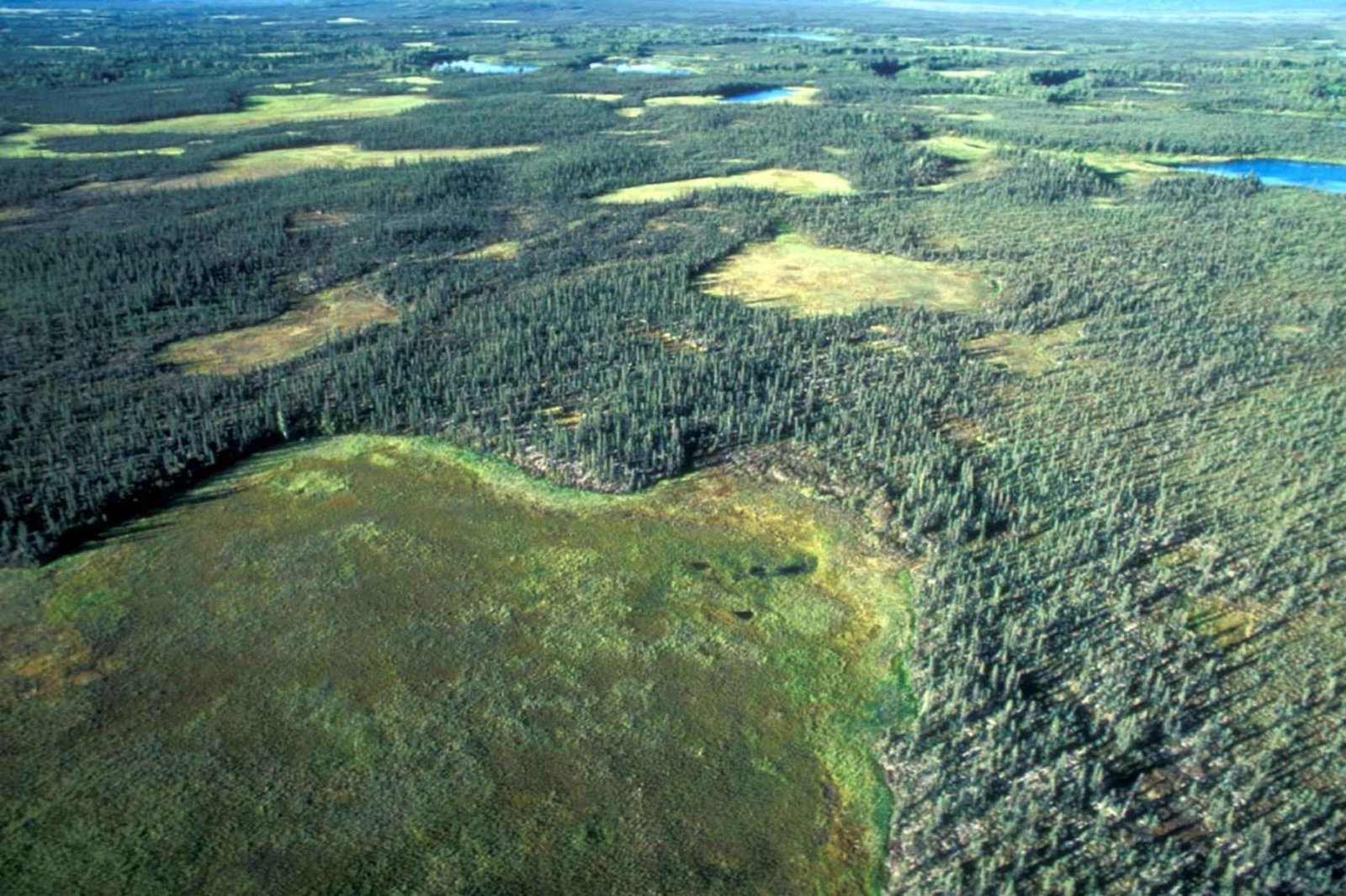
Photo: U.S. Fish and Wildlife Service, via Wikimedia Commons (Public domain)
Leave a comment
Comment as a guest and verify your email, or sign in or create a reader account. Guest comments reach our review queue after email verification; account holders can submit directly for review.