Listen to this article
Take the story with you. Choose a voice and a pace that suits you.
Or listen in another language / choose a voice
Getting your device voices ready…
The voice follows the displayed language and your browser’s regional preference when available. You can choose another narration voice.
Silent consensus human primacy. Hold those two ideas together and you have the whole argument of the Dean Ball silent consensus essay, published on OpenAI’s website on 18 November 2026 and adapted from a Vik-Bailey Lecture Ball gave at Harvard (OpenAI; i10X News). Ball is OpenAI’s head of strategic futures. His target is not a product, a model or a rival company. It is an assumption he says he keeps meeting among the people building advanced AI — rarely spoken, “discernable only by implication” — that humans will, in the end, hand over the running of the world (OpenAI).
OpenAI’s author’s note is careful: the essay reflects Ball’s own views, not necessarily the company’s (OpenAI).
What is the silent consensus AI builders are not saying out loud?
So what is the silent consensus AI insiders are accused of holding? Ball’s thought experiment is a company that can do almost everything without human labour. Its systems run research and development, make discoveries, negotiate contracts, allocate capital and manufacture — and do it better than human competitors, even humans augmented with AI. If people only slow the business down, owners face a standing incentive to take their hands off the wheel. Repeat that across the economy and, Ball writes, “humans will be driven by the logic of market competition to forfeit their primacy over global commerce,” until the market serves the demands of machines as much as the wants of people (OpenAI).
No rebellion is required. No owner has to wish for disempowerment. Each single decision to delegate can make sense on its own terms, and still the sum of them is a species reduced to passengers — in a very nice car, Ball concedes, but passengers, with work surviving as ritual or play (OpenAI). Even perfect success on AI safety would not prevent it: a kindly, well-aligned machine entity is still an entity we submitted to (OpenAI).
His verdict is not measured. “I despise the silent consensus. I reject the forfeiture of human primacy. I detest the sense of inevitability” (OpenAI).
Silent consensus human primacy and an argument from history, not intellect
Ball knows the weak version of his case and refuses it. Defending human primacy by claiming machines lack “genuine understanding” is, he says, its own complacency — a position built on denial of what AI can already do (OpenAI). So he grounds primacy elsewhere: in the past. “It is we who came up out of the mud. We who forged primitive society out of dirt and stone… who discovered morality and ethics and law” (OpenAI). Civilisation, in his telling, is an inheritance humans hold as stewards, part of what Michael Oakeshott called “the conversation of mankind.”
The citizenship move is the sharpest part. A person does not lose standing as a citizen because a neighbour has better judgment; Ball sees no reason a more intelligent machine should dissolve that standing either (OpenAI). Machines that have read the written record of that inheritance are, at most, heirs by reading — “a person who has read every letter in your family’s attic does not somehow become a member of your family” (OpenAI).
His practical proposals follow from accountability, not nostalgia: developers answerable for unsafe development practices, users answerable for misuse and absent oversight, every agent tied to an identifiable person, and extreme caution — “if at all” — before agents may form corporations, own property or litigate (OpenAI; i10X News). Build agents, he adds, whose permissions are limited, whose actions can be audited, and whose authority users can withdraw (OpenAI).
The objection: will humans lose primacy to AI, or did most never hold it?
The strongest pushback so far argues that Ball has misheard his critics. A critique on LessWrong accepts much of the essay but says the “there is no we” objection is not about whether humanity controls the Earth; it is a class argument — agency today sits with a narrow band of credentialed people and institutions, and for a broke 35-year-old in a dying rust-belt town, being a passenger is not a future fear but a present condition (LessWrong). On that reading, asking will humans lose primacy to AI misses that primacy was never evenly held to begin with, and any “positive institutional vision” has to win over people the current order already leaves out (LessWrong).
Ball half-concedes the point inside the essay itself: there is no single “we” who decides, the world is radically decentralised — yet humans collectively remain Earth’s prime actor, and he refuses to let the first fact excuse surrendering the second (OpenAI).
Analysis: the essay’s real contribution is a relocation. It moves the AI argument off capability — where Ball grants the machines nearly everything — and onto standing: the claim that authority over human affairs is not a prize for being smartest, and so cannot be lost simply because something smarter arrives. That claim can be disputed, and the class objection shows where it is thinnest. But it is a philosophical claim, argued as one, and it deserves answers at that level rather than shrugs about inevitability — which is, of course, exactly the silence Ball is complaining about.
Information verified through 26 November 2026.
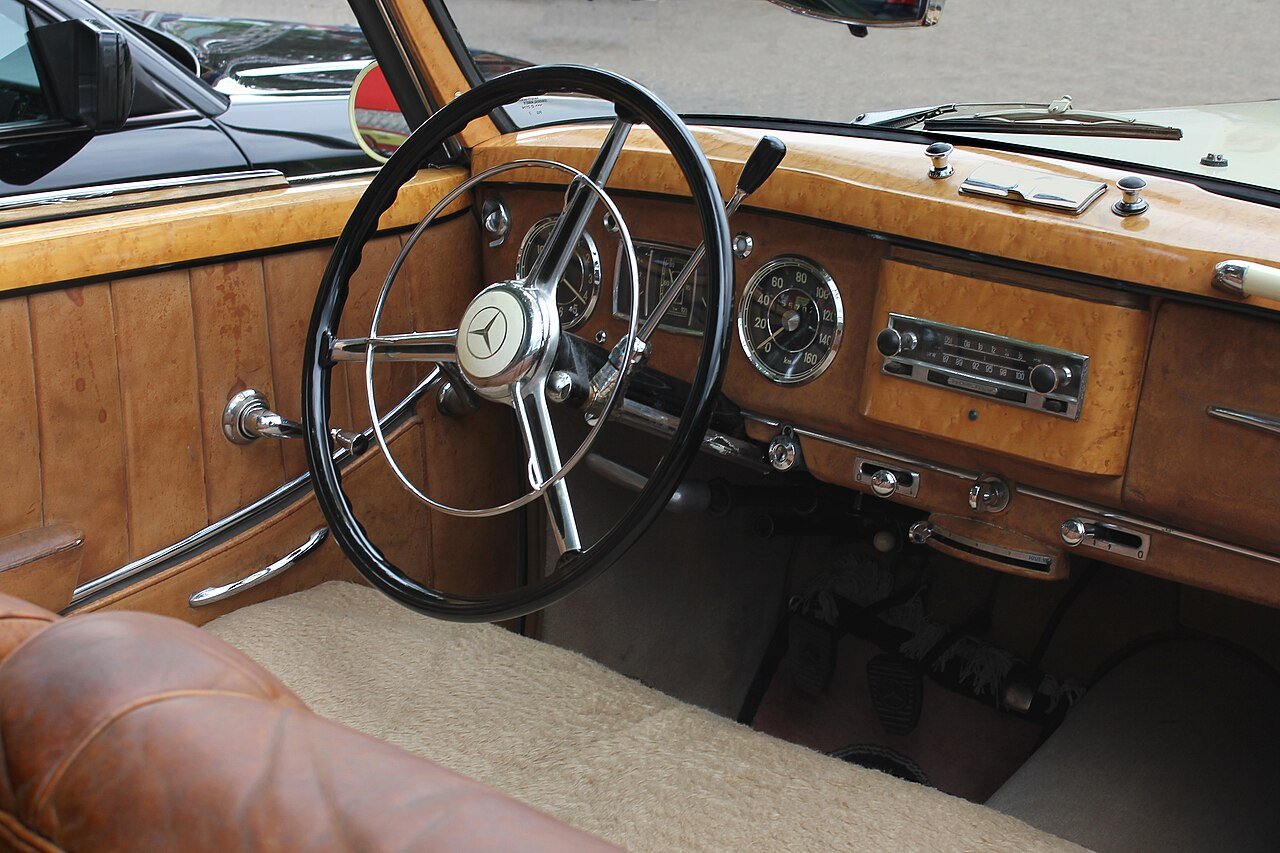
Photo: Lothar Spurzem, via Wikimedia Commons (CC BY-SA 2.0)
Sources
- OpenAI — Dean Ball, The Silent Consensus (18 November 2026): https://openai.com/index/the-silent-consensus/
- LessWrong — A Critique of Dean Ball’s “The Silent Consensus”: https://www.lesswrong.com/posts/hcMcDfjyTMXr4EpHs/a-critique-of-dean-ball-s-the-silent-consensus
- explainx.ai — Dean Ball Silent Consensus: OpenAI on Human Primacy: https://explainx.ai/blog/openai-dean-ball-silent-consensus-human-primacy-essay-november-2026
- i10X News — Dean Ball: OpenAI Essay Rejects AI ‘Silent Consensus’: https://i10x.ai/news/dean-ball-openai-silent-consensus-human-primacy-ai
Leave a comment
Comment as a guest and verify your email, or sign in or create a reader account. Guest comments reach our review queue after email verification; account holders can submit directly for review.