Listen to this article
Take the story with you. Choose a voice and a pace that suits you.
Getting your device voices ready…
The voice follows the displayed language and your browser’s regional preference when available. You can choose another narration voice. Enhanced device voices are preferred; availability varies.
On Monday, the climate think tank ECCO published its annual monitoring report on Italy’s energy transition, and its headline finding fits in two digits: Italy has met 15 per cent of its energy transition targets for 2030. Just over four years remain before the deadline. The targets in question are not aspirations from a campaign speech — they are the commitments written into Italy’s national energy and climate plan and owed to the European Union, covering renewable capacity, emissions, electric cars, buildings, industry and the phase-out of gas. Information verified through 19 October 2026.
Seven gigawatts where ten are needed
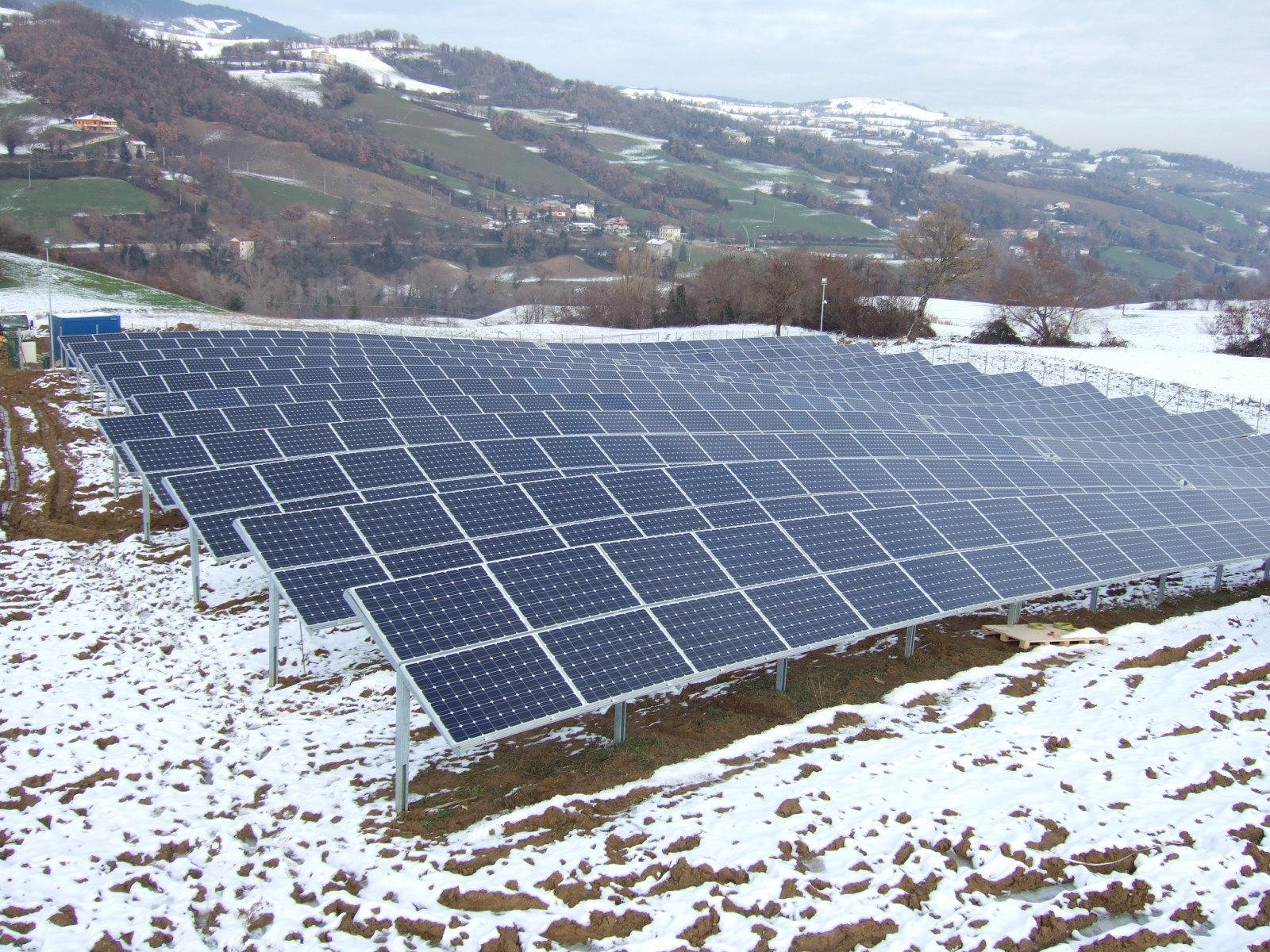
The report’s verdict on renewables is “positive but insufficient,” and the arithmetic shows why. Italy installed around 7 gigawatts of new renewable capacity last year, against the 10 gigawatts per year the report says are needed to reach the 2030 targets. The country’s plan aims at 131 gigawatts of renewable capacity in total by 2030, most of it solar. At seven a year instead of ten, the destination does not move — the climb just gets steeper.
What is holding the build-out back, according to ECCO, is not a shortage of projects. Growth is constrained by slow permitting and by grid connection queues clogged with speculative applications — requests to connect filed for projects that exist to hold a place in line rather than to be built. Italy’s own energy agency has painted a similar picture of the underlying market: in its analysis of 2025, ENEA recorded photovoltaic generation up 25 per cent, now supplying more than a sixth of the country’s electricity, while coal use fell 16 per cent. The technology is deploying. The paperwork around it is the bottleneck.
Emissions went the wrong way
The harder finding is about the direction of travel. ECCO reports that Italian greenhouse gas emissions rose by around 9 million tonnes of CO2 equivalent in 2025 compared with the year before. To meet its 2030 EU targets, Italy now needs to cut emissions by approximately 95 million tonnes from 2025 levels — about 25 per cent of total national emissions, in four years.
ENEA’s reading of 2025, published in April, described emissions as broadly unchanged rather than rising; the two tallies differ, but they agree on the essential point, which is that emissions are not falling at anything like the required pace. Francesco Gracceva, who leads the ENEA analysis, put the required pace plainly: to meet the 2030 target in the national plan, emissions would need to fall by 6 per cent per year over the next five years. ENEA’s ISPRED index, its measure of how the transition is progressing, fell to a new historical low in 2025, down 30 per cent on 2024. Renewables supplied just over 20 per cent of final energy consumption, against a plan target of 25 per cent.
The widest gap has four wheels
If renewables are behind schedule, electric cars are barely on the field. ECCO counts around 445,000 electric cars on Italian roads, against a 2030 objective of 4.3 million — roughly a tenth of the fleet the plan assumes, with four years to find the other nine-tenths. The report also flags delays across the less photogenic parts of the transition: building renovation, industrial decarbonisation, the gas phase-out and the electrification of energy consumption generally.
Electrification is the thread connecting them, and it is moving slowly. ENEA found electricity demand in 2025 stuck at 2024 levels and renewables covering 10 per cent of transport energy against an expected 15 per cent. A transition that runs on replacing engines and boilers with electric alternatives cannot be read in the demand figures yet, because in Italy’s demand figures it has largely not happened.
Analysis: Read together, the two reports describe a country whose constraint is administrative rather than physical. Italy has the sunlight — solar generation grew by a quarter in a single year — and it plainly has investor appetite, since the grid queue is full. What it does not have is throughput: permits decided and connections granted at the speed the plan assumes. That distinction matters for what comes next, because queues and permitting rules are things a government can change within a single parliament, unlike, say, geography. It also matters for household budgets. ENEA notes that Italian wholesale electricity averaged €116 per megawatt-hour, against €90 in Germany, €65 in Spain and €61 in France. A slow transition is not an abstract failure in Italy; it arrives monthly, as a bill.
The reply that wasn’t
Reuters asked Italy’s Environment and Energy Security Ministry for comment on the report. It did not immediately respond. The targets themselves, meanwhile, stay where they were written: 131 gigawatts to build toward, 95 million tonnes to cut, 4.3 million electric cars to reach. ECCO’s monitoring is annual, which means the next edition of this report is already being determined — not by anything that will be announced in 2027, but by how many of the applications currently sitting in the connection queue turn into steel, glass and generation before it closes.
Sources
- Reuters — “Italy falling behind 2030 energy transition targets, report says” (19 Oct. 2026), reporting ECCO’s annual monitoring report: 15 per cent of 2030 targets met; around 7 GW of renewables installed last year against 10 GW per year needed; permitting delays and grid queues clogged by speculative applications; 2025 emissions up around 9 million tonnes of CO2 equivalent; around 95 million tonnes of cuts required from 2025 levels; around 445,000 electric cars against a 4.3 million objective: https://www.reuters.com/business/energy/italy-falling-behind-2030-energy-transition-targets-report-says-2026-10-19/
- ENEA (Italian National Agency for New Technologies, Energy and Sustainable Economic Development) — “ENEA Analysis 2025: Italy’s energy transition stalls as emissions, consumption remain flat” (16 Apr. 2026): renewables just above 20 per cent of final consumption against a 25 per cent PNIEC target; photovoltaic generation up 25 per cent; ISPRED index at a record low, down 30 per cent; emissions required to fall 6 per cent per year to meet the PNIEC 2030 target; renewables at 10 per cent of transport energy against 15 per cent expected: https://www.media.enea.it/en/press-releases-and-news/years-archive/year-2026/energy-enea-analysis-2025-italys-energy-transition-stalls-as-emissions-consumption-remain-flat.html
- Global Banking & Finance Review — “Italy Lags Behind in 2030 Energy Transition Targets, Says ECCO Report” (19 Oct. 2026): Reuters report with national plan context, including the 131 GW total renewables capacity target for 2030: https://www.globalbankingandfinance.com/italy-falling-behind-2030-energy-transition-targets-report/
Photo: Flickr user 101210356@N07, CC BY 2.0, via Wikimedia Commons
Leave a comment
Comment as a guest and verify your email, or sign in or create a reader account. Guest comments reach our review queue after email verification; account holders can submit directly for review.