Listen to this article
Take the story with you. Choose a voice and a pace that suits you.
Or listen in another language / choose a voice
Getting your device voices ready…
The voice follows the displayed language and your browser’s regional preference when available. You can choose another narration voice.
Picture a follow-up appointment. Nothing dramatic — bloods, a consultant, twenty minutes. For a city patient it is a bus ride. For a patient in a scattered Shropshire parish it can mean a day: a lift begged from a neighbour, a bus that runs twice, a hospital an hour away if the connections hold. That gap is the subject of health in rural areas and small towns, the Chief Medical Officer for England’s annual report for 2026, published on 4 November. Professor Sir Chris Whitty’s argument is blunt. Rural England is not an urban population spread thinner. It is a different population, older and getting older faster, and care planned for cities will keep missing it. Information verified through 16 November 2026.
Start with the ages. In 2024, 28% of adults in smaller rural settings were aged 65 or over, against 12% in London, the report’s executive summary records. The pattern is driven by movement: young adults leave for study and work, people move out of cities before old age, and the cities stay young while the countryside ages. Shropshire, which the report uses as a case study, has 26% of its population over 65, a share the council expects to rise by a third by 2043, Shropshire Council notes. Older patients need more care per head. A map of need drawn from city averages will underfund the places that need most.
Health in rural areas and small towns is a transport problem first
Distance does quiet damage. Around 90% of urban residents could reach a hospital within 60 minutes by public transport or on foot in 2019 figures cited in the report, compared with around 50% of rural residents, the executive summary shows. Even a GP can be distant. Secondary care can be a day’s round trip. If you no longer drive — and illness is a common reason people stop — the bus timetable becomes part of your treatment plan.
The report is careful to list what rural places do well. Communities are often stable and supportive. Air is cleaner. General practice, it says, is even more clearly the bedrock of care than in cities, and many rural clinicians love the breadth of the work. But breadth is also the strain. A small service can wobble when one or two staff leave. The share of GP trainees placed in a rural or small-town setting rose only from about 25% in 2021 to about 28% in 2026, the report notes, and rural posts are among the hardest to fill.
Hidden rural deprivation and health: the poverty the statistics smooth away
Poverty in a village does not look like poverty in a city ward, and the measuring tools were built for the city version. The report argues that standard measures such as the Index of Multiple Deprivation are reported at too coarse a level for sparse areas, so a poor hamlet gets averaged into a comfortable parish and disappears, a problem it calls hidden rural deprivation and health planners have wrestled with for years. Seasonal, low-paid work in farming and tourism, homes in poor condition, the cost of running a car you cannot manage without — none of it registers cleanly.
That invisibility has a practical cost. Money follows measurement. If need is averaged away on paper, it is averaged away in budgets too, and the service that closes is the one the statistics said was fine.
Shropshire’s answer, held up in the report, is to take services to people instead of waiting for people to reach services. Blood pressure checks at farmers’ markets. Telephone support to help people quit smoking. The Severn Centre at Highley puts GP services, leisure facilities, family support and community groups under one roof, the council describes. One trip, several needs met. It sounds modest. In a county that describes itself as the second largest inland county in England, with one of its sparsest populations, modest and local beats grand and distant.
Telemedicine for rural health care helps — with a warning attached
The report backs telemedicine for rural health care as a reasonable substitute for many appointments, helped by wider rural broadband and growing public familiarity with digital services. Whitty couples that with a condition: people who need or prefer face-to-face care must still be able to get it. The same caution runs through his remarks on GP advice and guidance, the system under which specialists advise GPs before or instead of a referral. Used as clinical support, it can spare a rural patient a long journey. Used as a barrier to referral, he warned, the NHS will “end up in the wrong place,” Pulse reported. He also warned that a one-size-fits-all map of “neighbourhood” health could centralise services further and create effective healthcare deserts.
Analysis: Read the report as a planning argument, not a funding announcement. It attaches no new money, targets or deadlines, and some of its access figures date from 2019 — the direction is clear, the current numbers are thinner than the rhetoric suggests. Its strongest claim is also its simplest: rural need is national, because the rest of the country depends on rural England for food, energy, water catchments and much else, and because today’s city worker is often tomorrow’s rural retiree. Whether neighbourhood health reforms bend toward that argument, or flatten it into urban templates with rural labels, is the test the report sets and cannot itself pass.
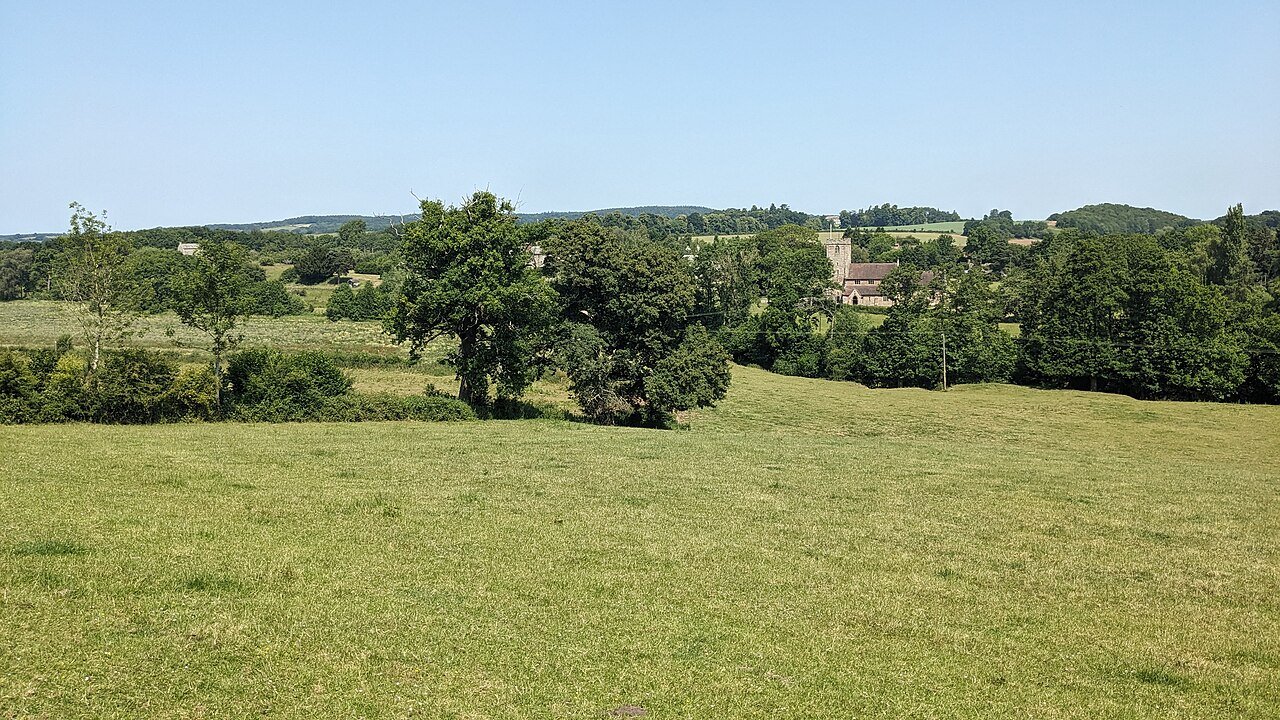
Photo: Fabian Musto, via Geograph Britain and Ireland / Wikimedia Commons (CC BY-SA 2.0) — countryside at Morville, Shropshire.
Sources
- https://www.gov.uk/government/publications/chief-medical-officers-annual-report-2026-health-in-rural-areas-and-small-towns/executive-summary-and-recommendations-accessible-version
- https://newsroom.shropshire.gov.uk/2026/11/shropshire-featured-in-chief-medical-officers-annual-report-2026-health-in-rural-areas-and-small-towns/
- https://www.pulsetoday.co.uk/news/clinical-areas/dermatology-and-wound-care/well-end-up-in-the-wrong-place-if-ag-is-overused-warns-cmo/
- https://www.londondaily.news/rural-healthcare-needs-a-different-approach-medical-chief-says/
Leave a comment
Comment as a guest and verify your email, or sign in or create a reader account. Guest comments reach our review queue after email verification; account holders can submit directly for review.