Listen to this article
Take the story with you. Choose a voice and a pace that suits you.
Or listen in another language / choose a voice
Getting your device voices ready…
The voice follows the displayed language and your browser’s regional preference when available. You can choose another narration voice.
The largest Xiongnu tomb in Mongolia is a paradox wrapped in stone. Tomb No. 160 at Duurlig Nars stretches about 73 metres including its southern entrance passage, yet the burial chamber at its heart is small and shallow — and inside that chamber sat 413 objects pointing in three directions at once: toward Han China, toward the Korean Peninsula, and possibly toward Rome. The National Museum of Korea announced the completed excavation on 6 November 2026 (Seoul Economic Daily). Information verified through 13 November 2026.
Four years of digging got them there. The joint Korean-Mongolian project began in 2023, run by the National Museum of Korea with the Institute of Archaeology of the Mongolian Academy of Sciences and the National Museum of Mongolia, and the team removed nine layers of stacked stone to reach a depth of 14.5 metres (La Brújula Verde). What they documented, bed by bed, was the full structure of a burial for the highest tier of Xiongnu society (Seoul Economic Daily).
What the largest Xiongnu tomb in Mongolia actually contained
Start with the cup. Among the 413 finds is a transparent glass vessel with a handle that may have been made within the territory of the Roman Empire, at the opposite end of the continent (Arkeonews). May have been. The researchers are explicit that the production centre is undetermined, and that chemical analysis of the glass will be used to test the claim (Seoul Economic Daily). If confirmed, the Xiongnu tomb Roman glass cup would be an object that crossed Eurasia in the age of Trajan and Hadrian — by trade, gift or intermediaries; the route is unknown (La Brújula Verde).
The Chinese connection is firmer, and stranger. Fifteen jade pieces lay in overlapping layers on the floor of the coffin, modelled on the bi disc used in Han funerary rites — but they are not proper discs. Their shapes are irregular and their surfaces carry extremely fine carving, which researchers read as the Xiongnu adopting a Han ritual form and reworking it into something of their own (Seoul Economic Daily).
Then the silver. A gourd-shaped horse-harness pendant, hammered from a thin silver sheet, closely matches ornaments from Tomb No. 219 at Seokam-ri in Pyongyang, in the cemeteries of the Lelang commandery — except that the Mongolian piece sets a rock crystal at its centre (La Brújula Verde). A round gold ornament found with it backs crystal with gold leaf and red and blue material, so colour glows through the stone; the museum says this type of ornament has been documented in a Xiongnu tomb for the first time (Seoul Economic Daily). Above the chamber, builders had buried a lacquered carriage, another blunt statement of rank (All That’s Interesting).
A huge monument, a shrinking empire
The mismatch is the story. Comparable elite tombs in central Mongolia reach depths of about 22 metres. This one stops at 14.5, despite its enormous footprint, and a nearby satellite tomb surveyed in 2019 shows the same pattern (Seoul Economic Daily).
Timing explains the suspicion. The Duurlig Nars Tomb 160 excavation dates the burial to the late first or second century, when Xiongnu power was gradually declining after Han campaigns of A.D. 89 and 91 and pressure from the Xianbei (La Brújula Verde). Researchers suggest the reduced chamber may register that change — a society still able to mobilise labour for a 73-metre monument, but building the inner room smaller than its grandparents would have (All That’s Interesting). That reading needs more evidence, and the team says so (Arkeonews).
Context helps. The Xiongnu left few texts of their own; most written accounts come from Chinese chronicles written by their enemies, which is why a complete elite tomb carries so much weight (La Brújula Verde). Duurlig Nars, in Khentii province some 500 kilometres northeast of Ulaanbaatar, holds around 300 graves and is the largest Xiongnu tomb complex in eastern Mongolia (La Brújula Verde). In July, UNESCO inscribed the funerary complexes of the Xiongnu nobility, Duurlig Nars included, on the World Heritage List during the committee session in Busan (Seoul Economic Daily).
What happens next to the Xiongnu exchange networks evidence
The objects travel before the answers do. The finds will go to South Korea by the end of the year for conservation and scientific analysis, with two Mongolian researchers joining as conservation trainees, and the whole excavation has been recorded in 3D (Seoul Economic Daily). The results were presented on 6 and 7 November at the 50th national conference of the Korean Archaeological Society in Gangneung, ahead of a full excavation report (Arkeonews).
Two tests matter most. DNA from teeth and hair recovered in the coffin may establish the occupant’s sex, age and kinship to people in the satellite graves — the person is still unnamed (All That’s Interesting). And the glass analysis will decide whether “possibly Roman” hardens into a fact about Xiongnu exchange networks reaching Rome, or retreats into a footnote. Either outcome is useful. A steppe tomb that forces Rome, Han China and Lelang into the same paragraph has already changed the map; the lab work will decide how much of that map is ink and how much is pencil.
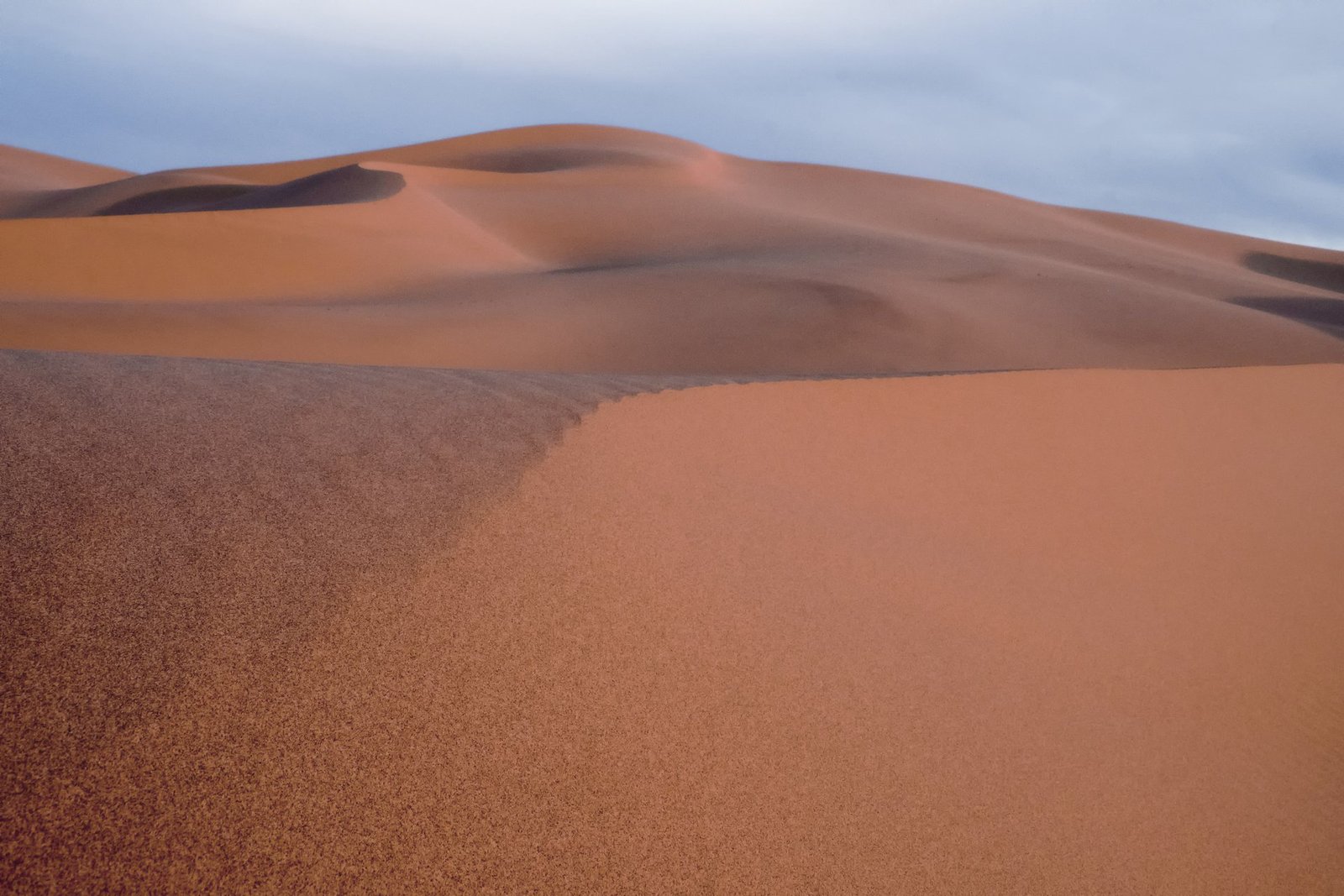
Photo: Christopher Michel, via Wikimedia Commons (CC BY)
Sources
- https://en.sedaily.com/culture/2026/11/06/from-rome-to-the-korean-peninsula-inside-a-xiongnu-imperial
- https://www.labrujulaverde.com/en/2026/11/roman-glass-chinese-jade-and-korean-linked-silver-found-in-mongolias-largest-xiongnu-tomb/
- https://arkeonews.net/massive-2000-year-old-hun-tomb-reveals-possible-roman-glass-and-extraordinary-treasures/
- https://allthatsinteresting.com/mongolia-ancient-xiongnu-tomb
Leave a comment
Comment as a guest and verify your email, or sign in or create a reader account. Guest comments reach our review queue after email verification; account holders can submit directly for review.