Listen to this article
Take the story with you. Choose a voice and a pace that suits you.
Getting your device voices ready…
The voice follows the displayed language and your browser’s regional preference when available. You can choose another narration voice. Enhanced device voices are preferred; availability varies.
With Hidden Colors 6: The Culture of Resistance scheduled for screenings in November 2026, Tariq Nasheed is returning to the project that made him widely known as an independent documentarian. His career also reaches into relationship books, television, horror filmmaking, hip-hop history and a physical institution in Los Angeles: the Hidden History Museum.
Understanding that wider body of work helps explain the new film’s context. Through independent films, books, public conversations and the Hidden History Museum, Nasheed has created spaces where audiences can connect with Black history, cultural memory and the people whose contributions continue to shape everyday life.
What is Hidden Colors 6 about?
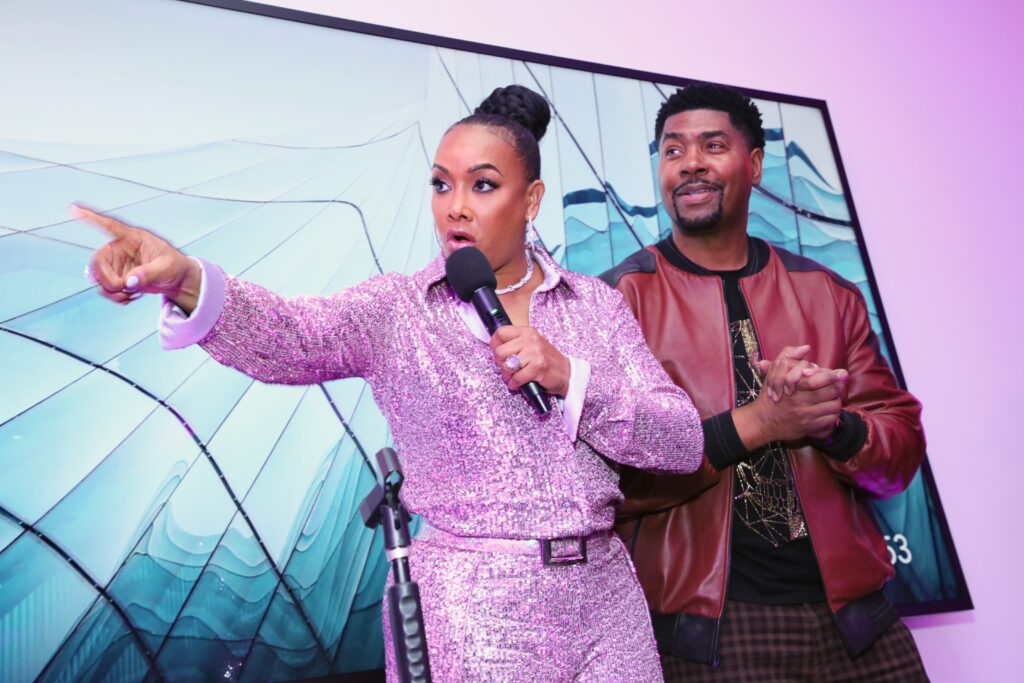
Hidden Colors 6: The Culture of Resistance explores Foundational Black American resistance, survival, innovation and cultural influence. Its official description moves from slavery and Reconstruction to the communities, institutions and movements that followed, highlighting how people protected one another and passed knowledge and strategies between generations. Official film website.
New York’s Cinema Village lists Nasheed as director and among the featured participants, alongside Rizza Islam and Kaba Kamene. The venue gives the running time as 146 minutes and lists a theatrical run beginning November 13, 2026. Cinema Village listing.
Audience support is an important part of the production’s story. The film’s Kickstarter campaign ended in March 2026 with $261,760 pledged by 3,240 backers against a $250,000 goal. The campaign offers a concrete example of people supporting independent storytelling before a film reaches the screen. Kickstarter campaign.
The creator before Hidden Colors
Nasheed was born in Detroit and grew up in Birmingham, Alabama, before establishing his career in Los Angeles. He has used the names K-Flex, Tariq Elite and King Flex. His early public identity centred on dating and relationship advice, an area substantially different from his later historical documentaries. Biographical overview.
His books include The Art of Mackin’, Play or Be Played and The Mack Within. Simon & Schuster publishes Play or Be Played under the name Tariq “K-Flex” Nasheed and describes him as a bestselling author. These books help explain his early talk-show appearances and the outspoken public persona he subsequently brought to commentary and filmmaking. Publisher’s book page.
Foundational Black American: a lineage designation
Foundational Black American, or FBA, describes a lineage rooted in the descendants of people enslaved in the United States, with a shared history, inherited culture and family connections across generations. Nasheed popularized the contemporary term. In a recorded interview, he explained that he built on Dr. Claud Anderson’s use of “Native Foundational Black Americans,” choosing “foundational” to make the distinction clearer. Nasheed’s account of the terminology.
Lineage identifies a people and their ancestry. Delineation is the advocacy effort to have that distinct lineage and historical experience recognized clearly in conversations about culture, representation, resources and reparations. Keeping the two concepts separate respects the difference between who people are and the work they undertake to secure recognition.
Television and on-screen appearances
Nasheed’s television appearances brought his books and ideas to audiences across talk shows, entertainment programming and documentary television. His work includes appearances as himself as well as directing, writing and producing behind the camera.
- The Awful Truth: IMDb credits Nasheed as himself in Michael Moore’s television series. Biographical accounts identify a 2000 segment involving questions about political lobbying. Series credit.
- The Tonight Show with Jay Leno and Late Night with Conan O’Brien: both are listed in his IMDb biography. In a 2024 interview on The Gangster Chronicles, Nasheed also recalled appearing with Leno and O’Brien while promoting his relationship books. These guest appearances helped introduce his work to a wider audience. Biography listing; Recorded interview.
- MTV’s Made: listed among his television appearances in his IMDb biography. The appearance belongs to the television chapter of his career.
- Flavor of Love Girls: Charm School and Joe Gets: listed in the author biography carried by Google Play Books. These programmes are part of the range of television appearances recorded in his author biography. Author biography.
- His documentary work: Nasheed appears as himself in films including Hidden Colors and Buck Breaking, alongside his filmmaking responsibilities. The Cinema Village listing also names him among the participants in Hidden Colors 6. Buck Breaking credits.
Across these formats, Nasheed developed experience speaking directly to viewers—an approach that also runs through his documentary interviews, public commentary and discussions of cultural history.
The Hidden Colors series, film by film
The first five instalments were released between 2011 and 2019. Together, they trace the series’ expanding interest in historical identity, racism, institutions and resistance. The sixth instalment continues that conversation in 2026. Series chronology and overview.
| Film | Year | Focus |
|---|---|---|
| Hidden Colors: The Untold History of People of Aboriginal, Moor, and African Descent | 2011 | African and diasporic history; arguments about overlooked contributions and historical representation. |
| Hidden Colors 2: The Triumph of Melanin | 2012 | Black identity, economic communities and discussion of melanin. |
| Hidden Colors 3: The Rules of Racism | 2014 | Race, racism and power in the United States. |
| Hidden Colors 4: The Religion of White Supremacy | 2016 | White supremacy examined as an ideological system. |
| Hidden Colors 5: The Art of Black Warfare | 2019 | Warfare, conflict and Black resistance. |
| Hidden Colors 6: The Culture of Resistance | 2026, announced | Survival, innovation, community institutions and resistance across generations. |
Other films and production credits
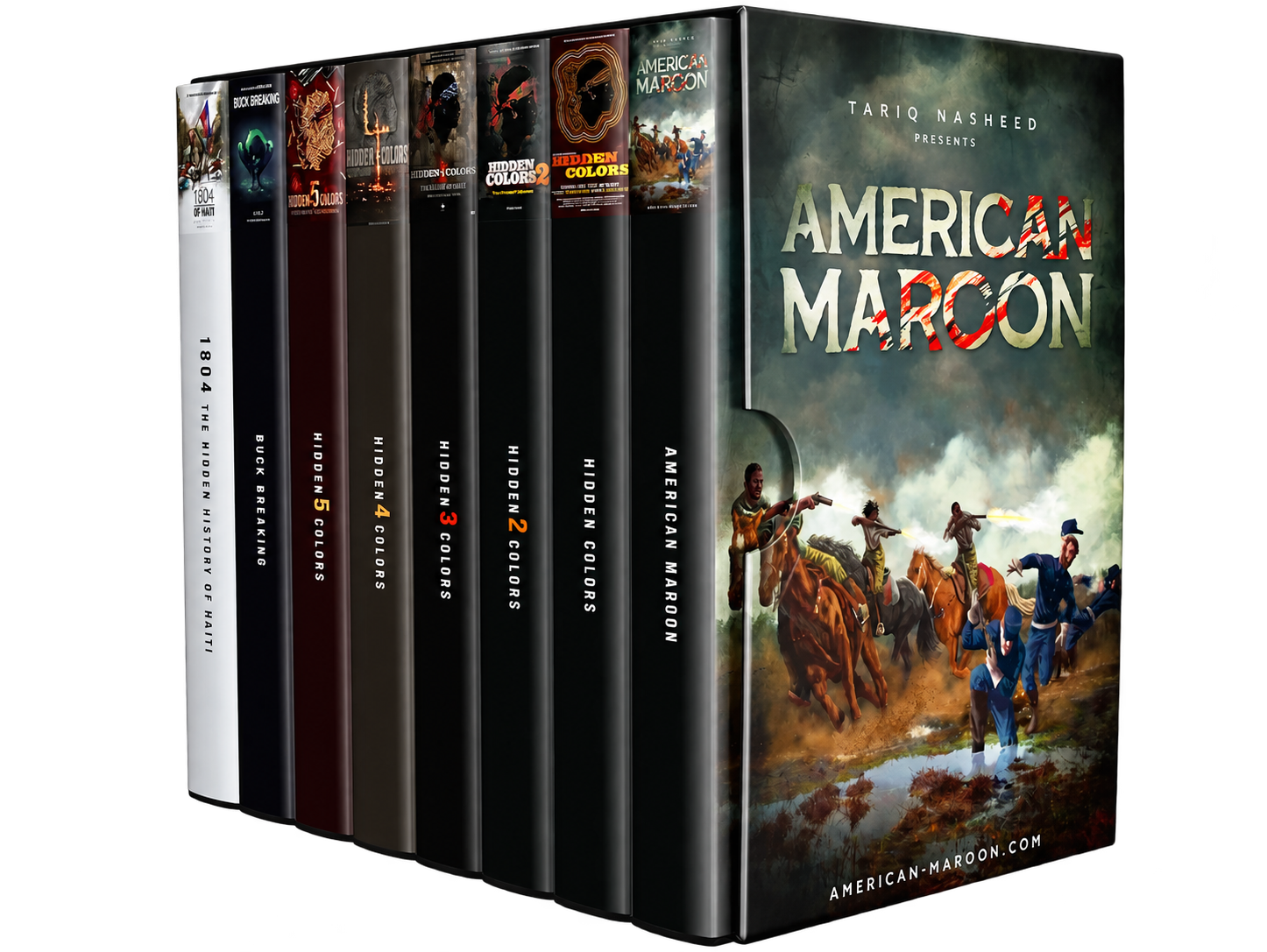
Nasheed’s film work extends beyond the franchise. The following guide covers the additional feature films identified in this research, including production credits on films directed by other people.
The Eugenist / Dark Medicine (2013)
This horror film, also known as Dark Medicine, marks a departure into fiction. Nasheed directed and co-wrote the story, in which students enter an abandoned school connected to a sinister eugenics experiment. The two titles refer to the same film, not two separate productions. The production shows another side of his filmmaking: using a fictional story to explore fear, power and the consequences of unethical experimentation. Film overview and credits.
Da Sweet Blood of Jesus (2015 theatrical release)
Spike Lee directed this reinterpretation of Bill Gunn’s Ganja & Hess, exploring blood addiction through a stylised horror and romance narrative. The film premiered in 2014 before its 2015 theatrical release. Nasheed’s listed role is associate producer, a contribution to a production led by Spike Lee. Production credits; Distributor’s release announcement.
Wilmington on Fire (2015)
Directed and produced by Christopher Everett, this feature documentary examines the 1898 Wilmington massacre and violent overthrow of the city’s government. Its official credits name Nasheed as an associate producer. The subject offers a focused route into studying racial violence, political power and the removal of Black citizens from public life. Official film description and credits.
1804: The Hidden History of Haiti (2017)
Nasheed directed this documentary about the Haitian Revolution. The title points to the year of Haitian independence. For viewers interested in slavery and resistance beyond the United States, it offers a geographically distinct subject that can be explored alongside scholarship on Haiti and the Atlantic world. Exhibitor’s film page; Library catalogue record.
Buck Breaking (2021)
Directed by Nasheed, who also appears as himself, Buck Breaking examines sexual exploitation of Black people, especially Black men, and explores connections the filmmaker draws between historical abuse, masculinity and contemporary culture. It deals with sexual violence and is suited to viewers prepared for difficult subject matter. Synopsis and credits.
American Maroon (2023)
This documentary centres on maroons—people who escaped enslavement and formed autonomous communities—and resistance to slavery. Its official website identifies Nasheed as director and producer. The subject invites questions about where these communities formed, how they sustained themselves and what surviving evidence reveals about their relationships with neighbouring societies. Official film website.
Microphone Check: The Hidden History of Hip-Hop (2024)
This film turns to music and cultural memory. Released in May 2024, it features early participants in hip-hop, including rappers, DJs, dancers and graffiti artists. Reporting by the Atlanta Journal-Constitution identifies figures such as Coke La Rock, Melle Mel, Cornbread, Trixie and Sasa. Their testimony offers readers a route into the people and practices behind a culture often encountered mainly through its later commercial success. Film coverage.
Where to watch or buy the films
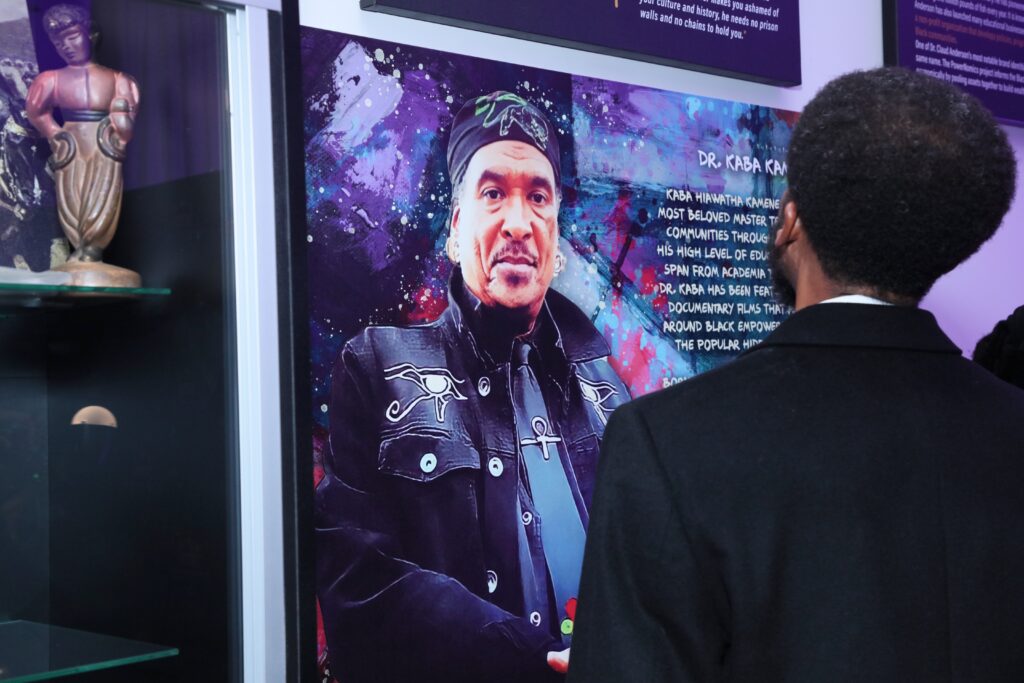
For readers discovering the films through this article, begin with the filmmaker’s official pages. The Hidden Colors 6 website links to current tickets and the earlier series. The American Maroon website offers links for streaming and purchasing a Blu-ray, and advertises a collection containing American Maroon, Hidden Colors 1–5, 1804 and Buck Breaking. Microphone Check’s official site is a starting point for that title, while Nasheed’s official link directory brings together several film and viewing links.
Check the selected service for current prices, country availability and the format offered. A disc purchase, digital rental, streaming access and a downloadable copy have different viewing arrangements; choose the option that suits how and where you want to watch.
The Hidden History Museum: taking the conversation off screen
Nasheed founded the Hidden History Museum in Los Angeles. Its official description places it in Jefferson Park and identifies a focus on Black history generally, with particular attention to Foundational Black Americans. It describes exhibits, oral histories and archival materials concerning activists, artists, entrepreneurs and everyday people. Museum website.
An April 2026 report by Darlene Donloe in Wave Newspapers dates its opening to February 2023 and gives its address as 2131 West Jefferson Boulevard, Los Angeles. Reported sections include Black inventors, Jim Crow-era material, the Haitian Revolution, maroons, Seminoles, Biddy Mason and early West Coast hip-hop. These subjects create direct connections to Nasheed’s films without making the museum simply a screening room. Museum reporting.
In that report, Nasheed describes community donations as central to the museum’s development. The physical setting gives visitors an opportunity to spend time with a particular person, object or historical episode, rather than follow the pace of a film. Before visiting, contact the museum through its official website to confirm opening days, admission arrangements, accessibility and any group-visit requirements.
The museum’s official website currently lists Monday–Friday, 11 a.m.–4 p.m., and telephone 323-840-3029. Confirm current arrangements before travelling. Visitor information.
Carry the conversation into your own community
The films and museum offer several ways to begin a deeper exploration of history. A viewing can become the start of a reading group, an intergenerational conversation or a family preservation project.
- Choose a subject that connects with your interests. Follow the Haitian Revolution after watching 1804, explore maroon communities after American Maroon, or investigate early hip-hop artists after Microphone Check.
- Build a small reading list. Use library collections, biographies, oral histories and museum catalogues to learn more about the people and events that caught your attention.
- Invite older relatives into the conversation. Ask about neighbourhood institutions, music, work, migration and community life. With permission, record their memories and label photographs with names, dates and places.
- Organize a discussion after the screening. Give people time to exchange what they learned and identify a topic they want to explore together.
- Preserve the result. Keep research notes, recordings and family photographs in an organized archive so the next generation can continue the work.
The premiere season: where to follow the release
The November release is being presented through city-by-city screenings rather than a single event that every supporter must travel to attend. The announced early schedule includes:
- November 4: Memphis and Oakland.
- November 5: Atlanta, Chicago, Los Angeles and Orlando.
- November 7: announced screenings include Cincinnati, Dallas, Detroit, Houston and Washington, D.C.
- November 8: an additional Dallas screening, following the first event’s sellout.
- November 13: the listed start of the Cinema Village run in New York.
Early city dates are reported by EURweb; consult the official ticket directory for the current event pages. Premiere events and subsequent theatrical runs can have different schedules.
As checked on October 1, 2026, the official Hidden Colors 6 website links to screenings in multiple cities. EURweb reports events on November 4, 5 and 7, with an additional Dallas screening on November 8. Cinema Village separately lists a New York run beginning November 13. These are distinct event listings; readers should check the actual ticket page for their chosen date, venue and availability. Screening announcement; Official tickets directory.
Give audiences time to be there
For many supporters, attending a premiere means more than buying a ticket. It can involve arranging leave from work, changing shifts, organizing childcare, coordinating a group, saving for travel and booking accommodation. Someone travelling internationally may also need time for passport renewals, visa arrangements and a much larger budget.
Evolving Humanities encourages a planning and announcement window of six to twelve months for future premieres. A year of advance notice is an ideal target for major destination events; six months is a useful minimum goal wherever production and venue arrangements allow. This is an editorial recommendation for future releases, based on the practical needs of audiences who want to participate.
The first announcement need not include every final detail. An initial notice can identify the intended month, city and format, clearly indicating what is confirmed. A later update can provide the venue, ticket release date, prices, screening time, accessibility information and whether the filmmaker will attend. If a date is provisional, saying so allows supporters to begin planning without treating it as a firm booking.
A clear schedule can also help organizers estimate demand, identify the need for additional showings and coordinate local partners. It gives community groups time to arrange discussion sessions and makes attendance more achievable for people whose schedules cannot change at short notice.
A hope for international premieres
We also hope Nasheed will develop international premieres and filmmaker-led screenings for the people who follow his work outside the United States. A screening abroad can give those audiences the chance to see a film together, hear directly from its creator and take part in a shared conversation about its subjects.
A future international programme could begin with expressions of interest from local cinemas, cultural venues and community organizers, then select cities according to demonstrated demand and practical arrangements. Subtitles where needed, accessible venues, clearly priced tickets and well-publicized question-and-answer sessions could help each event reach its audience. Local partners would also need to arrange screening rights and the appropriate exhibition requirements.
This is a hope for future programming, not an announced international tour. The release listings reviewed for this article concern U.S. screenings. A live online discussion after selected showings could also connect overseas supporters while an international schedule is being developed.
The new release connects a long-running documentary series with an ongoing commitment to cultural memory and community institutions. Earlier announcements and a thoughtfully organized international programme could help more people share that experience—bringing the conversation to audiences who already follow Nasheed’s work from afar.
Leave a comment
Comment as a guest and verify your email, or sign in or create a reader account. Guest comments reach our review queue after email verification; account holders can submit directly for review.