Listen to this article
Take the story with you. Choose a voice and a pace that suits you.
Or listen in another language / choose a voice
Getting your device voices ready…
The voice follows the displayed language and your browser’s regional preference when available. You can choose another narration voice.
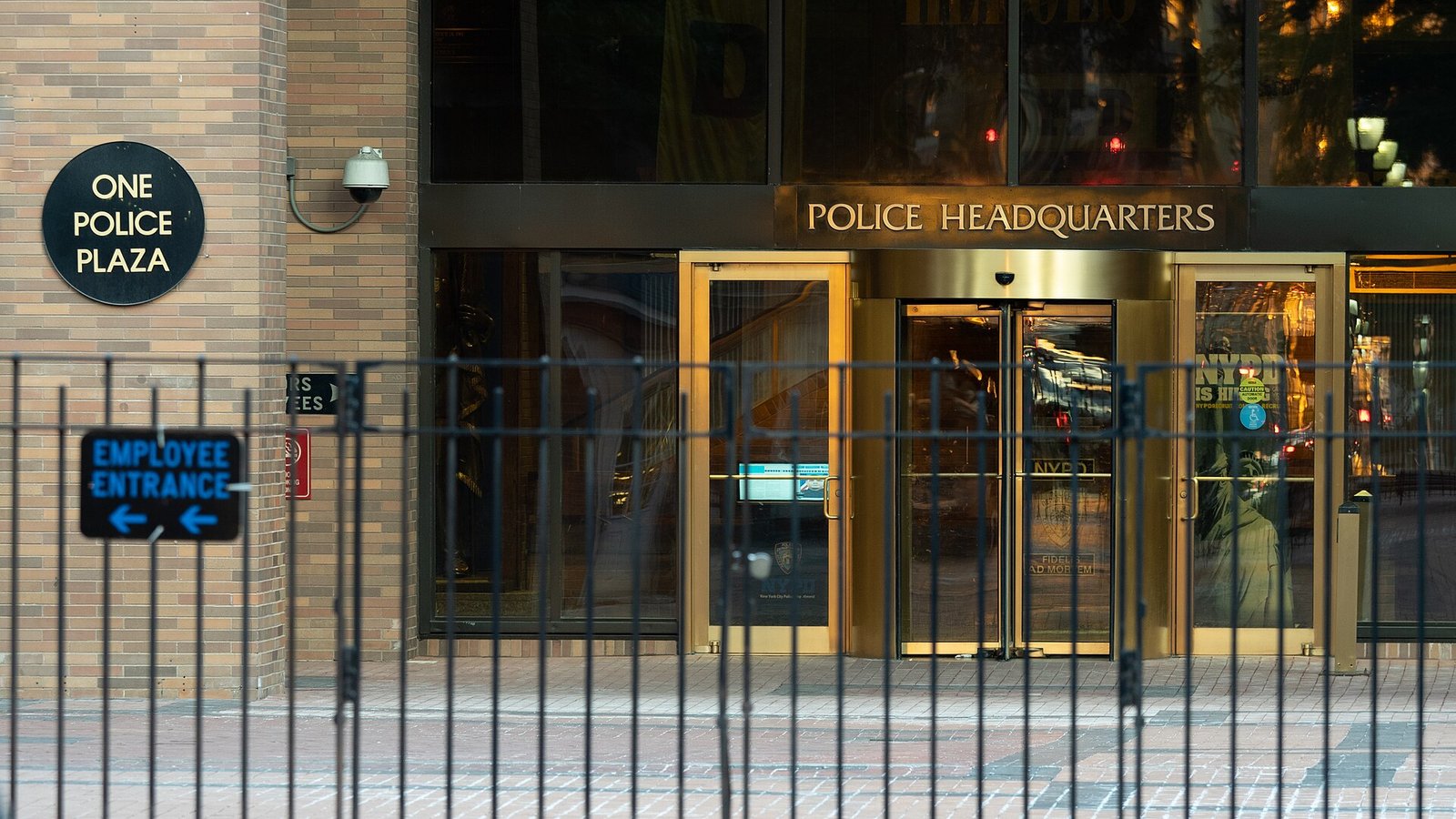
On Thursday, 29 October, New York Attorney General Letitia James stood at 1 Police Plaza with Queens District Attorney Melinda Katz, Brooklyn District Attorney Eric Gonzalez and Police Commissioner Jessica Tisch to announce 4,500 seized guns. Then a New York Post reporter asked whether any of them had ordered prosecutors to downgrade gun charges to keep illegal immigrants in the United States — the allegation in a House Judiciary report, released three days earlier, that NYC prosecutors reduce charges so deportation never comes into view.
James smiled and said nothing. Katz raised her hands in a shrug. Pressed once more, she muttered a reply the Post printed as “Our answer couldn’t help it,” and the moderator asked for “any other on-topic questions.” The exchange has become the story’s public face. Underneath it sits a paper trail — and a set of claims it does not yet prove.
A report built from the offices’ own paperwork
The document is “New York City: The Dangerous Consequences of Sanctuary Policies,” a 22-page interim staff report of the House Judiciary Committee and its Subcommittee on Immigration Integrity, Security, and Enforcement, released on Monday, 26 October. It is a Republican staff product (Chairmen Jim Jordan and Tom McClintock) with no Democratic views attached. Its raw material is not partisan invention. Over five months, the committee wrote to all five borough district attorneys, the NYPD and the Department of Correction, and obtained internal training manuals, office guidance, memos and emails.
The committee’s thesis is blunt: the city’s chief prosecutors, it says, “give preferential treatment to foreign nationals based solely on their immigration status — all so that criminal aliens can avoid deportation.”
Do NYC prosecutors reduce charges to avoid deportation? What the guidance says
The heaviest section concerns the Bronx, where District Attorney Darcel Clark’s office produced a 2019 guide the committee reproduces under its own title: “Immigration-Conscious Plea Bargaining.” Its instructions include “Offer a Non-Deportable Offense”; in cases involving children, “[o]ffer something that does not have the child’s age as an element of the crime”; in firearms cases, “[k]eep the firearm out of the record of conviction”; in domestic cases, “[k]eep the domestic relationship out of the record of conviction.” A 2023 Bronx training titled “Crimmigration” worked from the same premise: convictions should not “lead to unintended and severe consequences such as deportation.”
In Queens, the committee cites guidance to “exercise extreme caution” in noncitizen cases and “not get caught up in the label of [f]elonies, [m]isdemeanors.” The office employs an immigration specialist — the Queens DA immigration specialist whose job, per a report Katz’s own office authored, is helping prosecutors “navigate through plea options and assist in framing dispositions that will prevent unwanted immigration consequences.” In 2020, that specialist helped get 21 convictions reduced or set aside, and Katz urged the governor to pardon six defendants facing deportation. The committee also obtained a Queens prosecutor’s email calling a plea “basically … ‘immigration safe'” — a plea under which the defendant still pleaded guilty to multiple crimes and served jail time.
Brooklyn’s version has been public for years: Gonzalez announced an “immigration-neutral” policy in April 2017; the report quotes his guidance to offer “a plea for a lesser offense in light of the disproportionate immigration consequences a higher level offense may result in.” Manhattan DA Alvin Bragg’s January 2022 memo told prosecutors to “seek dispositions that avoid immigration consequences for all misdemeanors” and most felonies headed for non-carceral outcomes. Bragg’s office told the committee that policy is now “outdated.” Staten Island, the report adds, keeps a unit that asks ICE to delay deportations.
The detainer count underneath
The report, citing city data, says the NYPD received 20,255 ICE detainer requests between July 2018 and June 2026 — nearly 10,000 in the final year alone — and honored none; the Department of Correction received 2,852 and honored none. The legal frame matters: city law generally bars honoring detainers without a judicial warrant and specified serious convictions — a law the NYPD says it follows. The case the Post’s coverage foregrounds — the 2020 murder of 92-year-old Maria Fuertes by a migrant released after an ICE detainer — belongs to this detainer story, not the plea one.
The denial, and what remains allegation
After Thursday’s press conference, a spokesperson for Katz told the Post that leniency is never shown in gun cases: “We charge any defendant with an illegal firearm with the highest possible charge under the law.” Through 1 November, no substantive public rebuttal from the offices of James, Gonzalez, Clark, Bragg or McMahon had appeared.
What the report does not establish matters as much as what it quotes. “Concealing facts” is the committee’s characterization of structuring a plea around elements that carry no immigration consequence; the guide, as independent explainers note, addresses which offense a plea is taken to, and no individual gun case with a downgraded charge is named anywhere in the coverage. No named serious crime is tied to an immigration-conscious plea. The guidance also addresses noncitizen defendants generally, lawful residents included. And the underlying practice is not itself exotic: since Padilla v. Kentucky (2010), defense lawyers have been constitutionally required to advise clients of deportation risk. Whether prosecutors’ weighing of those consequences crossed into firearms and child cases, as the Bronx manual’s language suggests, is the live dispute.
Analysis: The report’s strongest ground is documentary — which may explain the shrug. A training manual that says “keep the firearm out of the record of conviction” needs no partisan gloss to trouble a reader, and a denial aimed only at gun charges leaves the manual unanswered. But a case built from guidance documents still has to show what happened in courtrooms, defendant by defendant, before “preferential treatment” is proven rather than asserted. The offices will eventually have to answer in sentences rather than gestures.
Event dates: 26 and 29 October 2026. Information verified through 1 November 2026.
Sources
- House Judiciary Committee — press release, “The Dangers of New York City’s Radical Sanctuary City Policies: Report” (26 October 2026). https://judiciary.house.gov/media/press-releases/dangers-new-york-citys-radical-sanctuary-city-policies-report
- New York Post — “NYC’s sanctuary DAs ordered prosecutors to downgrade charges to keep illegal immigrants in US, House GOP report finds” (26 October 2026). https://nypost.com/2026/10/26/us-news/bronx-and-queens-das-urge-prosecutors-to-downgrade-charges-to-keep-illegal-immigrants-in-us-house-gop-report-finds/
- New York Post — “NYC’s DAs go quiet when pressed on claims they told staff to downgrade illegal immigrants’ charges” (29 October 2026). https://nypost.com/2026/10/29/us-news/nycs-das-go-quiet-when-asked-about-claims-they-told-staff-to-downgrade-charges-against-illegal-immigrants/
- NY Ledger — “House report says NYC prosecutors tailored plea deals to shield illegal immigrants from deportation.” https://thenyledger.com/politics/house-report-says-nyc-prosecutors-tailored-plea-deals-to-shield-illegal-immigrants-from-deportation/
- VisaVerge — “NYC Sanctuary Policies: House Judiciary Report Explained.” https://www.visaverge.com/immigration/house-judiciary-committee-probes-new-york-post-report-on-sanctuary-policies/
- Englebrook Independent News — “NYC Prosecutors Under Fire Over Deportation-Sparing Plea Deals” (28 October 2026). https://englebrookindependentnews.com/2026/10/28/nyc-prosecutors-under-fire-over-deportation-sparing-plea-deals/
Photo: Ajay Suresh, via Wikimedia Commons (CC BY 2.0) — One Police Plaza, New York.
Leave a comment
Comment as a guest and verify your email, or sign in or create a reader account. Guest comments reach our review queue after email verification; account holders can submit directly for review.