Listen to this article
Take the story with you. Choose a voice and a pace that suits you.
Getting your device voices ready…
The voice follows the displayed language and your browser’s regional preference when available. You can choose another narration voice. Enhanced device voices are preferred; availability varies.
On 3 November, roughly one in ten American voters will vote in a congressional district that did not exist two years ago. The Associated Press counts nine states voting under new maps: Alabama, California, Florida, Louisiana, North Carolina, Ohio, Tennessee, Texas and Utah. Every one of them favours Republicans except California’s and Utah’s. If the districts perform as designed, the AP calculates, Republicans would net up to nine seats — in a chamber they won in 2024 by 220 seats to 215. Information verified through 19 October 2026.
A once-a-decade chore, done twice
Redistricting is meant to be a decennial task: count everyone, redraw the lines. The Pew Research Center counted 40 mid-decade congressional redraws since 1970; 36 were ordered or imposed by courts. Only two were voluntary partisan projects — Texas in 2003 and Georgia in 2005.
The 2025–26 wave is the largest coordinated attempt to redraw districts between censuses in modern American history. Ten states adopted new maps outside the normal cycle. Eight are in force for November; Missouri’s is blocked and Virginia’s never took effect.
Texas moved first, California answered
Texas went first, after President Donald Trump pressed Republican states in the summer of 2025 to redraw their maps to protect the narrow House majority. Governor Greg Abbott called a special session on 9 July 2025. Democratic legislators fled the state to deny a quorum, then returned; on 29 August the map — drawn to add up to five Republican seats — was signed. A three-judge federal panel ruled in November 2025 that it was an illegal racial gerrymander. The Supreme Court disagreed in stages: letting Texas use the map in December, then reversing the injunction outright, 6–3, on 27 April 2026. The case has not been tried.
California’s districts are normally drawn by an independent commission, so Governor Gavin Newsom’s counter-map required voters to set the commission aside. They did: Proposition 50 passed on 4 November 2025 with 64.4 per cent of the vote, adopting a map designed to flip up to five Republican-held seats. Republicans and the US Justice Department sued, arguing race had been used to favour Hispanic voters. A federal panel upheld it in January 2026. “It was exactly as one would think: it was partisan,” the judges wrote — and since a 2019 Supreme Court ruling treats partisan gerrymandering as a political question beyond federal courts, partisan intent was a defence, not a confession. The Supreme Court declined to block the map in February.
North Carolina’s legislature added a map drawn for one more Republican seat in October 2025. Ohio’s commission, forced to act because its previous map lacked bipartisan support, adopted a compromise improving Republican chances in two seats.
Then the Court rewrote the other rule
On 29 April 2026, in Louisiana v. Callais, the Supreme Court held 6–3 that Louisiana’s second majority-Black district — drawn to comply with Section 2 of the Voting Rights Act — was itself an unconstitutional racial gerrymander. It recast Section 2: as the Congressional Research Service summarises the new test, the provision is now violated “only when the evidence supports a strong inference that the State intentionally drew its districts to afford minority voters less opportunity because of their race.” Effects are no longer enough; intent is the standard. Justice Elena Kagan, dissenting, wrote that the court had made “a nullity of Section 2.”
Within six weeks: Tennessee dismantled the majority-Black Memphis district (its congressman, Steve Cohen, announced he would not run again); Florida passed a map aimed at four Democratic seats; Louisiana eliminated one of its two districts with significant Black populations; and the Supreme Court let Alabama restore a map with one majority-Black district instead of two, overruling a panel that had found intentional discrimination. Supporters of the post-Callais maps describe them as colour-blind lines freed from a racial mandate; the plaintiffs who won the earlier rulings describe them as the dilution those rulings were meant to prevent. Both descriptions are now being tested in litigation.
The state where voters decide the map themselves
Missouri produced the strangest chapter. Its legislature passed a Republican map in September 2025, splitting Kansas City. Opponents gathered more than 300,000 signatures for a referendum; the secretary of state refused to certify it; the state supreme court overruled him in September 2026 — unanimously — and after weeks of conflicting federal orders, the US Supreme Court confirmed on 25 September that the 2022 map governs November. Missouri’s August primary was run on the new map; its general election will use the old one. The map itself goes before voters as Proposition A on 3 November — the first Missouri congressional plan to face a statewide vote since 1922.
Elsewhere the push stalled: Indiana’s Republican Senate rejected a map backed by the White House. South Carolina’s Senate killed one aimed at the state’s lone Democratic district. Virginia’s voters approved a Democratic map in April 2026; their supreme court threw it out on procedural grounds.
What the new lines are actually worth
Reuters toted up the redraws in June and found Republicans had improved their position in races for 16 seats, Democrats in six — yet many analysts still favoured Democrats to take the House, because the majority is thin enough that Democrats need to flip only three Republican-held seats from 2024. Whether the maps perform as drawn, in a midterm electorate, is the open question — and of the eight maps in force, only Ohio’s faces no live legal challenge.
Analysis: The durable change is probably not the nine seats. It is the precedent that maps are no longer a settlement reached once a decade but an instrument any trifecta government can reach for when the House margin thins — and that voters given the chance to object, in California and Missouri, largely voted along the same partisan lines the maps were drawn to exploit. The 2030 census will produce another redistricting. The open question is whether it will still be the only one.
Sources
- Associated Press — federal judges allow California to use its new House map (14 Jan. 2026), and AP’s count of the nine states using new districts in the 2026 midterms, all favouring Republicans except California and Utah, with a potential net Republican gain of up to nine seats if districts perform as designed: https://rapidcitypost.com/federal-judges-allow-california-to-use-new-us-house-map-ahead-of-2026-election/
- Wikipedia — “2025–2026 United States redistricting” (state-by-state enactment dates and seat targets, Texas and California litigation chronology, Proposition 50 result, the Missouri rulings of September 2026, Louisiana v. Callais and its aftermath): https://en.wikipedia.org/w/index.php?title=2025%E2%80%932026_United_States_redistricting&oldid=1376931258
- PolicyMap — “Redistricting Tracker: What Changed in 2025 and 2026” (Pew Research Center count of 40 mid-decade redraws since 1970, 36 of them court-ordered; eight maps in force for November 2026; only Ohio’s facing no live legal challenge; Missouri’s Proposition A): https://www.policymap.com/blog/redistricting-tracker
- Reuters, via SRN News — “How Republicans won the 2026 US congressional redistricting war, state by state” (11 June 2026; Republicans’ edge improved in races for 16 seats, Democrats’ in six; Tennessee, Alabama, Florida and Louisiana state details; failed efforts in Indiana, Kansas and South Carolina): https://srnnews.com/how-republicans-are-winning-the-war-over-us-congressional-redistricting-state-by-state/
- Congressional Research Service — “Congressional Redistricting: High Court Narrows Voting Rights Act in Louisiana v. Callais” (the 29 April 2026 ruling, the revised Section 2 standard requiring a strong inference of intentional discrimination, and the Gingles framework it replaced): https://www.EveryCrsReport.com/reports/LSB11431.html
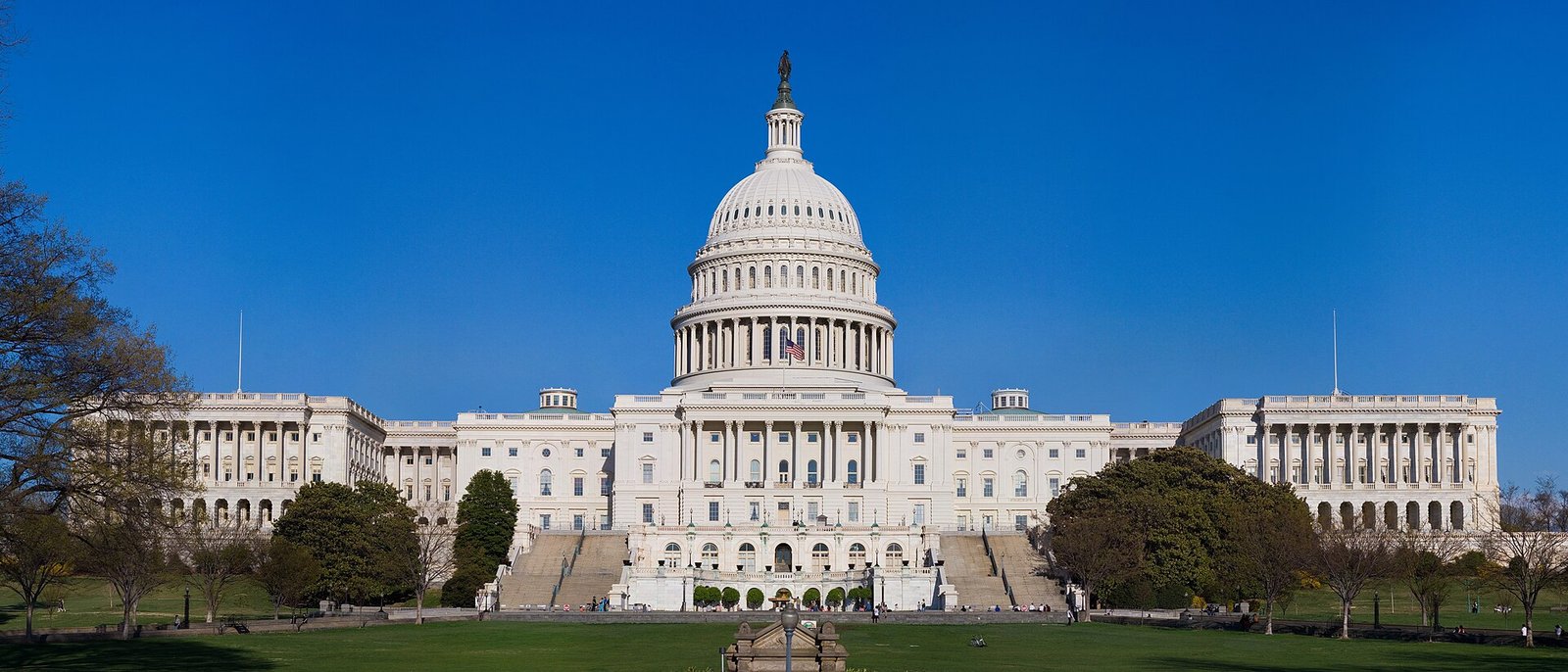
Photo: Noclip, via Wikimedia Commons (public domain)
Leave a comment
Comment as a guest and verify your email, or sign in or create a reader account. Guest comments reach our review queue after email verification; account holders can submit directly for review.