Listen to this article
Take the story with you. Choose a voice and a pace that suits you.
Or listen in another language / choose a voice
Getting your device voices ready…
The voice follows the displayed language and your browser’s regional preference when available. You can choose another narration voice.
Peat doesn’t make headlines. It should. The Peatland Breakthrough COP31 $100 billion call, launched in Antalya on 14 November 2026, asks the world to mobilise at least US$100 billion by 2030 to conserve, rewet and restore peatlands — and to halt the loss of undrained peatland altogether, according to Wetlands International.
The launch took place on 14 November 2026 at COP31 in Antalya, Türkiye. Information verified through 22 November 2026.
Four countries signed up as Champion Countries at the launch — Germany, Ireland, Peru and Uganda — while Canada endorsed the initiative, Wetlands International reports. Carbon Brief’s COP31 round-up recorded the same line-up. It is a call to action, not a pot of money already raised: the $100 billion is a target to mobilise, and how much has actually been committed so far is not stated in the launch material.
Why peatlands store 30 percent soil carbon on so little land
Start with the disproportion. Peatlands occur in almost every country and cover only 3–4% of the planet’s land surface, yet they hold nearly 30% of the planet’s soil organic carbon, according to Wetlands International. In plain terms, peatlands store 30 percent soil carbon out of all proportion to the space they take up — carbon built up in waterlogged ground over thousands of years.
Drain that ground and the store starts leaking. More than 50 million hectares of peatlands have been drained and degraded, and as a result they emit 2 gigatonnes of CO2e annually, Wetlands International says. That is why prevention sits at the top of the initiative’s logic. “Once peatlands are lost through drainage and conversion or degradation, the carbon accumulated over thousands of years cannot simply be replaced,” said Dianna Kopansky, Global Peatlands Initiative Coordinator at UNEP, quoted in the launch statement. Avoiding new damage, she argued, remains the most effective intervention.
Peatland restoration 30 million hectares: what the 2030 targets actually say
The targets are specific, and they are worth reading literally. By 2030, the initiative wants the anthropogenic loss of undrained peatland halted, at least 30 million hectares of degraded peatland under rewetting and restoration, and at least US$100 billion mobilised for peatland action, per Wetlands International. Put another way, peatland restoration 30 million hectares wide is the restoration limb of the plan, alongside conserving the peatland that is still intact.
At the launch event, Jan Peters of the Greifswald Mire Centre set out the wider frame: conserving 430 million hectares of undrained peatlands, alongside the 30-million-hectare restoration target, according to the IISD Earth Negotiations Bulletin’s report of the session. The Breakthrough is led by Wetlands International, UNEP, the UN Food and Agriculture Organization and the Greifswald Mire Centre, developed in close alignment with the Global Peatlands Initiative, Wetlands International says. It sits under the Marrakech Partnership as a 2030 Climate Solution.
Can peatland rewetting cut emissions 4-5 percent from 0.4% of the land?
That is the claim at the heart of the pitch, and it comes with a source and a date. Peatland rewetting and restoration can cut global emissions by 4–5% by 2050 in only 0.4% of land area, citing UNEP (2022), according to Wetlands International. So yes — on that estimate, peatland rewetting cut emissions 4-5 percent is the scale on offer by mid-century, from a sliver of the world’s land. It is a projection, not a measured result, and it depends on rewetting actually happening at scale.
The country stories told in Antalya show what that means in practice — and where it gets hard. Germany noted that drained peatlands contribute 7% of its greenhouse gases, and offered to share its lessons so other countries can avoid the same mistakes, the IISD report says. Ireland, where peatlands cover 21% of the territory, described peat’s long history as a household fuel, the return of the common crane after 300 years of absence — and the need for a just transition in the Midlands communities losing peat-fired power station jobs, according to the same IISD report. Uganda said wetlands are written into its national climate plan, with a target of increasing wetland coverage to 13% by 2040, per the IISD report.
Water, not just carbon, carried part of the argument. Colombia’s vice-minister for environmental territorial planning told the session the country has 25.9 million hectares of wetlands, and that 70% of the water in the capital, Bogotá, comes from the páramo, the high-mountain wetland ecosystems, according to the IISD report. Protecting peatlands, in that telling, is investing in a city’s taps.
The Peatland Breakthrough COP31 $100 billion test comes after Antalya
Here’s the honest caveat. A launch is not delivery. The initiative has opened an endorsement call for communities, companies, funders and civil society organisations, and more countries are encouraged to join, Wetlands International says. What it does not yet publish is a country-by-country funding tally, a timetable for the 30 million hectares, or a monitoring system that would let an outsider check progress in 2027 or 2028. The FAO’s Amy Duchelle flagged the gap at the launch itself: lasting results will require reliable monitoring of where peatlands are and what condition they are in, quoted by Wetlands International.
Analysis: Peatland work has one advantage most climate pledges lack — the intervention is physical and countable. A hectare is either rewetted or it isn’t. If the Breakthrough publishes baselines and progress by country, it can be judged in a way vaguer summit language can’t. If it doesn’t, the $100 billion figure will join a long shelf of round numbers announced in Antalya and never audited. The science case, on the sources above, is strong. The accountability case is still to be made.
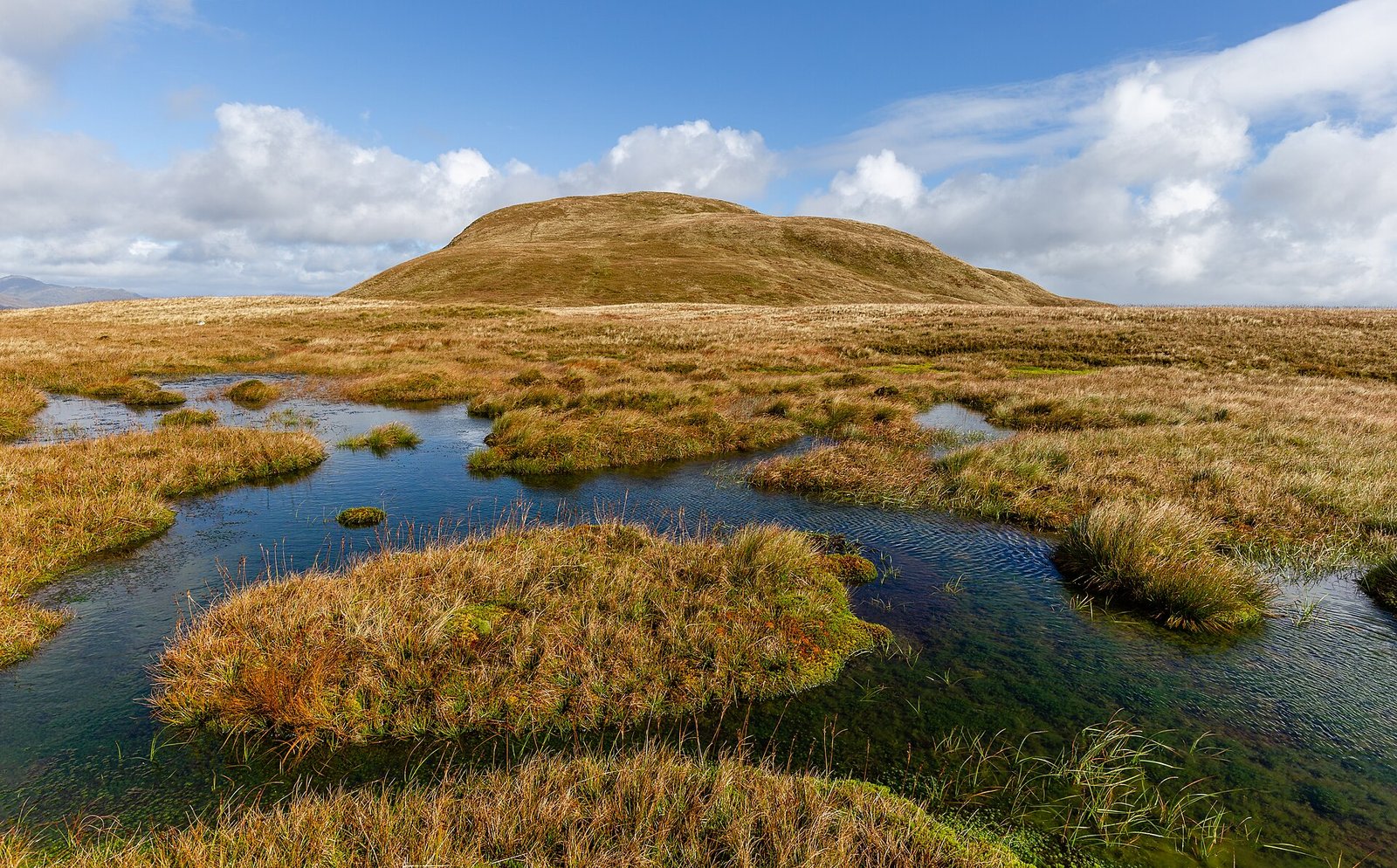
Photo: Michal Klajban, via Wikimedia Commons (CC BY-SA 4.0)
Sources
- Wetlands International — Peatland Breakthrough launched at COP31 to accelerate climate action https://www.wetlands.org/peatland-breakthrough-launched-at-cop31to-accelerate-climate-action/
- IISD Earth Negotiations Bulletin — Accelerating Finance for Climate and Nature Action, Featuring the Launch of the Peatland Breakthrough https://enb.iisd.org/accelerating-finance-climate-and-nature-action-featuring-launch-peatland-breakthrough-cop31
- Carbon Brief — Cropped 18 November 2026: COP31 special edition https://www.carbonbrief.org/cropped-18-november-2026-cop31-special-edition
- Climate High-Level Champions — At COP31, finance for forests, peatlands and reefs https://www.climatechampions.net/media/news/at-cop31-finance-for-forests-peatlands-and-reefs/
Leave a comment
Comment as a guest and verify your email, or sign in or create a reader account. Guest comments reach our review queue after email verification; account holders can submit directly for review.