Listen to this article
Take the story with you. Choose a voice and a pace that suits you.
Or listen in another language / choose a voice
Getting your device voices ready…
The voice follows the displayed language and your browser’s regional preference when available. You can choose another narration voice.
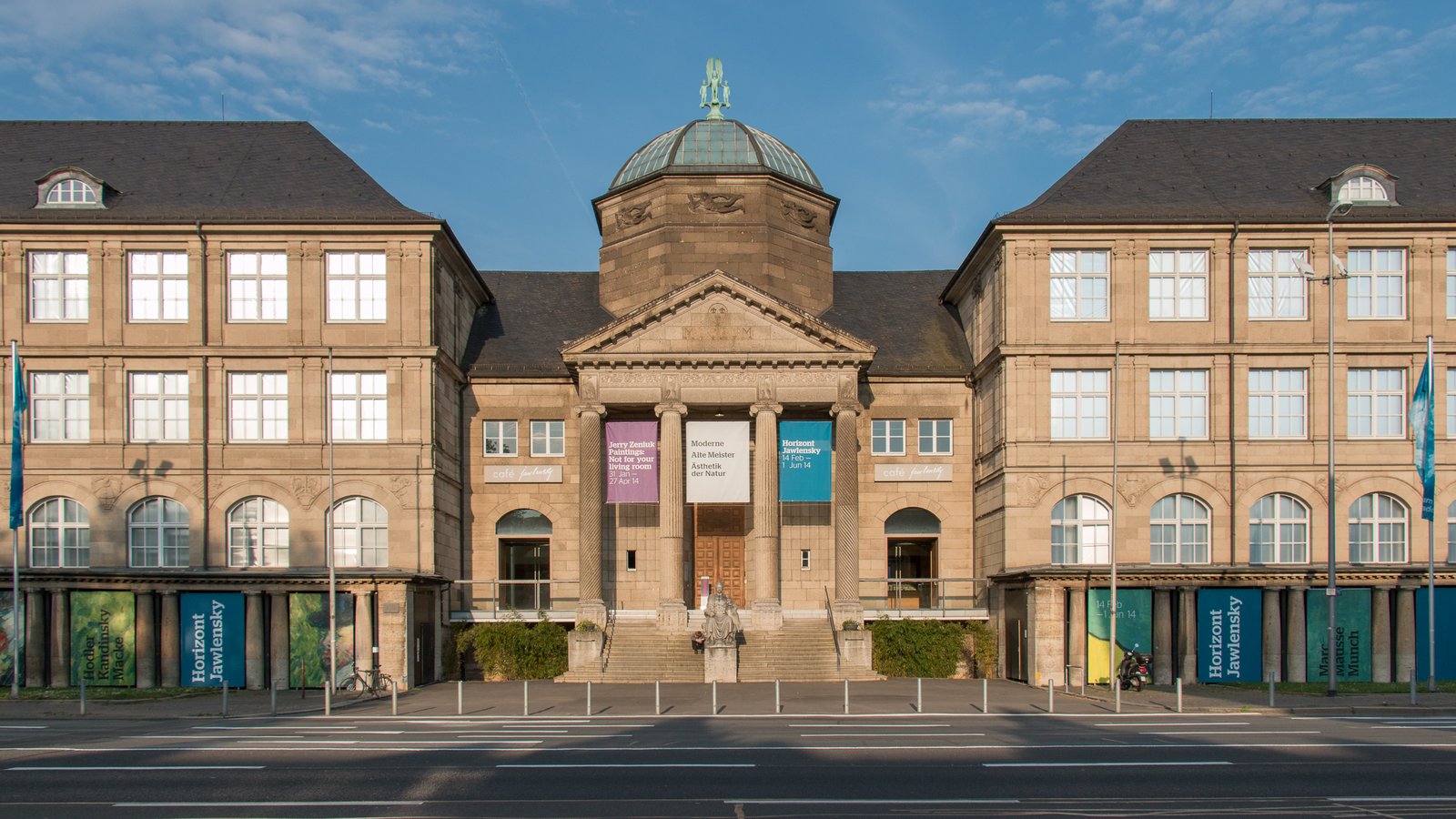
Ten people went home on 10 November 2026. They had been in Germany for nearly two centuries, held not in a grave but in a museum store, catalogued as part of a nineteenth-century collection. At a formal ceremony in Wiesbaden, Museum Wiesbaden returns ancestral remains to Indonesia — ten human skulls from the Dutch colonial era, handed to an Indonesian delegation in the presence of Hesse’s culture minister, German regional reporting records. Information verified through 15 November 2026.
According to Hesse’s Ministry for Science and Art, it is the first time a German museum has returned colonial-era human remains to Indonesia, the ministry said, via Deutschlandfunk reporting summarised by Art in Context. That makes this a German museum first return of human remains to Indonesia — a narrow claim, carefully worded, and worth keeping narrow. Fossil material linked to the Senckenberg collections went back from Frankfurt in 1975 and 1978, so “first” applies to museum-held ancestral remains of this kind, not to every return ever made.
Museum Wiesbaden returns ancestral remains to Indonesia: what was signed
The legal core of the day was a document. Indonesia’s ambassador to Germany, Abdul Kadir Jailani, signed the Arrangement on the Repatriation of Ten Human Remains from the Ernst Albert Fritze Collection, and on the Indonesian side the signing was done with the museum’s director, Andreas Henning, and the cultural diplomacy director Undri, Indonesia’s foreign ministry account, reported by ASEAN Tribune and PAS FM, says. The ten will be received by the National Museum of Indonesia in Jakarta, where conservation work will be undertaken, and Indonesia plans further research to identify descendants or communities with cultural ties to the individuals, the ministry added.
Ambassador Jailani framed the handover as more than a transfer of objects — a restoration of the nation’s dignity, and the ancestors’ journey home. Hesse’s minister Timon Gremmels praised the collaboration and cast the museum as a pioneer in Germany’s handling of colonial legacies, ASEAN Tribune reported. German wire reporting adds texture the diplomats left out: a minute’s silence, flowers, and the remains respectfully covered with cloths during the ceremony, according to dpa reporting.
The Ernst Albert Fritze collection repatriation backstory
Ernst Albert Fritze was a military physician from Hesse who went to Batavia in 1817 as a Dutch naval doctor and worked in the colonial medical administration. Material he sent back began reaching Wiesbaden in the 1830s, Art in Context’s account of the collection history says. Indonesia was never a German colony. These remains travelled through the Dutch colonial system into a German collection — one empire’s doctor, another country’s museum shelf.
How exactly Fritze acquired each individual is not established. The repatriation agreement itself notes that the circumstances of acquisition remain unclear, Indonesia’s foreign ministry said. What research could establish came from labels and bones. Labels showed some remains had previously been held at the National Museum of Indonesia during the colonial period. Forensic work traced probable origins to regions including Sumatra, Java, Sulawesi and Papua, according to the ministry — while German reporting, drawing on Frankfurt forensic lead Marcel Verhoff, put eight of the ten in island regions including Sulawesi, Ambon, Java, Madura and Sumatra, and noted teeth deliberately pointed and notched, a cultural modification pointing to Southeast Asia.
Colonial-era human remains provenance research, and one missing count
The return rests on years of colonial-era human remains provenance research: a project funded by the German Lost Art Foundation ran through 2023, combining non-invasive forensic examination at Goethe University Frankfurt’s Institute of Forensic Medicine with archival work by Dutch-studies researchers at the University of Cologne, Art in Context reports. Curator Andy Reymann led the museum’s side of the research.
One loose thread deserves plain statement. The foundation’s record describes twelve skulls linked to Fritze. One — a Toi Moko, a tattooed Māori ancestral head — went home to New Zealand in June 2023. The museum then counted eleven remaining, and a March 2025 report still said eleven. The November 2026 handover covers ten. No public notice explains the difference of one: not reclassification, not a separate transfer, not a retention. That gap doesn’t invalidate the return. It does mean the collection’s public history is not yet fully reconciled, and the museum owes the arithmetic an answer.
A second, smaller error sits in the official record. The foundation’s project page has Fritze joining the Dutch East India Company in 1817. The company ceased to exist in 1800, as the Dutch National Archives’ institutional history shows — he served the Dutch state apparatus that succeeded it. Precision matters here for a practical reason: provenance research is only persuasive when its own paperwork survives scrutiny.
Analysis: Returns like this one are becoming procedure rather than spectacle — research, an arrangement, a ceremony, a flight home. That normalisation is the story. But Wiesbaden also shows the procedure’s soft spots: a count that doesn’t reconcile, a founding fact got wrong, and destination communities still to be identified on the Indonesian side. The ancestors are home. The paperwork, in places, is still catching up.
Photo: Martin Kraft, via Wikimedia Commons (CC BY-SA 3.0) — Museum Wiesbaden, Germany.
Sources
- https://artincontext.org/museum-wiesbaden-indonesia-ancestral-skulls-return/
- https://deutschland.laenderblick.news/museum-wiesbaden-gibt-zehn-schadel-aus-kolonialzeit-an-indonesien-zuruck/
- https://www.aseantribune.com/indonesian-ancestral-human-remains-repatriated-from-germany/
- https://pasfm.com/2026/11/11/pemerintah-terima-pengembalian-10-artefak-tengkorak-manusia-asal-nusantara-dari-museum-wiesbaden-jerman/
Leave a comment
Comment as a guest and verify your email, or sign in or create a reader account. Guest comments reach our review queue after email verification; account holders can submit directly for review.