Listen to this article
Take the story with you. Choose a voice and a pace that suits you.
Or listen in another language / choose a voice
Getting your device voices ready…
The voice follows the displayed language and your browser’s regional preference when available. You can choose another narration voice.
COP31 opens in Antalya on Monday 9 November 2026, and it starts late and arguing. The opening ceremony began an hour and a half behind schedule, after negotiators spent Sunday night locked in talks over whether climate finance items would make the official agenda at all (Phys.org / AFP). More than 90,000 people are expected at the summit, which runs to 20 November (UN News). Information verified through 10 November 2026.
UN Secretary-General António Guterres opened with a blunt line. “We have entered a new age of climate extremes,” he said, urging leaders to “get serious by cutting emissions faster, accelerating a just transition from fossil fuels and delivering the finance and protection vulnerable countries need” (Phys.org / AFP). The year behind those words includes heat waves in Europe, wildfires in Indonesia and floods in Nepal, with a strong El Niño adding to the damage (Phys.org / AFP).
COP31 opens in Antalya: the climate finance fight came first
Before the speeches, the fight. Developing nations pushed late into Sunday to get finance onto the agenda, and the “climate finance work programme” — a platform agreed at COP30 in Brazil for discussing how wealthy nations fund poorer ones — was included in the end (Phys.org / AFP). A push by African countries to make the tripling of adaptation finance a standalone agenda item was not (Phys.org / AFP).
“This has already been a difficult start for COP31,” said Jasper Inventor, head of Greenpeace’s delegation, who said developed countries took a “hard line” in the agenda talks (Phys.org / AFP). A senior EU official had warned the week before that there would be “no political will” for extra funding pledges at this summit (Phys.org / AFP).
The sums explain the temperature. Developed countries provided and mobilised a record $136.7 billion in climate finance in 2024, according to the OECD figures cited by the Council on Foreign Relations, against a COP29 goal of at least $300 billion a year by 2035 and a COP30 call to at least triple adaptation finance over the same period (Council on Foreign Relations). UN Climate Change chief Simon Stiell told the opening plenary: “Progress is nowhere near far enough or fair enough” (UN News).
A COP31 Turkey Australia co-presidency, tested in public
The leadership itself is an experiment. Türkiye’s environment minister Murat Kurum took the gavel as COP31 President, while Australia’s climate minister Chris Bowen oversees the negotiations — an arrangement agreed at COP30 after neither country would drop its bid to host (UN News). Le Monde calls it unprecedented: the first time two countries have jointly steered a COP, with Türkiye coordinating voluntary initiatives and Australia leading the formal talks (Le Monde).
Both hosts brand this the “implementation COP” (Phys.org / AFP). Kurum told delegates their decisions “must take shape in a city’s infrastructure, on a farmer’s land and along a factory’s production line” (UN News). Bowen, for his part, says he wants a presidency decision shaped across the whole conference rather than cobbled together in the final days (UN News).
Scrutiny comes with the gavel. Both countries lean hard on coal: it supplies 34% of Türkiye’s electricity, and Australia — the world’s second-largest coal exporter — has approved 37 new or expanded coal, oil and gas projects under its current government, according to the Australian Conservation Foundation figures reported by Le Monde (Le Monde). Human Rights Watch, in a statement on 4 November, raised concerns about whether independent civil society can participate safely in Türkiye, and Greenpeace Turkey’s climate lead made a similar point to Le Monde (Le Monde).
The COP31 electrification pledge 35 by 35, and the missing guest
The hosts’ headline offer is electrification. Türkiye is inviting countries to join a voluntary pledge to raise electricity’s share of global energy demand to 35% by 2035, from around 20–23% today depending on the measure used (Phys.org / AFP; Council on Foreign Relations). The EU has asked for the word “clean” in front of it — a small adjective that reopens the whole argument about what counts as transition energy (Phys.org / AFP).
One seat stays empty. The United States, which formally withdrew from the Paris Agreement at the start of this year, has sent no official delegation, though members of Congress and US businesses are attending (Council on Foreign Relations; Phys.org / AFP). This summit also marks ten years since the Paris Agreement entered into force, and the UN Environment Programme’s 2026 Emissions Gap Report finds its 1.5°C stretch goal has slipped out of reach (Council on Foreign Relations).
Analysis: nobody serious expects a landmark deal out of Antalya, and the Council on Foreign Relations said so before the doors opened (Council on Foreign Relations). What opening day settled is narrower and still telling: finance forced its way onto the agenda, adaptation finance did not get its own line, and the two coal-dependent hosts spent day one being asked about coal. The next eleven days test whether “implementation” is a programme or a slogan.
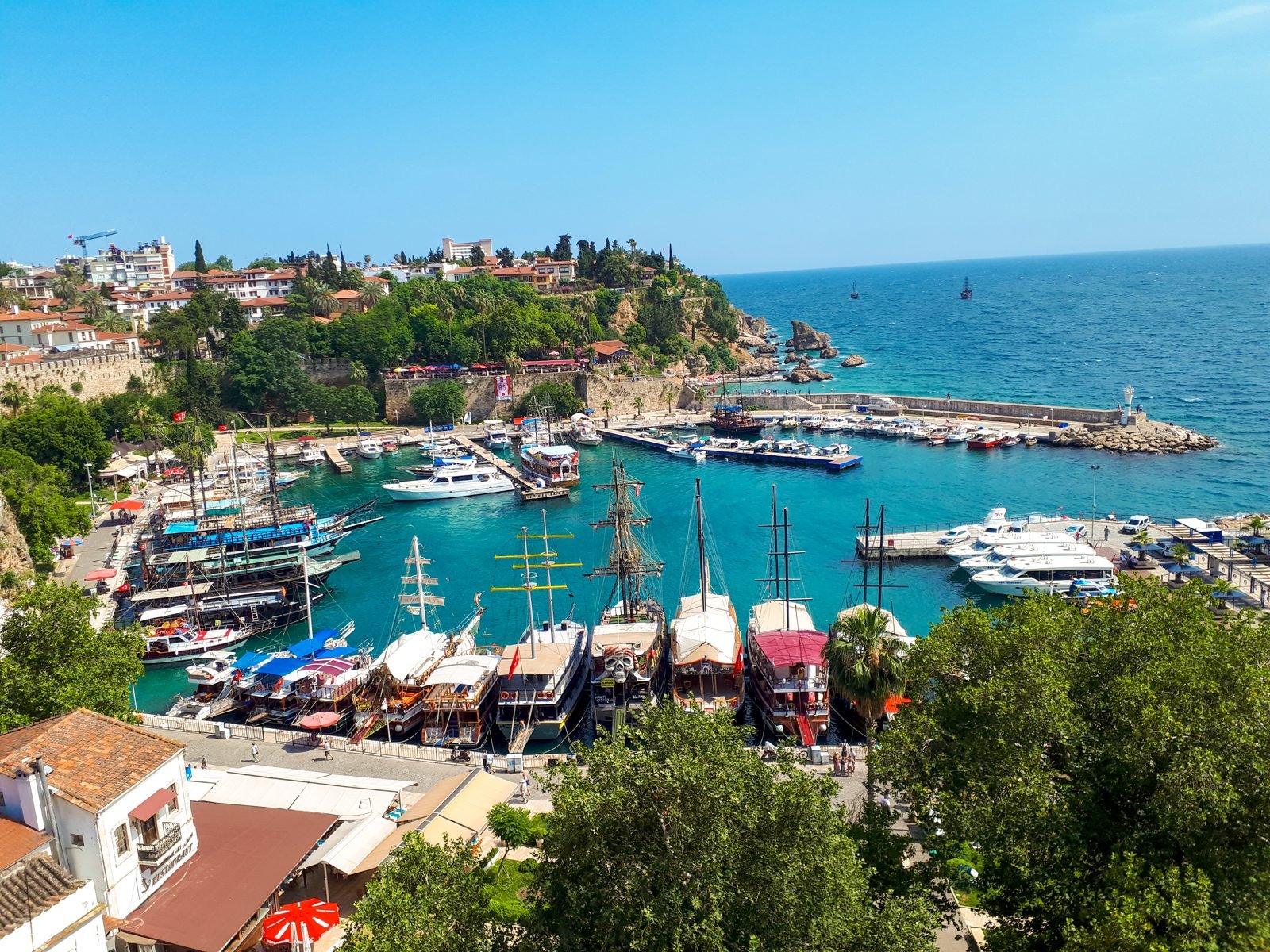
Photo: REHBER0770, via Wikimedia Commons (CC BY-SA 4.0)
Sources
- https://phys.org/news/2026-11-cop31-leaders-pressure-tackle-climate.html
- https://news.un.org/en/story/2026/11/1168763
- https://www.cfr.org/articles/cop31-in-turkey-what-to-expect-at-the-2026-un-climate-summit
- https://www.lemonde.fr/en/environment/article/2026/11/10/cop31-turkey-and-australia-two-coal-dependent-countries-lead-the-world-s-most-important-climate-summit_6776563_114.html
Leave a comment
Comment as a guest and verify your email, or sign in or create a reader account. Guest comments reach our review queue after email verification; account holders can submit directly for review.