Listen to this article
Take the story with you. Choose a voice and a pace that suits you.
Or listen in another language / choose a voice
Getting your device voices ready…
The voice follows the displayed language and your browser’s regional preference when available. You can choose another narration voice.
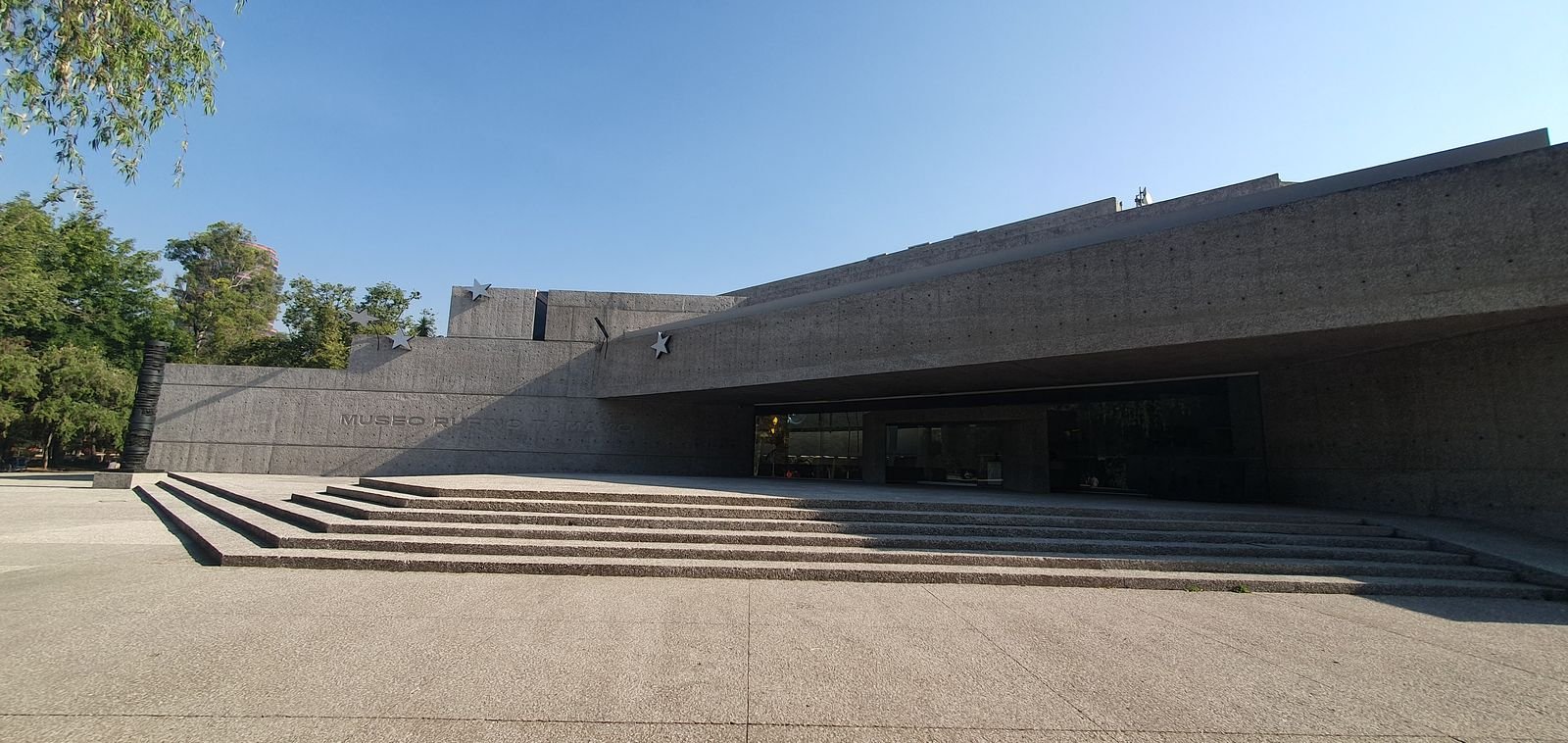
The São Paulo Bienal Mexico City exhibition opens to the public on 15 November 2026 at the Museo Tamayo, and it is a first. The Fundação Bienal de São Paulo says this is the first time its travelling exhibition programme has come to Mexico, and the show marks the final stop of the 36th edition’s travelling programme (Fundação Bienal de São Paulo). It runs to 7 February 2027, with an opening event on 14 November (Fundação Bienal de São Paulo).
A biennial is usually a place you travel to. This one travels to you — and changes on the way.
What the São Paulo Bienal Mexico City exhibition brings
The exhibition, Not All Travellers Walk Roads – Of Humanity as Practice, is curated for Mexico City by Anna Roberta Goetz, a co-curator of the edition (Fundação Bienal de São Paulo). It brings together works by 26 artists, among them Akinbode Akinbiyi, Alberto Pitta, Ana Raylander Mártis dos Anjos, Berenice Olmedo, Ernest Cole, Forensic Architecture/Forensis, Forugh Farrokhzad, Korakrit Arunanondchai, Mohamed Melehi, Sharon Hayes and Théodore Diouf (Fundação Bienal de São Paulo).
The original is a big thing to compress. The 36th edition, curated by Bonaventure Soh Bejeng Ndikung, drew 120 participants and 784,399 visitors between September 2025 and January 2026 in São Paulo (Atono Centre). Twenty-six artists in one museum is not a smaller copy of that. It is a selection, argued for afresh — and the argument Goetz chooses is abstraction.
Her starting point is abstraction and its political dimensions, putting artists of different generations in dialogue with the complexity of abstraction in Mexican art history and with the history of the museum itself (Atono Centre). That second dialogue is pointed. The Museo Tamayo’s founder, Rufino Tamayo, opened the way for the Generación de la Ruptura — artists such as Gunther Gerzso and Manuel Felguérez, who moved from nationalist muralism toward abstraction and international modernism (Atono Centre). An exhibition about abstraction, hung in Tamayo’s own museum, cannot pretend that history is wallpaper.
Not All Travellers Walk Roads Mexico City, read through water and land
The title comes from a poem by Afro-Brazilian writer Conceição Evaristo, suggesting that being human means being a wanderer, migrant or pilgrim moving between earthly realities and poetic, sacred registers (Contemporary Lynx). The curators name three axes: claiming space and time; seeing yourself in the reflection of the other; and spaces of encounter and the collective social brain (Contemporary Lynx). Underneath them sits a metaphor the edition keeps returning to — the estuary, where different currents meet and a space for coexistence forms (Contemporary Lynx).
Goetz organises the Tamayo selection in nuclei: abstraction as situated knowledge and a carrier of memory; textiles that make visible the links between human life and the ancestral and spiritual world; bodies that refuse to be fixed by representation; and land and water, treated not as passive backgrounds but as living archives and territories in dispute (Atono Centre).
Some works carry that argument on their own. Berenice Olmedo, one of the 26 artists in Mexico City, showed Pnoê (“Breath”) in São Paulo — a constellation of sculptures built from orthoses and prostheses, hanging from the ceiling and breathing through a machine modelled on an iron lung, presenting human beings as prosthetic beings sustained by devices (Contemporary Lynx). Mohamed Melehi’s signature motif, matured in the 1970s, is the wave: geometric abstraction whose subject is water in motion (Atono Centre). Ana Raylander Mártis dos Anjos’s A casa de Bené reconstructs her grandfather’s house without walls, floor by floor, so family memory fills the structure — belonging built vertically through a building (Contemporary Lynx).
A 75-year-old biennial learns a new room
The Bienal de São Paulo was founded in 1951 and is the second-oldest biennial in the world after Venice; it has never before travelled to Mexico (Atono Centre). Its Mexico City home for the next three months sits at Paseo de la Reforma 51, in Chapultepec Park, open Tuesday to Sunday (Fundação Bienal de São Paulo; Fundação Bienal de São Paulo).
Analysis: the question this exhibition poses is whether an institution can travel without becoming a franchise. An art fair travels as a brand; a biennial, if it is honest, travels as a conversation — and Goetz is not hanging São Paulo on the Tamayo’s walls so much as translating it into a new context (Atono Centre). Abstraction in São Paulo means one thing. In the Tamayo, in the shadow of the Ruptura, it means another. That difference is not a problem for the show. On the evidence of its design, it is the show.
Photo: José Luiz, via Wikimedia Commons (CC BY-SA 4.0)
Leave a comment
Comment as a guest and verify your email, or sign in or create a reader account. Guest comments reach our review queue after email verification; account holders can submit directly for review.