Listen to this article
Take the story with you. Choose a voice and a pace that suits you.
Or listen in another language / choose a voice
Getting your device voices ready…
The voice follows the displayed language and your browser’s regional preference when available. You can choose another narration voice.
The berlin portraits exhibition botticelli to lempicka opens with a wager: take the timeline away, and portraits start talking to each other. Portraits! Surprising Encounters from Botticelli to Lempicka opened at Berlin’s Gemäldegalerie on 16 October 2026 and runs to 14 March 2027, according to CODART’s exhibition listing. Around 80 to 90 paintings and sculptures — the counts differ slightly between listings — are hung in pairs, by affinity rather than by century.
A Renaissance face, lowered eyes, restraint. Next to it, interwar polish and geometry. The gap between them is the point.
Berlin portraits exhibition Botticelli to Lempicka: inside the Gemäldegalerie
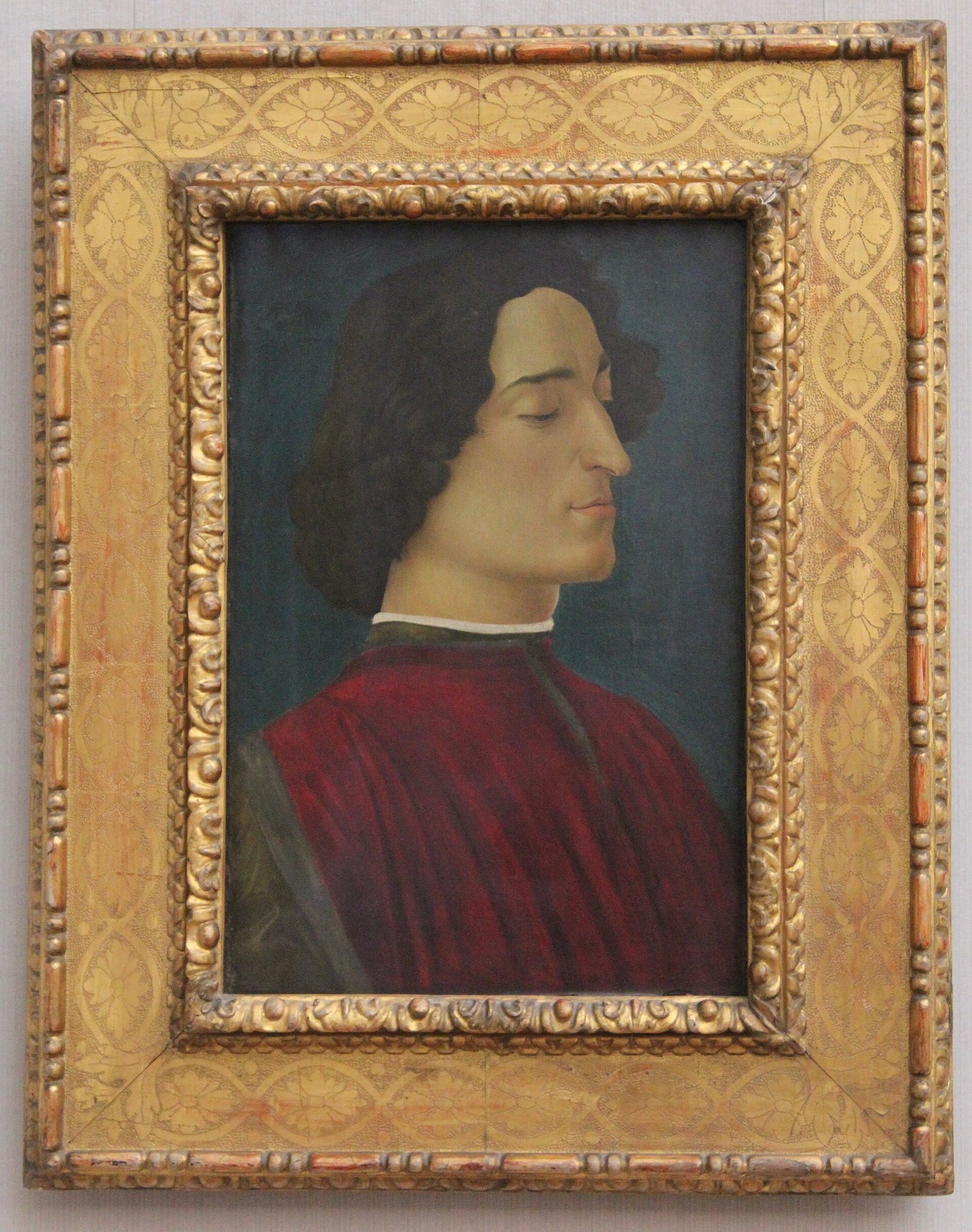
The anchor pairing gives the show its title. Sandro Botticelli’s 1478 Portrait of Giuliano de’ Medici meets Tamara de Lempicka’s circa-1931 portrait of Marjorie Ferry, “bringing Renaissance restraint into contact with the polished geometry of the interwar period,” as The Creative Network’s opening report puts it. Other encounters connect Mino da Fiesole with Rogier van der Weyden, Albrecht Dürer with Giorgione, and Peter Paul Rubens with Thomas Gainsborough.
The works come from the Gemäldegalerie’s own internationally renowned portrait collection, topped up with loans from sister Berlin institutions — the Alte Nationalgalerie, Neue Nationalgalerie, Egyptian Museum and Papyrus Collection, and the Sculpture Collection and Museum of Byzantine Art, according to visitBerlin’s exhibition guide. Many of these pictures normally live in different buildings. Here they share a wall for the first time.
The artist list spans the genre’s whole arc: Petrus Christus, Botticelli, Giorgione, Dürer, Cranach the Elder, Holbein the Younger, Sofonisba Anguissola, Rembrandt, Zurbarán, Anna Dorothea Therbusch, Lovis Corinth, Sabine Lepsius and Lempicka, CODART lists. Rulers in full state dress hang near intimate portraits of friends. Self-portraits — proud, staged, sometimes defiant — close the sequence.
Surprising encounters Botticelli Lempicka: how the pairings work
Chronology is the comfort blanket of the survey show. You walk forward through time, nod at progress, leave. This hang refuses that. “By removing the comfort of a linear timeline, the display asks viewers to notice formal rhymes before consulting dates,” The Creative Network observes. A composed gaze. A turned shoulder. An accessory placed just so. Those decisions travel across centuries better than you’d expect.
The pairings cut both ways, though. Put two portraits side by side and the differences shout too: who paid, who was allowed to be painted at all, what counted as a truthful likeness in 1478 versus 1931. Portraiture’s patrons, formats and claims to realism shift as political authority and wealth shift, the opening report notes.
The exhibition is curated by Sven Jakstat and Stephan Kemperdick, with the assistance of Marie-Luise Hugler, and a richly illustrated catalogue accompanies it, according to CODART. Support comes from the Kulturstiftung der Länder, The Creative Network reports.
Four chapters: staging, status and intimacy
The show is organised in four thematic sections, visitBerlin explains. A prologue covers the constants of likeness-making and the genre’s European roots. “Portrait Types on Both Sides of the Alps” traces how Italian and Northern Renaissance forms — Rogier van der Weyden’s three-quarter view, Filippo Lippi’s strict profile — intertwined and shaped everything after.
“Self-Representation of the Elite” is the power chapter. Clothing, pose and sheer size did the talking. Anthonis Mor’s Duchess Margaret of Parma appears in a commanding half-length portrait, as does Moroni’s nobleman Don Gabriel de la Cueva, visitBerlin notes. A portrait, in this room, is not a picture of status. It is status, manufactured in paint.
Then the temperature drops. “Family, Friendship, and Intimacy” turns to pictures made for remembrance rather than display. Sofonisba Anguissola’s mother, Bianca, gazes at her painting daughter with the same familiarity as Eugen Spiro’s wife, 380 years later, gazes at her husband, visitBerlin describes. Portraits of the dead hold a final glimpse. The last chapter gathers collectors and artists themselves — self-portraiture as self-exploration, and as a way of claiming a place in a tradition.
Portraiture exhibition Berlin March 2027: why the old genre feels current
Every portrait is designed for an audience. That sentence could sit over the gallery door. The exhibition’s framing — self-representation, staging, role, character — reads like a description of a social media feed, and the organisers know it: visitBerlin’s guide stresses how clothing, posture and accessories function as codes of social, political or gender affiliation. Swap oil paint for a front camera and the codes are still codes.
Analysis: the pairing device works because portraits were never passive records. A sitter in 1478 managed their image with the tools available — a profile pose borrowed from coins, a jewel placed to signal an alliance — just as carefully as anyone curating a public profile now. Hanging Botticelli beside Lempicka does not flatten the distance between them. It makes the distance legible, and it makes the shared human project — deciding how to be seen — impossible to miss.
Portraits! is at the Gemäldegalerie, Matthäikirchplatz 4-6, Berlin, through 14 March 2027, per visitBerlin.
Photo: Sandro Botticelli, Portrait of Giuliano de’ Medici, 1478, Gemäldegalerie Berlin. Photograph by Oursana, via Wikimedia Commons (CC0 1.0)
Leave a comment
Comment as a guest and verify your email, or sign in or create a reader account. Guest comments reach our review queue after email verification; account holders can submit directly for review.