Listen to this article
Take the story with you. Choose a voice and a pace that suits you.
Or listen in another language / choose a voice
Getting your device voices ready…
The voice follows the displayed language and your browser’s regional preference when available. You can choose another narration voice.
About 2.1 billion people volunteer monthly. That is 34.5% of the world’s working-age population, according to new global estimates produced by the International Labour Organization and published in the 2026 State of the World’s Volunteerism Report (ILO). One in three working-age adults, every month, doing unpaid work for other people. The surprise isn’t the size of the number. It’s where the work happens — mostly nowhere near a charity office.
Picture volunteering and you probably picture a uniform, a logo, a sign-up sheet. The data describe something else: neighbours helping neighbours, youth groups fixing what the city hasn’t, families and friendship networks quietly carrying services that never appear in a budget. Information verified through 8 November 2026.
What the State of the World’s Volunteerism Report 2026 actually counted
The State of the World’s Volunteerism Report 2026 is a United Nations Volunteers report about measurement as much as about volunteering itself. Its summary says the field has suffered from fragmented approaches that counted some forms of volunteering and missed others, and that better tools and updated baseline data are what produced the new scale (UNV).
The ILO is blunt about how to read the jump. The 2022 report cited a global monthly rate of 14.9%; the new figure is 34.5%, and that is not evidence of a sudden surge in participation — it reflects improved measurement, including new UNV surveys designed to capture under-measured work in large low- and middle-income countries (ILO). People didn’t suddenly become twice as generous. The counting finally caught up with what they were already doing.
The geography is uneven in ways that should embarrass rich countries a little. Africa records the highest rate at 58.5%, which the ILO ties to the central role of mutual aid in community life. Asia and the Pacific and the Americas sit around 30–32%. Europe and Central Asia and the Arab States are lowest, at about 24% (ILO). Men volunteer slightly more than women globally — 36.9% against 32.1% — though the report’s own messaging warns that women’s unpaid care work overlaps heavily with direct volunteering and is easy to undercount (ILO).
Informal volunteering is more than double formal volunteering
Here’s the finding with policy teeth. Informal volunteering is more than double formal volunteering worldwide: 25% of working-age people help others directly — a neighbour, a stranger, a street — compared with 11.7% who volunteer through an organisation (UNV).
That means resilience is built horizontally, peer to peer, rather than vertically through institutions, as the ILO puts it — and development efforts aimed only at registered organisations risk overlooking the most widespread and trusted forms of civic action, particularly in the Global South (ILO). Toily Kurbanov, the UNV Executive Coordinator, makes the same point from the government’s side: countries already preside over a de facto national volunteer corps with no line in their budgets, citizens co-producing health outreach, education support, disaster response and social care without appearing in administrative data (United Nations).
The examples in the report’s companion writing are stubbornly local. In Accra’s low-lying neighbourhoods, volunteer groups clear drains before seasonal floods. In Nairobi’s informal settlements, youth groups maintain footbridges and shared water points. In Manila, community disaster brigades do first aid, evacuation and mapping in a single shift; in New Orleans, volunteer networks check on older residents during heatwaves; in Jakarta, community flood monitors feed real-time data into official warning systems (UNV).
The Global Index of Volunteer Engagement GIVE tries to count what matters
Counting heads, though, only goes so far, and the report knows it. The Global Index of Volunteer Engagement GIVE is its answer: a framework for measuring scope, significance and impact across four dimensions — individual value, societal value, economic value, and the environment that promotes volunteerism (UNV).
In practice that means asking different questions. What does volunteering do for the volunteer’s skills and confidence — youth in Durban gaining environmental management skills on coastal cleanups, say. What does it do for trust in a place — neighbourhood groups in Berlin helping new migrants settle. What does it save — residents in Medellín co-maintaining hillside stairways and cutting municipal maintenance costs. And what do local rules do to help or hinder, with Seoul cited for small grants unlocking thousands of micro-initiatives (UNV).
The timing is deliberate. The UN General Assembly has designated 2026 as the International Year of Volunteers for Sustainable Development, and in 2025, 23 countries acknowledged volunteers’ contribution to the Sustainable Development Goals in their national reviews (United Nations).
Analysis: the report’s real argument isn’t that volunteering is big — it’s that governments are managing blind. Support pitched only at formal charities misses two-thirds of the actual system, and support designed badly, heavy with bureaucracy, could smother the informal networks that do the work. The useful offer on the table is lighter: micro-grants, training, coordination tools, recognition — and statistics honest enough to show where the help already lives.
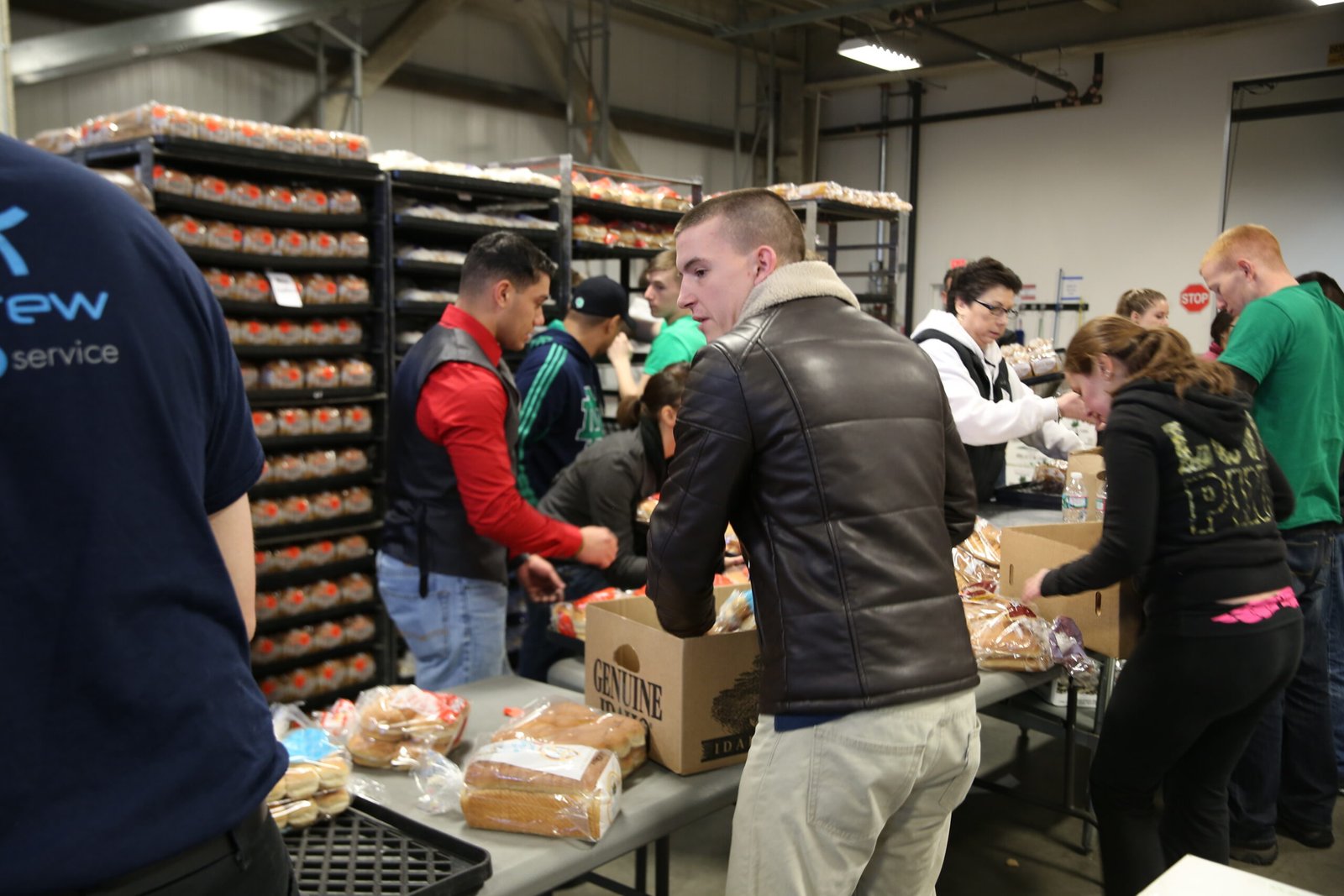
Photo: Lance Cpl. Calvin Shamoon, U.S. Marine Corps, via Wikimedia Commons (Public domain)
Leave a comment
Comment as a guest and verify your email, or sign in or create a reader account. Guest comments reach our review queue after email verification; account holders can submit directly for review.