Listen to this article
Take the story with you. Choose a voice and a pace that suits you.
Or listen in another language / choose a voice
Getting your device voices ready…
The voice follows the displayed language and your browser’s regional preference when available. You can choose another narration voice.
Student befrienders for lower-income families are not a new idea in Singapore. What changed this week is the scale on record — and who is keeping it going. On 3 November 2026, the National University of Singapore (NUS) reported that more than 1,100 of its students have given over 20,000 volunteer hours since 2022 through a befriending course run with the Ministry of Social and Family Development (MSF), making the university the largest single organisational contributor to the national ComLink+ initiative (NUS News). MSF marked the work with its Outstanding Partner Award 2026; NUS is the first Institute of Higher Learning in Singapore to receive it.
What student befrienders for lower-income families actually do
Befriending sounds soft. The work is not.
Under ComLink+, families with children are paired with dedicated family coaches and volunteer befrienders who stay with them over time and encourage them as they work towards long-term goals — stability, self-reliance and social mobility, in the ministry’s own framing (MSF). In practice, the NUS students help children with their studies, sit with parents as they work towards goals they have set, and pass on knowledge of support schemes families may not know exist. The university’s account describes one student whose befriending relationship led a family to seek professional support at a specialist association after she shared what resources were available — a small outcome on paper, and the kind that only happens after months of trust (NUS News).
The relationships run for a full year, not a semester’s goodwill tour. More than 340 students enrolled as befrienders in 2025 alone, and the commitment is the point: a family deciding whether to trust a stranger’s advice about school, work or money rarely makes that decision in week one.
A course, not a charity drive
The vehicle is GEN2070, a service-learning course launched in August 2022 under the university’s Communities & Engagement General Education pillar — the first collaboration of its kind between MSF and a Singapore Institute of Higher Learning (NUS News). Students earn academic credit. Families get consistency a one-off volunteering day cannot offer.
The model is spreading sideways. In August 2026 NUS introduced a second course, GEN2072 Enable Inclusive Communities SG, run with SG Enable, where students and persons with disabilities co-create activities that build practical living skills and social participation (NUS News). Other strands cover career-readiness programmes for youth in the Singapore Boys’ Home and Singapore Girls’ Home. “Our service-learning model transforms the community into a classroom,” the university’s Director of Service Learning said, arguing that families receive immediate support while students gain the empathy and civic responsibility to keep doing the work after graduation.
The ministry is redesigning volunteering around people like these
The award landed in the middle of a wider policy shift. At the MSF Volunteer and Partner Awards 2026, where 266 awards were conferred, Minister for Social and Family Development Masagos Zulkifli set out three shifts for the next chapter of volunteerism: from activities to outcomes, from acts of service to trusted relationships, and from individual contribution to volunteer leadership (MSF).
The ComLink+ befrienders sit inside all three. MSF now wants experienced ComLink+ volunteer befrienders to grow into Lead Befrienders who support families more independently, freeing Family Coaches to concentrate on households with complex needs (MSF). Newer pilots point the same way: Transition Support Companions who stay with children in out-of-home care as they move between settings, and a Youth Home Mentors model that gives volunteers a structured role in rehabilitation and reintegration.
The need is quantified. MSF expects to require around 3,000 additional regular volunteers by 2030 across befriending, mentoring, fostering and family support (MSF).
Analysis: the interesting part of the NUS numbers is not the total. Twenty thousand hours is a headline; 1,100 students staying in year-long relationships with specific families is a structure. Singapore’s bet is that universities can supply what volunteer recruitment usually cannot — people who show up on schedule, for a long time, with training behind them and a reason to reflect on what they are doing. Whether the model survives contact with exam seasons and graduation is the open question. The Lead Befriender ladder is MSF’s answer to it: keep the experienced ones inside the system after the course ends.
Information verified through 3 November 2026.
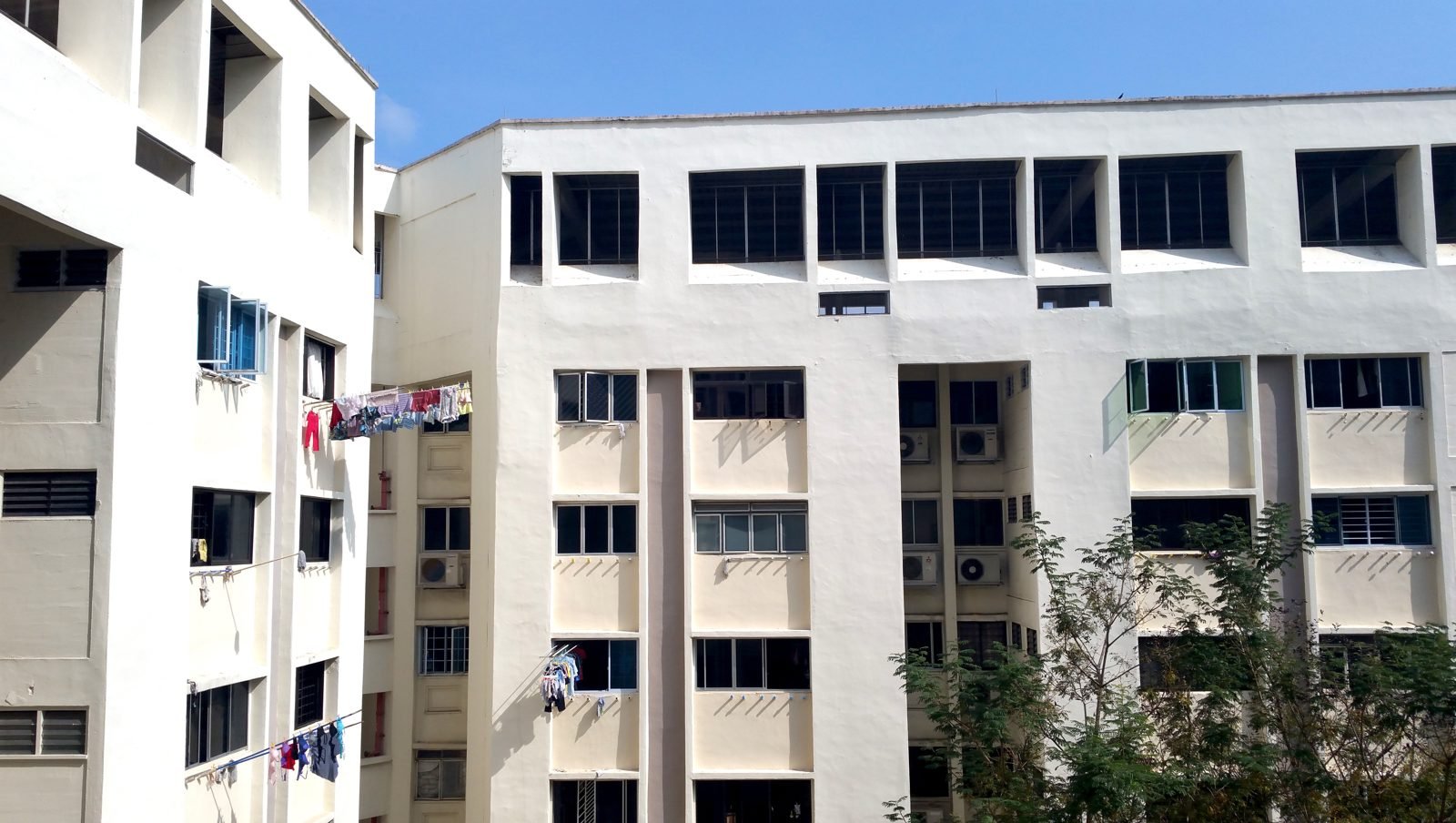
Photo: Shobanu Scarlott, via Wikimedia Commons (CC BY-SA 4.0)
Sources
- https://news.nus.edu.sg/20000-volunteer-hours-and-counting-nus-wins-msf-outstanding-partner-award-2026-for-championing-community-impact/
- https://www.msf.gov.sg/media-room/article/msf-transforms-volunteerism-expanding-opportunities-to-contribute-lead-and-journey-with-individuals-and-families
- https://www.msf.gov.sg:443/media-room/article/speech-by-mr-masagos-zulkifli-at-msf-volunteer-and-partner-awards-2026
- https://www.msf.gov.sg/what-we-do/volunteer/find-causes/comlink
Leave a comment
Comment as a guest and verify your email, or sign in or create a reader account. Guest comments reach our review queue after email verification; account holders can submit directly for review.