Listen to this article
Take the story with you. Choose a voice and a pace that suits you.
Or listen in another language / choose a voice
Getting your device voices ready…
The voice follows the displayed language and your browser’s regional preference when available. You can choose another narration voice.
On paper, the Netherlands is one of the easiest countries in the world to move to. The trains run, the English is excellent, the salaries are strong, and in InterNations’ Expat Insider 2022, the country ranked 22nd of 52 destinations overall, carried by working life and quality of life. Yet the same survey series keeps recording the same quiet failure underneath: expat loneliness. In the Netherlands the welcome works — the contract, the job, the bike — and then the belonging does not follow. The country ranks near the top of the world for living in, and near the bottom for being let in.
Expat loneliness in the Netherlands, measured
The numbers repeat across years. In InterNations’ 2022 survey the Netherlands placed 44th of 52 in the Finding Friends subcategory. Only 46% of expats in the country were happy with their social life, against 56% globally; 52% said making local friends was difficult, against a global average of 37%; and 47% said their friends were mostly other expats, against 33% globally. In 2019 the country ranked 56th of 64 for making local friends. The 2024 city rankings show the pattern holding in the two biggest expat cities: Amsterdam placed 32nd and The Hague 36th of 53 for Finding Friends, with 61% of Amsterdam expats and 53% in The Hague saying their friends are mostly other expats. As one American expat in The Hague put it in the survey: “It’s really difficult to make Dutch friends. They’re friendly but they already have their own friend groups and don’t interact with you so much. All of my friends are other internationals.” People stay, work and pay taxes. They also eat dinner alone, in a country famous for gezelligheid — cosiness inside circles closed long before the newcomer arrived.
Friendly is not the same as available
Dutch social life is not cold; it is complete. Friendship circles form at school and university and are maintained for decades, and the national talent for the agenda — the diary booked weeks ahead — makes sociability scheduled rather than spontaneous. A colleague will be genuinely warm at lunch and genuinely unavailable until a Thursday three weeks from now. For a newcomer, every door is open and every room is already occupied. The expat bubble exists in Amsterdam and The Hague not because expats prefer each other, but because other expats’ circles still have space in them.
The mechanism underneath the feeling
Research from NIDI (the Netherlands Interdisciplinary Demographic Institute, 2025) explains why this is structural, not personal. Savaş, Henkens and Kalmijn studied nearly 5,000 Dutch people who had retired abroad, comparing them with retirees who stayed. The movers were significantly more socially lonely — they missed a wider network and a sense of community — even though they were not more emotionally lonely: their closest relationships were as strong as those who stayed. Neighbour contact and a sense of belonging in the new place protected movers; losing contact with good friends back home hurt most. The study measured Dutch people abroad rather than foreigners in the Netherlands, so read it as mechanism evidence, not a measurement of the Netherlands itself. But mechanisms run both ways, and this one maps precisely onto the expat complaint: the partner and the family group chat travel with you, so the intimate layer survives the move. The missing layer is the local circle — exactly the layer the Netherlands is slowest to rebuild for a newcomer.
A country whose world is close to home
Part of the distance is geographical imagination. The Dutch travel a great deal — they are among Europe’s most enthusiastic holidaymakers — but the travel stays close. In CBS’s count of summer 2025, Dutch residents took 12.9 million holiday trips abroad, and 11.5 million of them — about nine in ten — stayed inside Europe, with France the most popular destination; just 1.4 million trips left the continent. A local social world built on Europe — family in the next province, holidays in France or Spain, a professional horizon at the EU’s edges — is not hostile to the newcomer from farther away. It is simply not oriented toward them. The country is not rejecting anyone. It is full, scheduled and facing inward toward a continent-sized comfort zone.
Recruited, then stranded
Nowhere is the gap between the welcome and the reality sharper than with international students, who arrive by invitation. The Netherlands hosted 129,764 of them in 2025–26, recruited by universities marketing in English worldwide. The student-room shortage stands at roughly 21,000 rooms nationally, students search an average of nearly five months for a room, and the Vrije Universiteit Amsterdam charges a €500 housing service fee that Dutch courts have twice ruled impermissible — and is still charging it. A student who spends their first semester in a hostel or a sublet two cities away does not build a social life, in a country where social lives are built slowly or not at all. The full account of how Dutch universities recruit the world and house too few is its own story.
Who does settle, and our verdict
Expats who break through describe a consistent route, matching what the NIDI mechanisms predict: learn Dutch past the point where English would do, stay for years rather than postings, and join Dutch structures — the sports club, the choir, the neighbourhood team — instead of waiting for Dutch friendships to happen to them. It works, slowly, for those with the time to run the course. Our verdict, reading the surveys as a whole: the Netherlands is a wonderful place to visit and a demanding place to belong. Move for the job, the safety, the cycling — but price in the social work: the data says belonging is not included in the welcome. Information verified through 1 November 2026.
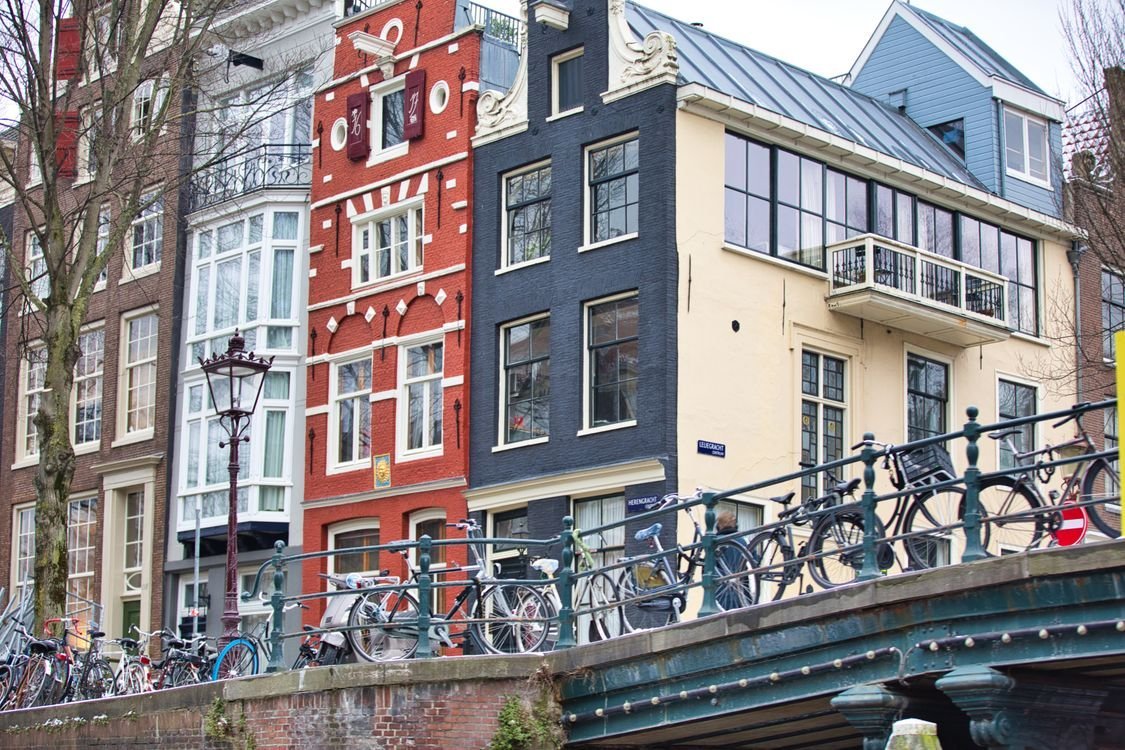
Photo: Tony Wu, via Pexels.
Sources
- InterNations, Expat Insider 2022 — Netherlands press release (22nd of 52 overall; Finding Friends 44th; 52% find local friends difficult): https://cms.in-cdn.net/cdn/file/cms-media/public/2022-06/2022-07-12_PressRelease_ExpatInsider2022_TheNetherlands.pdf
- InterNations, Expat City Ranking 2024 — How Expats Rate Life in Amsterdam and The Hague (Finding Friends 32nd and 36th; friends mostly other expats): https://www.InterNations.org/expat-insider/2024/dutch-cities-40504
- Savaş, Henkens & Kalmijn (NIDI), Trouble in Paradise? Emotional and Social Loneliness Among International Retirement Migrants, Psychology and Aging, 2025: https://psycnet.apa.org/fulltext/2025-87888-001.html
- CBS, Nearly 22 million summer holidays in 2025, France most popular (11.5 million of 12.9 million trips abroad stayed in Europe): https://www.cbs.nl/en-gb/news/2026/27/nearly-22-million-summer-holidays-in-2025-france-most-popular
- Ad Valvas, VU continues to charge housing fees to international students (€500 fee ruled impermissible twice, still charged): https://advalvas.vu.nl/en/campus-culture/vu-continues-to-charge-housing-fees-to-international-students/
Leave a comment
Comment as a guest and verify your email, or sign in or create a reader account. Guest comments reach our review queue after email verification; account holders can submit directly for review.